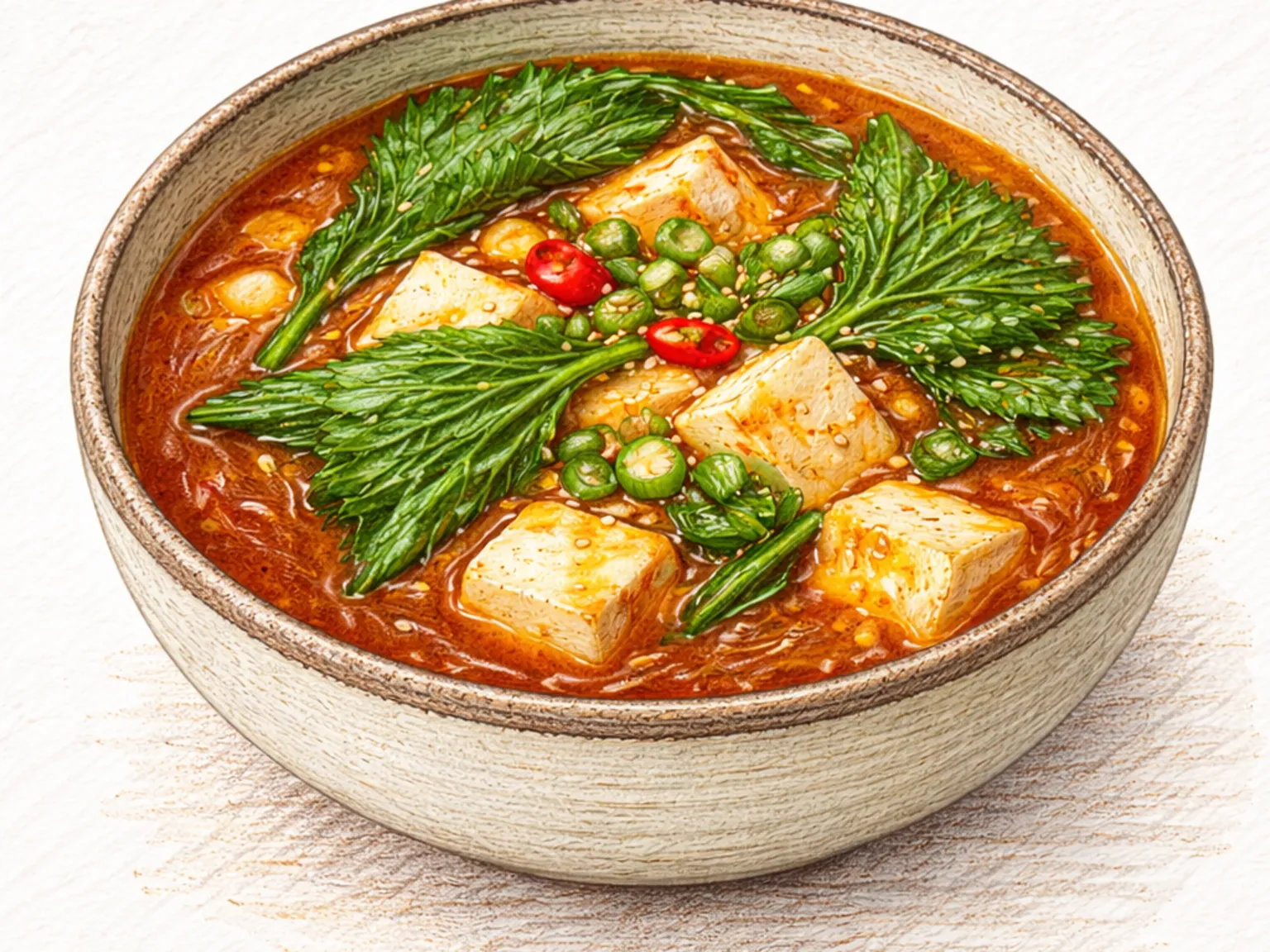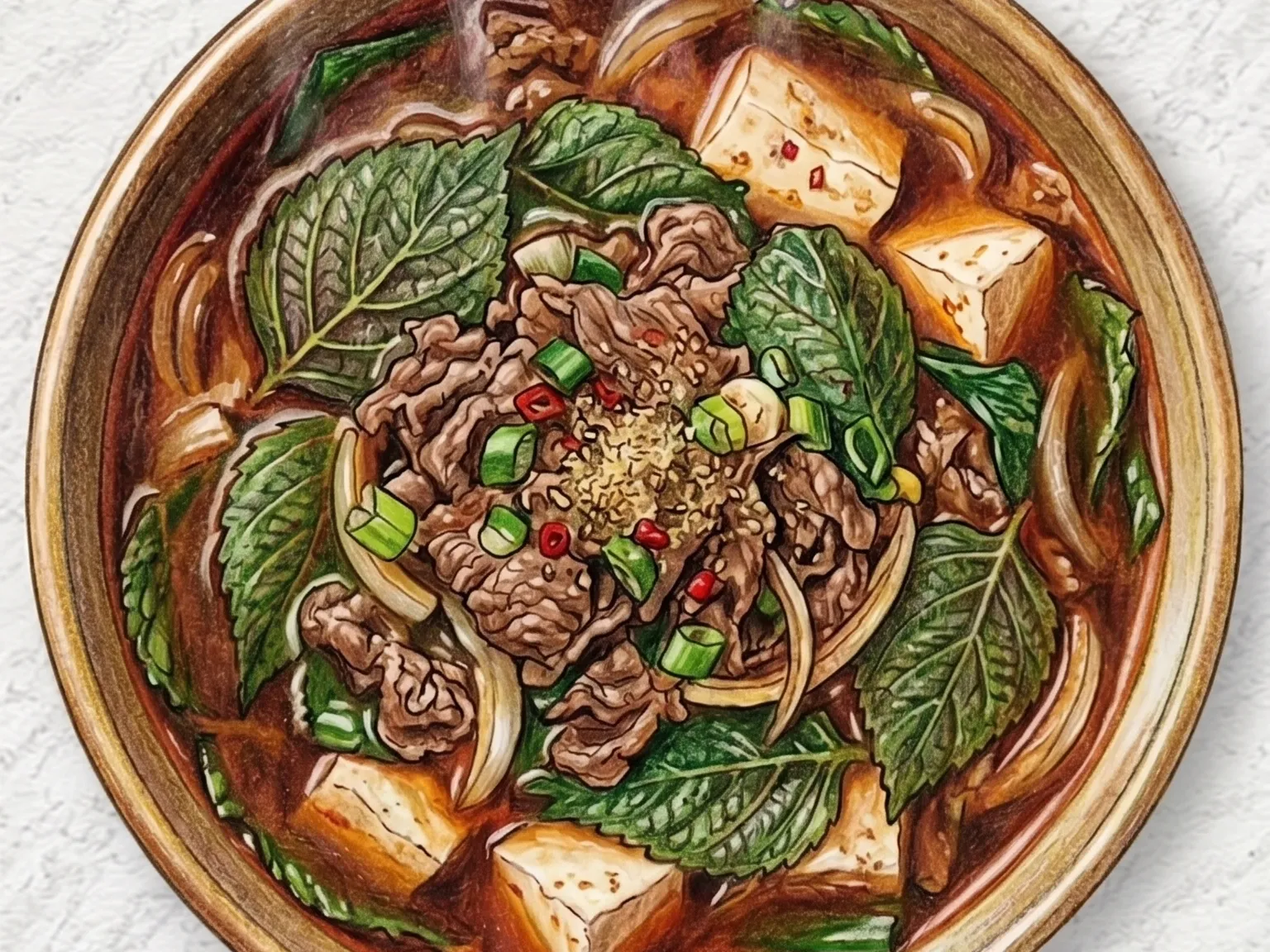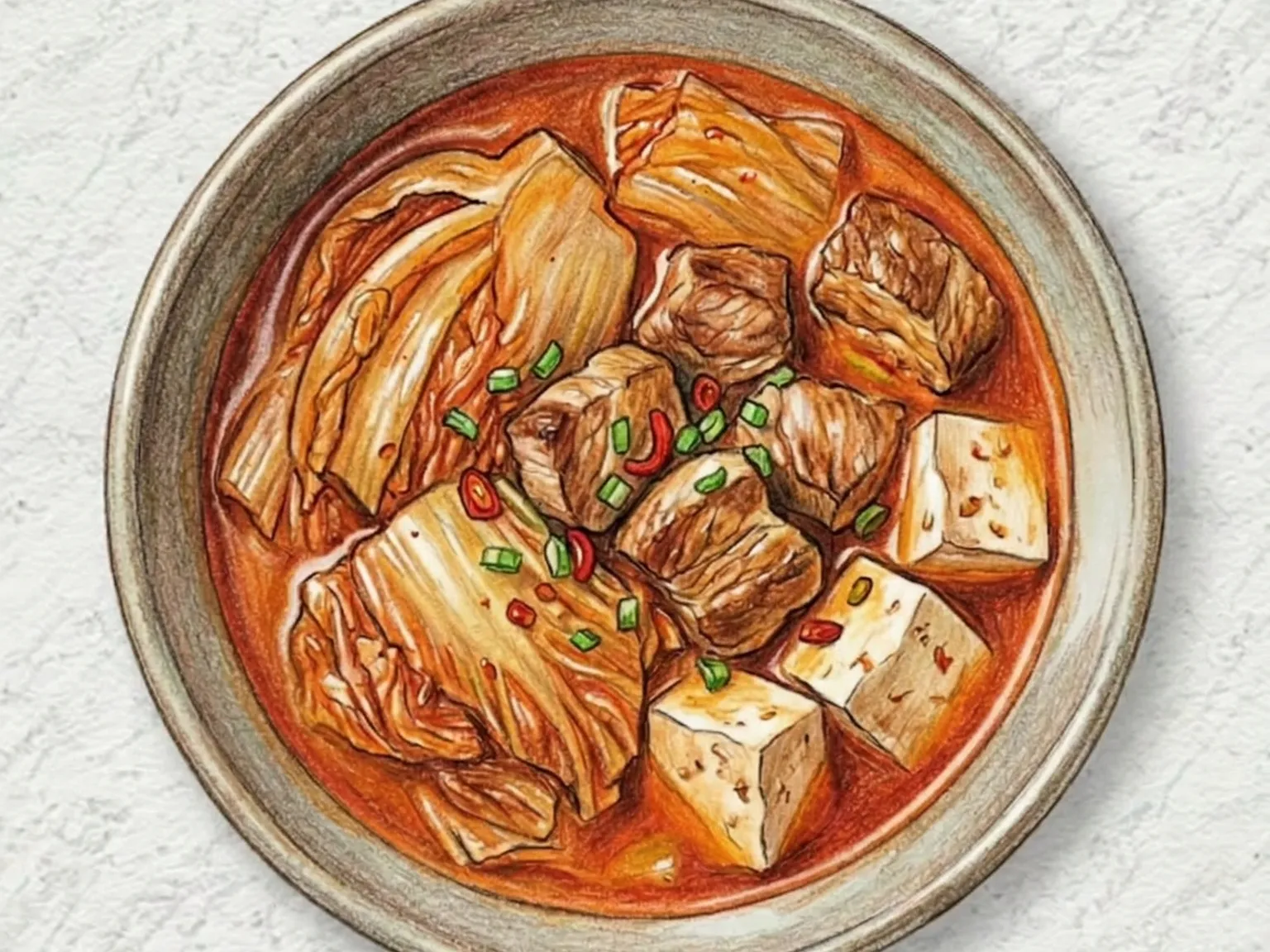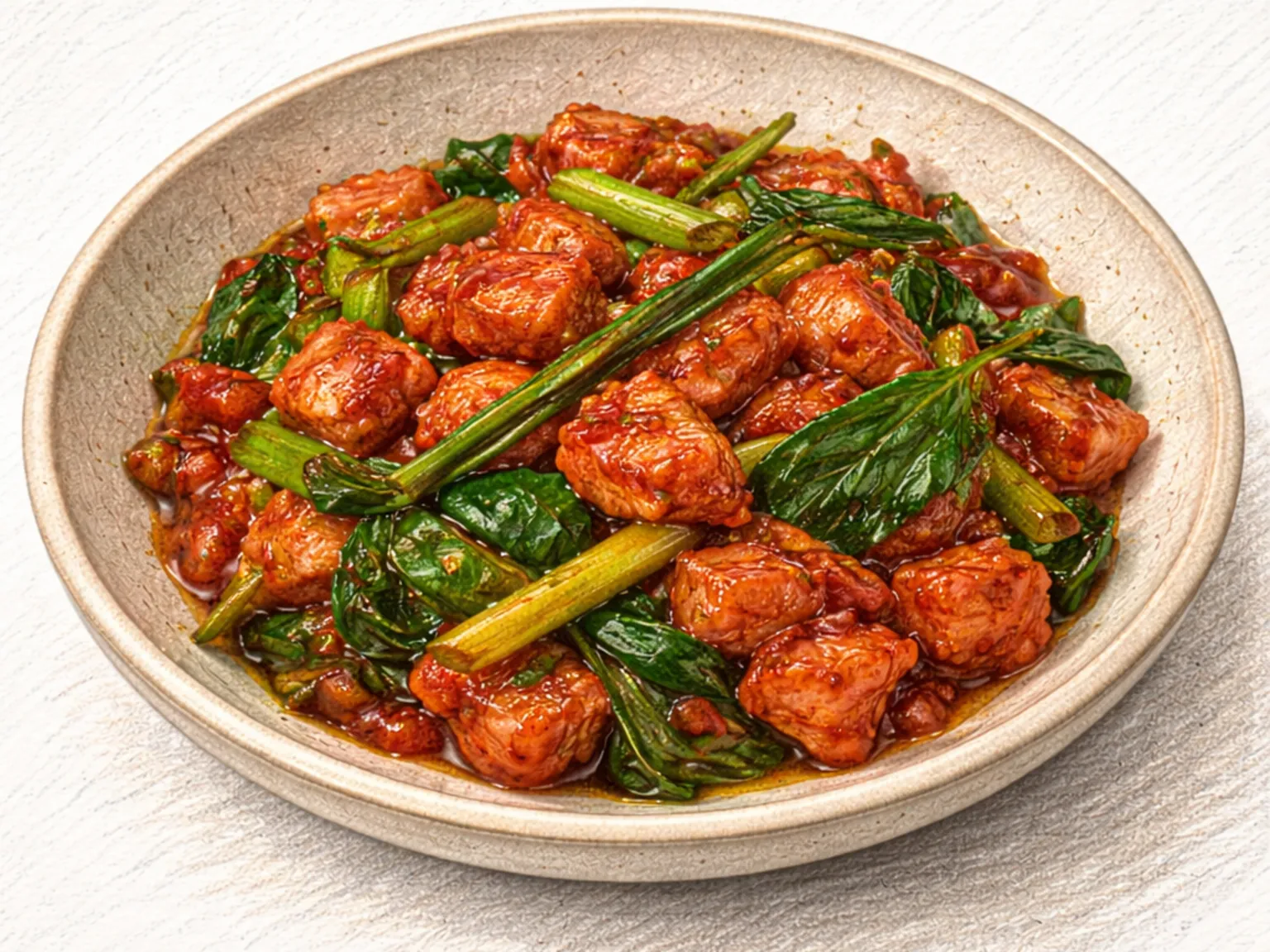
Korean Gochujang Pork Bulgogi

Korean Gochujang Pork Bulgogi

Quick answer

Gochujang dwaeji bulgogi is a Korean main course that marinates sliced pork neck in a sauce of gochujang, gochugaru, soy sauce, plum syrup, and minced garlic before stir-...

What makes this special

  • Plum syrup balances the fermented heat of gochujang in this classic spicy pork main course.
  • Maesil-cheong acidity pairs with gochujang's fermented heat for balance
  • Pork shoulder is leaner than belly and meshes well with bold gochujang seasoning
Total time
25 min
Level
Easy
Servings
2 servings
Ingredients
10
Calories
540 kcal
Protein
30 g

Key ingredients

Pork neck slicesOnionPerilla leavesGreen onionGochujang

Core cooking flow

  1. 1 Slice 380 g pork neck about 0.5 cm thick and pat off excess moisture so the marinade coats evenly.
  2. 2 Slice 120 g onion into 0.5 cm strips and cut the green onion into 5 cm lengths.
  3. 3 Heat the pan well over high heat, then spread the marinated pork in one layer.

Gochujang dwaeji bulgogi is a Korean main course that marinates sliced pork neck in a sauce of gochujang, gochugaru, soy sauce, plum syrup, and minced garlic before stir-frying over high heat. The fermented heat of gochujang provides depth and a slow burn, while the plum syrup contributes a bright tanginess that prevents the sweetness from feeling flat. Onion softens and releases its natural sugar into the sauce during cooking, rounding out the overall flavor profile. Green onion adds a fresh, pungent note throughout. Perilla leaves are added at the final moment before the heat is off, preserving the herb's volatile oils so its distinctive grassy aroma and slight bitterness remain intact. That herbal character is what cuts through the richness of the pork fat and brings the dish together. Served over rice or wrapped in lettuce leaves with rice, both presentations make a filling and well-seasoned main.

Prep 15min Cook 10min 2 servings

Instructions

Read the steps as a cooking flow: prep, heat, seasoning, doneness control, and finish.

6 steps
  1. 1
    Season

    Slice 380 g pork neck about 0.5 cm thick and pat off excess moisture so the marinade coats evenly.

    Mix gochujang, soy sauce, Korean chili flakes, minced garlic, and plum syrup, then marinate the pork for 10 minutes.

  2. 2
    Prep

    Slice 120 g onion into 0.5 cm strips and cut the green onion into 5 cm lengths.

    Fold the 8 perilla leaves, roughly slice them, and keep them separate so they can be added only at the end.

  3. 3
    Control

    Heat the pan well over high heat, then spread the marinated pork in one layer.

    Leave it untouched for 1 minute so the edges darken and the surface browns instead of releasing too much liquid.

  4. 4
    Season

    Turn and loosen the pork as you stir-fry for about 2 minutes.

    When the sauce begins to stick to the pan, lower the heat to medium-high, add the onion, and mix it through the pork.

  5. 5
    Control

    Stir-fry for 2 more minutes, until the onion turns translucent and its sweetness blends into the sauce.

    Add the green onion, toss for 1 minute until fragrant, then reduce the heat to low.

  6. 6
    Finish

    Add the perilla leaves and toss for only 10 seconds so their color and aroma stay fresh.

    Turn off the heat, drizzle 1 teaspoon sesame oil over the pork, and serve with rice or lettuce leaves.

After the steps

Pick a recipe that fits this dish.

Continue with shared ingredients, meal pairings, or a similar method.

Recipes That Go Well With This

More Stir-fry →

Based on shared ingredients and meal pairing

Korean Spicy Gochujang Bulgogi
Shared ingredient: pork neck Stir-fry

Korean Spicy Gochujang Bulgogi

Spicy gochujang pork bulgogi builds its bold flavor from a marinade of gochujang, Korean chili flakes, soy sauce, corn syrup, and garlic applied to thick-cut pork neck, then stir-fried over high heat. The gochujang delivers a deep, fermented heat while the corn syrup adds a glossy sweetness that helps the sauce caramelize on the surface of the meat. Adding chili flakes separately from the gochujang introduces a different texture and heat quality, creating a more complex spice profile than either ingredient alone would produce. Allowing the moisture to evaporate before adding the onion is important, as onion releases liquid when it hits the pan and will thin the sauce if added too early. The natural sugars in the onion contribute a mild sweetness that tempers the chili heat once the moisture has cooked off. Scoring thicker pieces of pork two or three times with a knife allows the marinade to penetrate more evenly and ensures consistent seasoning throughout. Finishing with green onion over high heat for thirty seconds adds a smoky char note while leaving a fresh aromatic lift. The recipe yields a generous four servings, making it a practical main dish for family meals or a filling for ssam wraps.

Korean Spicy Pork Stir-fry
Shared ingredient: onion Stir-fry

Korean Spicy Pork Stir-fry

Jeyuk-bokkeum is a Korean spicy pork stir-fry where sliced pork is marinated in gochujang, soy sauce, sugar, and garlic, then wok-tossed with vegetables over high heat. The marinade sinks into the meat, combining chili heat with caramelized sweetness, while onions and scallions release moisture that balances the bold seasoning. Quick cooking at high temperature lets the pork develop a lightly charred exterior that adds another layer of flavor. It is commonly served over rice as a donbap or wrapped in lettuce leaves.

Korean Pollock Roe Egg Porridge
Serve together Rice

Korean Pollock Roe Egg Porridge

Rice is simmered in anchovy stock until the grains soften and the porridge thickens, then finished with pollock roe and beaten egg. The roe dissolves into the broth and spreads its briny, savory depth throughout the bowl, while the egg forms soft curds that add body to the texture. Because pollock roe already carries significant salt, soup soy sauce is added only in small amounts at the very end to fine-tune the seasoning rather than build the base flavor. Stirring the egg in gently over low heat produces delicate, smooth curds. Rushing the egg over high heat causes it to seize into rough clumps that interrupt the silky consistency of the porridge. A drizzle of sesame oil, a scattering of dried seaweed flakes, and sliced green onion finish the bowl with a nutty fragrance and a clean finish. This is a natural choice for days when appetite is low or the stomach feels unsettled, and the roe's depth of flavor means a small number of ingredients produces a genuinely satisfying result.

Korean Spicy Pork Rice Bowl
Similar recipe Rice

Korean Spicy Pork Rice Bowl

Pork shoulder is sliced into strips, marinated in gochujang, chili flakes, soy sauce, garlic, and sugar for ten minutes, then stir-fried over high heat until the edges caramelize. Onion goes in first to build sweetness, and green onion added at the end brings a sharp, fresh bite that cuts through the spicy-sweet glaze. A final drizzle of sesame oil rounds out the aroma. Served over steamed rice, the bold sauce coats every grain, making this a satisfying single-bowl meal that comes together in under thirty minutes.

Serve with this

Korean Kimchi Mandu Jjigae (Kimchi Dumpling Stew)
Stews Easy

Korean Kimchi Mandu Jjigae (Kimchi Dumpling Stew)

Kimchi mandu jjigae drops whole frozen kimchi dumplings straight into a simmering pot of aged kimchi, tofu, and anchovy stock. The dumpling wrappers absorb the broth as they cook, swelling plump and moist, while the kimchi filling inside echoes the stew's tangy base and doubles the fermented depth. Gochugaru and soup soy sauce add a clean chili heat, and firm tofu cubes absorb the spiced broth for a softer textural contrast. Because the dumplings themselves carry seasoning, it is better to start with less sauce and adjust after tasting the broth. This is a filling, no-fuss meal that needs nothing more than a bowl of steamed rice alongside it.

🏠 Everyday ⚡ Quick
Prep 8min Cook 15min 2 servings
Gyeran-guk (Egg Drop Anchovy Broth Soup)
Soups Easy

Gyeran-guk (Egg Drop Anchovy Broth Soup)

Gyeran-guk is Korea's most accessible comfort soup: a clear, golden broth seasoned with soy sauce and garlic into which a beaten egg is drizzled in a thin stream. When the egg hits the rolling boil, it sets almost instantly into delicate, flower-like ribbons that drift through the liquid in pale yellow sheets. Sliced green onion and a drop of sesame oil added at the end bring a gentle fragrance that lifts the otherwise clean, mild broth. The result is soothing and restorative, mild enough for a sick day yet substantial enough to anchor a full meal of rice and side dishes. Its near-universal appeal on Korean dinner tables comes partly from the fact that nearly every household keeps eggs, soy sauce, and garlic on hand, making it the soup most likely to appear with no planning at all. From start to finish the bowl is ready in under ten minutes.

🏠 Everyday ⚡ Quick
Prep 5min Cook 10min 2 servings
Korean Stir-fried Dried Shrimp
Side dishes Easy

Korean Stir-fried Dried Shrimp

Geon-saeu-bokkeum transforms a handful of dried shrimp, a Korean pantry staple, into a quick, crunchy banchan that earns its reputation as a rice thief. The shrimp are dry-toasted in a pan first to drive off residual moisture, intensifying their briny aroma and building the foundation for a crisp final texture. Soy sauce, rice syrup or oligosaccharide, and garlic are added and reduced over low heat until the shrimp are wrapped in a thin, glossy sweet-salty glaze. The timing matters: the moment the syrup bubbles once, the heat must drop immediately, because leaving it even slightly too long hardens the coating into a tooth-testing shell rather than a pliable lacquer. A finish of sesame oil and whole sesame seeds adds a nutty warmth that rounds out this compact side dish. Finely sliced Cheongyang chili mixed in during the last minute produces a spicier variation, and a small handful of almonds or peanuts stirred in enriches the chew. The finished banchan keeps well in a sealed container at room temperature for several days, making it as practical as it is flavorful.

🏠 Everyday 🍱 Lunchbox
Prep 5min Cook 8min 4 servings

Similar recipes

Korean Spicy Pork Bulgogi Grill
Grilled Medium

Korean Spicy Pork Bulgogi Grill

This Korean grilled pork dish is made by marinating pork shoulder in a spicy and sweet mixture. The marinade blends gochujang, soy sauce, sugar, minced garlic, ginger juice, and sesame oil. Coating each piece individually and pressing the meat flat ensures the seasoning penetrates deeply during a thirty-minute resting period. Cooking requires a preheated grill or a heavy pan set over high heat to sear the meat quickly. Spreading the slices in a single layer prevents them from steaming. The sugars from the gochujang and sugar caramelize under high heat, creating a deep brown, flavorful crust on the pork surface. Because this coating can scorch easily, adjusting the stove to medium-high prevents burning. Serving the hot grilled pork wrapped in fresh lettuce sheets balances the smoky, seasoned meat with a crisp and hydrating vegetable texture.

🍺 Bar Snacks 🏠 Everyday
Prep 30min Cook 15min 2 servings
Korean Spicy Pork Bean Sprout Stir-fry (Kongbul)
Stir-fry Easy

Korean Spicy Pork Bean Sprout Stir-fry (Kongbul)

Kongbul is a fiery Korean stir-fry of pork shoulder tossed in a gochujang-gochugaru-soy sauce blend and cooked over high heat, with bean sprouts added at the very end to preserve their crunch. The gochujang's thick spiciness combines with rendered pork fat for an intense, mouth-coating savoriness, while the bean sprouts release just enough moisture to keep the sauce from scorching. The sprouts must be stir-fried only until barely wilted to maintain their snap. Chopped scallion goes in last, and mixing the whole thing into a bowl of rice stretches this into a full, hearty meal.

🏠 Everyday 🍱 Lunchbox
Prep 15min Cook 12min 2 servings
Korean Gochujang Grilled Chicken Legs
Grilled Medium

Korean Gochujang Grilled Chicken Legs

Gochujang dak-dari-gui is a Korean pan-grilled chicken dish in which bone-in leg quarters are marinated in a sauce of gochujang, soy sauce, oligosaccharide syrup, minced garlic, mirin, and sesame oil before being cooked in a skillet. The use of oligosaccharide syrup rather than plain sugar is deliberate - it has a lower sweetness level but higher viscosity, which helps the marinade adhere to the chicken's surface and caramelizes more slowly without burning, making it easier to develop a proper glaze. Starting the chicken skin-side down over medium heat is the foundation of the dish: pressing the skin gently against the pan renders the subcutaneous fat gradually, producing a crisp surface layer. Without sufficient rendering time, the skin stays soft and slick even when coated with the sauce later. Flipping and covering with a lid traps steam inside the pan, which drives heat into the thickest part of the meat and ensures it cooks through evenly without the outside drying out. When the lid comes off and the sauce reduces, the evaporating water concentrates the marinade's flavors and causes it to begin clinging to the meat in a thick, glossy layer. The final two minutes on high heat are the transformation point of the dish: the residual sugars in the marinade caramelize rapidly in the intense heat, and the spicy fermented depth of the gochujang, the sweetness of the syrup, and the salinity of the soy compress into a lacquered, shining glaze. Marinating in the refrigerator for at least one hour, and ideally overnight, reduces any gamey odor from the chicken and allows the seasoning to work its way deep into the muscle fibers, so that when the meat is cooked it tastes seasoned from the inside.

🍺 Bar Snacks
Prep 20min Cook 30min 4 servings

Tips

Add perilla leaves at the end to keep their fragrance.
If less sweet, add 1 tsp more plum syrup.

Nutrition (per serving)

Calories
540
kcal
Protein
30
g
Carbs
12
g
Fat
39
g