Gochujang Eggplant Ricotta Lasagna Rolls
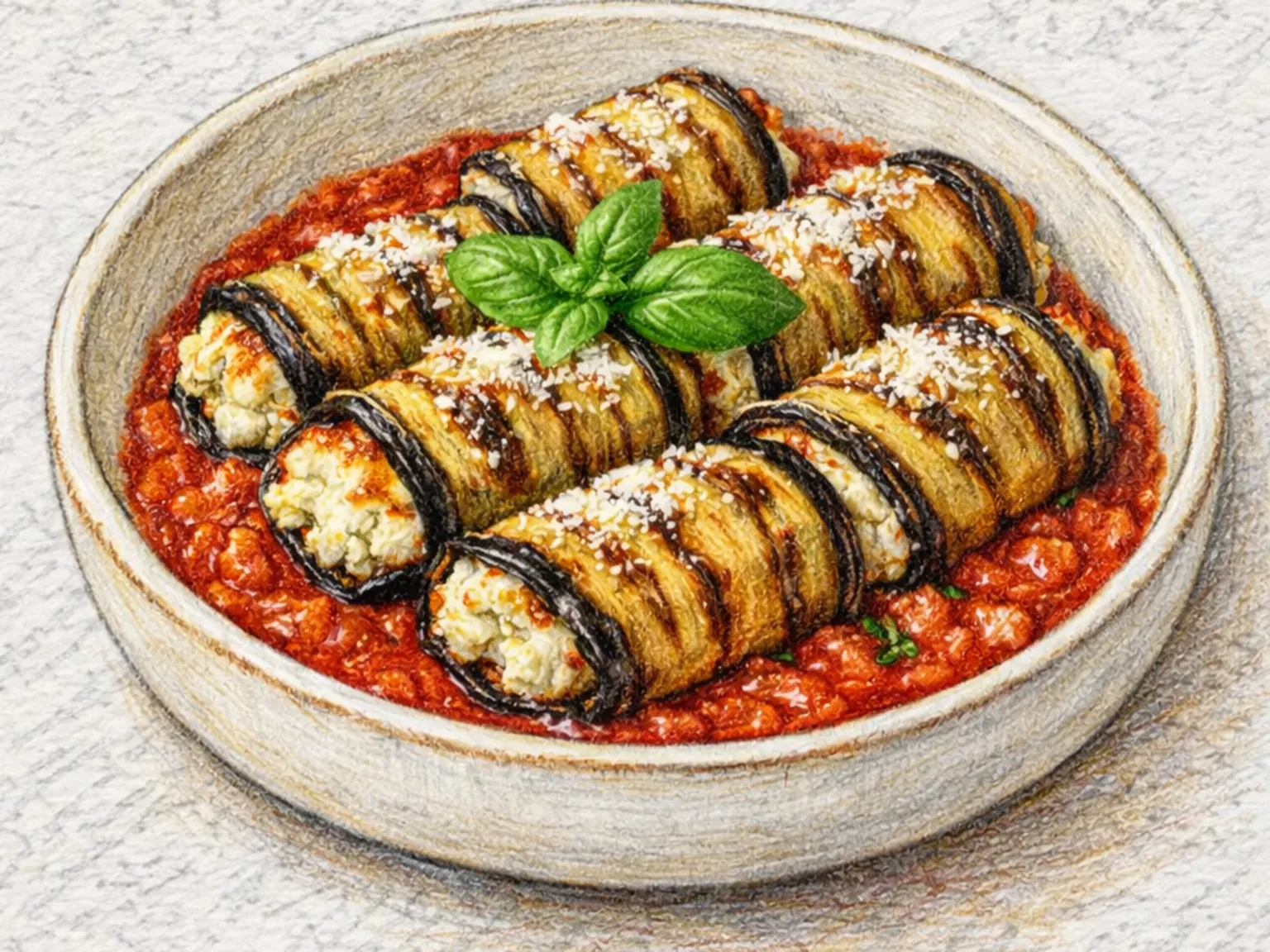
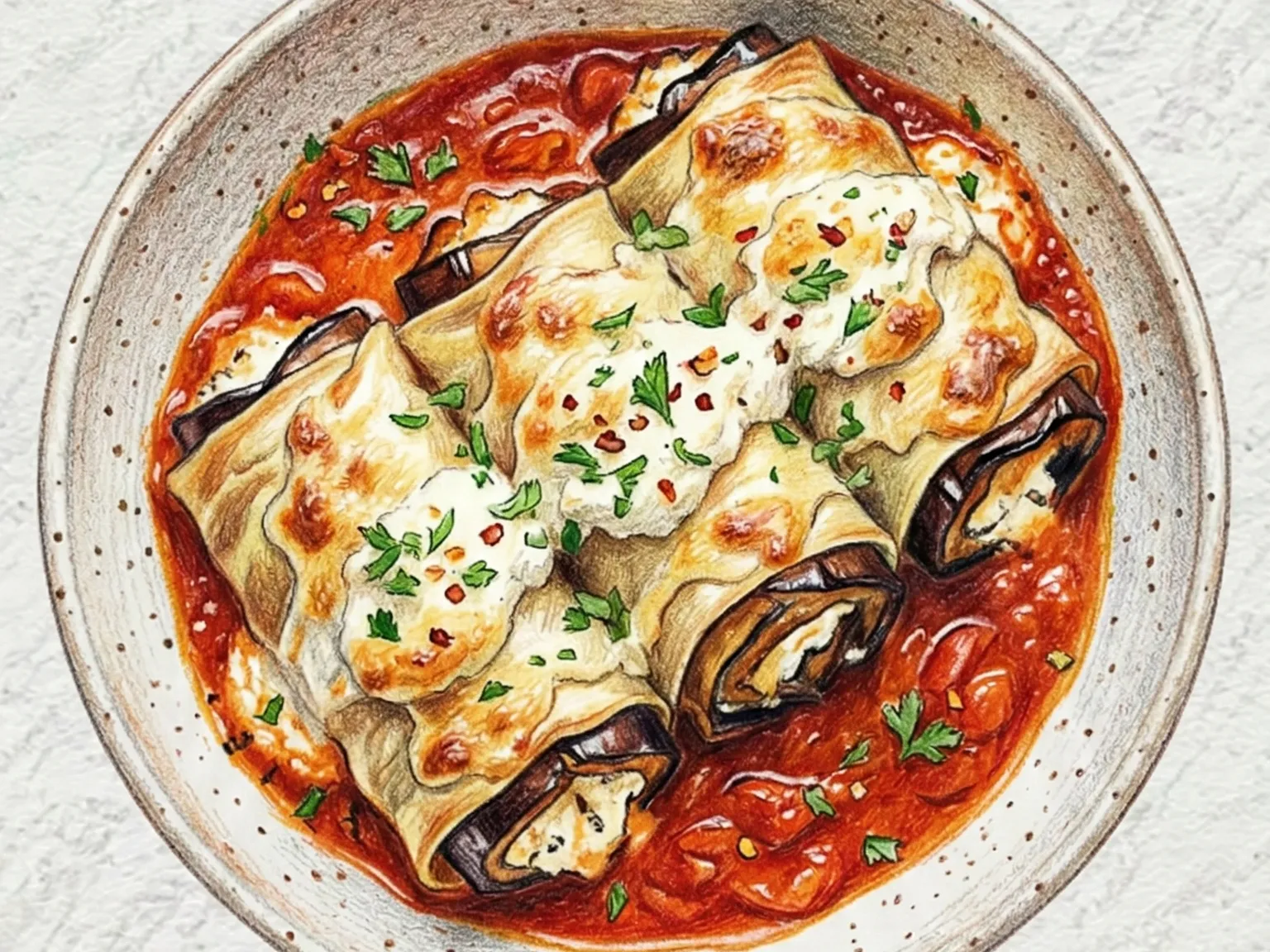
Gochujang eggplant ricotta lasagna rolls roast diced eggplant at 200 degrees Celsius with olive oil and salt until the flesh turns creamy, then spread the roasted eggplant with ricotta onto boiled lasagna sheets, roll them up, and bake under a spicy gochujang-tomato sauce. Roasting the eggplant for fifteen minutes collapses its cellular structure, driving out water and concentrating its mild sweetness. The tomato sauce is built by sauteing onion and garlic, then simmering tomato puree with gochujang and dried oregano for ten minutes until the heat from the chili paste integrates with the tomato's acidity. Mozzarella melted over the assembled rolls forms a browned, crisp cap during the final bake, while the filling inside stays moist and soft. The contrast between the crunchy cheese top and the tender eggplant-ricotta interior defines the texture of each slice.
Adjust Servings
Instructions
- 1
Dice eggplant, toss with 1 tbsp olive oil and a pinch of salt, then roast at 200C for 15 minutes.
- 2
Sauté onion and garlic, then add tomato puree, gochujang, and oregano; simmer 10 minutes.
- 3
Mix ricotta with half of the roasted eggplant and a pinch of salt for the filling.
- 4
Boil lasagna sheets, drain, spread filling, and roll tightly into spirals.
- 5
Spread sauce in a baking dish, place rolls, then top with remaining eggplant and mozzarella.
- 6
Bake at 190C for 20 minutes, rest 5 minutes, then slice and serve.
As an Amazon Associate, we may earn from qualifying purchases.
Tips
Nutrition (per serving)
More Recipes

Gochujang Vongole Linguine
Gochujang vongole linguine pairs briny Manila clams with the fermented kick of Korean red chili paste in a single pan sauce. White wine steams the clams open and creates a seafood liquor that becomes the foundation of the sauce, while gochujang dissolves into it, adding a layer of spicy complexity absent from traditional vongole. A knob of butter stirred in at the end gives the sauce a glossy sheen, and parsley plus black pepper sharpen the finish. Slicing garlic thin and toasting it slowly in olive oil is key to building the aromatic backbone.

Gochujang Cream Pasta (Spicy Fermented Chili Cream Sauce)
Gochujang cream pasta merges Italian cream sauce with the fermented heat of Korean red chili paste. Heavy cream and parmesan form a velvety base, while gochujang layers in umami depth and a slow-building spice that lingers without overwhelming. Bacon renders its salt and fat into the sauce, and sauteed onion and garlic supply an aromatic sweetness underneath. Adjusting consistency with starchy pasta water brings the sauce to a glossy, clinging texture that coats each strand evenly.

Ricotta Spinach Stuffed Shells
Ricotta spinach stuffed shells fill jumbo pasta shells with a mixture of ricotta cheese, blanched spinach, egg, and Parmesan, then bake them in tomato sauce under a layer of melted mozzarella. Squeezing all excess water from the blanched spinach is the critical step - soggy filling makes the shells slide apart and dilutes the sauce underneath. The egg in the filling acts as a binder that firms up during baking, holding the ricotta and spinach together as a cohesive mass inside each shell. Even shells that tear during boiling can be placed on the sauce and baked without issue - the sauce supports them and the cheese covers any imperfections. A generous layer of tomato sauce on the bottom of the baking dish prevents the shells from drying out, while 20 minutes at 190 degrees Celsius melts the mozzarella into a soft, stretchy cap.

Baked Lasagna
Baked lasagna stacks wide pasta sheets between layers of slow-cooked beef Bolognese sauce and a trio of cheeses: ricotta, mozzarella, and Parmesan. The assembly begins with a thin coat of tomato sauce on the bottom of the dish, followed by alternating layers of noodles, meat sauce, and cheese. Ricotta contributes a mild, creamy layer that tempers the acidity of the tomato base, while mozzarella melts into stretchy threads that bind the layers together. Parmesan scattered across the top develops a golden-brown crust after forty-five minutes in the oven. Making the dish a day in advance and refrigerating it overnight allows the sauce to absorb into the pasta for a more cohesive texture. Leftovers reheat well, which makes lasagna a practical choice for meal preparation.

Gochujang Beef Ragu Rigatoni
Gochujang beef ragu rigatoni sears ground beef hard over high heat to develop a deep browned crust, then adds gochujang and tomato puree with red wine for a twenty-minute simmer on medium-low heat. Leaving the beef undisturbed in the pan until a crust forms is essential - stirring too early releases moisture and prevents browning. Frying the gochujang in oil for one minute draws out its sweet fermented umami, which pairs naturally with the tomato's acidity. The red wine reduces and leaves behind a fruity complexity that layers into the ragu's depth. Rigatoni is boiled one minute short of al dente, then finished in the sauce pan with pasta water so the starch integrates into the sauce and coats the tubes both inside and out with a glossy, clinging finish.

Pasta alla Norma (Sicilian Fried Eggplant Tomato Pasta)
Pasta alla Norma originates from Catania in Sicily and combines fried eggplant cubes with a simple tomato passata sauce. Salting the eggplant beforehand draws out moisture and bitterness, resulting in firmer pieces that absorb less oil during cooking. Garlic provides aromatic depth, while fresh basil added off-heat preserves its fragrance. The dish is named after Vincenzo Bellini's opera Norma, a tribute to its status as a Sicilian culinary masterpiece.