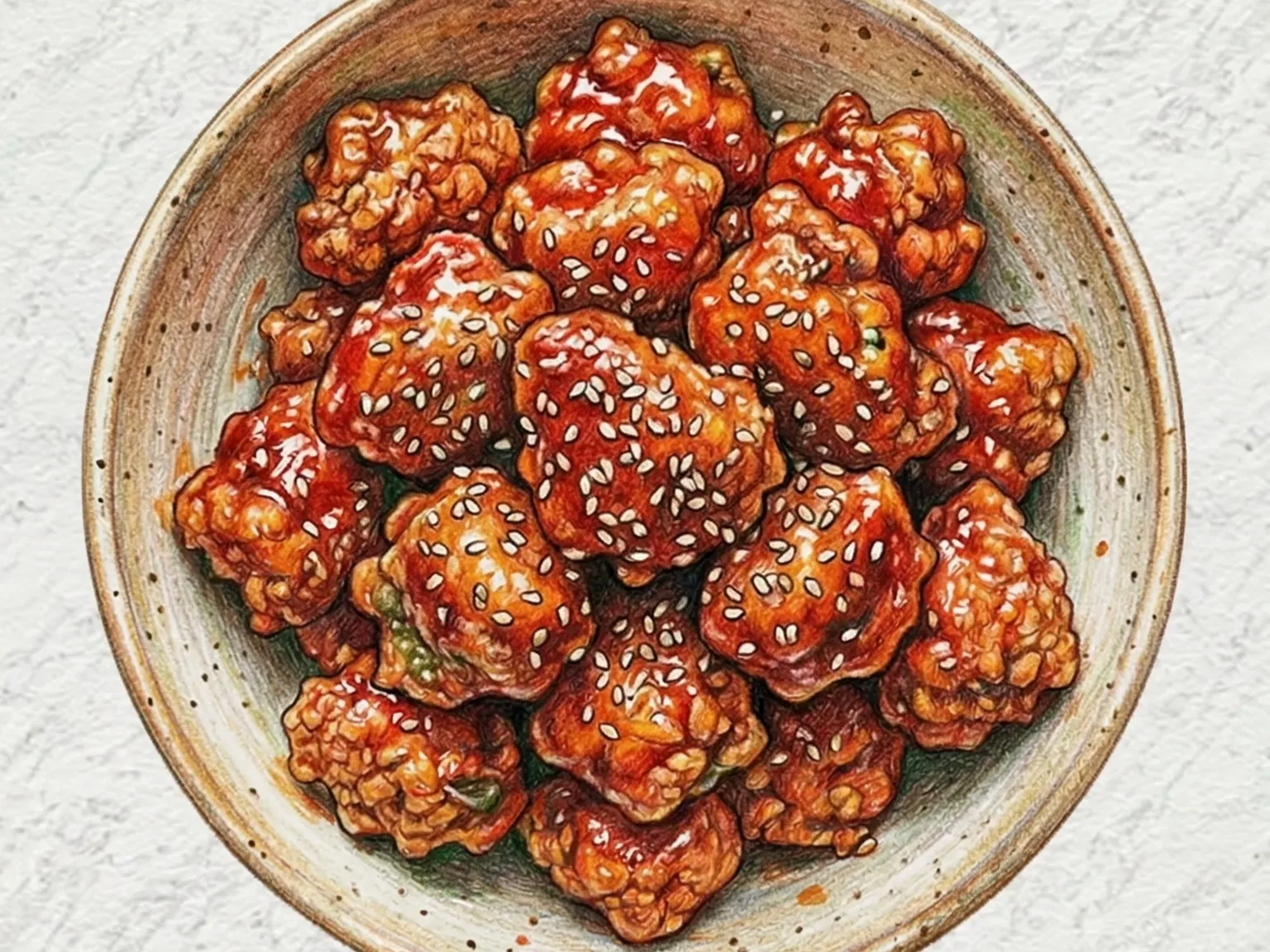
Korean Gochujang Honey Dakgangjeong
Gochujang honey dakgangjeong starts with bite-sized boneless chicken thigh pieces coated in potato starch and double-fried - first at 170 degrees, then at 180 degrees - before being tossed in a glaze of gochujang, honey, soy sauce, and garlic. The two-stage frying builds a rigid starch shell that stays crunchy even after saucing, while the thigh meat's natural fat keeps the interior moist. The glaze balances gochujang's fermented heat against honey's dense sweetness, with soy sauce anchoring the saltiness and sesame seeds adding a finishing nuttiness. The sauce must be reduced quickly - under one minute on high heat - to achieve a glossy coat without burning.
Adjust Servings
Instructions
- 1
Cut chicken thighs into bite-size pieces and season with salt and pepper.
- 2
Coat chicken evenly with potato starch and rest 5 minutes.
- 3
Deep-fry at 170C for 4 minutes for the first fry, then remove.
- 4
Increase to 180C and fry 1-2 more minutes for extra crispness.
- 5
Simmer gochujang, honey, soy sauce, and garlic, then toss chicken in the glaze.
- 6
Sprinkle sesame seeds and serve immediately.
As an Amazon Associate, we may earn from qualifying purchases.
Tips
Nutrition (per serving)
More Recipes

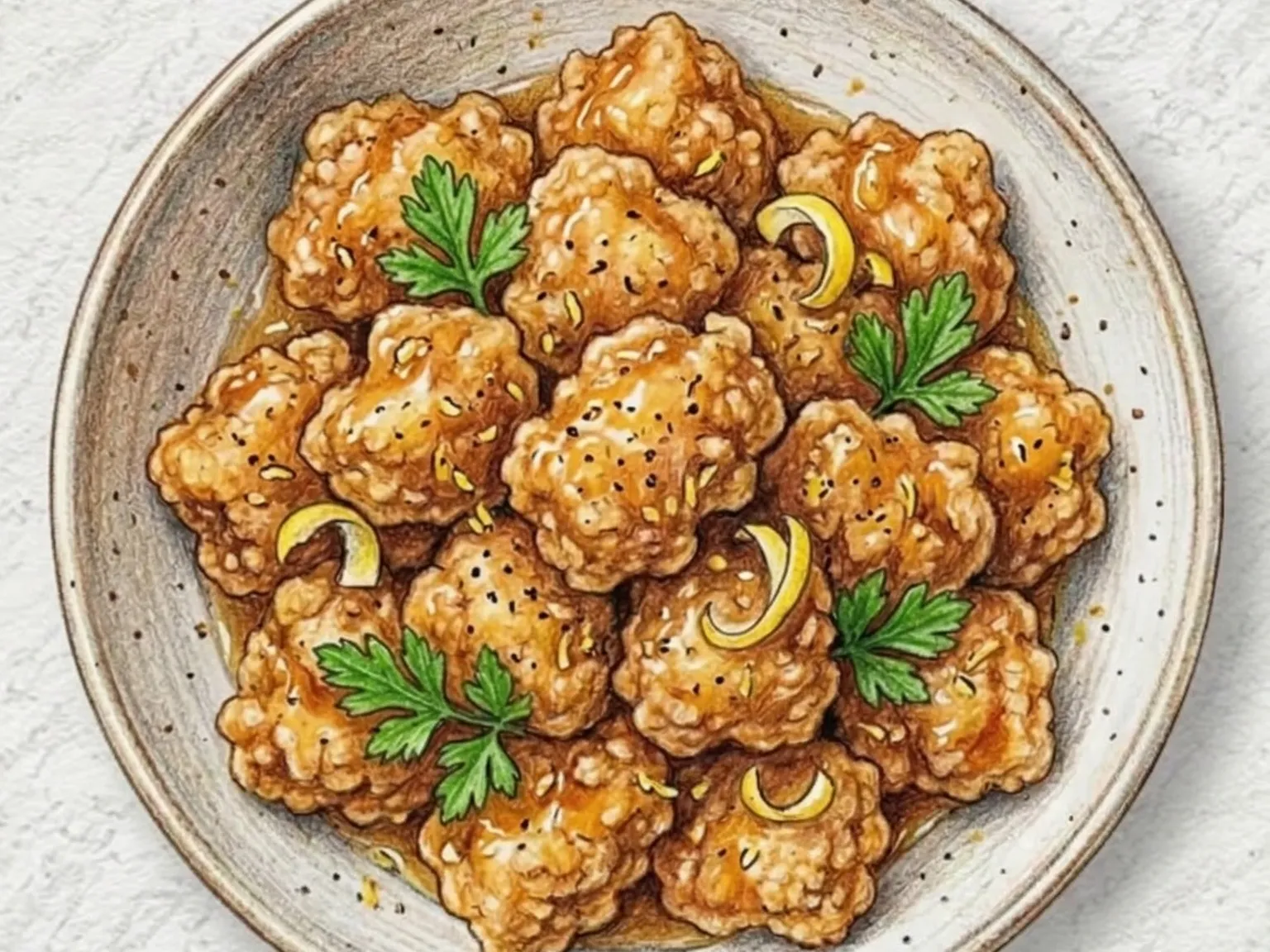
Korean Lemon Pepper Dakgangjeong
Bite-size boneless chicken thigh pieces are coated in potato starch and double-fried, first at 170 then at 180 degrees Celsius, before being tossed in a quick glaze of lemon juice, honey, and soy sauce. The bright citrus acidity cuts through the fried richness, while cracked black pepper lingers on the finish. The glaze must be applied in under 20 seconds to preserve the crunch of the double-fried crust.

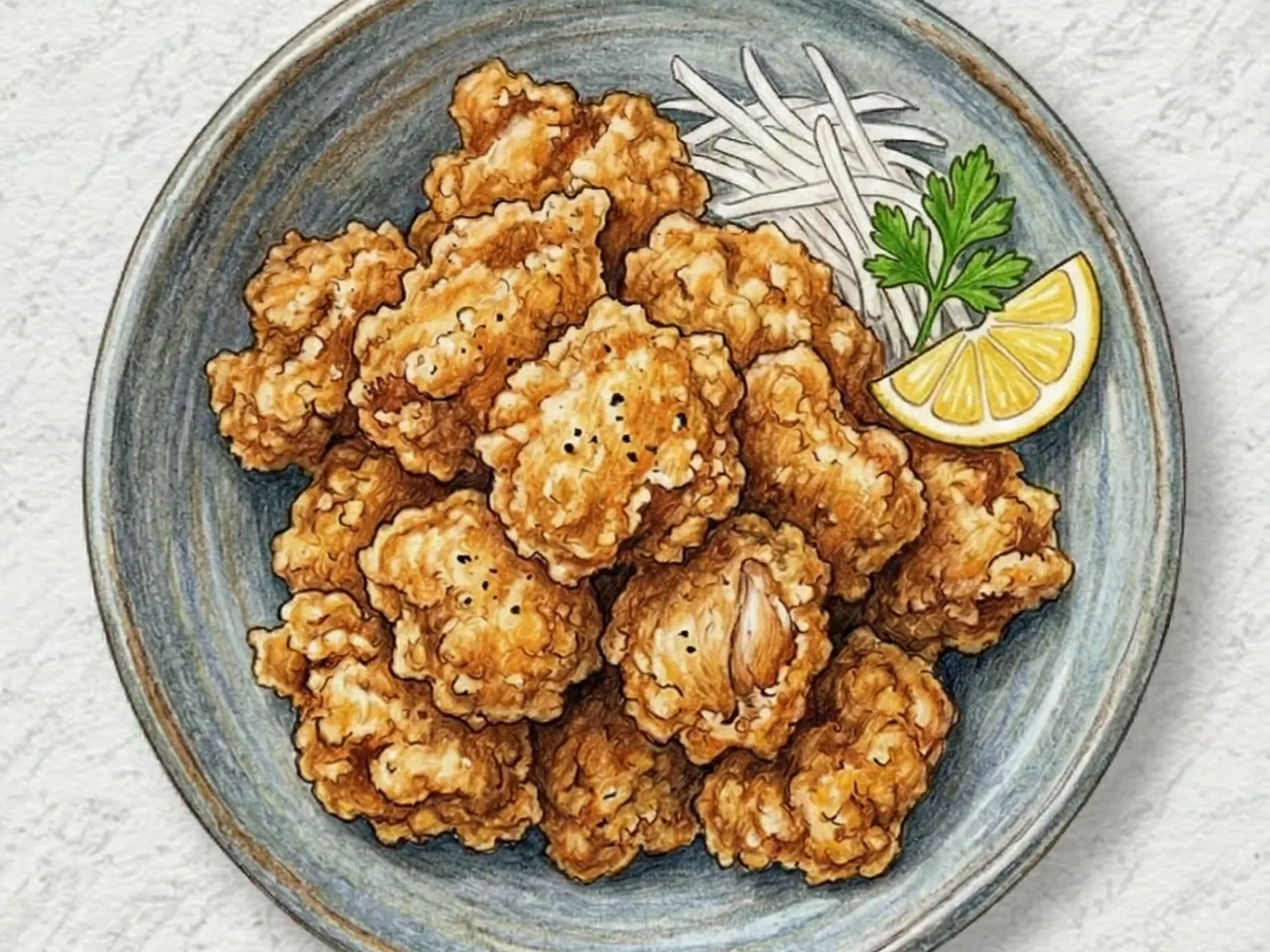
Korean Soy Garlic Dakgangjeong
Soy-garlic dakgangjeong is Korean fried chicken made from boneless thigh pieces coated in potato starch and double-fried, then tossed in a glossy sauce of soy sauce, minced garlic, oligosaccharide syrup, and vinegar. The first fry cooks the meat through while the second at higher temperature sets the crust hard enough to hold up under the wet glaze. The sauce is reduced only briefly to keep the saltiness in check, and vinegar cuts any greasiness while leaving a clean finish. A final sprinkle of sesame seeds adds a nutty aroma and textural accent against the lacquered surface.

Korean Sweet Spicy Dakgangjeong
Yangnyeom dakgangjeong is Korean sweet-spicy fried chicken made by cutting boneless thigh meat into bite-sized pieces, coating them in potato starch, and double-frying: first at 170 degrees Celsius to cook through, then at 185 degrees for a second pass that drives off residual moisture and locks the crust. The glaze is a reduction of gochujang, gochugaru, corn syrup, and soy sauce simmered until thick enough to cling without dripping. Tossing the twice-fried chicken in the sauce must happen quickly, off the heat and within twenty seconds, to coat evenly while the crust is still intact. The result is a shell that stays audibly crunchy under a sticky, glossy layer of sweet-spicy glaze even after it cools.

Korean Potato Fritters
Gamja twigim coats sliced or shredded potatoes in a batter of frying mix and cold water, then deep-fries them until golden and crisp. Soaking the cut potatoes in cold water to wash off surface starch results in a crunchier finish after frying, and keeping the batter coat thin lets the potato's own starchy sweetness come through. Thick-cut slices yield a fluffy interior beneath the crust, while shredded potatoes tangle together into a chip-like, airy cluster. A simple dusting of salt is enough to bring out the potato flavor, and Korean fritter shops typically serve these alongside chili pepper and perilla leaf tempura as part of a mixed platter.

Korean Grilled Chicken Skewers
Dak-kkochi-gui is a Korean grilled chicken skewer inspired by street-stall cooking, made by threading bite-sized pieces of chicken breast or thigh onto bamboo sticks and brushing them with a sauce of gochujang, soy sauce, honey, and minced garlic. Thigh meat works best because its higher fat content resists drying out over direct heat, and applying the glaze in two or three separate coats builds up a thick, sticky, caramelized layer. Cutting the chicken into uniform cubes ensures every piece finishes cooking at the same time, and alternating with slices of green onion or bell pepper between the meat adds moisture and color. The interplay of gochujang's fermented heat and honey's sweetness against charcoal smoke captures the unmistakable flavor of Korean street food.

Korean Grilled Fish Cake Skewers
Sticky, sweet-spicy, and irresistibly snackable - these Korean grilled fish cake skewers are the street food you will not stop eating. Flat fish cake sheets are folded in zigzag layers onto wooden sticks, grilled, then brushed with a glossy soy-gochujang glaze. Folding the sheets before skewering increases the surface area for glaze and creates layered thickness that gives each bite a bouncy, concentrated chew. Dry-grilling the skewers first without oil drives off surface moisture so the sauce clings tightly when brushed on, and a final brief sear after glazing caramelizes the sugars into a glossy sheen. Threading pieces of green onion between the folds lets their moisture steam away during grilling, infusing the fish cake with a sweet, mellow onion fragrance.