Korean Red Pepper Paste Stew
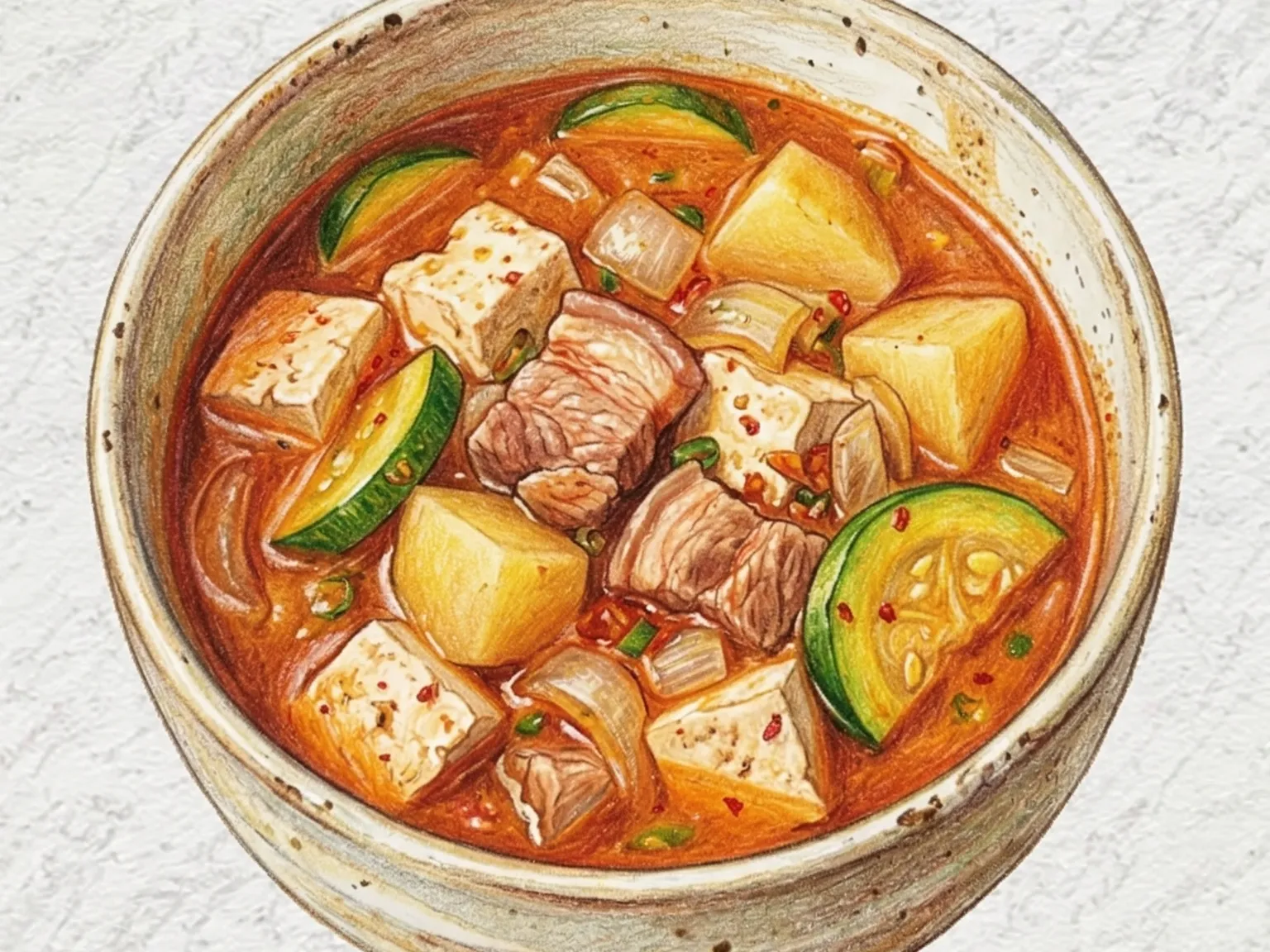
Gochujang jjigae uses Korean chili paste as its primary seasoning, producing a broth that is both spicy and subtly sweet. Pork shoulder simmers in the base, contributing its fat and flavor to the soup. Potato, zucchini, tofu, and onion fill out the pot generously. With gochugaru and soy sauce supporting the main gochujang seasoning, the stew offers a different flavor profile from the more common doenjang-based stews.
Adjust Servings
Instructions
- 1
Cut 150g pork into bite-size, dice potato, and cut zucchini and onion into bite-size.
- 2
Oil the pot and stir-fry pork on medium heat for 3 minutes until surface is cooked.
- 3
Add 2 tbsp gochujang, 0.5 tbsp gochugaru, 0.5 tbsp soy sauce, and garlic. Stir-fry 1 minute.
- 4
Add 600ml water and potato, boil on high, then reduce to medium and simmer 10 minutes.
- 5
Add tofu, zucchini, and onion. Simmer 5 more minutes.
- 6
Add green onion and cook 1 more minute to finish.
As an Amazon Associate, we may earn from qualifying purchases.
Tips
Nutrition (per serving)
More Recipes

Korean Zucchini Pork Stew
Aehobak-jjigae is a home-style Korean stew that builds bold flavor from modest ingredients - pork, zucchini, and a spoonful each of gochujang and gochugaru. The pork is stir-fried first with garlic to render fat and build a savory fond at the bottom of the pot, then the chili paste is toasted into the fat before anchovy broth goes in. This layering technique gives the broth a depth that plain boiling cannot achieve. The zucchini cooks in the simmering liquid for just six minutes, softening into the stew while keeping enough structure to hold its half-moon shape. The broth finishes spicy and slightly sweet from the pork fat and vegetable sugars, with enough body to soak into a bowl of rice. A reliable weeknight meal that requires no special ingredients beyond a basic Korean pantry.

Korean Pork Gochujang Jjigae
This pork-focused gochujang stew blends chili paste with a half-tablespoon of doenjang, balancing the heat with fermented soybean depth. A full tablespoon of gochugaru intensifies the color and spice level. The 180 grams of pork shoulder render their juices into 700ml of broth, while potato, zucchini, onion, and tofu ensure variety in every bite. The combination of two fermented pastes gives this version a more complex flavor than a pure gochujang stew.

Korean Pork Kimchi Stew (Fermented Kimchi & Pork Shoulder)
Pork kimchi jjigae is one of the most beloved home-cooked Korean stews, built on aged kimchi and pork shoulder. The marbled fat from the pork shoulder melts into the broth, balancing the kimchi's sharp acidity with richness. Tofu and onion bulk up the pot, while soup soy sauce and chili flakes season the liquid. The riper and more sour the kimchi, the better this stew tastes - it is the ideal use for old kimchi.

Korean Brisket Soybean Paste Stew
This version of doenjang jjigae adds thinly sliced beef brisket to the classic soybean paste stew. The marbled brisket renders its fat into the rice-rinsing water base, giving the broth a richer, more full-bodied character than the standard recipe. Potato, zucchini, tofu, and a cheongyang chili round out the pot, making each spoonful a mix of creamy, starchy, and spicy elements.

Korean Gochujang Pork Bulgogi
Gochujang dwaeji bulgogi marinates pork neck in gochujang, soy sauce, chili flakes, garlic, and plum syrup, then stir-fries it over high heat for an intensely flavored main course. The plum syrup provides a bright, tangy sweetness that counterbalances the fermented heat of gochujang. Perilla leaves are tossed in at the very end, their herbal aroma cutting through the richness of the pork and adding a distinctive Korean fragrance. Onion melts into the sauce for rounded sweetness while green onion contributes a fresh bite. It is excellent served over rice or wrapped in lettuce leaves for contrasting textures.

Korean Spicy Pork Rice Bowl
Pork shoulder is sliced into strips, marinated in gochujang, chili flakes, soy sauce, garlic, and sugar for ten minutes, then stir-fried over high heat until the edges caramelize. Onion goes in first to build sweetness, and green onion added at the end brings a sharp, fresh bite that cuts through the spicy-sweet glaze. A final drizzle of sesame oil rounds out the aroma. Served over steamed rice, the bold sauce coats every grain, making this a satisfying single-bowl meal that comes together in under thirty minutes.