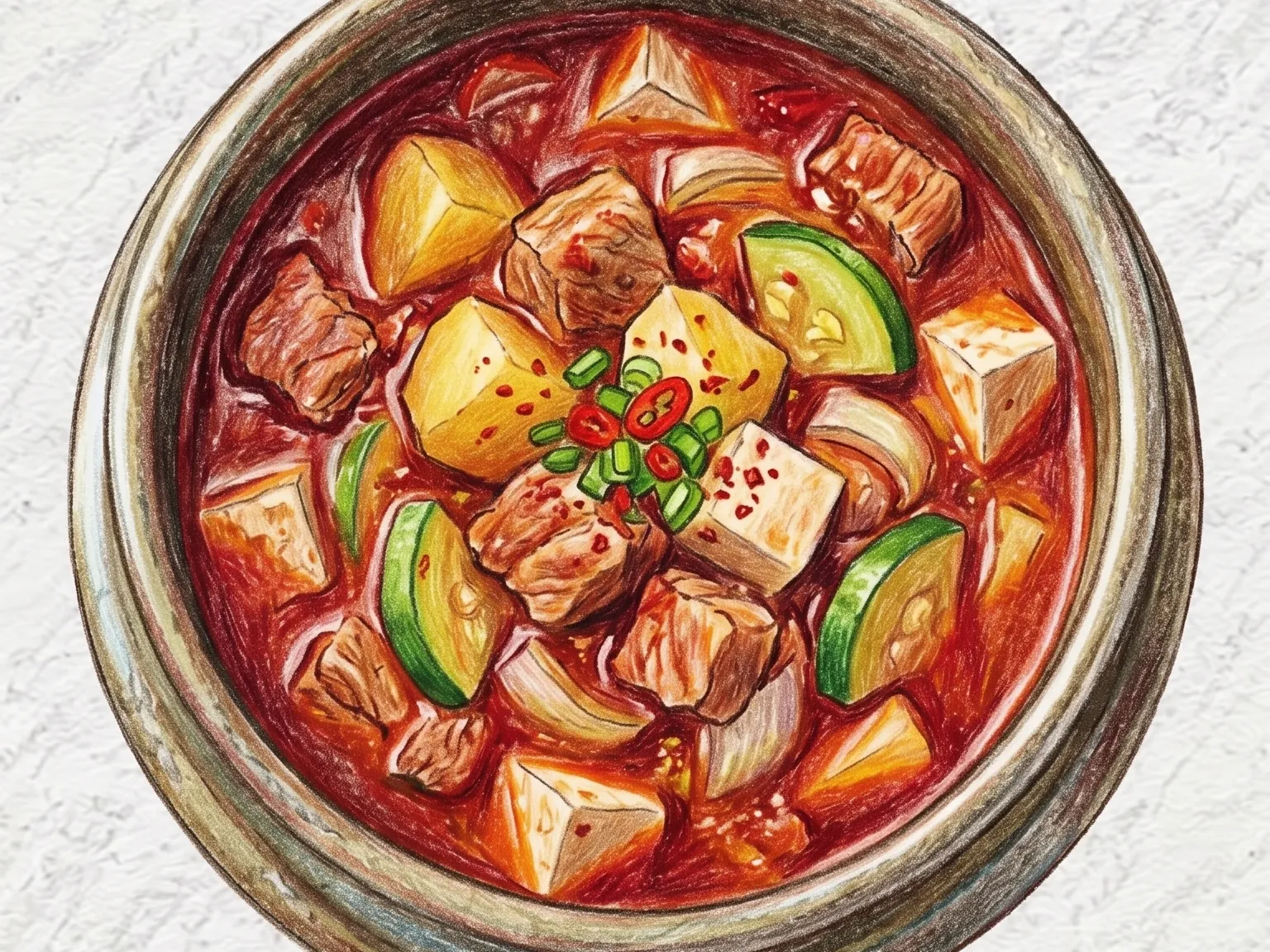
Korean Pork Gochujang Jjigae
Stir-fry 180 g pork shoulder over medium heat for about 3 minutes, then add 1 1/2 tbsp gochujang, 1/2 tbsp doenjang, 1 tbsp Korean chili flakes, and 1 tsp minced garlic and stir over low heat for only 1 minute so the pastes do not burn. Pour in 700 ml water gradually, simmer the potato and onion for about 10 minutes, then add the zucchini and tofu for 6 to 7 minutes more. The stew is done when the potato is tender and the broth has thickened slightly.
Quick answer
- Total time
- 35 min
- Level
- Easy
- Servings
- 2 servings
- Ingredients
- 10
About this dish
Half a tablespoon of doenjang goes into the gochujang seasoning, smoothing the sharp edge gochujang has on its own into something more savory.
Read more
The pastes are fried in the pork fat over low heat for just a minute.
Ingredients
Instructions
- 1
Cut the 180 g pork shoulder into bite-size pieces.
Dice the potato, zucchini, onion, and tofu into pieces about 2 cm wide, keeping the tofu separate so it can go in later without breaking apart.
- 2
Heat a pot over medium heat, then add the pork and stir-fry for about 3 minutes.
Move it often so it does not stick, and continue until the surface turns opaque and some fat begins to render.
- 3
Add 1.5 tablespoons gochujang, 0.5 tablespoon doenjang, 1 tablespoon gochugaru, and 1 teaspoon minced garlic.
Lower the heat to low and stir for only 1 minute so the pastes bloom without burning.
- 4
Pour in the 700 ml water gradually while stirring to dissolve the seasoning into the liquid.
Add the potato and onion, bring the pot to a boil over high heat, then reduce to medium once it bubbles steadily.
- 5
Simmer for about 10 minutes, until the edges of the potato pieces start to look slightly translucent.
If the broth reduces too quickly or splashes hard, lower the heat to prevent sticking on the bottom.
- 6
Add the zucchini and tofu, then simmer for 6 to 7 more minutes.
Stop when the potato is tender, the zucchini is cooked but not mushy, and the broth looks slightly thickened, then serve hot.
Use-up ingredient planner
Turn these ingredients into two more meals
The overlap excludes basic seasonings. Open the next recipe and your selected dishes will stay with you.
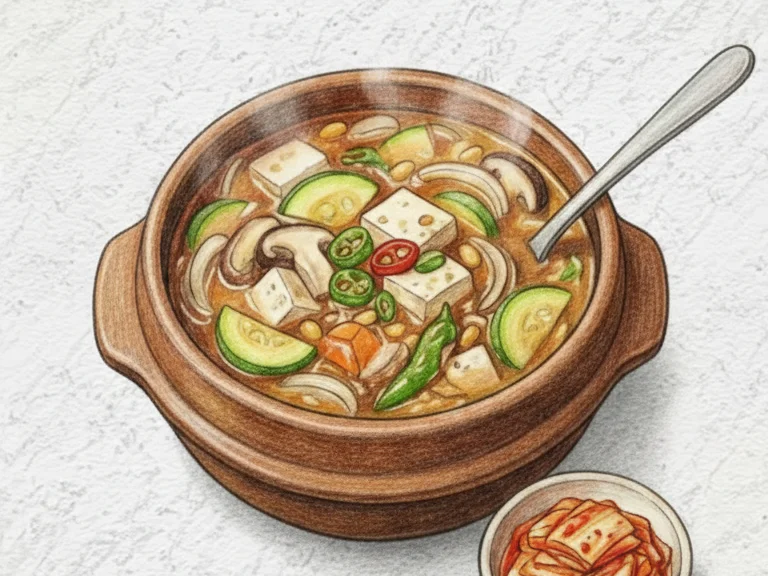
Korean Soybean Paste Stew
Potato, Zucchini
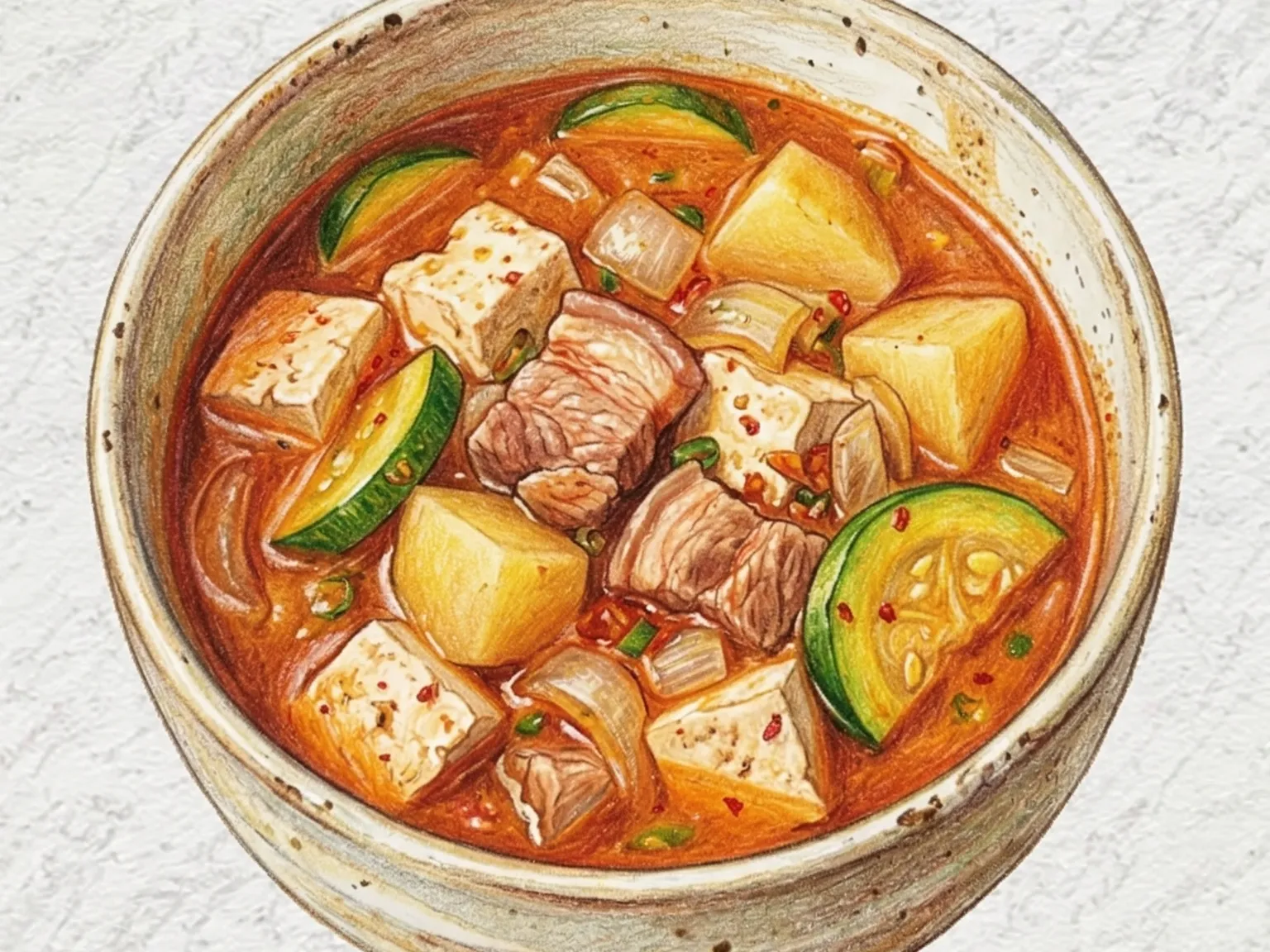
Korean Red Pepper Paste Stew
Potato, Zucchini
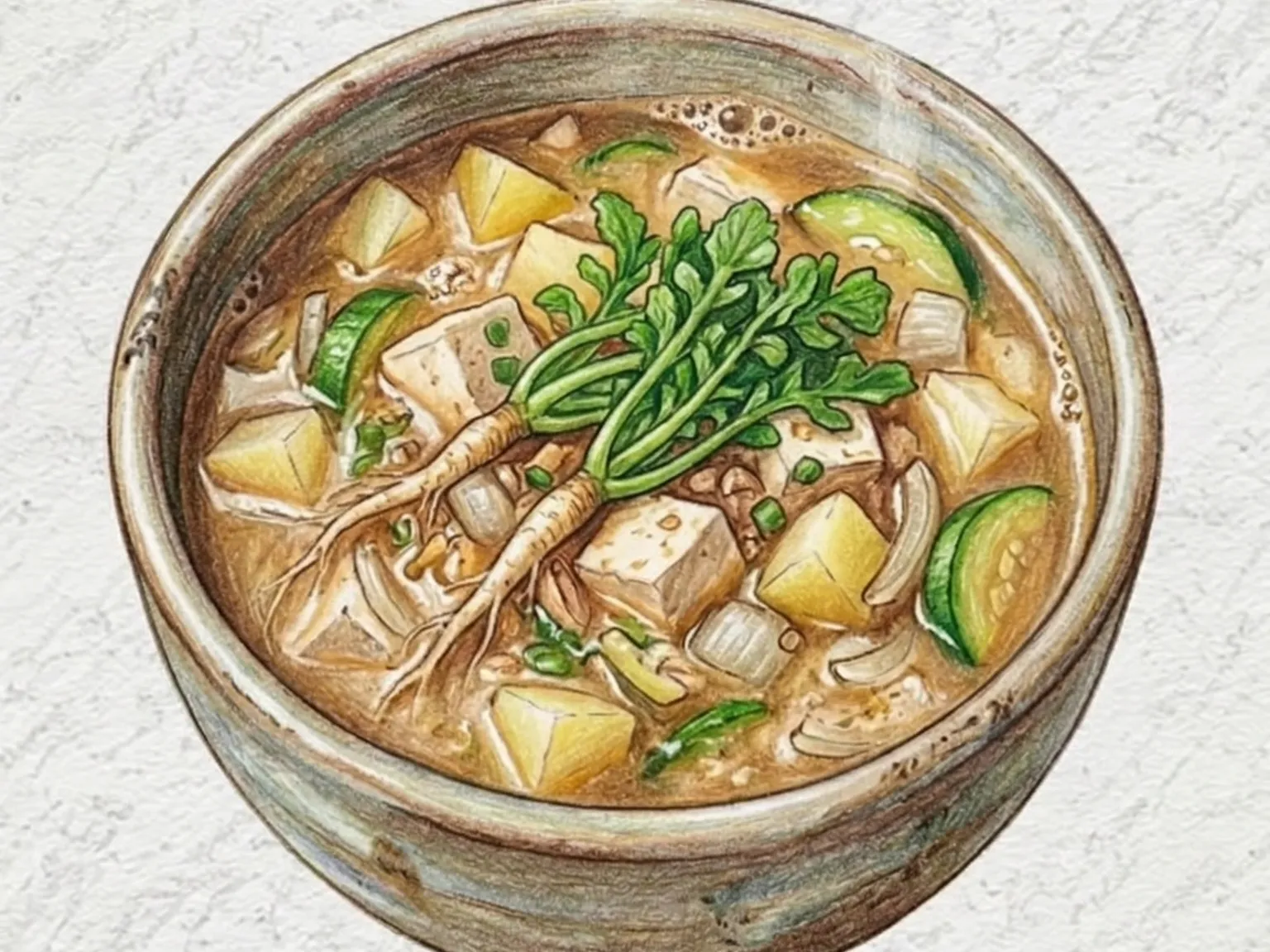
Korean Shepherd's Purse Doenjang Jjigae
Potato, Zucchini