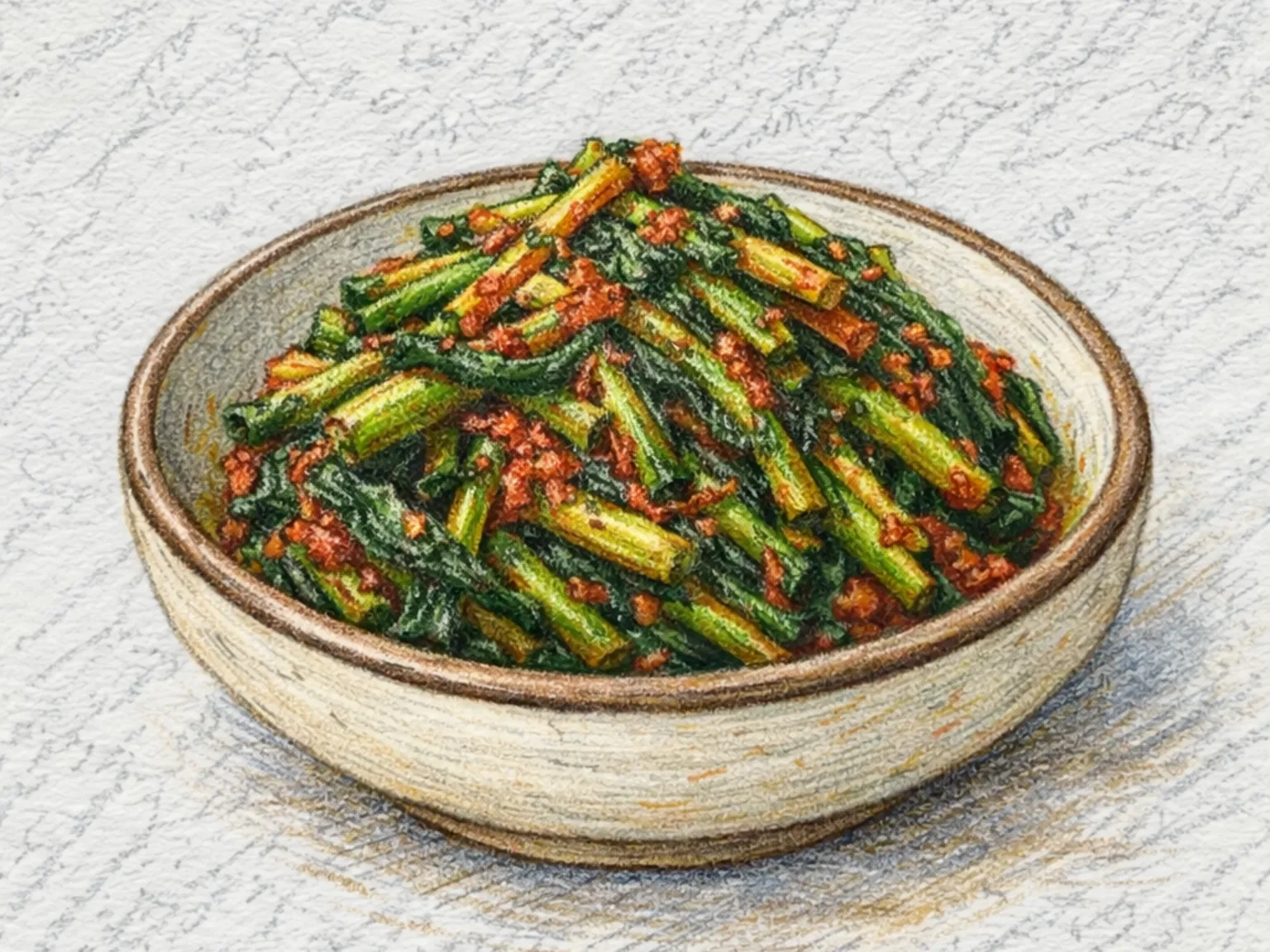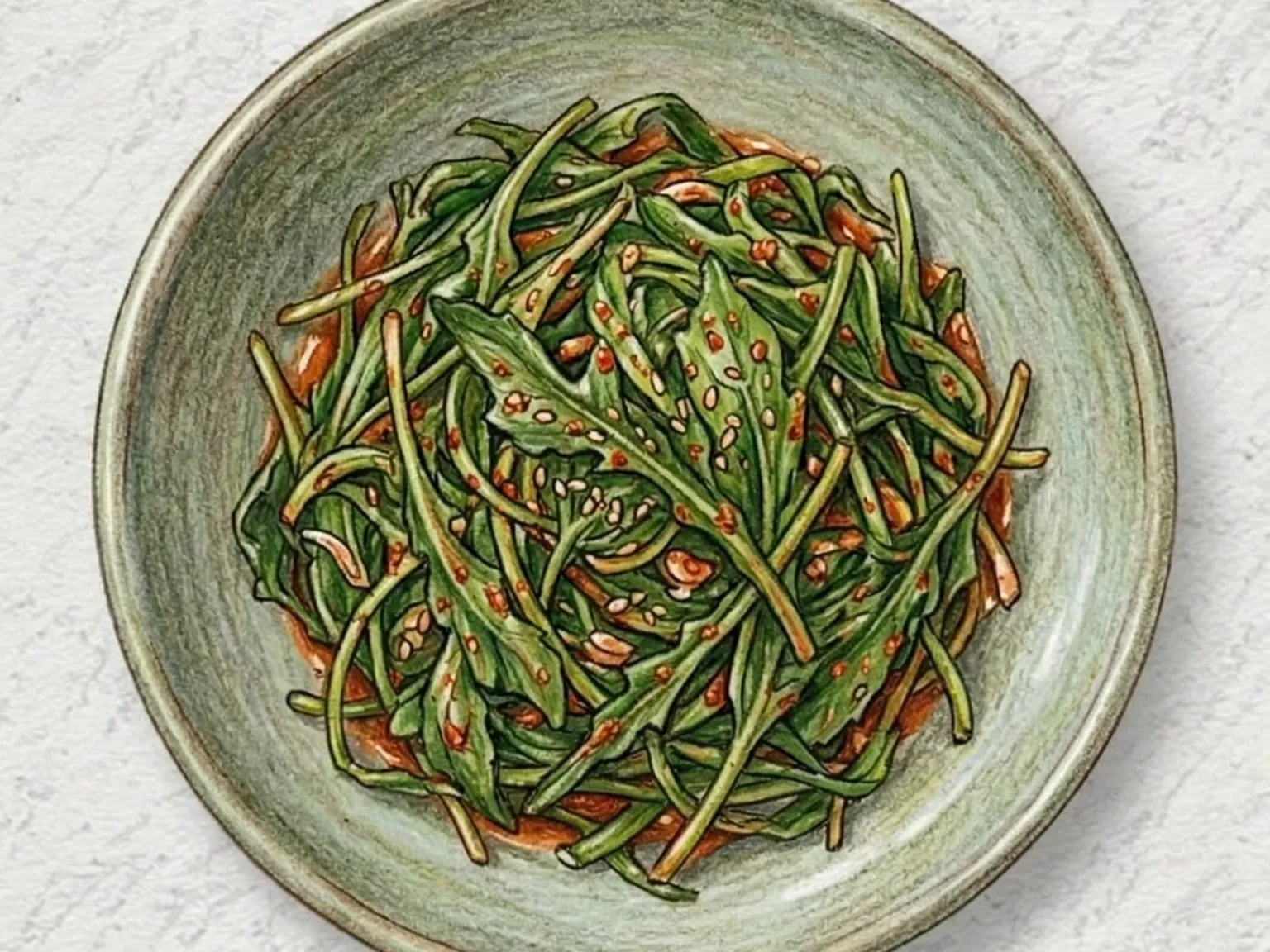
Seasoned Korean Wild Lettuce
A bold, bitter-meets-spicy Korean side dish that wakes up the entire meal - foraged wild lettuce tossed in a fiery gochujang-vinegar dressing. Godeulppaegi (Ixeris dentata) is blanched briefly, then soaked in cold water for at least thirty minutes to tame its sharp bitterness. Dressed in gochujang, gochugaru, vinegar, sugar, garlic, and sesame oil, the remaining edge transforms into a complex, layered flavor. In season from spring through early summer, this is a prized banchan at rural markets across southern Korea.
Adjust Servings
Instructions
- 1
Remove wilted leaves from wild lettuce and wash thoroughly.
- 2
Blanch in boiling water for about 40 seconds, then rinse in cold water to preserve color.
- 3
Squeeze out excess water and cut into 4-5 cm lengths.
- 4
Mix gochujang, chili flakes, vinegar, sugar, and garlic in a bowl.
- 5
Add the blanched greens, toss evenly, and finish with sesame oil and sesame seeds.
As an Amazon Associate, we may earn from qualifying purchases.
Tips
Nutrition (per serving)
More Recipes

Korean Seasoned Rapeseed Greens
Young rapeseed greens are blanched for just 40 seconds in salted water, then squeezed dry and tossed with doenjang, minced garlic, green onion, sesame oil, and ground sesame. The brief blanching preserves the stems' gentle snap, and the fermented soybean paste brings an earthy depth that pairs naturally with the greens' mild grassy flavor. Squeezing out excess water before seasoning keeps the dressing concentrated on each piece rather than pooling at the bottom. From prep to plate, this banchan takes under fifteen minutes.

Korean Seasoned Eoseuri Herb Namul
Eoseuri - Korean cow parsnip, Heracleum moellendorffii - is a wild mountain herb foraged from Korea's central and northern highlands in early spring. Its thick stems and broad leaves carry a complex fragrance combining celery, parsley, and a faintly medicinal undertone that no cultivated vegetable can replicate. Blanched under a minute to soften the stems while keeping their slight resistance, the greens are dressed with gochujang, vinegar, garlic, and sesame oil. The bitterness is more pronounced than common namul like sigeumchi, giving eoseuri a polarizing reputation - those who enjoy it develop a craving that milder greens cannot satisfy. In Korean mountain villages, eoseuri has been gathered alongside chwinamul and chamnamul as part of the spring banchan spread.

Korean Seasoned Bitter Lettuce
Wild sseumbagui, a bitter green foraged in Korean spring fields, is dressed in a gochujang vinaigrette that transforms its sharp bitterness into a layered, complex side dish. The intrinsic bitterness of the leaves works as a palate cleanser, and the gochujang's heat and vinegar's acidity wrap around it to build depth rather than mask it. Sugar smooths the rough edges of the combined flavors, while a drizzle of sesame oil closes each bite with a warm, nutty finish. Soaking the greens in salt water draws out enough bitterness to make them approachable without erasing the vegetal character that defines this namul. Over-soaking strips the personality entirely, leaving a flat, unremarkable green. Garlic folded into the dressing adds a pungent undercurrent, and a gentle tossing motion keeps the fragile leaves intact. The flavor progresses from bitter opening to spicy-sour middle to a sesame-scented close, a sequence that captures the taste of Korean spring.

Korean Seasoned Stonecrop Salad
Dollnamul - stonecrop, Sedum sarmentosum - is a succulent herb found along Korean stream banks in spring. Its plump, jade-green leaves burst with a mildly sour, grassy juice when bitten. Unlike most namul, dollnamul is never cooked - even seconds of heat destroy its crunch. Dressed immediately with gochugaru, vinegar, fish sauce, garlic, and sugar, it stays crisp and bright. The fish sauce provides a fermented undercurrent beneath the vinegar's sharpness. Must be eaten minutes after assembly.

Korean Garlic Scape Kimchi
Maneul jong kimchi is a Korean garlic scape kimchi made by lightly brining the scapes, then dressing them in a paste of gochugaru, fish sauce, and plum syrup blended with pureed onion and pear. The scapes' sharp, peppery garlic aroma survives fermentation while the stems maintain their crisp snap, delivering alternating waves of heat and umami with each bite. Pear lays a fruit sweetness into the base that buffers the chili intensity, and fish sauce adds the fermented depth expected in Korean kimchi. Trimming the woody bottoms before seasoning improves the texture, and the flavor settles into balance after about two days of fermentation.

Korean Spicy Braised Tofu
Spicy dubu-jorim pan-sears firm tofu slabs cut 1.5 centimeters thick until golden on both sides, then braises them in a sauce of soy sauce, gochugaru, garlic, and sugar. Searing first firms the tofu so it holds its shape through the eight-minute simmer, during which onion and green onion cook alongside in the reducing liquid. The chili flakes deliver a direct, persistent heat that penetrates the tofu as the sauce thickens, balanced by the sugar's sweetness. A final circle of sesame oil ties the flavors together with a roasted, nutty aroma.