Korean Braised Mackerel (Fatty Mackerel with Radish in Spicy Soy Sauce)
Steamed Medium

Korean Braised Mackerel (Fatty Mackerel with Radish in Spicy Soy Sauce)

Quick answer

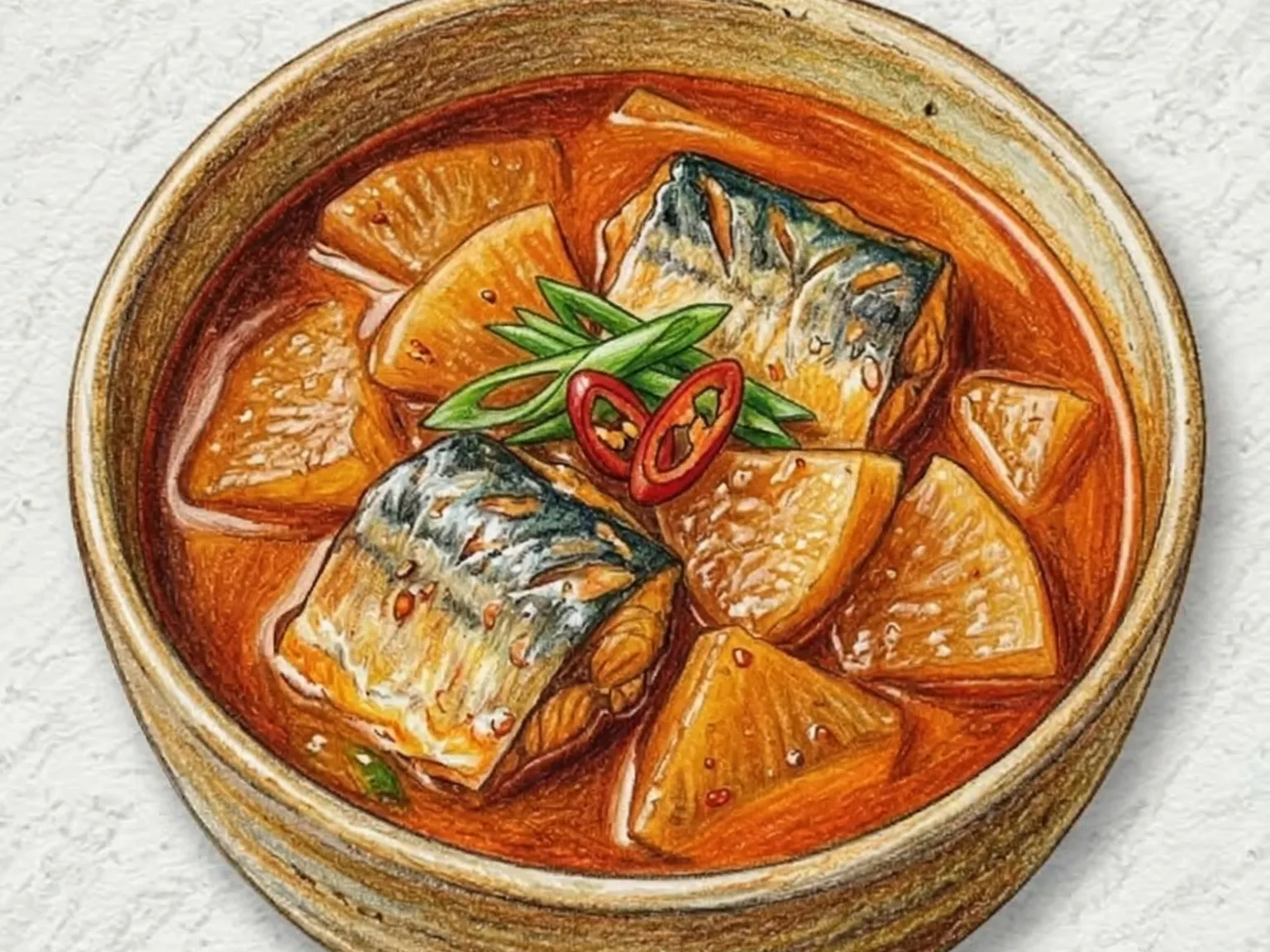
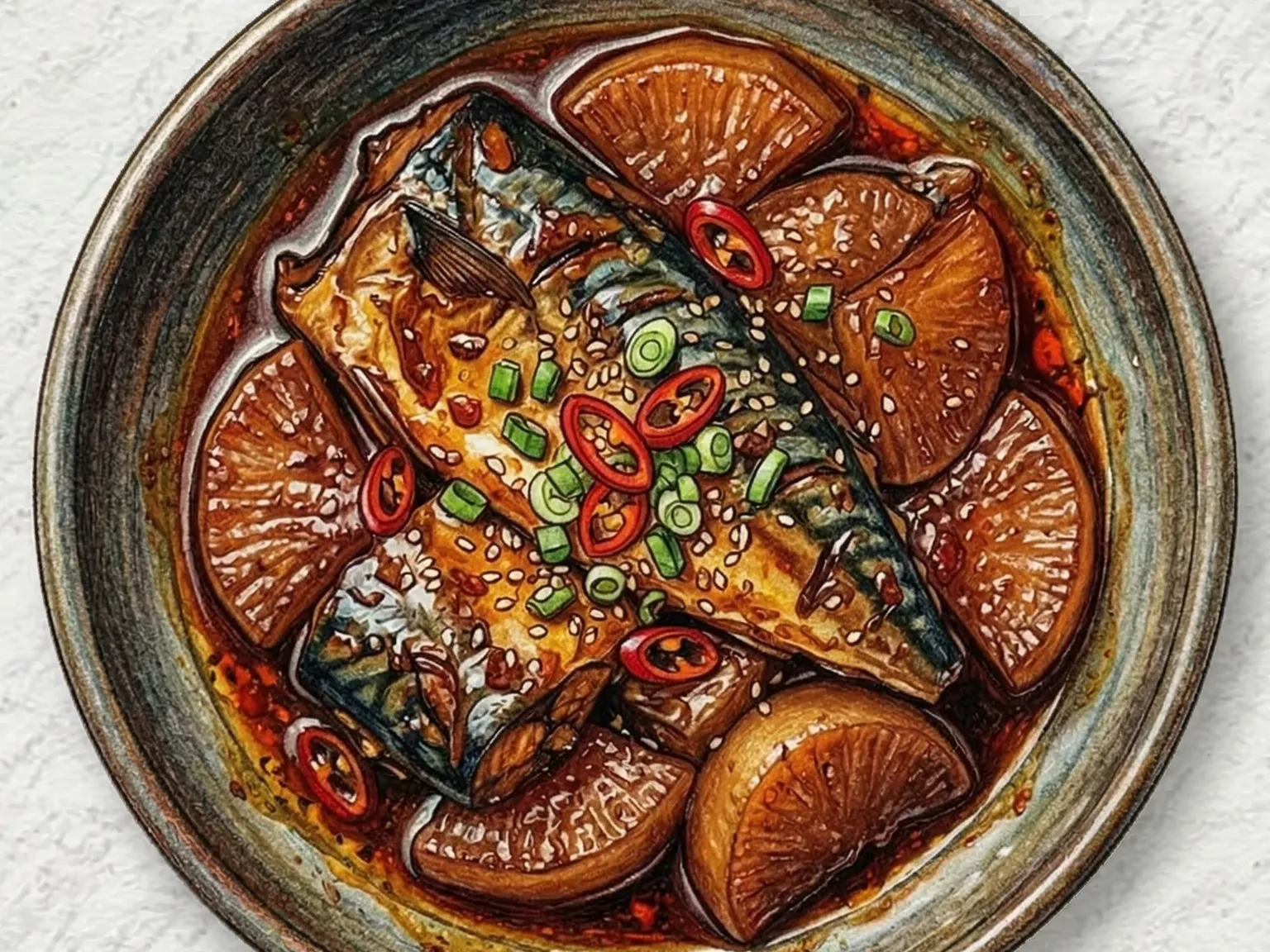
Godeungeo-jjim is a Korean braised mackerel dish cooked low and slow with Korean radish, sliced onion, gochugaru, soy sauce, and fresh ginger.

What makes this special

  • Godeungeo-jjim layers mackerel over radish to absorb fishy odors in a bold gochugaru braise.
  • Radish under the mackerel absorbs the fishy odor while collecting umami
  • A small amount of ginger neutralizes the blue-backed fish's characteristic aroma
Total time
55 min
Level
Medium
Servings
3 servings
Ingredients
8
Calories
410 kcal
Protein
29 g

Key ingredients

mackerelkorean radishonionsoy saucegochugaru

Core cooking flow

  1. 1 Clean 2 mackerel by removing the heads and innards, then make 2 to 3 deep cuts along the back.
  2. 2 Slice 300g Korean radish into 1cm half-moons and spread them tightly across the bottom of the pot.
  3. 3 Mix 2 tbsp soy sauce, 1.5 tbsp gochugaru, 1 tbsp minced garlic, 0.5 tsp ginger, and 350ml water.

Godeungeo-jjim is a Korean braised mackerel dish cooked low and slow with Korean radish, sliced onion, gochugaru, soy sauce, and fresh ginger. Mackerel belongs to the blue-backed fish category with a high natural fat content, and that fat absorbs the bold, spiced seasoning during braising in a way that leaner fish cannot. The flavor that results is deeply savory with a rounded heat that does not taste sharp or one-dimensional. Radish placed at the bottom of the pan serves a dual purpose: it draws out the fishy aroma during cooking and simultaneously soaks up the braising liquid, making it almost as desirable to eat as the fish itself. Ginger neutralizes the remaining raw fish notes and keeps the overall taste from feeling heavy, providing a subtle warmth that lifts the richness. As the braising liquid reduces, it thickens into a glossy, intensely flavored sauce that is commonly spooned over steamed rice to the last drop. Mackerel is widely available and inexpensive in Korea, which has made this preparation a household staple across generations.

Prep 15min Cook 40min 3 servings

Instructions

Read the steps as a cooking flow: prep, heat, seasoning, doneness control, and finish.

6 steps
  1. 1
    Season

    Clean 2 mackerel by removing the heads and innards, then make 2 to 3 deep cuts along the back.

    Check that the openings are deep enough for the seasoning to reach the fatty flesh while braising.

  2. 2
    Prep

    Slice 300g Korean radish into 1cm half-moons and spread them tightly across the bottom of the pot.

    Keep the pieces even, because thicker slices take longer to soften and may stay firm under the fish.

  3. 3
    Season

    Mix 2 tbsp soy sauce, 1.5 tbsp gochugaru, 1 tbsp minced garlic, 0.5 tsp ginger, and 350ml water.

    Stir until no dry spice clumps remain, so the sauce coats the fish evenly instead of tasting patchy.

  4. 4
    Control

    Lay the mackerel over the radish and cover it with 1 onion cut into thick strips.

    Spoon the sauce over the cuts and edges of the fish, making sure the seasoning reaches the scored parts.

  5. 5
    Control

    Cover and cook over medium heat for about 15 minutes.

    If the boiling sounds too strong, lower the heat slightly so the mackerel stays intact while the radish softens in the simmering liquid.

  6. 6
    Finish

    During cooking, spoon the braising liquid over the fish several times and check that the radish turns slightly translucent.

    When the liquid thickens and looks glossy, serve the fish with the sauce for rice.

After the steps

Pick a recipe that fits this dish.

Continue with shared ingredients, meal pairings, or a similar method.

Recipes That Go Well With This

More Steamed →

Based on shared ingredients and meal pairing

Korean Braised Mackerel with Radish
Shared ingredient: korean radish Stir-fry

Korean Braised Mackerel with Radish

Layering thick slices of radish beneath fresh mackerel prevents the delicate fish from sticking to the pot while allowing the vegetables to soak up the seasoning like a sponge. This traditional Korean preparation uses a base of soy sauce, red chili powder, and red chili paste to create a thick braising liquid. As the pot simmers, the cook repeatedly spoons the sauce over the fish pieces to ensure the heat and spices reach every part of the mackerel. Ginger serves as a crucial ingredient to eliminate any strong fishy scents, so adding it early in the cooking process allows its aromatic properties to fully integrate into the broth. Over time, the radish softens into a translucent texture, absorbing the spicy and salty elements of the sauce until it becomes a substantial part of the meal. Adding onions and green onions during the final stages of cooking preserves their crispness and prevents their fresh aroma from fading. The process concludes when the liquid reduces into a glossy glaze that coats the mackerel. Serving this dish immediately over warm white rice allows the grains to catch the concentrated sauce. Beyond its taste, the mackerel provides omega-3 fatty acids while the radish contributes digestive enzymes and vitamin C to balance the natural oils of the fish.

Korean Braised Mackerel with Aged Kimchi
Shared ingredient: mackerel fillet Steamed

Korean Braised Mackerel with Aged Kimchi

Godeungeo kimchi jjim is mackerel braised together with well-fermented aged kimchi in a soy sauce and gochugaru broth. The deep, sharp acidity of the aged kimchi cuts through the fatty mackerel flesh without leaving any heaviness, drawing out a concentrated savory taste instead. The key step is removing the lid partway through cooking and letting the braising liquid reduce and absorb into the fish, which also drives off any residual fishiness. Onion softens into a gentle sweetness that rounds out the broth, while a pinch of sugar tempers the sourness of the kimchi so the seasoning stays in clear balance. The sauce reduces to a small pool of intensely flavored liquid that is meant to be mixed directly into a bowl of steamed rice.

Crispy Mushroom Tangsu (Sweet & Sour)
Serve together Side dishes

Crispy Mushroom Tangsu (Sweet & Sour)

Double-fried oyster mushrooms with the same two-stage frying technique used for Korean tangsu pork. Oyster mushrooms fully dried of moisture are coated in a potato starch and flour batter, fried at 170°C, rested to release steam, then returned to 180°C for a second fry that locks in a crisp exterior while keeping the interior chewy. A sweet-sour sauce of soy sauce, vinegar, and sugar is simmered with onion, bell pepper, and carrot, then thickened with a starch slurry. Pouring the sauce over the mushrooms in advance softens the crust quickly, so serving the sauce separately and ladling it on at the table preserves the crunch. The technique produces a texture comparable to the pork version without any meat.

Braised Korean Radish (Soy Garlic Slow-Cooked Side)
Similar recipe Steamed

Braised Korean Radish (Soy Garlic Slow-Cooked Side)

Mu-jjim is a Korean braised radish dish where thick-cut Korean radish is simmered slowly in a covered pot with soy sauce, sugar, and garlic. The radish absorbs the seasoned liquid as it cooks, turning translucent from edge to center and developing a natural sweetness that balances the saltiness of the soy base. A drizzle of sesame oil at the end adds a nutty fragrance, and a single sliced green chili contributes a mild kick to the finish. Despite the short ingredient list, this banchan pairs naturally with rice at any meal and holds up well as a make-ahead side throughout all seasons. Keeping the heat at medium or below for at least twenty minutes allows the radish to soften fully and take in the seasoning without becoming mushy.

Serve with this

Korean Sashimi Rice Bowl (Flounder Sashimi with Cho-Gochujang)
Rice Medium

Korean Sashimi Rice Bowl (Flounder Sashimi with Cho-Gochujang)

Sliced flounder sashimi sits atop julienned cucumber, lettuce, and perilla leaves over slightly cooled rice, dressed with cho-gochujang just before eating. The rice must not be piping hot because residual heat softens the sashimi and dulls its clean texture, so resting it until just warm is essential. The vinegar tang and chili warmth in cho-gochujang lift the mild fish flavor, while sesame oil and seeds leave a nutty finish on the palate. Keeping the vegetables well chilled before assembly creates a temperature contrast against the warm rice that sharpens every bite. Adding the cho-gochujang right before eating rather than in advance prevents the vegetables from weeping moisture and going limp.

🎉 Special Occasion 🏠 Everyday
Prep 20min Cook 5min 2 servings
Korean Rice Cake Dumpling Soup
Soups Easy

Korean Rice Cake Dumpling Soup

Tteok-mandu-guk combines two of Korea's most beloved New Year foods - sliced rice cakes and handmade dumplings - in a single bowl of clear beef broth. The broth, typically drawn from simmered brisket or bone stock, serves as a clean canvas for the two main ingredients. Rice cake ovals absorb the hot liquid and swell into a pleasantly chewy mass, while the dumplings, stuffed with a mixture of ground pork, tofu, scallion, and garlic, release their savory filling into the soup as they cook. Starch from the dumpling wrappers lends the broth a slight silkiness that binds everything together. Julienned egg garnish and a pinch of crushed dried seaweed are scattered over the top, adding color and a whisper of ocean fragrance. The soup is seasoned simply with soup soy sauce, letting the stock and fillings carry the flavor. While practically it extends a pot of tteokguk to feed more people, the real appeal lies in the textural variety - sticky rice cakes and soft, yielding dumplings in the same spoonful create a satisfaction that neither achieves alone.

🏠 Everyday 🎉 Special Occasion
Prep 15min Cook 25min 4 servings
Korean Soy Pickled Burdock
Kimchi Easy

Korean Soy Pickled Burdock

Ueong jangajji is a soy-pickled burdock root prepared by soaking cut burdock in vinegar water to prevent browning, blanching to remove any earthiness, then submerging in a brine of soy sauce, vinegar, and sugar. Kelp, dried red chili, and whole peppercorns boiled into the brine contribute umami depth and a subtle warmth. The root's natural nuttiness and earthy aroma meld with the sweet-salty-tangy brine into a layered, lingering flavor. Its firm, crunchy texture holds up well over days of storage, and reboiling the brine on the third day extends the pickle's shelf life further. Because burdock oxidizes quickly once cut, transferring it to the vinegar soak immediately after slicing is essential for keeping the finished pickle looking clean and bright rather than muddy.

🏠 Everyday 🍱 Lunchbox
Prep 20min Cook 12min 4 servings

Similar recipes

Korean Steamed Pacific Saury
Steamed Medium

Korean Steamed Pacific Saury

Kkongchi-jjim braises Pacific saury with Korean radish, onion, and green onion in a gochugaru and soy sauce broth until the liquid reduces to a concentrated, deeply spiced glaze. The saury's naturally oily flesh absorbs the bold seasoning without drying out, while the radish softens in the braising liquid and draws out any fishiness that would otherwise distract from the sauce. Garlic and ginger scrub the broth clean, and the chili's penetrating heat opens the appetite in a way that milder seasonings cannot. The remaining sauce, ladled over rice, is what most people eat last and remember longest - a humble fish dish that punches well above its price.

🏠 Everyday 🍱 Lunchbox
Prep 20min Cook 30min 2 servings
Korean Dried Greens Mackerel Stew
Stews Medium

Korean Dried Greens Mackerel Stew

Siraegi-godeungeo-jjigae is a spicy Korean stew that combines mackerel and boiled dried radish greens in a gochugaru-seasoned broth. The oily, pronounced umami of the mackerel and the earthy, slightly musty depth of the dried greens amplify each other in the pot, while Korean radish maintains a clean, refreshing base that prevents the combination from becoming too heavy. Using rice-rinse water as the broth foundation is a traditional technique that neutralizes the mackerel's fishiness while simultaneously giving the liquid a mild, rounded body that plain water cannot provide. The radish greens must be well squeezed after boiling to remove any grassy, off-putting odor; briefly sauteing them in perilla oil before adding them to the stew deepens their nutty character further. Seasoning with gochugaru alone, without gochujang, preserves the clarity and clean red color of the broth and keeps its defining quality: a penetrating spiciness that is simultaneously bracing and warming rather than paste-thick and murky. Onion, green onion, and minced garlic round out the aromatics and complete the flavor profile of a classic everyday Korean jjigae. Mackerel is typically added bone-in, and eating it by working the flesh off the bones with chopsticks as you go is part of the simple, unhurried character of the dish.

🏠 Everyday
Prep 20min Cook 35min 4 servings
Korean Braised Squid with Radish
Steamed Medium

Korean Braised Squid with Radish

Ojingeo mu jorim is a Korean braised dish where radish is cooked first in a soy-based liquid until fully softened, then squid is added and the whole pot is reduced in a spiced sauce of gochugaru and gochujang. Giving the radish time to cook alone is the structural key to this dish: as it slowly absorbs the liquid and breaks down, it releases its natural sweetness into the broth, which merges with the salt and gentle umami of soy sauce to build the braising liquid into something more complex than its ingredients suggest. When the spice paste goes in, the resulting flavor sits at the intersection of heat and coolness - the particular sensation of Korean chili that stings without overwhelming. The single most important technique in this recipe is the timing of the squid. Squid turns rubbery when overcooked, and the window between tender and tough is narrow, so it is added only in the last five minutes of cooking. That brief time is enough for the squid to absorb the surrounding flavors while holding the springy, snapping bite that makes the dish texturally rewarding. Green onion stirred in at the finish adds a sharp herbal lift. The reduced sauce left in the pan is deliberately left shallow rather than thick, concentrated with the flavors of both the squid and the radish, and it is best used by spooning it over rice and eating everything together.

🏠 Everyday 🎉 Special Occasion
Prep 20min Cook 30min 4 servings

Tips

A small amount of ginger helps neutralize fish aroma.

Nutrition (per serving)

Calories
410
kcal
Protein
29
g
Carbs
11
g
Fat
27
g