Charim

2686 Korean & World Recipes

2686+ Korean recipes, clean and organized. Ingredients to instructions, all at a glance.

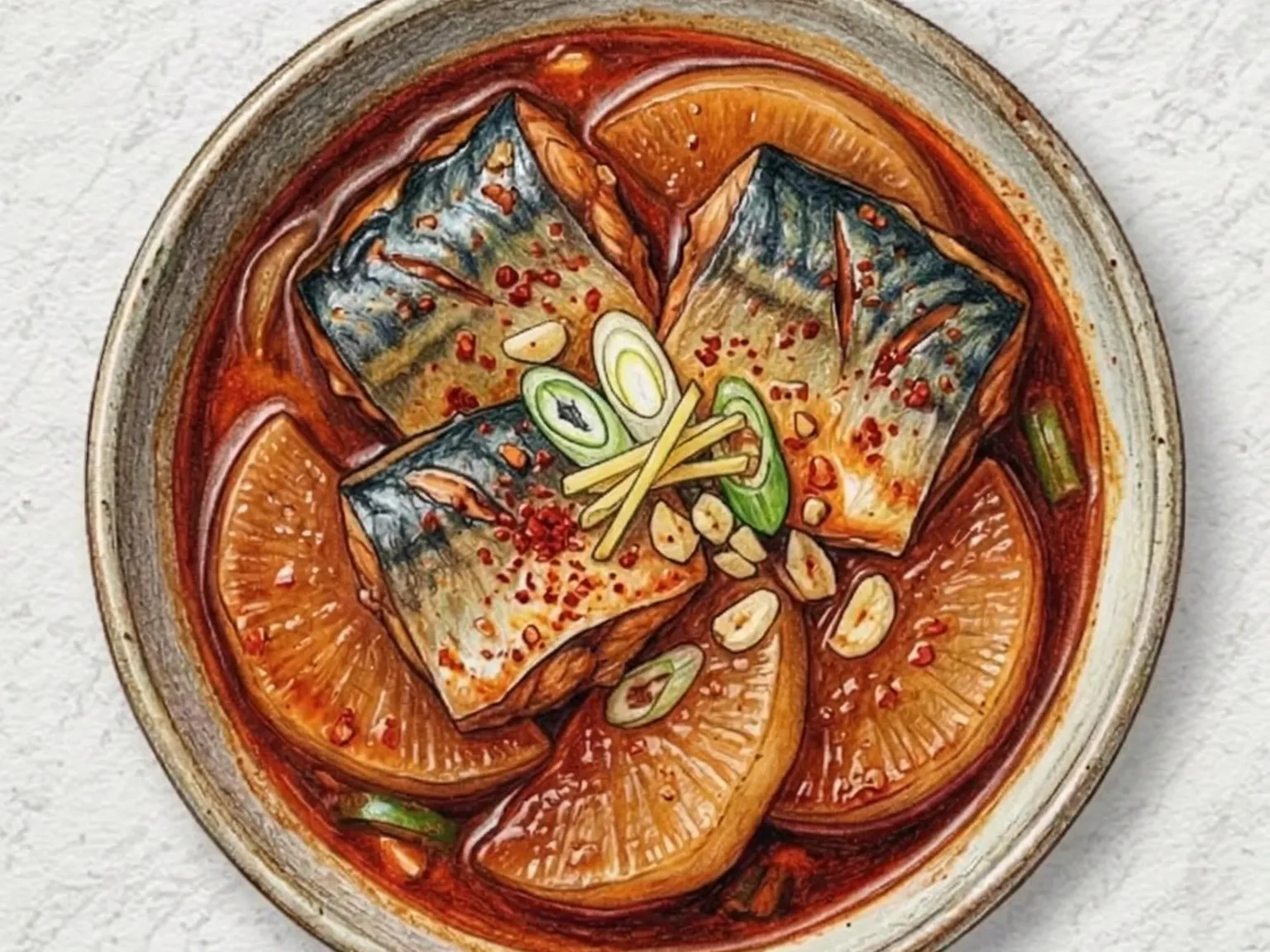
Korean Braised Mackerel in Spicy Sauce

Korean Braised Mackerel in Spicy Sauce

Godeungeo-jorim is one of the most frequently cooked fish banchan in Korean homes, pairing mackerel's assertive flavor with a spicy braising sauce that demands steamed rice. Mackerel is cut into steaks and salted for ten minutes to draw out fishy odors, then arranged over thick radish slices that line the pot bottom. The radish serves dual duty: preventing the fish from sticking and releasing its natural sweetness into the braising liquid. A sauce of gochugaru, gochujang, soy sauce, garlic, ginger, and sugar is spooned over and the pot simmers covered for twenty minutes, during which the seasoning penetrates the flesh while the radish absorbs enough sauce to rival the fish itself. Green onion added in the final minutes lifts the heavy spice with a fresh sharpness.

Prep 15min Cook 25min 4 servings

Adjust Servings

2servings
servings

Instructions

  1. 1

    Cut mackerel into 4 pieces and rinse under running water to reduce fishiness.

  2. 2

    Slice daikon 1 cm thick into half-moons and line the bottom of a pot.

  3. 3

    Mix gochugaru, soy sauce, gochujang, garlic, ginger juice, and water for the sauce.

  4. 4

    Place mackerel on the radish and pour sauce over everything.

  5. 5

    Bring to a boil, reduce to medium, and braise for 20 minutes, basting occasionally.

  6. 6

    Add green onion and chili, cook 2 more minutes before serving.

🛒Shop Ingredients on Amazon

As an Amazon Associate, we may earn from qualifying purchases.

Tips

Ginger juice significantly reduces the fishy smell.
Radish at the bottom prevents sticking and absorbs the delicious sauce.

Nutrition (per serving)

Calories
280
kcal
Protein
22
g
Carbs
12
g
Fat
16
g

Variations

Soy-Braised Mackerel

Mackerel simmered in a savory soy-based sauce until the liquid reduces and caramelizes. The rich, oily fish absorbs the bold seasoning beautifully.

More Recipes

Korean Braised Saury in Spicy Sauce
Side dishesMedium

Korean Braised Saury in Spicy Sauce

Kkongchi-jorim simmers Pacific saury with daikon radish in a soy-gochujang sauce until the bones soften enough to eat whole - a thrifty Korean fish braise built on one of autumn's most affordable catches. The radish lines the pot bottom, cushioning the fish from direct heat to prevent breakage while absorbing the braising liquid into sweet, flavor-soaked wedges. After bringing the sauce to a boil, twenty-five minutes of medium-low simmering renders the fine bones edible without adding vinegar. Canned saury, with bones already softened during processing, halves the cooking time for weeknight shortcuts. Green onion placed on top in the final two minutes tempers the fish's natural oiliness and adds a visual accent. Like most jorim-style banchan, this dish improves over several days in the refrigerator as the seasoning continues to penetrate.

🏠 Everyday🍱 Lunchbox
Prep 10minCook 30min4 servings
Korean Braised Tofu in Spicy Sauce
Side dishesEasy

Korean Braised Tofu in Spicy Sauce

Dubu-jorim is arguably the single most frequently made tofu dish in Korean home kitchens. The technique is straightforward but the sequence matters: tofu must be fried first to build a crust that holds its shape during braising, then simmered in a sauce that penetrates through that crust into the soft interior. The braising liquid - soy sauce, gochugaru, garlic, sugar, and water - reduces around the tofu slabs for eight to ten minutes, concentrating into a thick, spicy-sweet glaze. The finished tofu has three distinct zones: a dark, slightly chewy exterior where sauce has caramelized, a transitional layer where seasoning has seeped in, and a pristine white center that provides a bland, creamy contrast. Korean home cooks often make a double batch on Sunday, refrigerating half for weekday lunches. The dish dates back to Buddhist temple cooking traditions where tofu was the primary protein.

🏠 Everyday🍱 Lunchbox
Prep 10minCook 15min4 servings
Korean Braised Semi-Dried Pollock
Side dishesMedium

Korean Braised Semi-Dried Pollock

Kodari-jorim braises semi-dried pollock with radish in a gochujang-soy glaze, occupying a middle ground between fresh fish stew and fully dried fish preparations. Kodari is whole pollock gutted and hung in pairs along the East Sea coast, air-dried for two to three weeks - halted before full dehydration so the flesh retains enough moisture to stay supple after cooking, unlike the spongy texture of fully dried hwangtae. Layering radish on the bottom of the pot serves a structural purpose: it prevents the fish from sitting directly on the heat source and scorching. A sauce of soy, gochujang, gochugaru, sugar, and garlic is poured over and brought to a boil, then reduced to medium heat for about thirty minutes, spooning the liquid over the fish periodically. Overnight refrigeration lets the seasoning penetrate evenly and deepens the flavor. The leftover sauce is potent enough to repurpose as a bibimbap dressing.

🏠 Everyday🍱 Lunchbox
Prep 25minCook 35min4 servings
Korean Braised Mackerel with Dried Radish Greens
SteamedMedium

Korean Braised Mackerel with Dried Radish Greens

Siraegi godeungeo jorim is a Korean braised mackerel dish cooked with blanched dried radish greens, radish, and onion in a chili-soy sauce. The richness of mackerel fat and the earthy fiber of the dried greens meet in a single pot, each amplifying the other's flavor. Mackerel pre-seasoned with cooking wine is placed on top of the vegetables and braised over medium-low heat for more than twenty minutes, allowing the seasoning to penetrate the fish. Thorough boiling of the greens beforehand is essential to soften their tough fibers, and serving the finished dish over rice with generous spoonfuls of the spicy sauce captures its full depth.

🎉 Special Occasion🍱 Lunchbox
Prep 20minCook 35min4 servings
Korean Braised Mackerel with Potatoes
SteamedEasy

Korean Braised Mackerel with Potatoes

Godeungeo gamja jorim is a quintessential Korean home-cooked dish of mackerel and potato braised in a soy sauce and gochugaru seasoning. The oily mackerel fillets release their rich flavor into the sauce, while the potato chunks soak up the spicy, savory liquid as they cook to a fluffy consistency. Onion and green onion contribute natural sweetness and aroma that balance the bold seasoning. This is one of Korea's most beloved fish dishes, often served family-style with the braising sauce spooned generously over rice.

🍱 Lunchbox
Prep 15minCook 30min2 servings
Korean Braised Anchovy Side Dish
Side dishesEasy

Korean Braised Anchovy Side Dish

Myeolchi-jorim simmers tiny dried anchovies in soy sauce, rice syrup, and garlic into a moist, glazed banchan that contrasts fundamentally with stir-fried anchovy preparations. Where bokkeum chases crispness, jorim aims for softness - the anchovies absorb the braising liquid over a sustained simmer, becoming pliant and saturated with sweet-salty flavor throughout their interior. A one-minute dry toast removes any fishiness before soy sauce, syrup, minced garlic, and water go into the pan, simmering uncovered on low heat for ten minutes. As the liquid reduces, a sticky, dark glaze wraps around each anchovy; unlike the bokkeum, pressing one between your teeth releases a rush of seasoned juice from within. Sesame seeds and sesame oil stirred in off-heat add a final layer of nuttiness. Once fully cooled, the reduced sauce thickens further into an almost jelly-like coating that holds the anchovies together. Refrigerated in an airtight container, myeolchi-jorim keeps for over a week.

🏠 Everyday🍱 Lunchbox
Prep 8minCook 15min4 servings
More Side dishes →