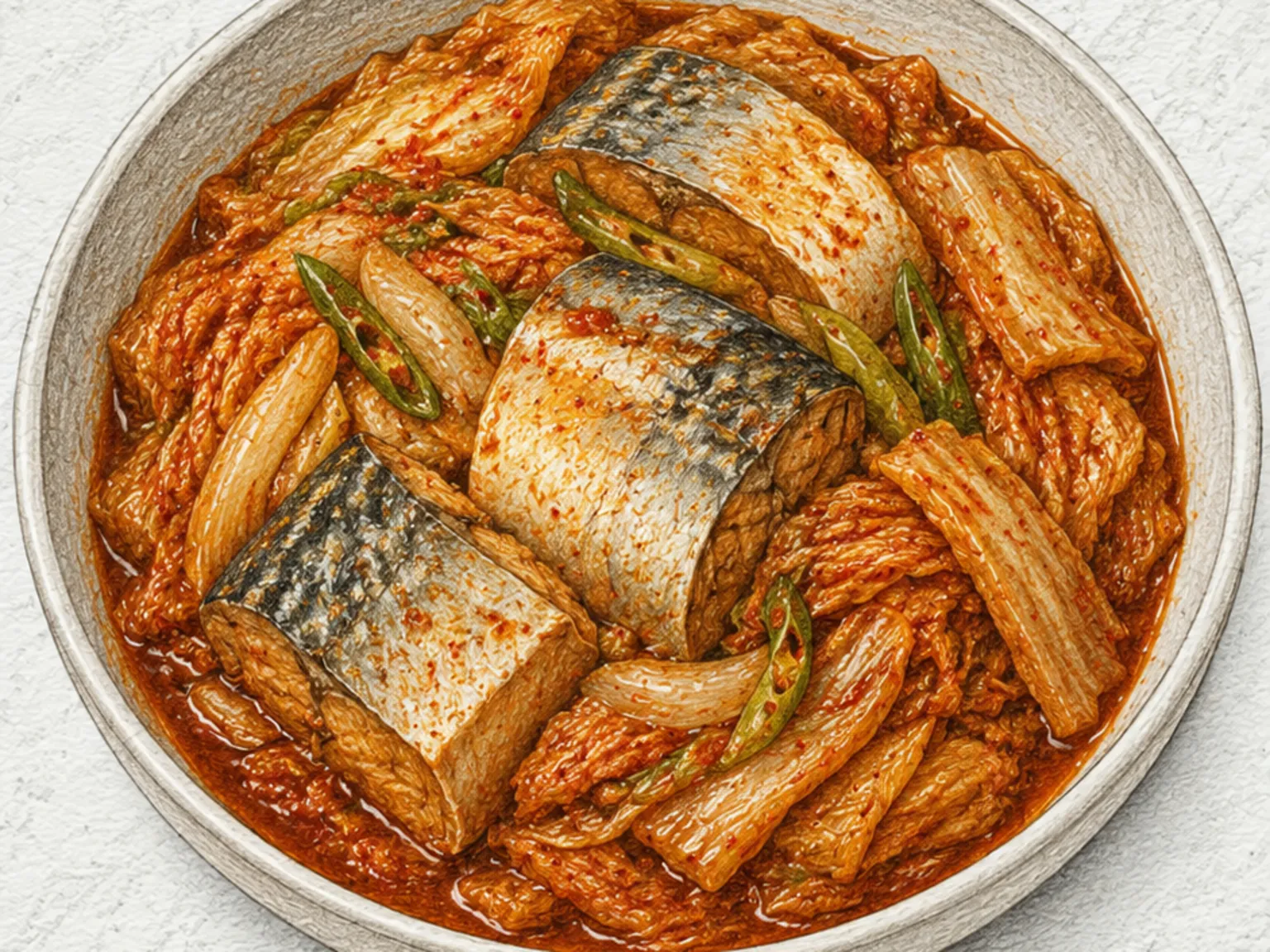
Korean Braised Mackerel with Aged Kimchi
Godeungeo kimchi jjim is mackerel braised with well-fermented aged kimchi in a soy sauce and gochugaru broth. The deep sourness of the aged kimchi cuts through the rich, oily mackerel flesh, creating a concentrated savory flavor without heaviness. Onion adds a gentle sweetness while a small amount of sugar balances the fermented tang. The sauce reduces to a thin, intensely flavored glaze that is meant to be spooned over steamed rice, making this one of the most satisfying ways to pair fermented ingredients with fish.
Adjust Servings
Instructions
- 1
Squeeze excess filling from aged kimchi and spread it on the pot bottom.
- 2
Place cleaned mackerel over kimchi and top with onion slices.
- 3
Mix gochugaru, soy sauce, garlic, sugar, and water, then pour in and boil.
- 4
Once boiling, reduce to medium and braise for 20 minutes.
- 5
Add green onion and cook 5 more minutes for aroma.
- 6
Turn off heat when sauce becomes slightly reduced and serve.
As an Amazon Associate, we may earn from qualifying purchases.
Tips
Nutrition (per serving)
More Recipes

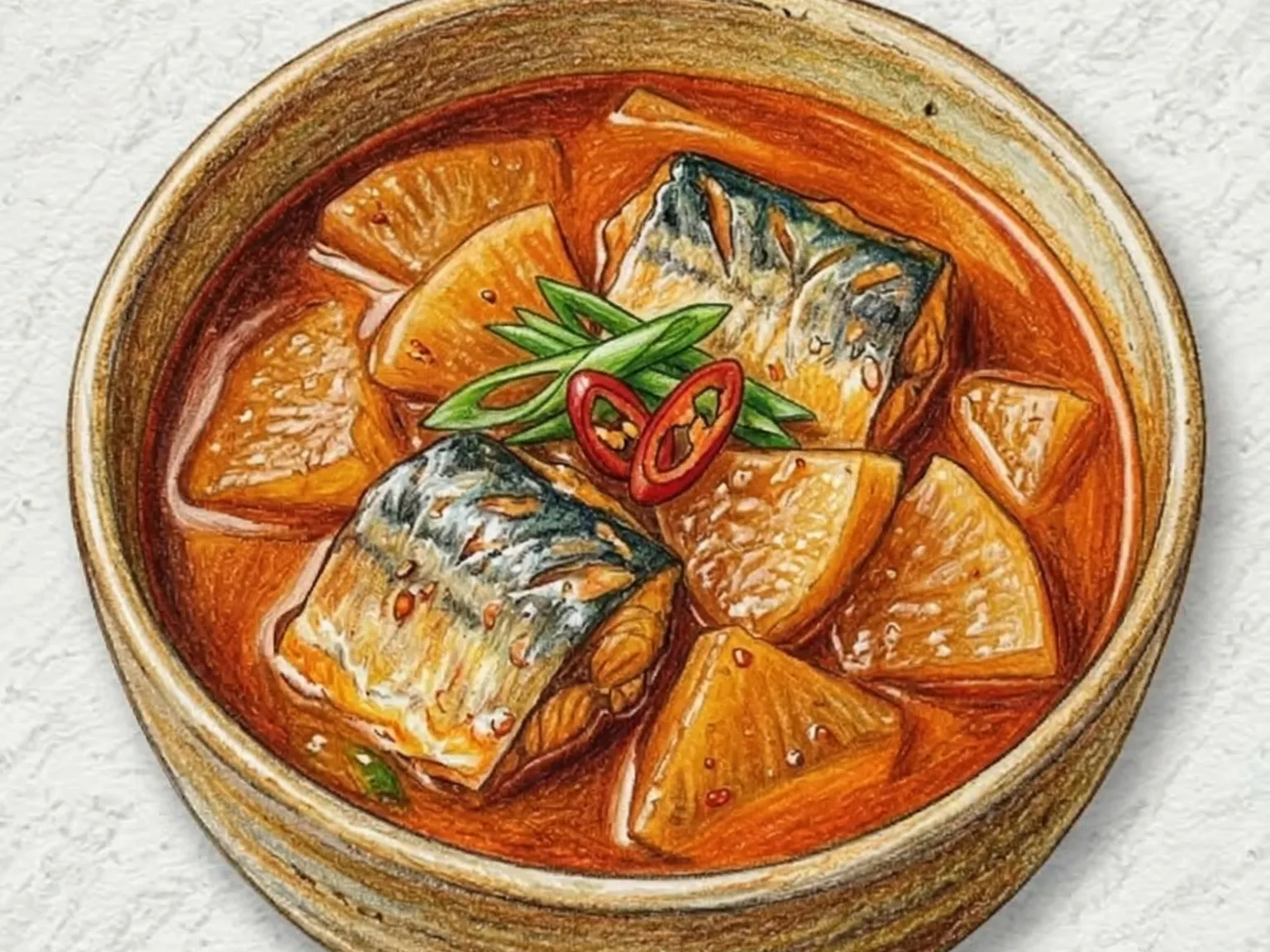
Korean Braised Mackerel (Fatty Mackerel with Radish in Spicy Soy Sauce)
Godeungeo-jjim is a Korean braised mackerel dish simmered with Korean radish, onion, and a generous amount of gochugaru and soy sauce. The mackerel's naturally fatty flesh stands up well to the bold, spicy seasoning, and the radish mellows the fish's aroma while absorbing the flavorful broth. Fresh ginger keeps the overall taste clean despite the richness of the ingredients. This is a staple comfort food in Korean households, always served with plenty of steamed rice to soak up the remaining sauce.

Korean Braised Mackerel with Potatoes
Godeungeo gamja jorim is a quintessential Korean home-cooked dish of mackerel and potato braised in a soy sauce and gochugaru seasoning. The oily mackerel fillets release their rich flavor into the sauce, while the potato chunks soak up the spicy, savory liquid as they cook to a fluffy consistency. Onion and green onion contribute natural sweetness and aroma that balance the bold seasoning. This is one of Korea's most beloved fish dishes, often served family-style with the braising sauce spooned generously over rice.

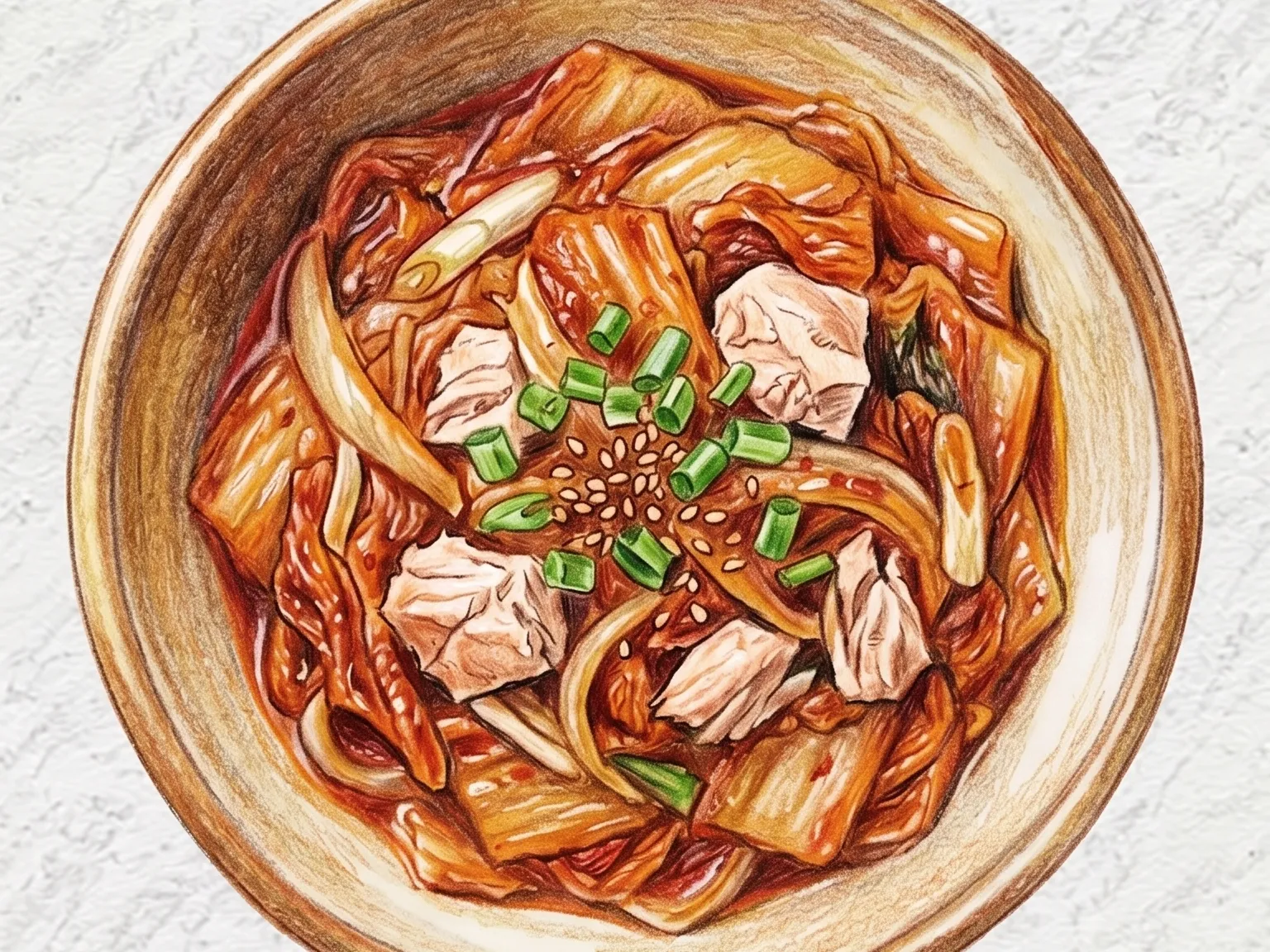
Korean Braised Pork Kimchi
Pork kimchi jjim is a cornerstone Korean home braise where pork shoulder and well-aged kimchi are layered in a pot with gochugaru, soy sauce, and garlic, then simmered on low heat for over fifty minutes. The kimchi's sharp fermented acidity mellows during the long cook while still infusing the meat with its complex, funky depth. Fat rendered from the pork shoulder enriches the braising liquid, and onion and green onion contribute a natural sweetness that rounds out the bold flavors. When the pork is soft enough to pull apart with chopsticks, the dish is ready to be served over rice with the remaining sauce spooned generously on top.

Korean Braised Mackerel with Dried Radish Greens
Siraegi godeungeo jorim is a Korean braised mackerel dish cooked with blanched dried radish greens, radish, and onion in a chili-soy sauce. The richness of mackerel fat and the earthy fiber of the dried greens meet in a single pot, each amplifying the other's flavor. Mackerel pre-seasoned with cooking wine is placed on top of the vegetables and braised over medium-low heat for more than twenty minutes, allowing the seasoning to penetrate the fish. Thorough boiling of the greens beforehand is essential to soften their tough fibers, and serving the finished dish over rice with generous spoonfuls of the spicy sauce captures its full depth.

Korean Braised Mackerel in Spicy Sauce
Godeungeo-jorim is one of the most frequently cooked fish banchan in Korean homes, pairing mackerel's assertive flavor with a spicy braising sauce that demands steamed rice. Mackerel is cut into steaks and salted for ten minutes to draw out fishy odors, then arranged over thick radish slices that line the pot bottom. The radish serves dual duty: preventing the fish from sticking and releasing its natural sweetness into the braising liquid. A sauce of gochugaru, gochujang, soy sauce, garlic, ginger, and sugar is spooned over and the pot simmers covered for twenty minutes, during which the seasoning penetrates the flesh while the radish absorbs enough sauce to rival the fish itself. Green onion added in the final minutes lifts the heavy spice with a fresh sharpness.

Korean Braised Mackerel with Radish
This Korean braised mackerel dish layers radish at the bottom of the pot, pre-cooks it to absorb seasonings deeply, then places mackerel on top to simmer in a spicy soy-gochugaru sauce. Basting the fish with the braising liquid several times throughout cooking ensures the flavors penetrate evenly while the ginger in the sauce tames any fishiness. The radish turns soft and translucent, soaking up the spicy-savory broth and serving as a flavorful bed beneath the flaky fish. Green onion and onion, added toward the end, contribute a fresh lift. The slightly reduced sauce at the finish is rich enough to drizzle over rice.