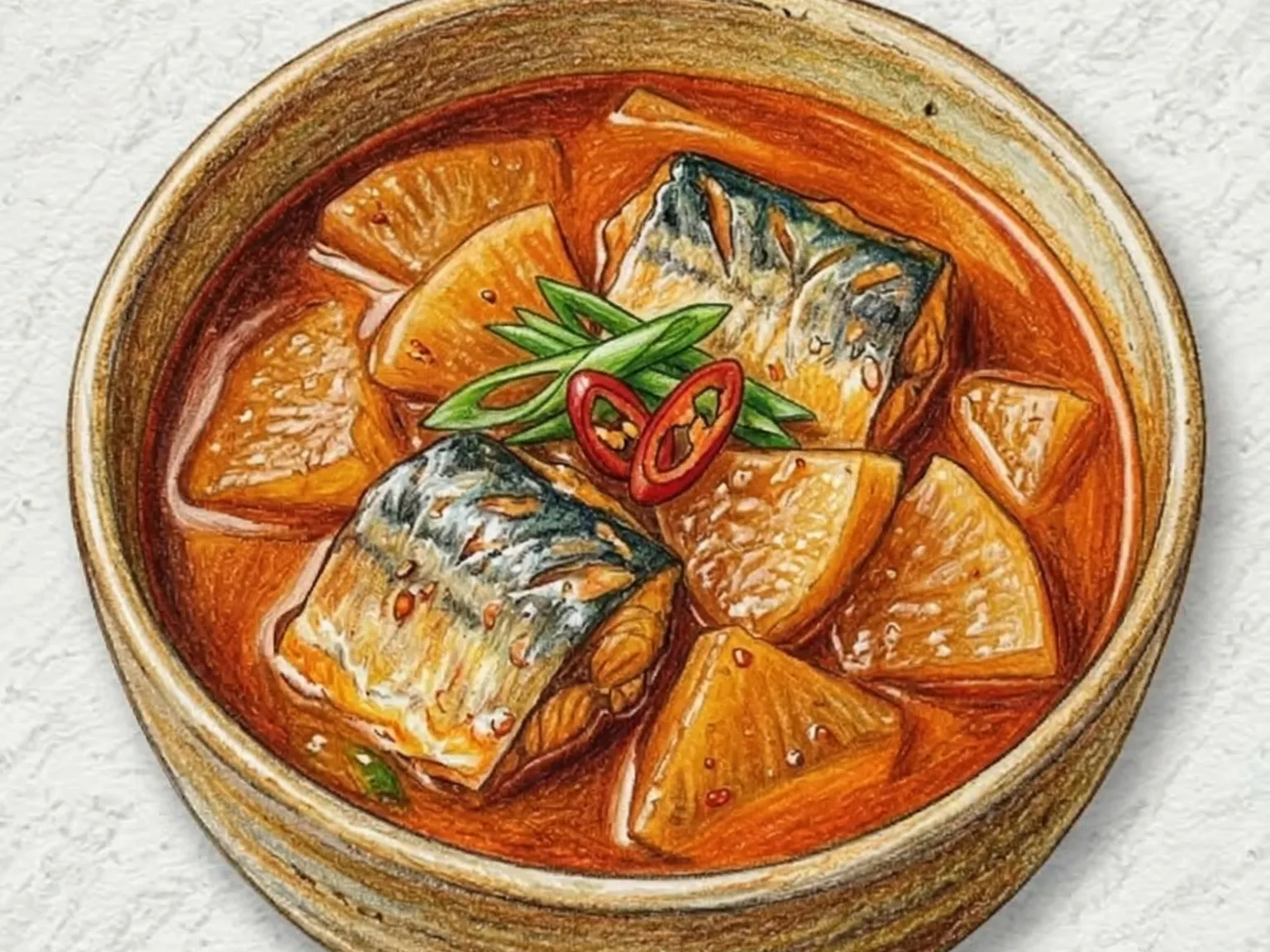
Korean Godeungeo Mu Jjigae (Mackerel Radish Stew)
Cook the radish first: lay 350 g Korean radish, cut into 1.5 cm half-moons, across the bottom of the pot and boil it in 900 ml water over medium heat for about 10 minutes, until the edges turn slightly translucent. Dissolve 2 tbsp gochugaru, 1 tbsp gochujang, 1 1/2 tbsp soup soy sauce, and 1 tbsp minced garlic in the broth, set 500 g mackerel and the onion on top, and simmer gently for 15 minutes, spooning broth over the fish. Add the green onion and give it 5 more minutes, by which point a chopstick should slide easily into the radish.
Quick answer
- Total time
- 55 min
- Level
- Medium
- Servings
- 4 servings
- Ingredients
- 9
About this dish
A thick layer of radish, 350 g, lines the bottom of the pot and boils for ten minutes before the mackerel is laid on top.
Read more
The radish soaks up the fish broth, and it goes over rice together with the little broth that is left.
Ingredients
Instructions
- 1
Soak 500 g mackerel in lightly salted water for 5 minutes if the fish smell is strong, then rinse and drain well.
Cut 350 g Korean radish into 1.5 cm half-moons so it cooks evenly without falling apart.
- 2
Cut 130 g onion into thick pieces and slice 1 stalk of green onion on the bias.
Keep the pieces generous because small cuts soften too quickly during simmering and make the stew look muddy.
- 3
Lay the radish tightly across the bottom of the pot and pour in 900 ml water.
Boil over medium heat for about 10 minutes, until the edges turn slightly translucent and the broth tastes mildly sweet.
- 4
Stir in 2 tablespoons gochugaru, 1 tablespoon gochujang, 1.5 tablespoons soup soy sauce, and 1 tablespoon minced garlic.
Dissolve the paste fully in the hot broth so the seasoning does not clump on the fish later.
- 5
Place the mackerel and onion on top, then lower the heat once the stew returns to a boil.
Simmer gently for 15 minutes, spooning broth over the fish so it seasons through without breaking apart.
- 6
Add the green onion and simmer for 5 more minutes.
Check that a chopstick slides easily into the radish and the broth has reduced to a saucy level, then taste the seasoning and turn off the heat.
Use-up ingredient planner
Turn these ingredients into two more meals
The overlap excludes basic seasonings. Open the next recipe and your selected dishes will stay with you.
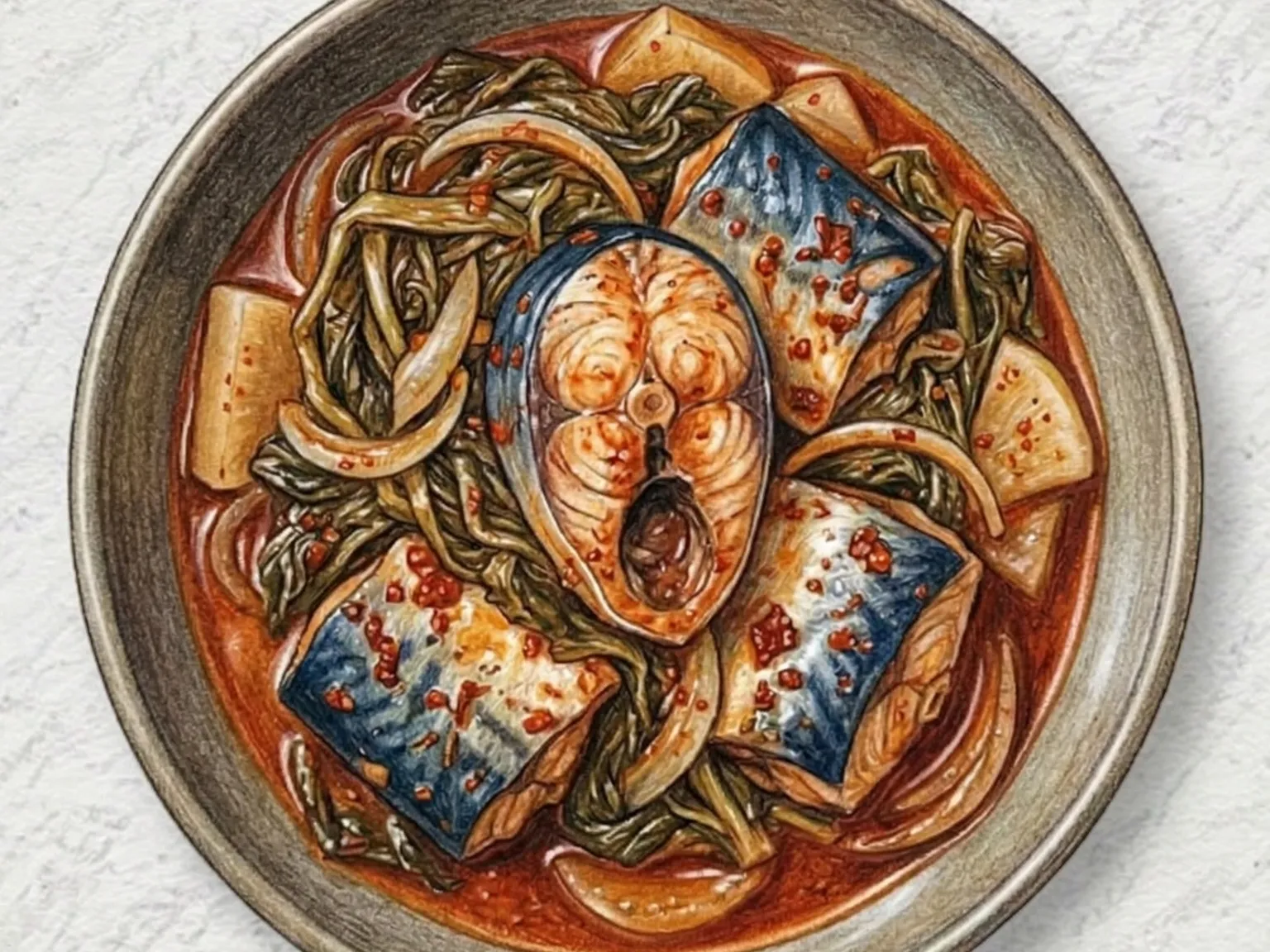
Korean Braised Mackerel with Dried Radish Greens
mackerel fillet, korean radish
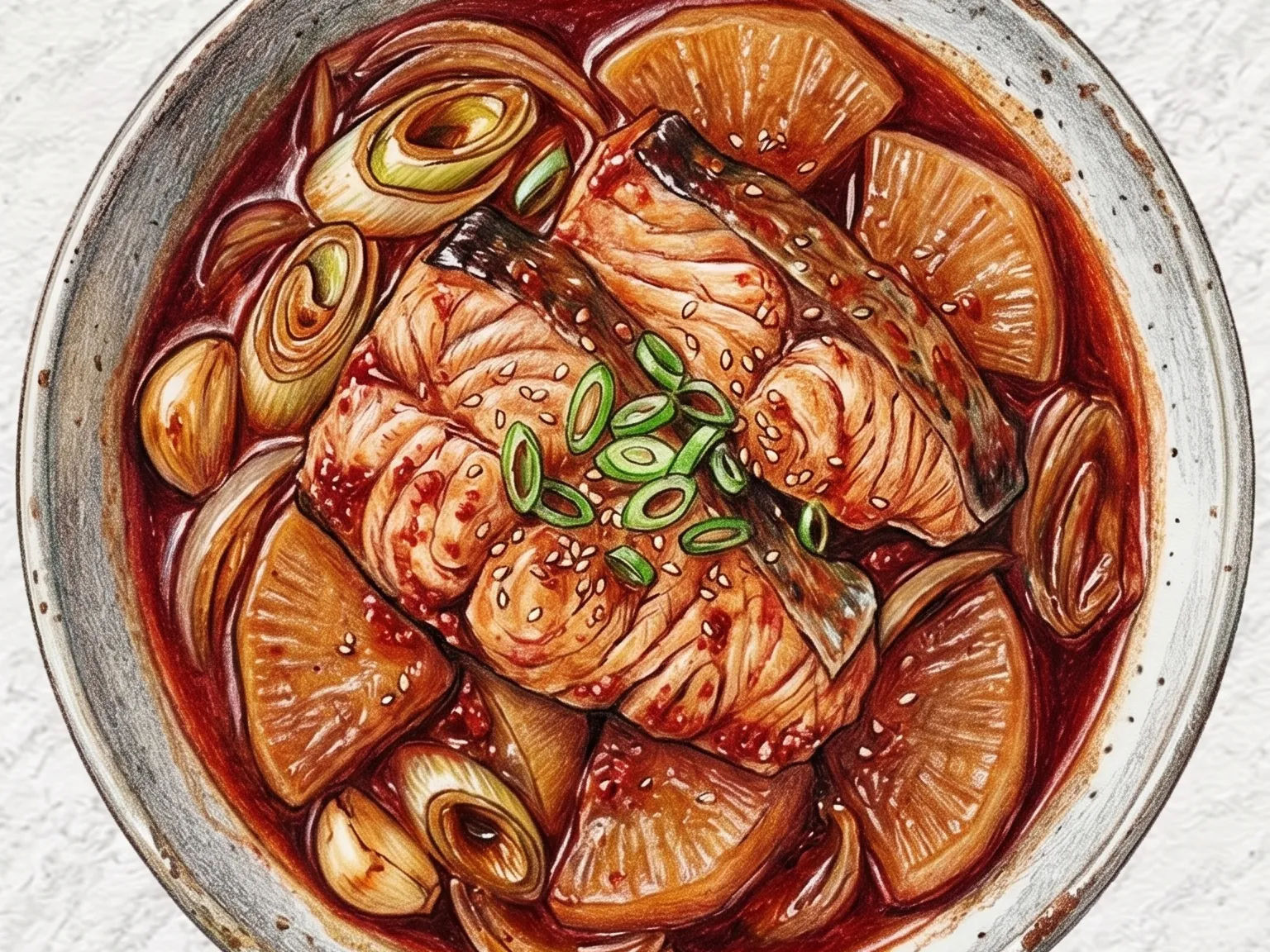
Korean Braised Cod with Vegetables
korean radish, onion
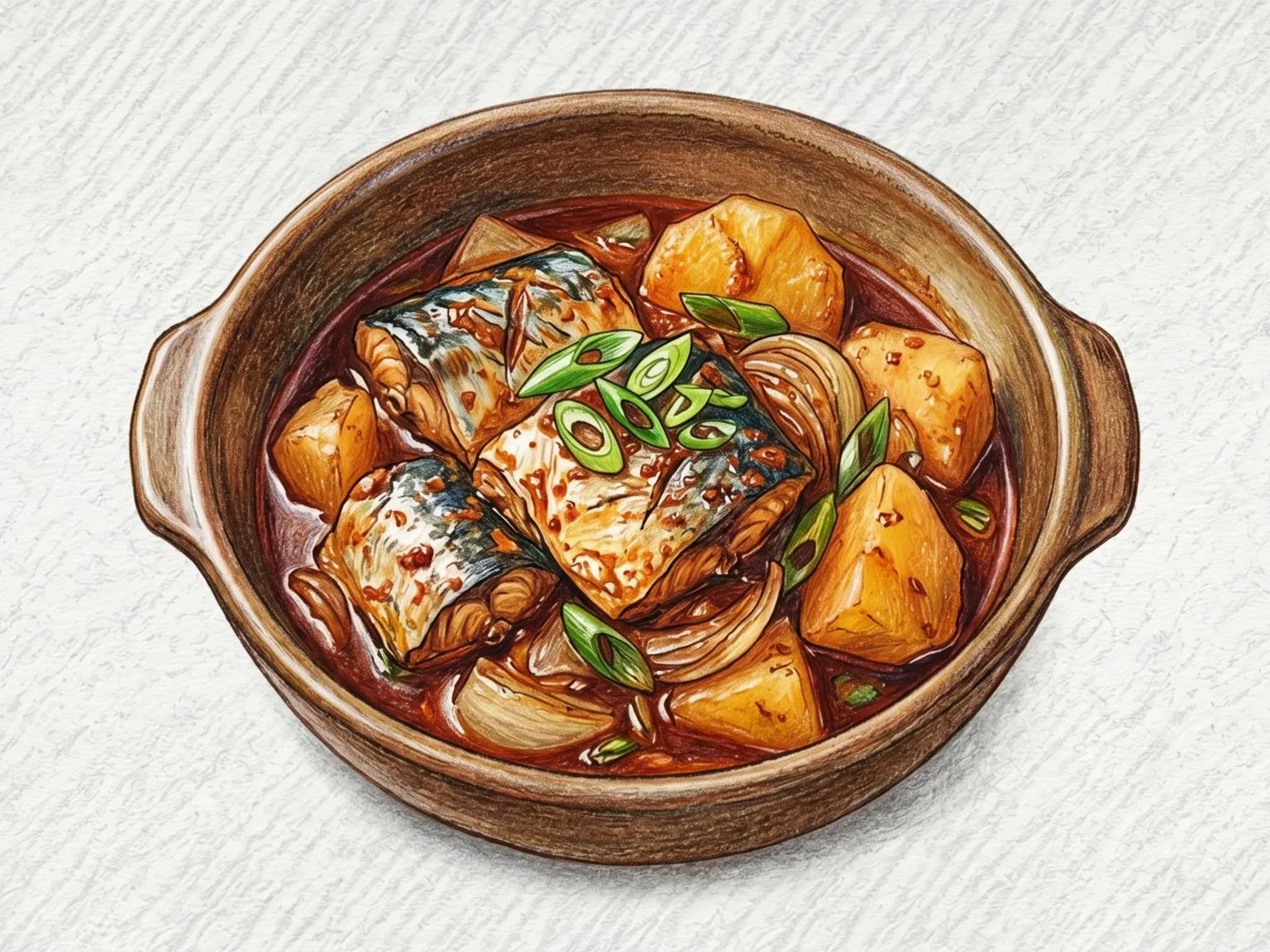
Korean Braised Mackerel with Potatoes
mackerel fillet, onion