Korean Braised Mackerel with Radish
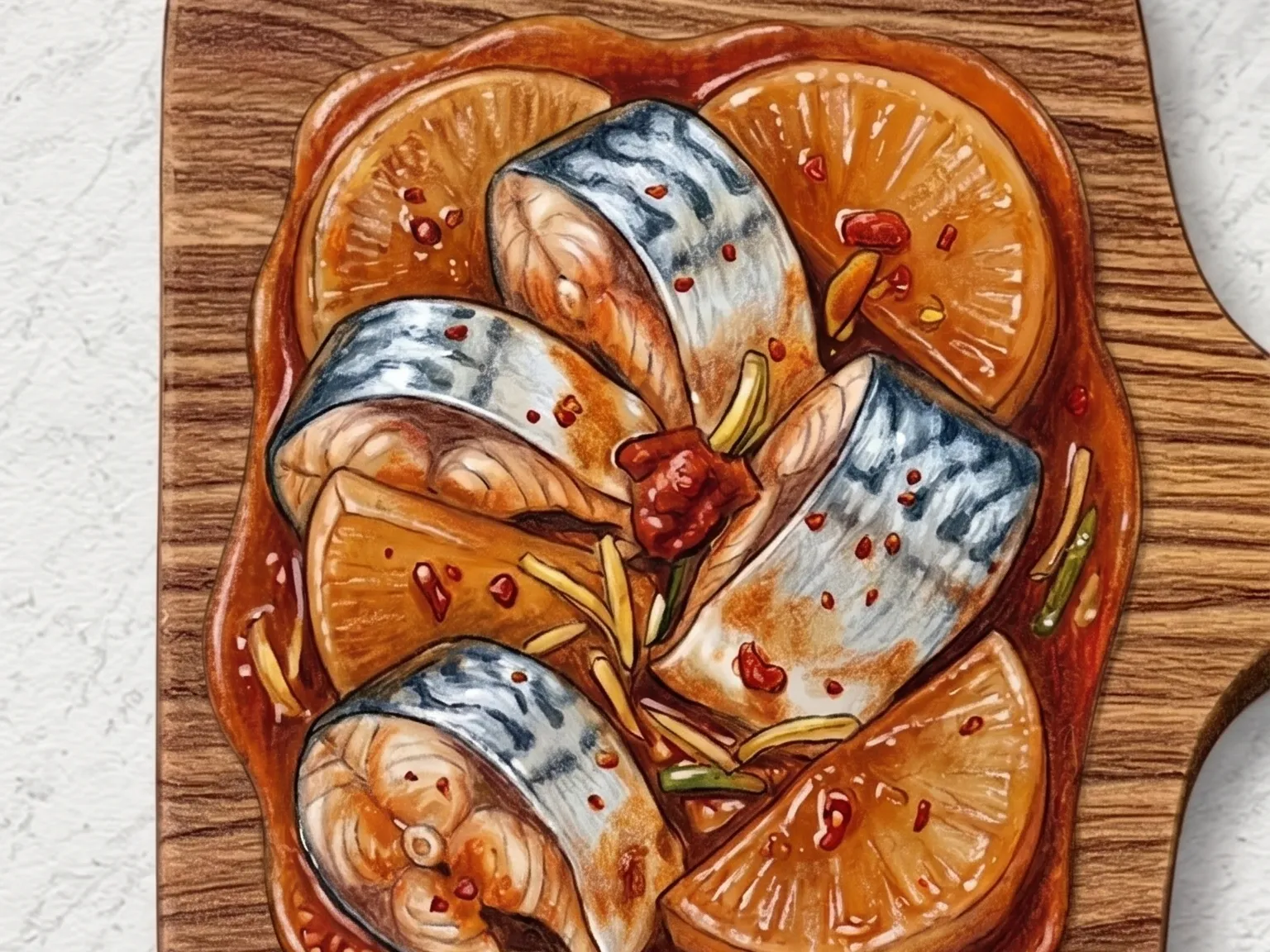
This Korean braised mackerel dish layers radish at the bottom of the pot, pre-cooks it to absorb seasonings deeply, then places mackerel on top to simmer in a spicy soy-gochugaru sauce. Basting the fish with the braising liquid several times throughout cooking ensures the flavors penetrate evenly while the ginger in the sauce tames any fishiness. The radish turns soft and translucent, soaking up the spicy-savory broth and serving as a flavorful bed beneath the flaky fish. Green onion and onion, added toward the end, contribute a fresh lift. The slightly reduced sauce at the finish is rich enough to drizzle over rice.
Adjust Servings
Instructions
- 1
Slice radish into 1 cm half-moons; slice onion and green onion.
- 2
Layer radish at the bottom, add water, and boil for 8 minutes first.
- 3
Mix soy sauce, gochugaru, gochujang, garlic, and ginger.
- 4
Place mackerel over radish and spoon sauce evenly on top.
- 5
Simmer 12 minutes on medium, basting fish 2-3 times.
- 6
Add onion and green onion; braise 5 more minutes until slightly reduced.
As an Amazon Associate, we may earn from qualifying purchases.
Tips
Nutrition (per serving)
More Recipes

Korean Braised Spanish Mackerel with Radish
Samchi mu-jorim layers sliced Korean radish on the bottom of a pot, topped with Spanish mackerel steaks and onion, then braised in a sauce of gochujang, soy sauce, gochugaru, and garlic. The radish prevents the fish from sticking, absorbs the braising liquid, and turns translucent-soft as it cooks. Rather than flipping the fish, the sauce is spooned over the top repeatedly so the flesh stays intact. After about fifteen minutes of simmering on medium heat, the liquid reduces to a concentrated, mildly spicy broth with the radish's subtle sweetness woven through it.

Korean Spicy Fish Stew (Mackerel in Chili-Radish Broth)
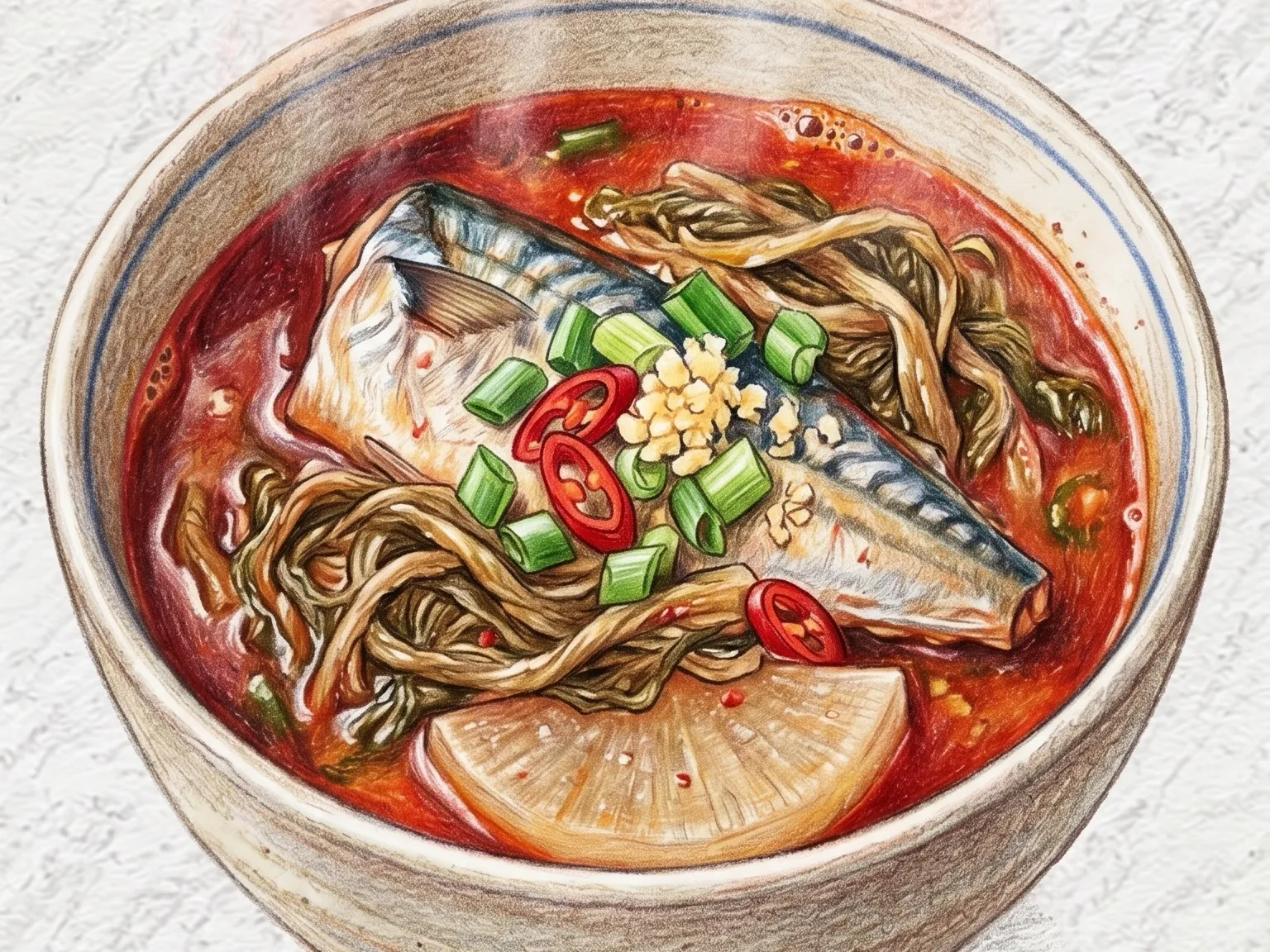
Saengseon jjigae is a spicy Korean fish stew made with mackerel or beltfish cut into chunks, simmered alongside daikon radish and zucchini. Gochujang, gochugaru, soy sauce, and garlic build a bold, peppery broth in an anchovy stock base. The radish neutralizes any fishiness while adding natural sweetness to the soup. Picking the flaky fish off the bone and eating it with spoonfuls of the fiery broth over rice is the traditional way to enjoy it.

Korean Braised Mackerel with Dried Radish Greens
Siraegi godeungeo jorim is a Korean braised mackerel dish cooked with blanched dried radish greens, radish, and onion in a chili-soy sauce. The richness of mackerel fat and the earthy fiber of the dried greens meet in a single pot, each amplifying the other's flavor. Mackerel pre-seasoned with cooking wine is placed on top of the vegetables and braised over medium-low heat for more than twenty minutes, allowing the seasoning to penetrate the fish. Thorough boiling of the greens beforehand is essential to soften their tough fibers, and serving the finished dish over rice with generous spoonfuls of the spicy sauce captures its full depth.

Korean Braised Mackerel (Fatty Mackerel with Radish in Spicy Soy Sauce)
Godeungeo-jjim is a Korean braised mackerel dish simmered with Korean radish, onion, and a generous amount of gochugaru and soy sauce. The mackerel's naturally fatty flesh stands up well to the bold, spicy seasoning, and the radish mellows the fish's aroma while absorbing the flavorful broth. Fresh ginger keeps the overall taste clean despite the richness of the ingredients. This is a staple comfort food in Korean households, always served with plenty of steamed rice to soak up the remaining sauce.

Korean Godeungeo Mu Jjigae (Mackerel Radish Stew)
This stew pairs mackerel fillets with Korean radish in a spicy broth. The oily mackerel releases its rich fats into the soup, while 350 grams of radish tempers any fishiness and adds a clean, cooling undertone. Gochugaru and gochujang bring the heat, and soup soy sauce ties the seasoning together. The radish slices soften as they cook, soaking up the spicy fish broth - a classic Korean home-cooking combination.

Korean Braised Monkfish in Spicy Soy Sauce
Agwi-jorim - braised monkfish - is a gentler preparation than the fiery agu-jjim, focusing on a soy-based braising sauce rather than a chili-paste coating. Thick slices of Korean radish line the bottom of the pot, cooking first to release their natural sweetness into the liquid. The monkfish goes on top and simmers covered in a mixture of soy sauce, gochugaru, garlic, and water that reduces slowly into a concentrated glaze. The radish acts as both a buffer preventing the delicate fish from sticking and a flavor sponge that becomes the best part of the dish. As the liquid reduces, the sauce thickens and stains both fish and radish a deep amber. The finished dish has a more balanced, less aggressive flavor profile than agu-jjim, with soy saltiness and radish sweetness in equal proportion to the chili heat.