Korean Spicy Marinated Mackerel Grill
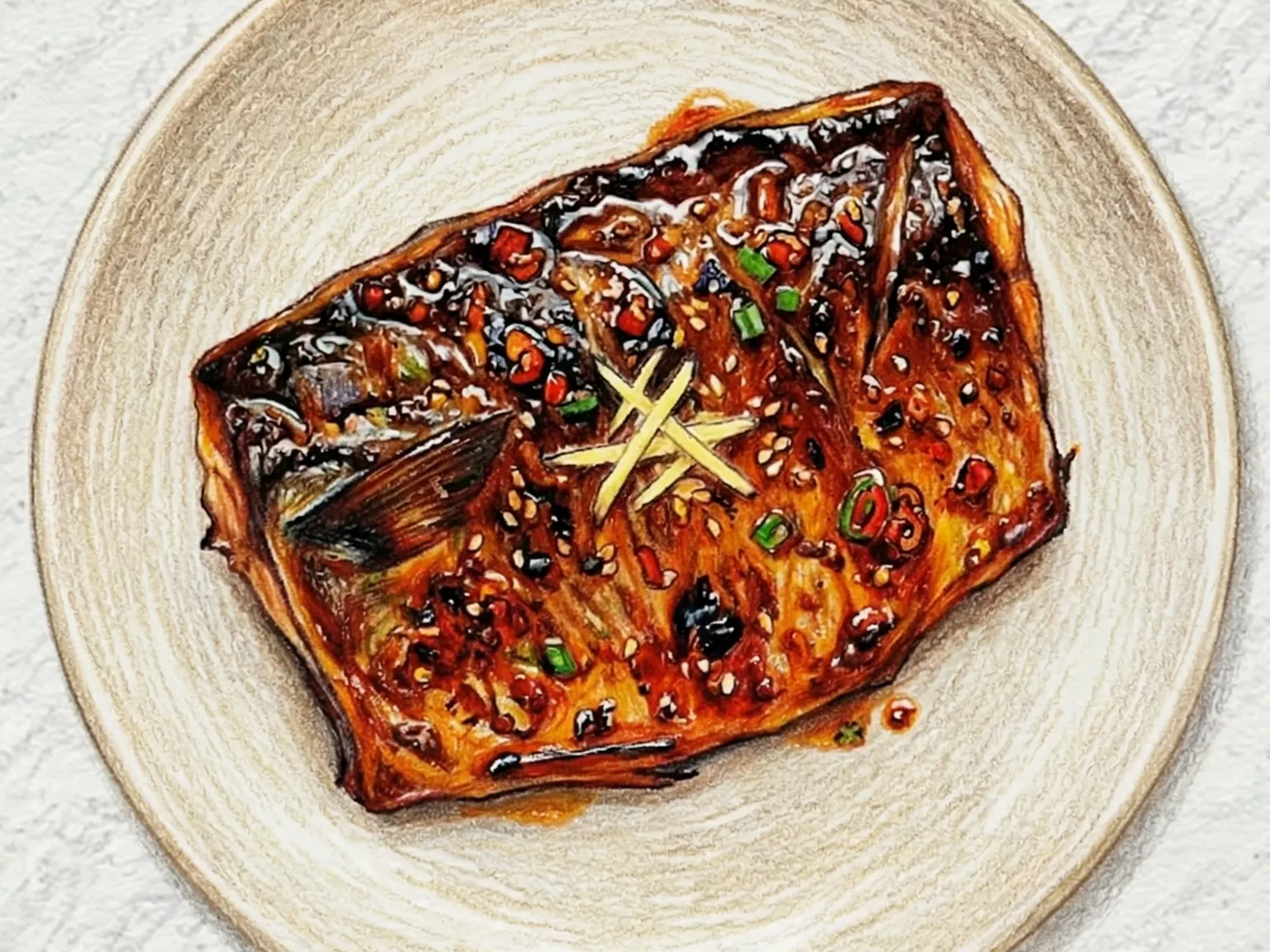
Godeungeo yangnyeom-gui is a Korean spicy marinated mackerel where fish pieces are coated in a paste of gochujang, soy sauce, sugar, garlic, ginger juice, and sesame oil, rested for thirty minutes, then grilled over medium heat with careful turning. The mackerel's own fat melts during cooking and accelerates the caramelization of the marinade, forming a glossy, deep-red crust on the skin. Ginger juice plays a dual role-it neutralizes the fish's raw smell and introduces a subtle freshness beneath the fermented kick of the gochujang. Because the high fat content causes flare-ups easily, maintaining steady medium heat and turning patiently is essential to achieve a charred glaze without burning.
Adjust Servings
Instructions
- 1
Clean and cut mackerel into serving pieces.
- 2
Mix gochujang, soy sauce, sugar, garlic, ginger, and sesame oil.
- 3
Coat mackerel with marinade and rest for 30 minutes.
- 4
Grill over medium heat, turning carefully.
- 5
Cook until the marinade caramelizes and chars at the edges.
As an Amazon Associate, we may earn from qualifying purchases.
Tips
Nutrition (per serving)
More Recipes

Korean Grilled Mackerel (Crispy Skin Salt-Grilled Blue Fish)
Godeungeo-gui is Korea's quintessential grilled mackerel, prepared by salting the fish for ten minutes to draw out moisture and reduce fishiness, patting the surface completely dry, then pan-frying or grilling. Cooking skin-side down first for five to six minutes renders the abundant subcutaneous fat and crisps the skin into a crackling shell, while flipping and cooking the flesh side for four to five more minutes keeps the interior moist and flaky. Mackerel's high omega-3 fat content transforms under heat into a deeply savory, naturally rich flavor that needs no marinade or seasoning beyond salt. A side of freshly grated daikon radish mixed with soy sauce provides a sharp, peppery contrast that cleanses the palate between bites of the oily fish.

Korean Grilled Semi-dried Pollock
Kodari-gui is a Korean grilled semi-dried pollock where the fish is pan-fried while being repeatedly brushed with a glaze of soy sauce, gochujang, oligosaccharide syrup, minced garlic, and sesame oil. Semi-drying concentrates the pollock's protein and draws out moisture, giving it a chewy, dense texture that absorbs seasoning more readily than fresh fish. The sugar in the glaze caramelizes as it cooks, building up a glossy, dark coating with each brushing. Applying the sauce gradually in thin layers rather than all at once prevents burning, and briefly soaking the dried fish before cooking softens the interior while maintaining that characteristic firm bite. Sesame seeds scattered on at the end add a toasted accent.

Korean Grilled Dried Pollack
Dried pollack strips are briefly moistened, coated in a paste of gochujang, soy sauce, and oligosaccharide syrup, then grilled low and slow. The slow heat lets the glaze seep into the chewy dried fish without charring, building layers of spicy-sweet flavor. A touch of sesame oil applied at the finish adds a toasted aroma that rounds out the dish.

Korean Grilled Webfoot Octopus
Cleaned webfoot octopus is tossed in a marinade of gochujang, chili flakes, soy sauce, and sugar for ten minutes, then seared on high heat for just three to four minutes. The brief cook time preserves the octopus's natural springy texture, while the intense flame adds a smoky char to the spicy glaze. Green onion tossed in at the very end introduces a fresh, sharp note that cuts through the heat.

Korean Spicy Fish Stew (Mackerel in Chili-Radish Broth)
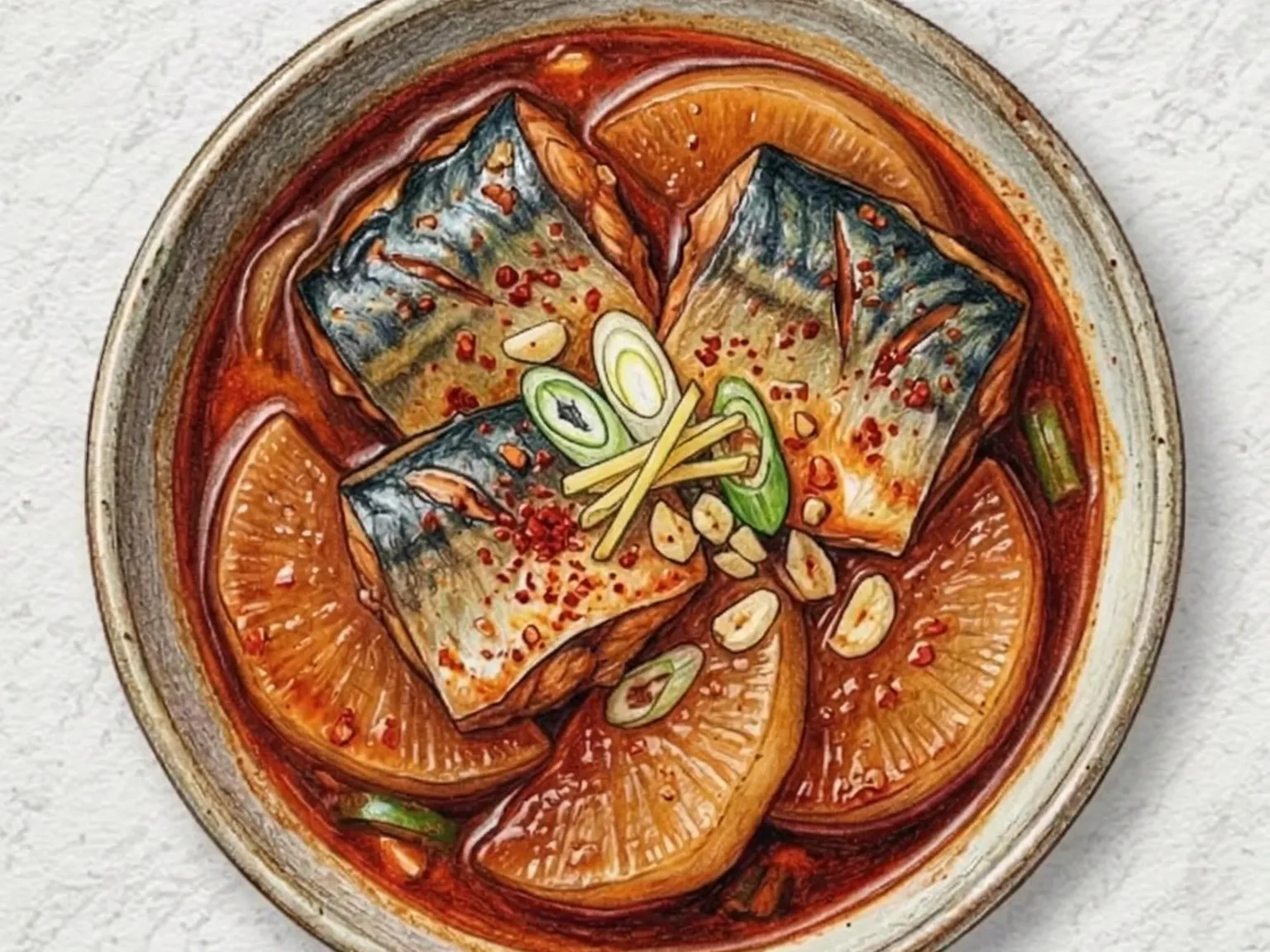
Saengseon jjigae is a spicy Korean fish stew made with mackerel or beltfish cut into chunks, simmered alongside daikon radish and zucchini. Gochujang, gochugaru, soy sauce, and garlic build a bold, peppery broth in an anchovy stock base. The radish neutralizes any fishiness while adding natural sweetness to the soup. Picking the flaky fish off the bone and eating it with spoonfuls of the fiery broth over rice is the traditional way to enjoy it.

Korean Godeungeo Mu Jjigae (Mackerel Radish Stew)
This stew pairs mackerel fillets with Korean radish in a spicy broth. The oily mackerel releases its rich fats into the soup, while 350 grams of radish tempers any fishiness and adds a clean, cooling undertone. Gochugaru and gochujang bring the heat, and soup soy sauce ties the seasoning together. The radish slices soften as they cook, soaking up the spicy fish broth - a classic Korean home-cooking combination.