Korean Radish & Shrimp Pancake

Korean Radish & Shrimp Pancake

Quick answer

Julienned Korean radish and small peeled shrimp are combined in a pancake batter fortified with a measured amount of potato starch for added crispiness.

What makes this special

  • Julienned radish and small shrimp combined with potato starch for a lighter, crispier pancake.
  • Julienned radish releases moisture, balanced by starch in the batter ratio
  • Small amount of potato starch adds structural crispness
Total time
27 min
Level
Easy
Servings
2 servings
Ingredients
8
Calories
320 kcal
Protein
17 g

Key ingredients

Korean radishpeeled shrimpKorean pancake mixpotato starchegg

Core cooking flow

  1. 1 Julienne radish (250 g) into 3-4 mm strips and place in a bowl.
  2. 2 Place cocktail shrimp (120 g) on paper towel and press to absorb moisture.
  3. 3 Whisk pancake mix (120 g), potato starch (1 tbsp), egg (1), and cold water (120 ml) until smooth.

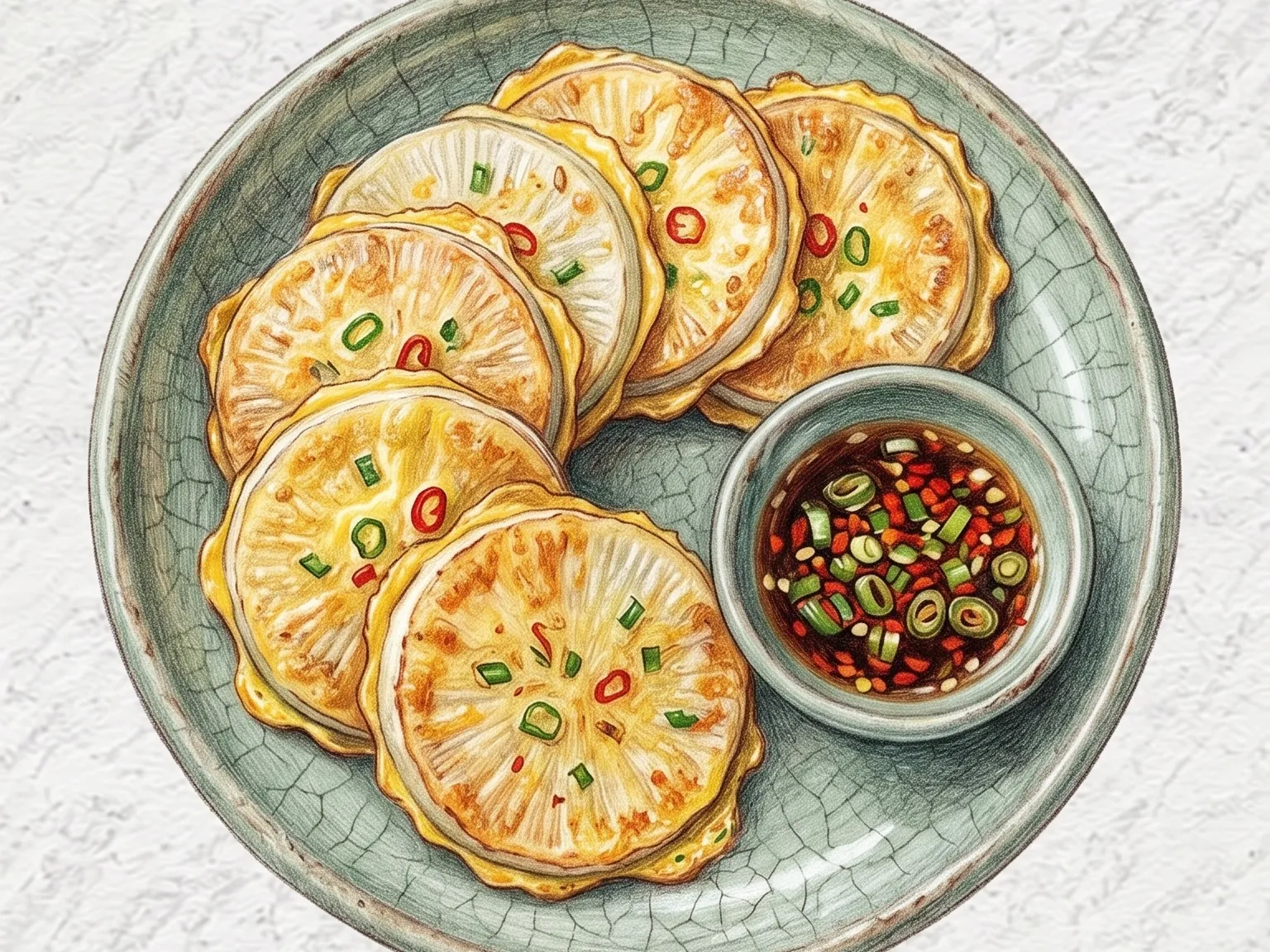
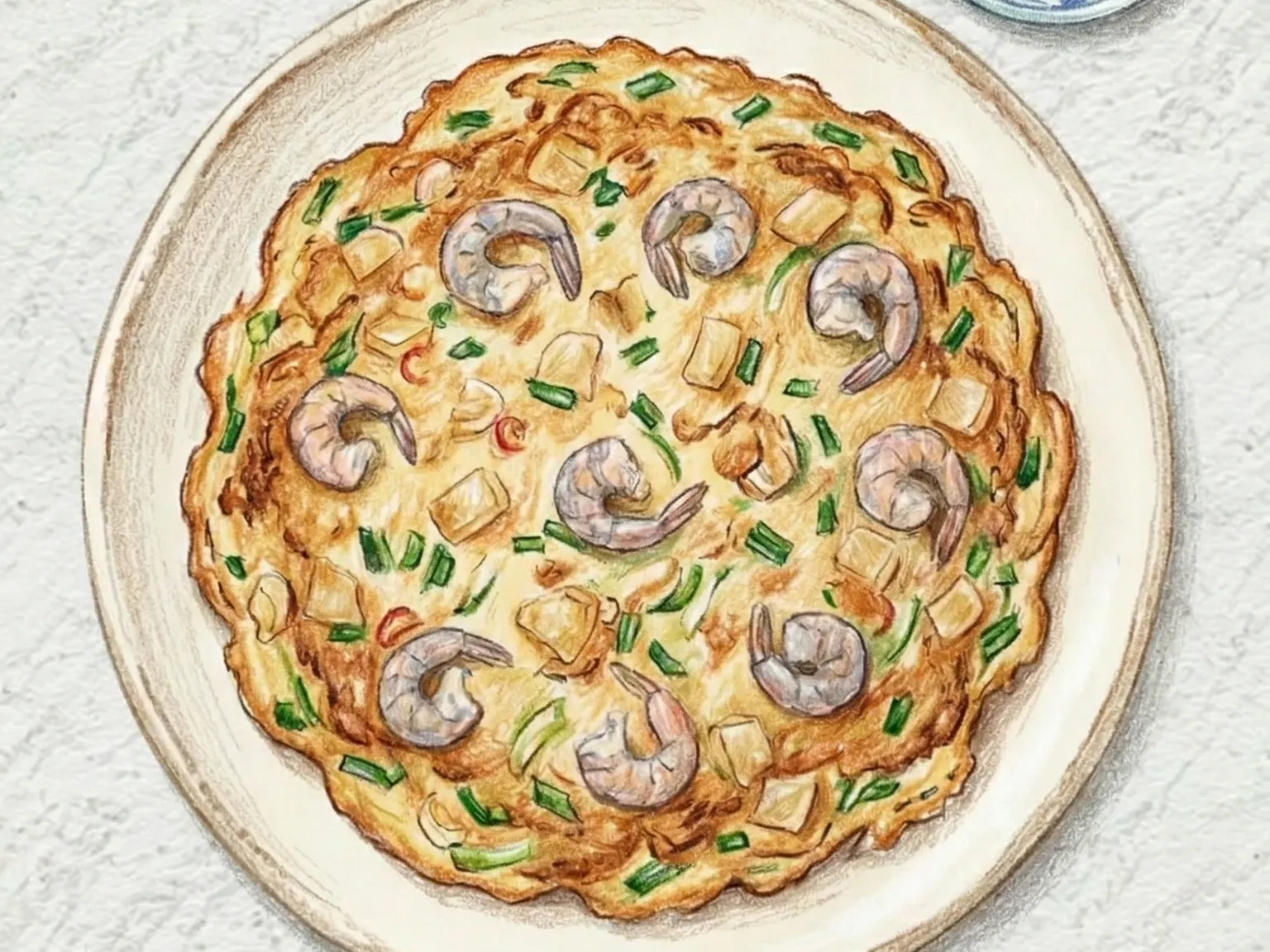
Julienned Korean radish and small peeled shrimp are combined in a pancake batter fortified with a measured amount of potato starch for added crispiness. Egg is mixed into the batter to improve binding and keep the pancake intact when flipped. Scallions are distributed throughout for a mild, grassy fragrance. Radish releases notable moisture as it cooks, so frying over high heat is essential to drive off that liquid quickly and achieve a crisp outer surface. The sharp, slightly bitter edge of raw radish disappears with heat and gives way to a gentle natural sweetness that pairs cleanly with the mild, delicate flavor of the shrimp. Pressing the center of the pancake down with a spatula while frying encourages even browning all the way through.

Prep 15min Cook 12min 2 servings
Recipes by ingredient → korean radish egg scallions

Instructions

Read the steps as a cooking flow: prep, heat, seasoning, doneness control, and finish.

6 steps
  1. 1
    Season

    Julienne radish (250 g) into 3-4 mm strips and place in a bowl.

    Sprinkle with a pinch of salt and rest 5 minutes. Lightly squeeze out the released moisture by hand. Excess radish water makes the batter too thin.

  2. 2
    Prep

    Place cocktail shrimp (120 g) on paper towel and press to absorb moisture.

    Cut in half, then chop into rough chunks. Do not mince too finely or the texture is lost.

  3. 3
    Heat

    Whisk pancake mix (120 g), potato starch (1 tbsp), egg (1), and cold water (120 ml) until smooth.

    Potato starch adds chewiness when cooked.

  4. 4
    Prep

    Add radish, shrimp, and diagonally sliced scallion (2 stalks) to the batter.

    Toss with chopsticks until all ingredients are evenly coated.

  5. 5
    Control

    Heat oil (2 tbsp) in a pan over medium heat.

    Ladle batter into 10-12 cm rounds and spread thin immediately. Then do not touch for 3-4 minutes.

  6. 6
    Heat

    Flip when edges are golden and firm.

    Cook the other side 3-4 minutes more. Press the center lightly with a chopstick; it should spring back when done.

After the steps

Pick a recipe that fits this dish.

Continue with shared ingredients, meal pairings, or a similar method.

Recipes That Go Well With This

More Pancakes →

Based on shared ingredients and meal pairing

Korean Water Parsley Shrimp Pancake
Shared ingredient: peeled shrimp Pancakes

Korean Water Parsley Shrimp Pancake

This Korean pancake combines fresh water parsley and cocktail shrimp in a light, seasoned batter. The preparation starts by cutting cleaned water parsley into five-centimeter pieces, slicing onions thinly, and drying the shrimp to prevent oil splattering. The batter is mixed using pancake flour, cold water, an egg, and a pinch of salt until smooth. The vegetables and shrimp are folded in gently with chopsticks to keep the texture light. Cooking the batter in a well-oiled pan over medium heat for two to three minutes on each side produces a pancake with thin, crispy edges. The water parsley stems retain their crispiness even after frying, contrasting with the tender shrimp. The herbal fragrance of the parsley blends with the clean sweetness of the shrimp. It is typically cut into bite-sized pieces immediately after cooking and served warm with a soy sauce and vinegar dipping sauce.

Korean Scallion Pancake
Shared ingredient: korean pancake mix Grilled

Korean Scallion Pancake

Pa-jeon is a Korean scallion pancake made by cutting scallions into six-to-seven-centimeter lengths, laying them across an oiled pan, and pouring a batter of Korean pancake mix, water, egg, and salt directly over them before frying on medium heat. The method of placing the scallions first and covering them with batter means one side of each scallion presses against the hot pan surface, which caramelizes them and coaxes out a sweet, aromatic fragrance that would not develop if the scallions were simply mixed into the batter. Batter consistency is a meaningful variable: the mixture should flow off a spoon in a continuous stream rather than plopping, because anything thicker makes the pancake bready and reduces the proportion of scallion in each bite, while anything too thin prevents the distinctive crispy rim from forming around the edges. Adding an extra drizzle of oil around the perimeter before flipping fries the outer edge like a fritter, creating a sharp contrast between the crunchy border and the soft, scallion-loaded interior when dipped into a soy-based dipping sauce. Pa-jeon is also known in Korean culture as a dish that people instinctively crave on rainy days, a reputation closely tied to the sound of batter hitting a hot oiled pan.

Korean Spicy Stir-Fried Anchovies
Serve together Side dishes

Korean Spicy Stir-Fried Anchovies

Spicy stir-fried anchovies (maeun myeolchi-bokkeum) toss medium-sized dried anchovies in a gochujang-gochugaru glaze, occupying the opposite end of the flavor spectrum from the sweet jiri-myeolchi version and targeting adult palates. Medium anchovies are larger and thicker than the tiny variety, requiring individual head-and-gut removal to eliminate bitterness - a tedious prep step that nonetheless determines the dish's clean finish. After dry-toasting to drive off moisture, the anchovies simmer in a sauce of gochujang, gochugaru, soy sauce, oligosaccharide, and minced garlic until each piece is coated in a rust-colored glaze. The gochujang's fermented heat combines with gochugaru's vivid red to create both flavor depth and visual appeal. The larger anchovy size delivers a satisfying crunch that lingers alongside a lasting savory umami. Heat intensity is adjustable via gochugaru quantity - adding chopped cheongyang chili ratchets it up another notch. This banchan doubles as a soju drinking snack, appearing as frequently on bar tables as on dinner tables.

Korean Dried Radish Greens Pancake
Similar recipe Pancakes

Korean Dried Radish Greens Pancake

Boiled dried radish greens are combined with doenjang and pan-fried into a dense, rustic jeon with deep fermented character. The fibrous texture of the radish greens gives the pancake a satisfying chew, and the soybean paste saturates the batter so thoroughly that no dipping sauce is necessary. Buckwheat flour adds an earthy coarseness that suits the greens well. Cheongyang chili provides a spicy accent throughout. Minced garlic benefits from a brief saute in oil before being mixed into the batter-the raw edge cooks off and the garlic's savory depth integrates fully into the finished pancake. Cooking over low heat lets the inside set without burning the outside, producing a crisp surface and a tender, flavorful center.

Serve with this

Korean Dakgalbi Fried Rice
Rice Easy

Korean Dakgalbi Fried Rice

Dakgalbi bokkeumbap is a fried rice made by stir-frying gochujang-marinated boneless chicken thigh with cabbage and onion over high heat, then adding day-old rice to the pan and frying until every grain absorbs the sweet-spicy marinade. The dish originated from the Chuncheon tradition of finishing a dakgalbi meal by stir-frying the leftover sauce and scraps with rice, effectively turning what remains in the pan into a second course. Day-old rice is essential: fresh rice holds too much moisture and clumps together, while refrigerated rice separates cleanly on the hot surface and makes sufficient contact with the pan to develop slightly charred bits at the bottom. These caramelized patches add a smoky crunch that contrasts with the sauced grains above and elevate the dish beyond a simple fried rice. Cabbage and perilla leaves added at the very end of cooking retain a faint crunch that cuts through the richness of the gochujang marinade. Plating the rice with a few perilla leaves laid on top and a scatter of sesame seeds over the surface finishes the dish without requiring anything further.

🏠 Everyday ⚡ Quick
Prep 12min Cook 14min 2 servings
Korean Whelk Stew (Spicy Canned Whelk & Cabbage Pot)
Stews Easy

Korean Whelk Stew (Spicy Canned Whelk & Cabbage Pot)

Golbaengi-jjigae is a spicy Korean stew made with canned whelk as the centerpiece. Because the whelk is already fully cooked inside the can, it goes in near the end of cooking rather than at the start, allowing the broth and vegetables to reach their full flavor first. Extended heat makes whelk rubbery, so a brief simmer of two to three minutes is enough to warm the pieces through while preserving their distinctive chewy texture. Anchovy stock forms the savory foundation of the broth, delivering a clean seafood depth that amplifies the whelk's flavor without masking it. Gochujang and gochugaru combine to give the stew its fiery, full-bodied heat, while cabbage and onion absorb the broth over time and release a gentle sweetness that balances the spice. A single cheongyang chili added whole sharpens the heat at the finish, pulling the entire broth taut with a bright, clean burn. A handful of sliced green onion stirred in at the end brings a fresh aroma that lifts the richness of the stew. It works equally well as a rice-side dish or as an accompaniment to soju.

🏠 Everyday ⚡ Quick
Prep 12min Cook 18min 2 servings
Refreshing Spicy Mulhoe Broth
Soups Easy

Refreshing Spicy Mulhoe Broth

Refreshing Spicy Mulhoe Broth is a Korean cold soup base for raw fish dishes. This recipe combines red pepper paste, red pepper powder, vinegar, sugar, plum syrup, and minced garlic. The mixture of six tablespoons of vinegar and two of plum syrup provides a double acidity that blocks fishy notes from seafood. Adding one hundred milliliters of lemon-lime soda introduces carbonation that lifts a bright, airy note in the broth. Alternatively, using pear juice instead of soda offers a sophisticated sweetness. To prepare, mix the paste first to remove dry pockets, stir in water, and add the soda last to preserve carbonation. Chill the broth for at least two hours or ferment it for a day to deepen the flavor. Serving it semi-frozen as a slushy lets the ice dilute the seasoning gradually as sashimi thaws.

🔥 Trending Now ⚡ Quick
Prep 15min Cook 5min 2 servings

Similar recipes

Korean Kimchi Pork Jeon (Fermented Kimchi and Pork Crispy Pancake)
Pancakes Easy

Korean Kimchi Pork Jeon (Fermented Kimchi and Pork Crispy Pancake)

Well-fermented kimchi and pork shoulder are the backbone of this hearty Korean pancake. Kimchi brine is mixed directly into the batter, intensifying both the crimson color and the tangy, fermented depth of flavor. A small amount of sugar balances the acidity, while green onion and onion distribute contrasting texture throughout each bite. Pressing the pancake flat in a generously oiled pan over high heat produces deeply caramelized, crispy edges. The kimchi should not be squeezed too dry before mixing in, since residual moisture keeps the interior soft and prevents the finished pancake from becoming dense. Pork shoulder should be cut into small pieces so it cooks through before the exterior over-browns. The kimchi's seasoning is assertive enough that no dipping sauce is required, making this a complete side dish on its own.

🍺 Bar Snacks 🏠 Everyday
Prep 20min Cook 18min 4 servings
Korean Tuna & Perilla Leaf Fritters
Pancakes Easy

Korean Tuna & Perilla Leaf Fritters

Chamchi-kkaennip-jeon is a Korean pan-fried pancake made with canned tuna and perilla leaves. The oil is drained from the tuna before mixing, which keeps the batter from becoming greasy. Perilla leaves, chopped into the batter, contribute their distinctive herbal fragrance - sharp and slightly anise-like - which cuts through the brininess of the tuna and gives the pancake its character. The combination lands somewhere between a vegetable pancake and a fish cake: more substantial than the former, lighter than the latter. Egg binds the batter and produces a smooth, even surface when cooked. Onion and carrot are finely diced so the pancake spreads thin and cooks through uniformly, rather than leaving thick raw patches at the center. Adequate oil in the pan and medium heat produce a thin, crisp exterior without burning. The pancake holds its texture reasonably well at room temperature, making it a practical lunchbox side dish. A soy-based dipping sauce brings out the perilla fragrance more clearly when eaten alongside.

🍺 Bar Snacks 🍱 Lunchbox
Prep 12min Cook 10min 2 servings
Korean Garlic Chive Pancake
Grilled Easy

Korean Garlic Chive Pancake

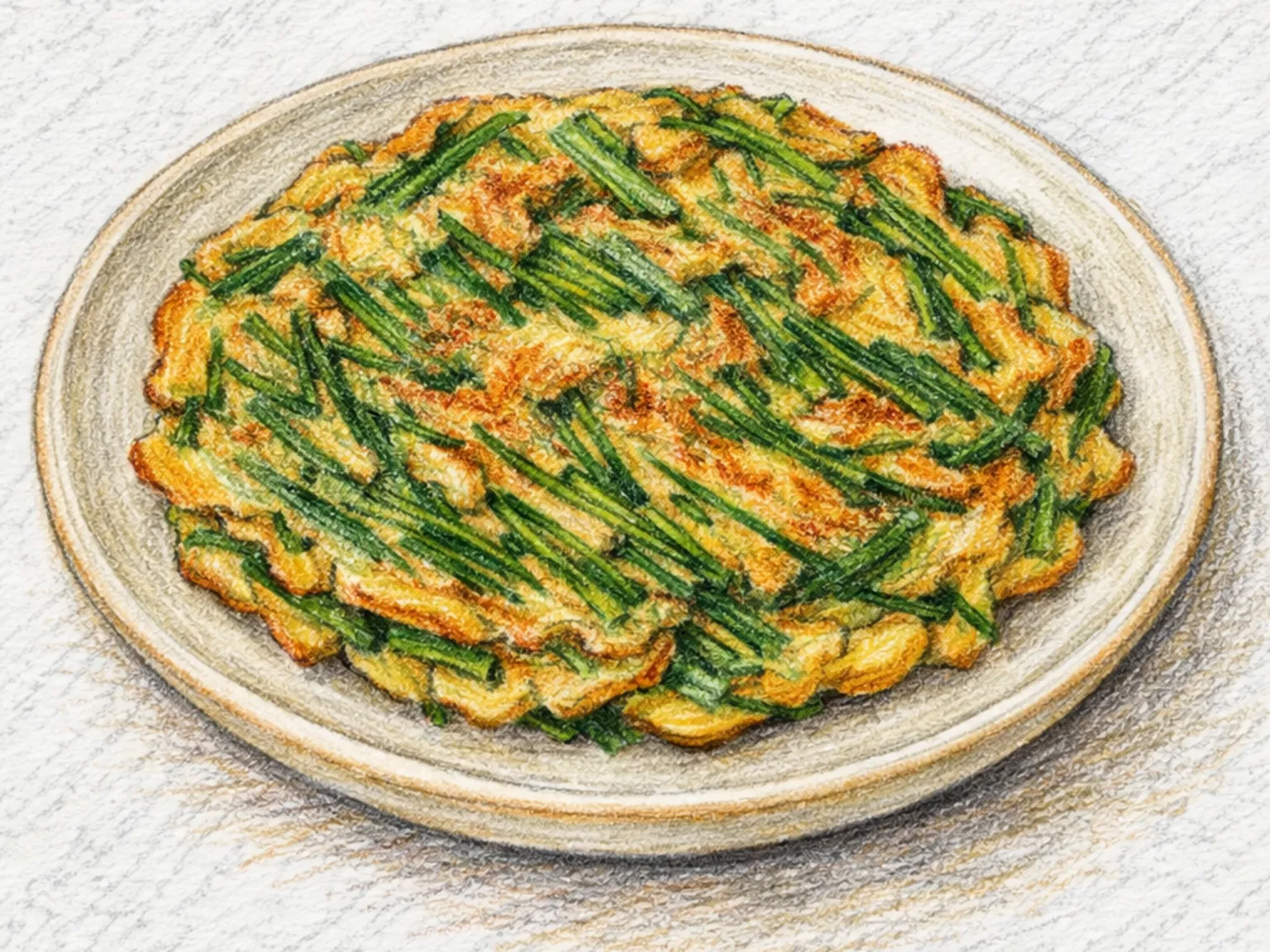
Buchu-jeon is a Korean garlic chive pancake where a generous pile of chives is loosely bound in a thin batter together with julienned carrot and onion, then pan-fried until the edges crisp and turn golden. The chives carry a pungent, mildly spicy aroma that becomes more pronounced with heat, and cutting them to five centimeters prevents the pancake from tearing when flipped. The batter is intentionally thin and runny - a thick batter produces a doughy, steamed interior that smothers the chive flavor rather than framing it. Spreading each portion as flat as possible in the pan is the direct path to the crispy edges that define the dish. Frying multiple small pancakes holds crunch significantly better than attempting a single large one, since each piece spends less time on heat and cools more evenly. Served immediately off the pan with a dipping sauce of soy sauce sharpened with a small pour of vinegar.

🍺 Bar Snacks ⚡ Quick
Prep 12min Cook 10min 2 servings

Tips

If radish is very watery, reduce water by 1-2 tbsp.
Leave shrimp slightly chunky for better texture.

Nutrition (per serving)

Calories
320
kcal
Protein
17
g
Carbs
30
g
Fat
14
g