Korean Sweet Potato Pancakes
Quick answer
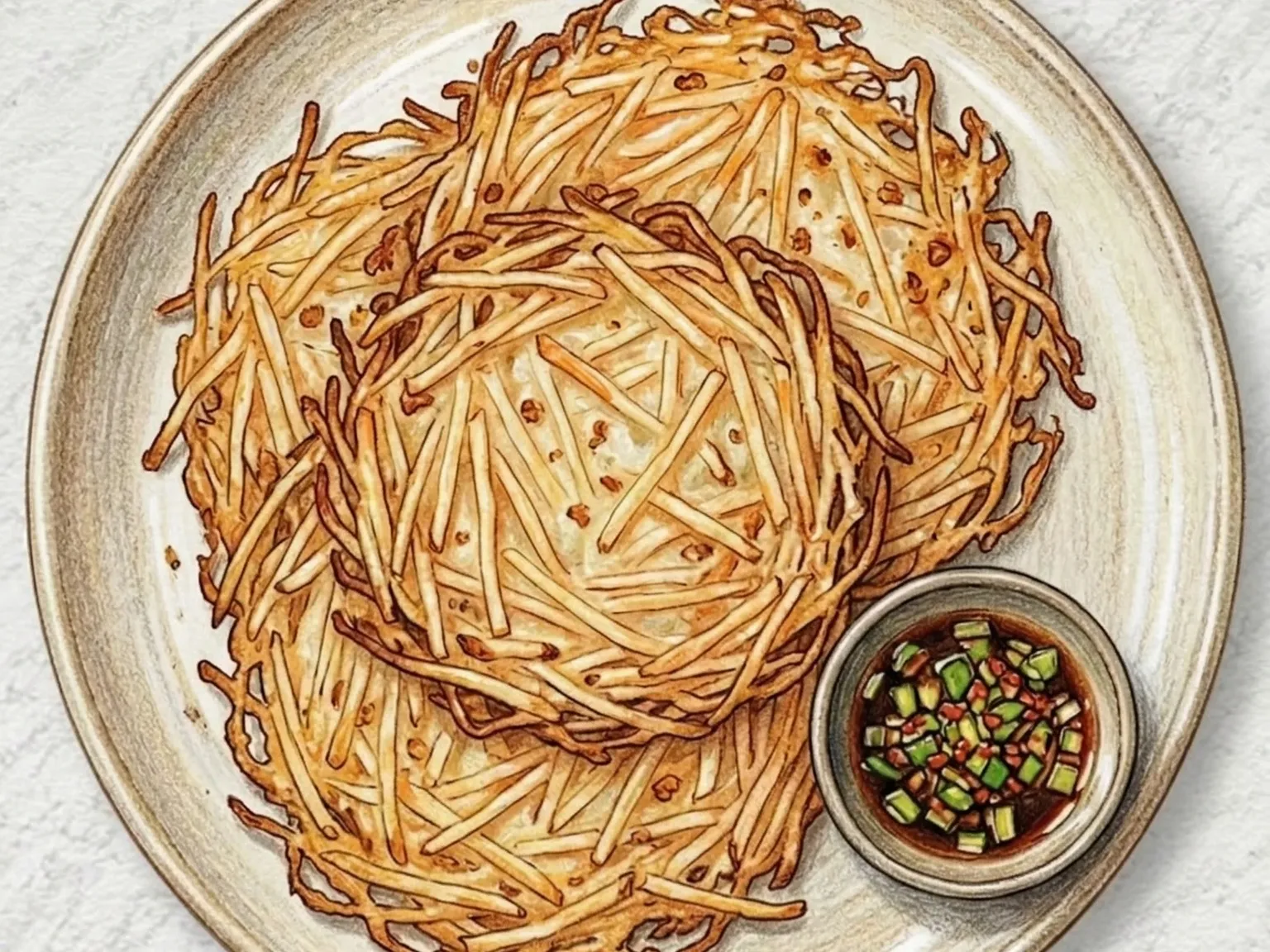
Goguma-jeon is a Korean sweet potato pancake made by julienning peeled sweet potatoes, folding them into a batter of pancake mix, water, salt, and a touch of sugar, then...
What makes this special
- Goguma-jeon are julienned sweet potato pancakes with crispy edges held together by natural starch.
- Sweet potato starch sets in the heat, binding with batter to crisp the edges
- Natural sweetness of sweet potato balances the salt seasoning
Key ingredients
Core cooking flow
- 1 Peel 300g of sweet potato and cut it into thin, even julienne strips about 0.3cm thick.
- 2 In a wide bowl, combine 90g pancake mix, 110ml water, 0.3 teaspoon salt, and 1 teaspoon sugar.
- 3 Add the julienned sweet potato to the batter and fold gently so the strips do not break.
Goguma-jeon is a Korean sweet potato pancake made by julienning peeled sweet potatoes, folding them into a batter of pancake mix, water, salt, and a touch of sugar, then spreading the mixture thin in an oiled pan and frying both sides until golden. The sweet potato's starch gelatinizes in the heat and bonds with the batter to create lacy, crisp edges, while the center retains the tuber's natural moist sweetness. Keeping the pancake thin is non-negotiable-pressing the batter flat with the back of a spoon ensures even cooking and maximum crunch, because thick portions steam internally and turn soggy. Adding a teaspoon of sugar to the batter amplifies the sweet potato's subtle sweetness and encourages faster caramelization at the edges.
Instructions
Read the steps as a cooking flow: prep, heat, seasoning, doneness control, and finish.
- 1Heat
Peel 300g of sweet potato and cut it into thin, even julienne strips about 0.3cm thick.
Trim any thicker pieces so the potato cooks at the same pace and does not stay firm inside.
- 2Season
In a wide bowl, combine 90g pancake mix, 110ml water, 0.3 teaspoon salt, and 1 teaspoon sugar.
Whisk until the dry flour disappears and the batter looks thick enough to cling to the sweet potato.
- 3Step
Add the julienned sweet potato to the batter and fold gently so the strips do not break.
Stop when the batter lightly coats the spaces between the strips instead of pooling heavily at the bottom.
- 4Control
Add 2 tablespoons cooking oil to a pan and preheat over medium heat for about 1 minute.
The pan is ready when a small bit of batter sizzles gently around the edges without smoking.
- 5Heat
Spoon the mixture into the pan and press it very thin with the back of the spoon.
Keep the heat at medium and fry for 3-4 minutes, until the edges set, look lacy, and turn golden.
- 6Heat
When the underside is deep golden, slide a wide spatula under the pancake and flip it carefully.
Cook for 2-3 minutes more, then remove it when both sides feel crisp and let it rest briefly before serving.
After the steps
Pick a recipe that fits this dish.
Continue with shared ingredients, meal pairings, or a similar method.
Recipes That Go Well With This
More Grilled →Based on shared ingredients and meal pairing
Korean Kimchi Potato Jeon
Kimchi-gamja-jeon is a pan-fried Korean pancake made from grated potatoes combined with chopped napa kimchi, Korean pancake mix, green onion, and Cheongyang chili. The grating releases starch along with water, and the key step is letting the mixture settle so the starch sinks, then pouring off the liquid and recombining only the starch with the rest of the batter. This starch concentration creates the contrast between a shattering crust and a moist, soft interior that marks a well-made potato pancake. The batter is spread thin in a preheated oiled pan and fried on both sides over medium-high heat. Keeping the temperature high enough that the exterior sets quickly before oil soaks in is essential, as a pan that is too cool produces a greasy, soft result. Kimchi juice that hits the hot pan caramelizes at the edges, creating pockets of deep savory crust alongside the sharp fermentation flavor. The tangy acidity of the kimchi and the mild sweetness of the potato create a defined contrast in each bite. Dipped in vinegared soy sauce spiked with sliced Cheongyang chili, the pancake is a classic makgeolli pairing.
Candied Sweet Potato
Goguma mattang is a Korean candied sweet potato snack made by cutting peeled sweet potatoes into large chunks and deep-frying them at 170 degrees Celsius until the interior turns floury and soft. A syrup of sugar, corn syrup, water, and a measured splash of soy sauce is cooked separately until large, foamy bubbles form - the visual cue for adding the fried sweet potatoes. Everything must be coated within thirty seconds to lock in a thin, glass-like caramel shell that crisps and turns translucent as it cools. The soy sauce shifts the flavor from purely sweet to a rounded, slightly savory depth. Pre-draining surface moisture from the cut sweet potatoes reduces oil splatter during frying and helps the syrup grip the pieces evenly. Black sesame seeds are scattered over the finished pieces for a toasted, nutty note, and each piece is spread individually on parchment paper while still warm so they cool without sticking together.
Korean Kabocha Tempura (Hobak-twigim)
Hobak-twigim is made by coating thin kabocha crescents in a cold flour and potato starch batter, then deep-frying them until crisp. It differs from hobak-jeon, which uses egg-coated zucchini slices cooked in a pan, and danhobak-jeon, which uses mashed steamed kabocha shaped into patties. Slices 0.5-0.7 cm thick cook through before the coating becomes too dark. Equal amounts of flour and potato starch mixed briefly with ice water produce a thin, crisp shell. Keep the oil at 170-180 degrees Celsius and fry in small batches so the temperature does not drop sharply. Drain the pieces in a single layer on a wire rack and serve them warm with vinegar-soy dipping sauce.
Korean Julienned Potato Pancake
Gamja-chae-jeon is a Korean julienned potato pancake where the potatoes are cut into thin matchsticks rather than grated, producing a texture fundamentally different from the mashed-style gamja-jeon. The intact strands create an open lattice that crisps at every exposed edge while maintaining a firm, slightly resistant bite in the center. Potato starch mixed dry into the julienned potatoes acts as a binder that holds the strands together during frying and flipping without adding moisture that would soften the crust. Adding a small amount of julienned onion contributes sweetness to the flavor, but the onion releases water as it cooks - water that will steam the pancake from underneath instead of letting it fry. Squeezing the onion dry in a kitchen towel before adding it solves this problem. The batter should be no wetter than what the potato's own natural moisture provides after the starch is mixed in, and adding no further liquid keeps the surface from turning soggy. Generous oil in the pan and constant pressing with a spatula over medium heat ensure that the entire underside maintains full contact with the cooking surface, frying the strands to an even, crackling golden crust that holds together cleanly when sliced.
Serve with this
Korean Egg Fried Rice (Quick Wok-Tossed Grain Bowl)
Gyeran-bokkeumbap is the most fundamental Korean fried rice, built from two beaten eggs and one bowl of cooked rice and finished in under ten minutes. The eggs go into a smoking-hot oiled pan, and the rice is added the moment they are half-set, then tossed rapidly so every grain picks up an individual egg coating that makes the rice fluffy and lightly glossy rather than clumped. Cold leftover rice performs best because its lower moisture lets the grains separate cleanly during stir-frying, but freshly cooked rice spread out and briefly cooled reduces sticking enough to be workable. A thin line of soy sauce poured along the rim of the pan caramelizes on contact and carries a trace of smokiness through the rice. A finishing drizzle of sesame oil and a scattering of sliced green onion add a toasty fragrance that completes this simple but satisfying base. The ratio of egg to rice is sturdy enough that a handful of kimchi, diced ham, or refrigerator scraps can be stirred in without changing the essential character of the dish.
Chicken Mu (Korean Fried Chicken Radish Pickle)
The crunchy, sweet-sour radish pickle served with every order of Korean fried chicken - now easy to make at home in under 15 minutes. Cubed radish is submerged in a cooled brine of vinegar, sugar, salt, and whole black peppercorns. Using fully cooled brine rather than hot is critical for maintaining the radish's firm, snapping crunch. Ready to eat after one day of refrigeration, its bright acidity cleanses the palate between bites of crispy chicken. Stored in a glass jar, this pickle keeps for over a week.
Korean Namhae-Style Clam Broth
Namhae-jogae-tang is a southern coastal Korean clam soup that relies on an abundance of clams and minimal interference to produce a broth of startling clarity and depth. The clams are purged in salted water, then cooked in water spiked with rice wine, which tempers any raw ocean smell. As the shells pop open, they release their natural liquor - briny, faintly sweet, and concentrated - which becomes the soup's defining flavor. Sliced green and red chilies add gentle heat and color without overwhelming the shellfish, while garlic and green onion contribute a quiet aromatic layer. Salt is added cautiously, since the clams themselves bring significant salinity. The result is a transparent, intensely flavored bowl that tastes like the sea distilled into its purest form, and it is traditionally enjoyed as both a drinking companion and a light meal.
Similar recipes
Korean Beef Jeon (Egg-Coated Pan-Fried Thin Beef Slice)
This classic Korean dish consists of thinly sliced lean beef round that is lightly seasoned, coated in flour and egg, and pan-fried. The process begins by seasoning the beef slices with salt, black pepper, and minced garlic. Each slice is dusted with a thin layer of flour, shaking off any excess to prevent clumping and to ensure the egg batter adheres securely during cooking. The floured beef is dipped in beaten egg and cooked in a preheated pan with oil over medium heat. It is crucial to avoid high heat, which can scorch the egg coating and toughen the meat. Pan-frying each side briefly until the egg sets preserves the natural tenderness of the beef. The cooked slices feature a delicate golden coating and are typically served warm. Yukjeon is a staple for holiday feasts, ancestral rites, and housewarming gatherings.
Korean Tofu Jeon (Golden Egg-Coated Pan-Fried Tofu)
Dubu-jeon is a Korean pan-fried tofu dish and a standard side dish in everyday home cooking as well as a fixture on ancestral rite tables. Firm tofu is sliced to about 1 cm thickness, seasoned with salt and pepper, dusted in a thin layer of flour to help the coating adhere, dipped in beaten egg, then fried on each side in a lightly oiled pan until the exterior turns golden and set. Pressing the tofu before cooking is the most important preparatory step: wrapping the slices in paper towels and placing a heavy object on top for at least fifteen minutes removes enough moisture to prevent the oil from splattering and allows the egg coating to bond tightly to the surface. Three to four uninterrupted minutes per side over medium heat are needed to develop an even golden crust without burning the egg; turning the pieces too often strips the batter away and leaves patches of bare tofu. The fried tofu is mild and nutty on its own, but a dipping sauce of soy sauce mixed with a small amount of vinegar and red pepper flakes adds salt, acidity, and heat that transform the simple base into something more complex. Eaten hot, the egg coating is thin and slightly crisp; as it cools the exterior softens while the interior remains tender.
Korean Shredded Sweet Potato Fritter
Sweet potato is cut into thin strips and pan-fried with julienned carrot and onion in a tempura-style batter. The overlapping sweet potato strands crisp up at the edges during frying, while the centers stay soft and carry the vegetable's natural sweetness. Using cold water to mix the batter keeps it light and loose, preserving the crunch of each strand after cooking. Black sesame seeds scattered over the top add a nutty note and visual contrast. The jeon is best eaten immediately off the pan, when the edges are at peak crispness. A soy-vinegar dipping sauce alongside balances the natural sweetness of the vegetables with a clean, sharp note.