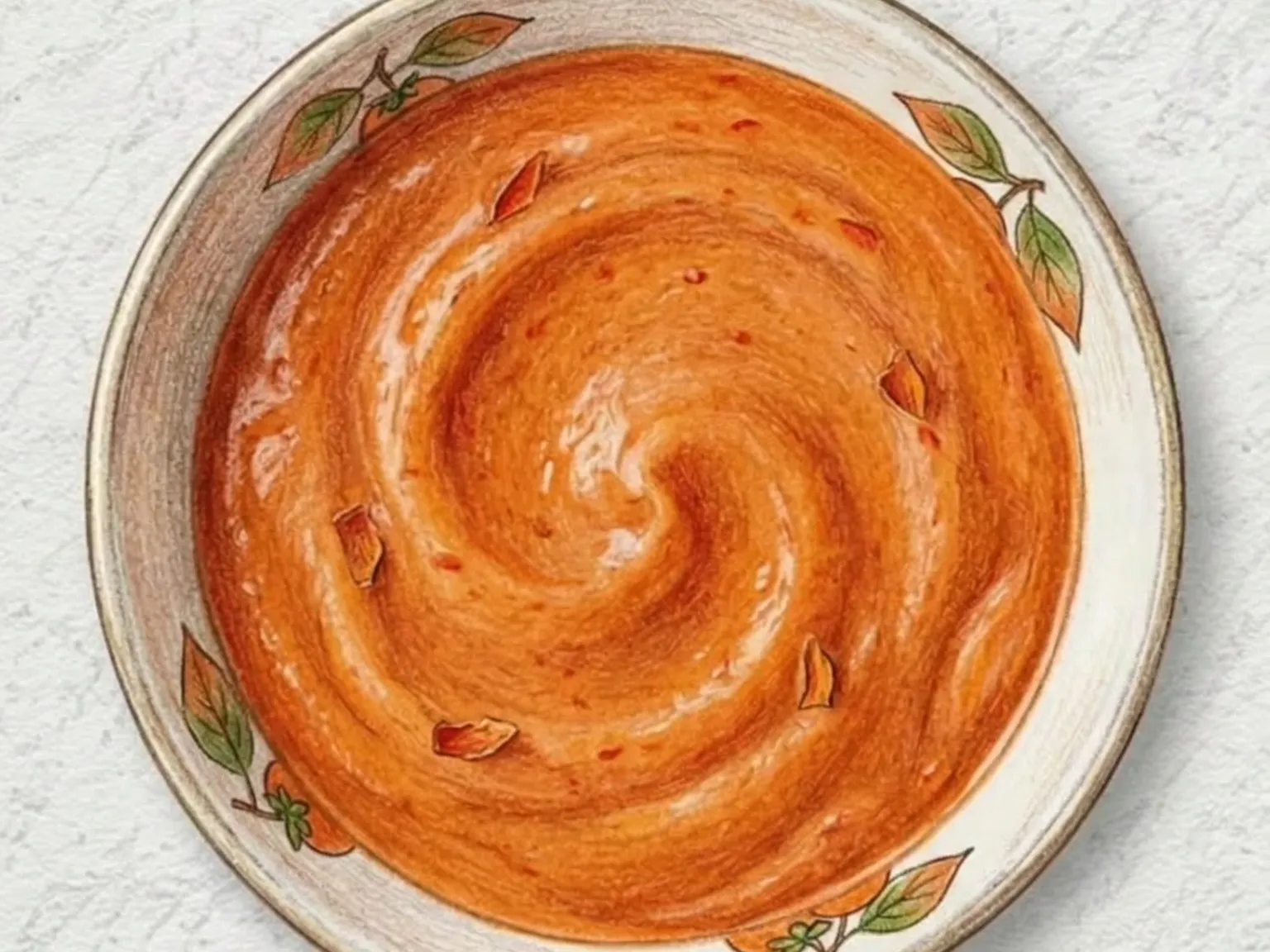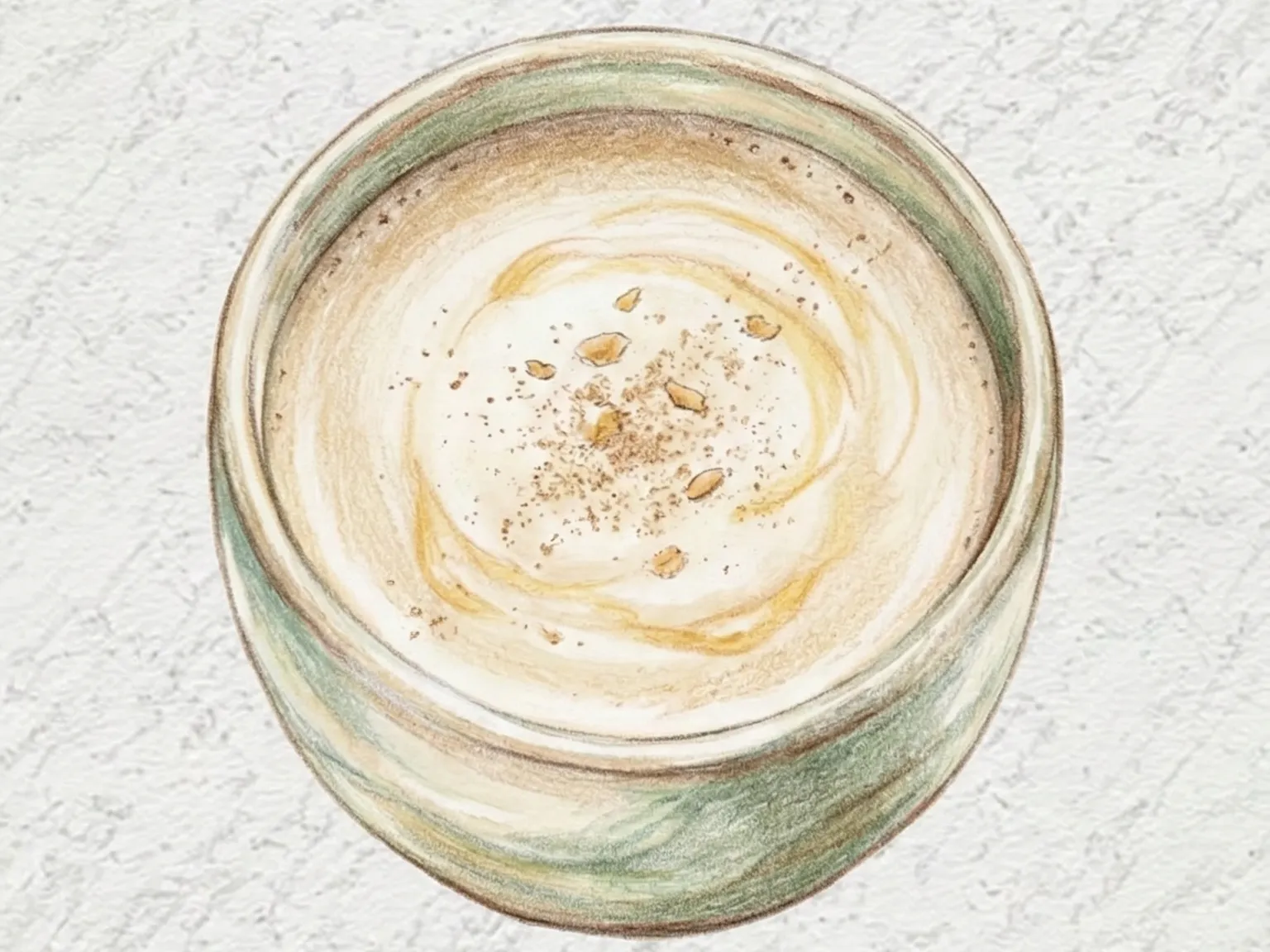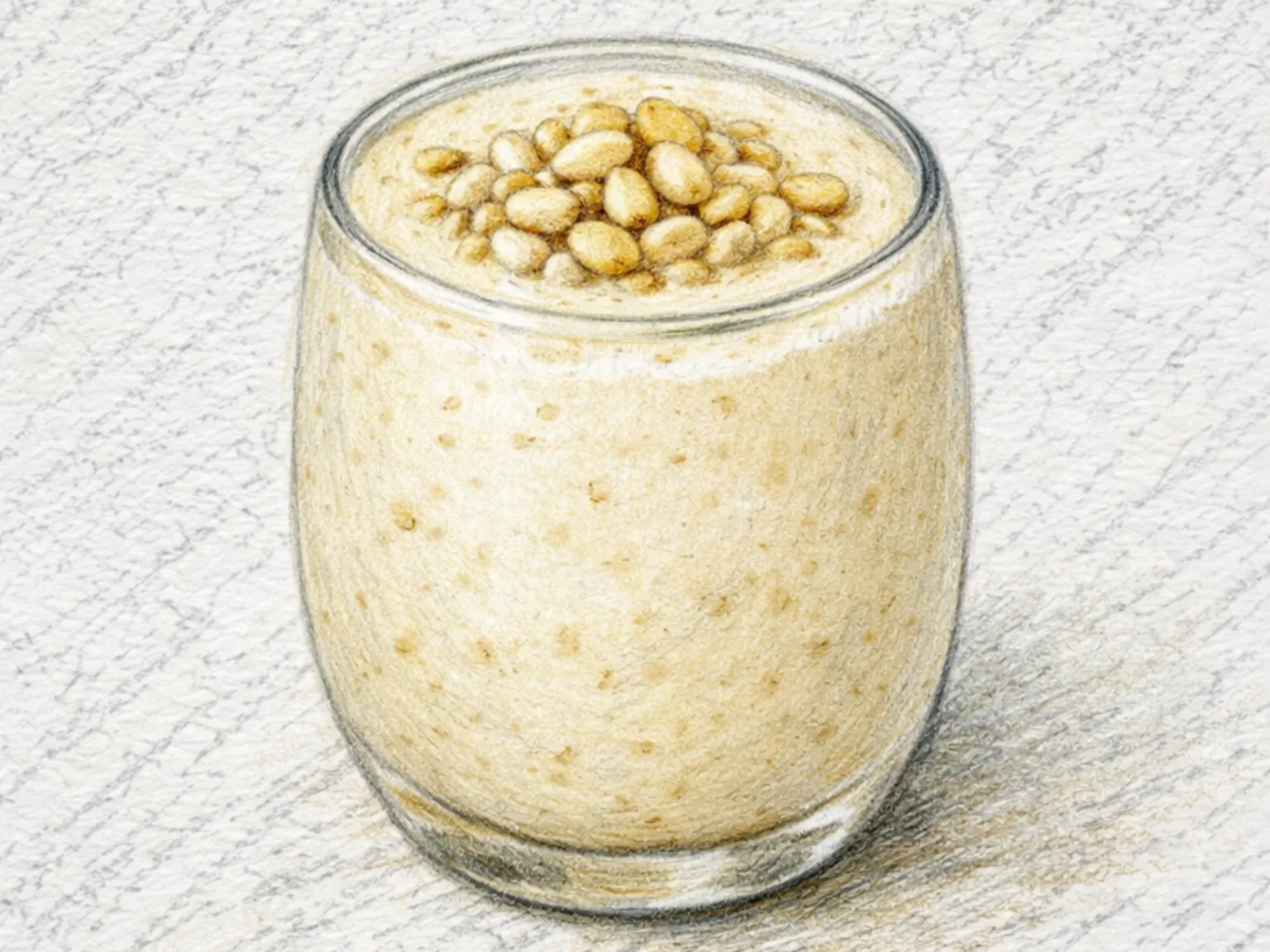
Korean Sweet Potato Latte
Quick answer
Goguma latte is a Korean sweet potato drink made by blending peeled roasted sweet potato with half the milk into a smooth puree, then combining it with the remaining milk...
What makes this special
- Oven-baked sweet potatoes provide a concentrated, roasty sweetness to this creamy Korean latte.
- Oven-baked sweet potato concentrates sugar far more than boiling does
- Glutinous rice flour raises viscosity for a smooth feel going down
Key ingredients
Core cooking flow
- 1 While the roasted sweet potato is still slightly warm, peel 220g and remove any dark or tough spots.
- 2 Add the mashed sweet potato and 225ml of the milk to a blender, then blend f...
- 3 Transfer the puree to a pot, pour in the remaining 225ml of milk, and set it over medium-low heat.
Goguma latte is a Korean sweet potato drink made by blending peeled roasted sweet potato with half the milk into a smooth puree, then combining it with the remaining milk in a pot and warming gently over medium-low heat. Using a fire-roasted or oven-baked sweet potato rather than a boiled one yields a significantly deeper sweetness from the caramelized sugars. Vanilla extract softens the starchy quality of the potato and makes the texture smoother, while a pinch of salt defines the edges of the sweetness. Cinnamon dusted on top blends with the earthy sweet potato aroma in each sip. The drink works equally well as a warm winter mug or over ice in summer, and the natural richness of the sweet potato makes it filling enough to serve as a light meal replacement without any added caffeine.
Instructions
Read the steps as a cooking flow: prep, heat, seasoning, doneness control, and finish.
- 1Step
While the roasted sweet potato is still slightly warm, peel 220g and remove any dark or tough spots.
Mash the flesh in a bowl with a fork until no large fibers or firm chunks are visible.
- 2Step
Add the mashed sweet potato and 225ml of the milk to a blender, then blend for about 40 seconds until smooth.
Stop once, scrape down the sides, and blend briefly again so the latte will not feel grainy.
- 3Control
Transfer the puree to a pot, pour in the remaining 225ml of milk, and set it over medium-low heat.
Stir in 1tbsp honey, 0.1tsp salt, and 0.5tsp vanilla extract before the milk gets hot.
- 4Prep
Warm the mixture for about 4 minutes, stirring across the bottom and edges of the pot with a spatula.
When steam rises and small bubbles appear on the surface, lower the heat to prevent scorching.
- 5Step
If the latte looks thin, stir for 1 more minute to concentrate the sweet potato flavor.
If it is so thick that spatula marks hold, add up to 50ml more milk a little at a time.
- 6Finish
Divide the warm latte into cups and sprinkle 0.25tsp cinnamon evenly over the surface.
Serve it right away while hot, or chill the mixture first and pour it over ice for a cold version.
After the steps
Pick a recipe that fits this dish.
Continue with shared ingredients, meal pairings, or a similar method.
Recipes That Go Well With This
More Drinks →Based on shared ingredients and meal pairing
Korean Sweet Pumpkin Latte
Danhobak latte begins with seeded kabocha pumpkin steamed skin-on, then blended with water into a smooth puree. Milk is whisked in gradually over low heat until the drink reaches a rich, velvety consistency. The pumpkin contributes natural sweetness that anchors the flavor, supported by honey, a half teaspoon of ground cinnamon, and a pinch of salt that defines the sweetness without adding noticeable saltiness. Keeping the milk below a boil -- around 80 degrees Celsius -- preserves its creamy character, and a spoonful of lightly whipped cream on top adds a soft, layered texture to each sip.
Korean Black Rice Latte (Purple Grain Milk Drink)
Heukmi latte is a grain-based drink made by soaking black rice for at least two hours, boiling it until completely soft, and then blending it smooth with milk. Without adequate soaking, the rice does not cook through evenly, and the blended result will be grainy rather than silky. Glutinous rice flour stirred into the blender adds viscosity, giving the drink a fuller, creamier body that coats the palate as it goes down. Maple syrup contributes a caramel-like sweetness that sits comfortably over the toasted, earthy character of the grain, while vanilla extract rounds out the aromatic range and keeps the flavor from smelling too starchy. A pinch of salt added at the very end prevents the sweetness from dominating and pulls the flavors into balance. The deep purple color comes naturally from the anthocyanin pigments in the black rice bran, making the drink visually striking before the first sip. It can be served warm straight from the blender or refrigerated and enjoyed cold.
Gotgam Cream Cheese Roll (Dried Persimmon Rolls)
Gotgam cream cheese roll is a no-cook Korean dessert that requires nothing more than a knife, a bowl, and a refrigerator. Dried persimmons are slit open and flattened into thin sheets, each one acting as the outer wrapper. The filling is cream cheese mixed with honey and fresh lemon juice to balance its natural richness with acidity, and finely chopped walnuts are folded in throughout to add a crunchy, nutty element to every bite. The filling is spread across the opened persimmon, which is then rolled tightly and wrapped in plastic wrap. Twenty minutes in the refrigerator firms the roll enough to slice cleanly. Dipping the knife in warm water and wiping it dry before each cut produces the smoothest cross-sections. The finished slices reveal clearly defined layers: the chewy, caramel-sweet dried persimmon on the outside, the tangy cream cheese in the middle, and flecks of walnut distributed throughout. The combination makes it a natural pairing with wine or a polished addition to a traditional holiday table.
Korean Sweet Corn Latte (Butter Sauteed Corn Milk Drink)
Sweet corn latte begins by sauteing cooked corn kernels in butter until fragrant, then simmering them in milk to draw out the corn's natural sugars before blending everything smooth. The butter amplifies the starchy, roasted aroma during the initial saute, coating each kernel so that the fat-soluble flavor compounds dissolve fully into the milk during the five-minute simmer. Blending the mixture until completely smooth and then straining it through a fine sieve removes any remaining hull pieces, producing a texture as silky as a custard sauce. This straining step makes a noticeable difference in the final quality. Condensed milk adds a rounded sweetness, and a small amount of white pepper introduces a faint spiced warmth that gives the drink depth beneath the sweetness. It works equally well served hot in a ceramic mug or chilled and poured over ice; the corn aroma remains vivid in both versions.
Serve with this
Korean Curry Flavored Tempura
Curry twigim mixes curry powder directly into the frying batter, giving it a vivid golden color and distributing spice throughout the coating before any frying begins. Sweet potato, carrot, and onion slices are dipped in this batter and deep-fried at 170 degrees Celsius. The key technical requirement is ice-cold water in the batter: cold temperature inhibits gluten development, which keeps the coating thin and produces a shattering, light crunch when bitten. Using warm or room-temperature water causes the gluten strands to develop fully, resulting in a thick, chewy crust that absorbs oil rather than repelling it. Because the curry powder is built into the batter itself, every piece carries turmeric, cumin, and coriander flavor in each bite without needing a dipping sauce. Compared to standard Korean vegetable tempura, the curry spices add an aromatic warmth and complexity to the sweet vegetables that distinguishes it clearly. The texture is best immediately out of the oil while the coating is still rigid.
Korean Seasoned Glasswort Salad
Sebalnamul-muchim features 220 grams of glasswort, a succulent coastal plant that carries a natural salinity from the tidal flats where it grows. A 10-second blanch in boiling water is enough to barely soften the thin stems while preserving their distinctive pop when bitten. The dressing of gochugaru, vinegar, plum extract, and sesame oil coats the tender shoots without masking their inherent briny flavor. Thinly sliced onion adds a sweet crunch, and the plum extract mellows the vinegar's sharpness into a rounded tartness. Because no additional salt is needed, the final seasoning relies entirely on the balance between acid, sweetness, and the glasswort's own minerality.
Dasik (Korean Honey-Pressed Roasted Grain Confection)
Dasik is a traditional Korean pressed confection made by kneading roasted grain or nut powders with honey and pressing the mixture into carved wooden molds. Unlike baked goods, dasik holds its shape entirely through the binding power of honey, with no heat applied during preparation. This technique produces a texture that is slightly resistant at first contact, then dissolves gently at body temperature in a way that releases the full aroma of the main ingredient. Roasted soybean powder yields a nutty version, black sesame produces a deeply aromatic one, and additions of pine nut powder or cinnamon develop the flavor in different directions. The wooden molds carve decorative patterns into the surface of each piece, giving dasik a visual refinement that matches its restrained sweetness. For centuries, dasik has been a standard offering at Korean tea gatherings, and its subtle flavor remains a natural match for the gentle bitterness of green tea.
Similar recipes
Korean Ginger Honey Latte
Ginger honey latte is a warm Korean latte built on a concentrated ginger infusion made by simmering thinly sliced fresh ginger in water over medium-low heat for ten minutes. Straining out the fibrous solids leaves a clean, sharp liquid that is returned to the pot with milk and heated until it just begins to steam, allowing the ginger's spicy heat to diffuse gradually through the dairy without becoming harsh. Adding honey only after the heat is turned off is important because prolonged exposure to heat causes its aromatic compounds to evaporate, leaving behind only sweetness without fragrance. A pinch of salt acts as a bridge between the sharp ginger and the floral sweetness of honey, drawing both flavors into sharper focus. A small dusting of cinnamon powder at the end adds a woody, resinous layer on top of the ginger that creates a warm-spice finish that lingers well after the last sip. The gingerols present in fresh ginger make this drink a common choice during seasonal transitions and on days when the body feels cold or run-down.
Korean Roasted Sweet Potato
Gun-goguma is a Korean winter snack made by roasting whole sweet potatoes in their skins at 200 degrees Celsius for 35 to 40 minutes. The slow heat converts the starches inside the potato into maltose, concentrating the sweetness and producing a sticky, honey-like layer just beneath the skin. Lower-temperature roasting is preferred over high heat because it extends the window of enzyme activity, allowing sugars to accumulate gradually rather than burning off at the surface. Korean pumpkin sweet potatoes, called hobak-goguma, have a higher moisture content and more pronounced natural sweetness, so they turn creamy and almost runny when fully roasted. Resting the potatoes at room temperature for a day or two before roasting further boosts sugar levels, since starch conversion continues during storage. The potato is satisfying on its own, but adding a pat of butter or a dusting of cinnamon layers in a rich, aromatic contrast. Eating the skin along with the flesh adds fiber and a slightly earthy counterpoint to the pure sweetness of the interior.
Korean Sweet Potato Pancakes
Goguma-jeon is a Korean sweet potato pancake made by julienning peeled sweet potatoes, folding them into a batter of pancake mix, water, salt, and a touch of sugar, then spreading the mixture thin in an oiled pan and frying both sides until golden. The sweet potato's starch gelatinizes in the heat and bonds with the batter to create lacy, crisp edges, while the center retains the tuber's natural moist sweetness. Keeping the pancake thin is non-negotiable-pressing the batter flat with the back of a spoon ensures even cooking and maximum crunch, because thick portions steam internally and turn soggy. Adding a teaspoon of sugar to the batter amplifies the sweet potato's subtle sweetness and encourages faster caramelization at the edges.