Vietnamese Chicken Salad
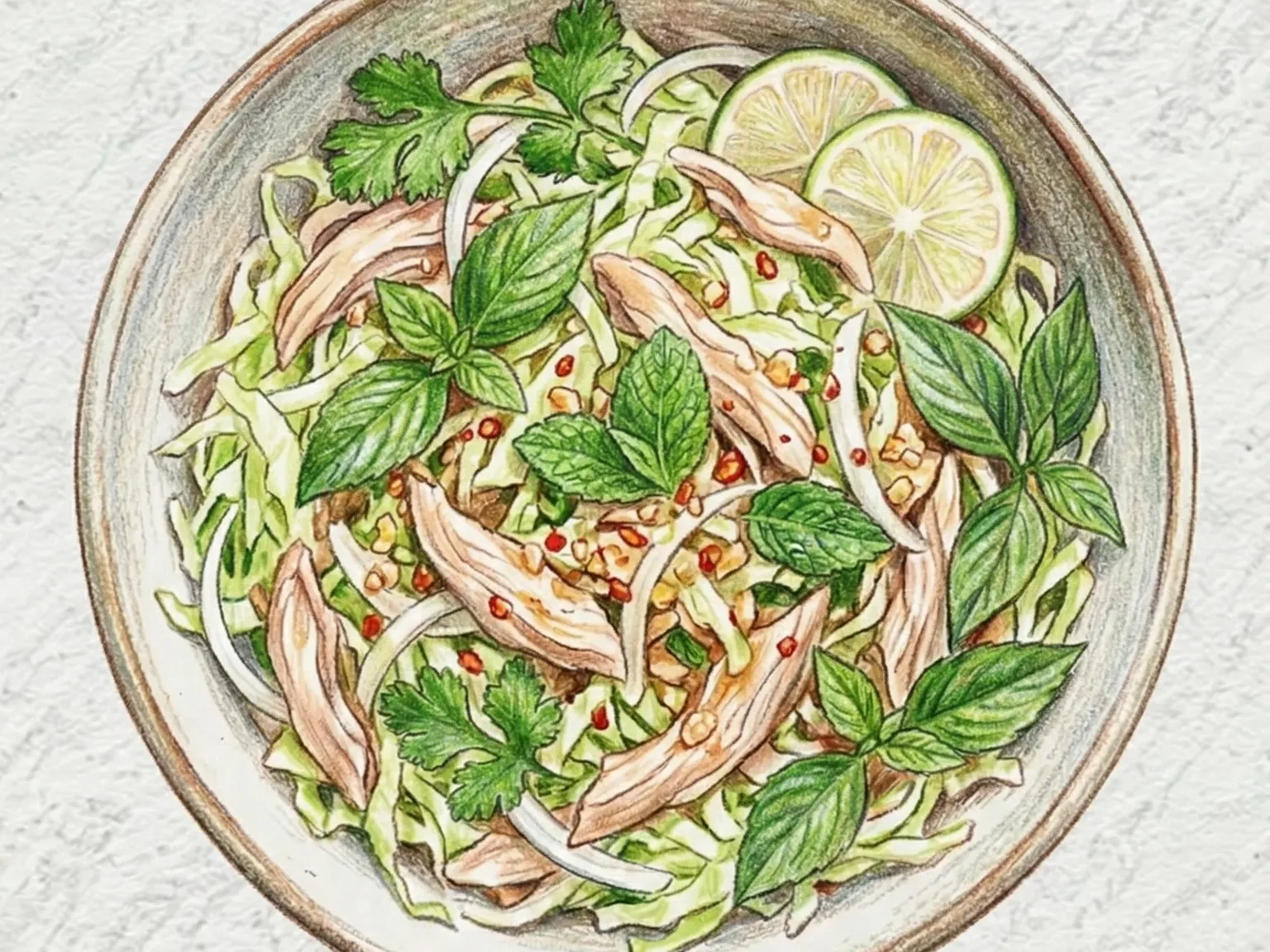
Goi ga - Vietnamese chicken salad - is eaten across Vietnam as a beer snack and appetizer, one of the cuisine's most effective dishes for hot weather when something cool, sharp, and light is needed. A whole chicken is poached and cooled, then shredded by hand along the grain - hand-shredding creates irregular surfaces that trap the dressing and produces a fibrous chew distinct from knife-cut meat. Shredded cabbage, onion, and carrot combine with Vietnamese coriander (rau ram), cilantro, and mint, all tossed in a dressing of fish sauce, lime juice, sugar, chili, and garlic. The dressing's acidity lifts the chicken's mildness, while the fish sauce's depth meets the vegetables' watery crunch to create a balance that is light yet not bland. Fried shallots and crushed roasted peanuts scattered on top add a crunchy dimension that elevates the salad from simple to layered. At bia hoi - Vietnam's fresh-beer street bars - goi ga is among the first dishes ordered, arriving minutes before the first cold glass.
Adjust Servings
Instructions
- 1
Poach chicken breast for 12 minutes, cool, then shred.
- 2
Julienne cabbage and carrot finely.
- 3
Mix fish sauce, lime juice, sugar, and garlic for dressing.
- 4
Combine chicken and vegetables, then toss lightly with dressing.
- 5
Top with cilantro and peanuts, then serve immediately.
As an Amazon Associate, we may earn from qualifying purchases.
Tips
Nutrition (per serving)
More Recipes

Chao Ga (Vietnamese Chicken Rice Porridge with Ginger)
Chao ga is Vietnam's answer to chicken soup - a gentle, restorative rice porridge eaten for breakfast or when recovering from illness, occupying the same cultural space as samgyetang does in Korea. A whole chicken simmers until the broth is deeply flavored, then rice cooks in that liquid until the grains dissolve into a thick, creamy consistency. Generous slices of ginger warm the stomach and temper any gaminess, while fish sauce adds an underlying umami depth that plain salt cannot achieve. The porridge is ladled into bowls and topped with hand-shredded chicken, fresh cilantro, cracked black pepper, fried shallots, and strips of you tiao - Chinese fried dough - whose crunch against the soft porridge creates a textural contrast essential to the dish. In Hanoi's early-morning alleys, chao ga vendors work from a single pot, serving hundreds of bowls before noon.

Hanoi-Style Chicken Pho (Pho Ga)
Hanoi-style pho ga is a chicken noodle soup that trades the beefy richness of pho bo for a lighter, cleaner bowl. Chicken bones and thighs simmer together until the broth turns golden and fragrant, then the meat is pulled into long shreds and piled over flat rice noodles. The spice profile is gentle - a knob of charred ginger and a single star anise - keeping the chicken flavor at the forefront. The broth has a silky quality from the natural gelatin in the bones, giving each spoonful a body that belies its clarity. Scallion, cilantro, and a squeeze of lime are the standard accompaniments. Some vendors add a torn fried dough stick for crunch. Pho ga is widely considered the everyday breakfast pho in Hanoi, less ceremonial than its beef counterpart but no less satisfying.

Larb Gai (Thai Isan Minced Chicken Herb Salad with Lime)
Larb gai is a minced chicken salad from the Isan region of northeastern Thailand. The chicken is cooked just until it loses its raw color, then dressed while still warm with lime juice, fish sauce, and a generous pinch of toasted rice powder that gives each bite a nutty, sandy crunch. Fresh mint, cilantro, and thinly sliced shallots add layers of brightness, while dried chili flakes bring a slow-building heat. Traditionally scooped up with balls of sticky rice, it works equally well wrapped in lettuce leaves or cabbage cups. The dish is light enough for hot weather yet full-flavored enough to anchor a meal.

Vietnamese Fresh Spring Rolls
Goi cuon - Vietnamese fresh spring rolls - are an uncooked, hand-rolled dish from southern Vietnam that encapsulates the core of Vietnamese food culture in a single bite: fresh herbs, balanced textures, and nuoc mam-based dipping sauce. Softened rice paper wraps around poached shrimp, sliced pork, rice vermicelli, lettuce, mint, cilantro, and garlic chives, rolled tightly into a translucent cylinder through which the pink shrimp and green herbs are visible - visual beauty is part of the experience before the first bite. Two dipping sauces accompany the rolls: a thick peanut-hoisin sauce whose nuttiness complements the pork, and a bright nuoc cham of fish sauce, lime, sugar, and chili that sharpens the shrimp. The textural layering within each roll - chewy rice paper, slippery noodles, springy shrimp, and crisp herbs - is what makes goi cuon compelling despite the absence of any cooking. In Ho Chi Minh City, fresh spring rolls are both everyday street food and a dish families prepare when hosting guests, assembled at the table in a communal ritual.

Vietnamese Grilled Pork Vermicelli
Charcoal-grilled pork sits atop a bed of cool rice vermicelli in this Vietnamese composed noodle bowl. The pork is marinated in fish sauce, sugar, and garlic before hitting the grill, where the sugars caramelize into a smoky-sweet crust while the interior stays moist. Fresh mint, cilantro, and crushed roasted peanuts are scattered over the top, building layers of herbal fragrance and crunch. A drizzle of nuoc cham, the sweet-sour-salty dipping sauce anchored by fish sauce and lime, ties every component together. Even without broth, the bowl feels generous and refreshing, thanks to the temperature contrast between the warm meat and the chilled noodles. Pickled daikon and carrot add a final note of acidity that keeps the palate engaged to the last strand.

Vietnamese Lotus Stem Shrimp Salad
Goi ngo sen is a traditional Vietnamese salad that combines thinly sliced lotus stem, blanched shrimp halved lengthwise, julienned carrot, and cilantro in a fish sauce and lime dressing. Soaking the lotus stem in diluted vinegar for ten minutes removes its astringent edge while preserving the crisp, crunchy texture that defines the dish. Blanching the shrimp for two to three minutes and splitting them open exposes more surface area for the dressing to penetrate. The dressing - fish sauce, lime juice, and sugar - hits salty, sour, and sweet notes simultaneously, amplifying the natural umami of the seafood. Letting the salad rest for about five minutes after tossing allows the flavors to meld into each ingredient.