Charim

2686 Korean & World Recipes

2686+ Korean recipes, clean and organized. Ingredients to instructions, all at a glance.

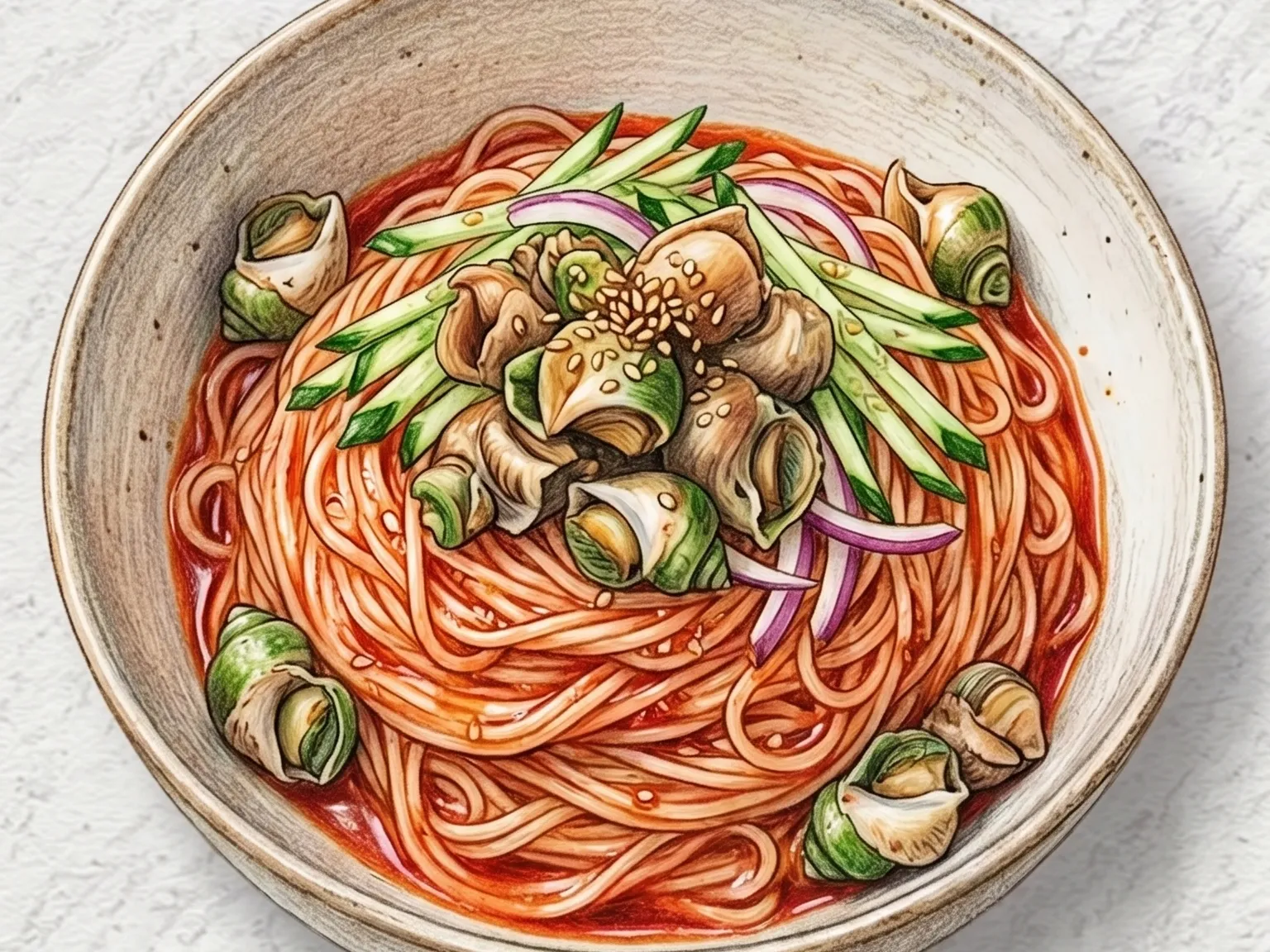
Korean Spicy Whelk Bibim Guksu

Korean Spicy Whelk Bibim Guksu

Golbaengi bibim-guksu is a cold mixed noodle dish built around chewy canned whelk tossed in a spicy-tangy sauce, widely enjoyed as a drinking snack in Korea. Gochujang and gochugaru set the heat level, while vinegar and sugar counter with a sharp sweetness, and sesame oil rounds everything out with a nutty finish. Julienned cucumber and onion contribute a crisp crunch that contrasts with the springy whelk and the slippery noodles. The somyeon must be rinsed immediately in ice water after boiling to lock in their firm, bouncy texture before mixing with the sauce. Adding a small splash of the whelk canning liquid into the sauce deepens the umami base, and rinsing the whelk itself under cold water controls the salinity.

Prep 18min Cook 7min 2 servings

Adjust Servings

2servings
servings

Instructions

  1. 1

    Thinly slice cucumber and onion; cut whelk into bite-size pieces.

  2. 2

    Mix gochujang, gochugaru, vinegar, sugar, and sesame oil for sauce.

  3. 3

    Boil noodles for 3 minutes, rinse in cold water, and drain.

  4. 4

    Combine noodles, whelk, vegetables, and sauce in a bowl.

  5. 5

    Let it rest for 5 minutes before serving for better flavor absorption.

🛒Shop Ingredients on Amazon

As an Amazon Associate, we may earn from qualifying purchases.

Tips

Soak onion in cold water for 5 minutes to reduce sharpness.
Add 1 tbsp canned whelk liquid for extra umami.

Nutrition (per serving)

Calories
500
kcal
Protein
22
g
Carbs
76
g
Fat
11
g

Goes Well With

Korean Paengi Beoseot Jeon (Enoki Pancake)
Side dishesEasy

Korean Paengi Beoseot Jeon (Enoki Pancake)

Paengibeoseot-jeon is a thin Korean pancake built around 200 grams of enoki mushrooms separated into loose strands and coated in a light batter of pancake mix, egg, and water. Cooked over medium-low heat, the batter spreads thin enough that the edges turn golden and crisp while the mushroom clusters in the center stay moist and chewy. Chopped scallions add color and a mild onion fragrance throughout. The pancake is served with a dipping sauce of soy sauce, vinegar, and a pinch of chili flakes, whose acidity and salt lift the subtle earthiness of the mushrooms. Keeping the heat moderate is essential - too high and the outside burns before the interior sets.

🍺 Bar Snacks🏠 Everyday
Prep 15minCook 12min2 servings
Korean Chive Clam Jeon (Garlic Chive and Clam Seafood Pancake)
PancakesMedium

Korean Chive Clam Jeon (Garlic Chive and Clam Seafood Pancake)

Buchu-bajirak-jeon is a seafood pancake of garlic chives and clam meat, pan-fried in a batter made with a mix of all-purpose pancake flour and rice flour. The rice flour addition increases the chew and gives the finished jeon a slightly more resilient texture than plain flour batters. Clam meat releases a briny, oceanic liquid as it cooks that seeps into the batter and flavors it throughout, while the chives add a sharp, grassy counterpoint. Minced garlic and diagonally sliced cheongyang chili worked into the batter suppress any fishiness and build a layered fragrance. A generous amount of oil in the pan over medium heat produces edges that crisp and brown like the outside of a fritter. Waiting until the bottom is fully set before flipping prevents the pancake from tearing. Served with soy dipping sauce or a seasoned soy mixture, the clean salinity of the clams comes through clearly.

🍺 Bar Snacks
Prep 25minCook 15min4 servings
Smoked Duck Chive Salad (Korean Chive Salad)
SaladsEasy

Smoked Duck Chive Salad (Korean Chive Salad)

Smoked duck chive salad brings together pan-seared smoked duck and fresh Korean chives in a soy-mustard dressing that cuts through the meat's richness with precision. The duck is seared in a dry or lightly oiled pan for two to three minutes to render off the surface fat before it meets the other ingredients. Korean chives are cut to four-centimeter lengths and combined with shredded cabbage and sliced bell pepper, each element adding its own texture to the finished dish. A dressing of soy sauce, mustard, vinegar, honey, and sesame oil delivers a multi-layered hit of nose-clearing heat, sweet-sour acidity, and roasted depth that cleanses the palate after every fatty bite of duck. The cabbage provides firm, watery crunch against the chewy, smoke-infused meat, while toasted sesame seeds scatter a nutty fragrance across the top. Adding the chives at the very end keeps their herbal aroma vivid rather than grassy, and limiting the searing time prevents the duck from turning tough. The interplay between the dense smokiness of the duck and the sharp freshness of the chives is what gives this salad its character beyond a simple protein-and-greens combination.

🍺 Bar Snacks🥗 Light & Healthy
Prep 15minCook 8min2 servings
Korean Lettuce Root Kimchi
KimchiHard

Korean Lettuce Root Kimchi

Godeulppaegi kimchi is a seasonal Korean kimchi made from the bitter wild herb godeulppaegi (Korean lettuce root), which is soaked in salted water for about a week to extract most of its sharp bitterness before being dressed in gochugaru, anchovy fish sauce, and glutinous rice paste for fermentation. The extended soak rounds off the bitter edge so that only a pleasant, lingering bitterness remains after fermentation, creating a complex interplay with the lactic acidity. The roots have a chewy, fibrous bite while the leaves turn soft, giving each stalk a dual texture in a single bite. This is a regional autumn kimchi from the Jeolla and parts of Gyeongsang provinces, traditionally prepared in fall to last through winter. The preparation is labor-intensive, requiring patient soaking and careful seasoning, but the resulting depth of flavor is what has kept this variety treasured across generations of Korean home cooking.

🎉 Special Occasion🍱 Lunchbox
Prep 60minCook 10min4 servings

More Recipes

Korean Spicy Mixed Wheat Noodles
NoodlesEasy

Korean Spicy Mixed Wheat Noodles

Bibim guksu is a chilled Korean noodle dish in which boiled and cold-rinsed somyeon wheat noodles are tossed in a sauce of gochujang, chili flakes, plum syrup, vinegar, soy sauce, and sesame oil. The heat from the gochujang, the sweetness of plum syrup, and the brightness of vinegar stack into a multi-dimensional flavor in every bite. Rinsing the noodles thoroughly in cold water removes excess starch, giving them a bouncy texture and allowing the sauce to cling evenly. Torn lettuce and julienned cucumber folded in at the end add crunch and release moisture that loosens the thick sauce just enough. A tablespoon of noodle cooking water can thin the sauce if needed. For 100 g of somyeon, a starting ratio of 1 tablespoon gochujang, 1 tablespoon plum syrup, and 1 teaspoon vinegar provides a reliable base to adjust from.

🏠 Everyday🌙 Late Night
Prep 15minCook 7min2 servings
Korean Spicy Pork Mixed Noodles
NoodlesMedium

Korean Spicy Pork Mixed Noodles

Jeyuk bibim-guksu tops cold mixed noodles with stir-fried spicy pork, combining two popular Korean preparations into one bowl. Pork shoulder is marinated in gochujang and gochugaru, then seared quickly so the edges caramelize while the inside stays moist and tender. Shredded cabbage and onion provide a crisp contrast to the sauced pork, and soy sauce with sugar balances the heat with savory sweetness. The temperature contrast between chilled somyeon noodles and hot, sizzling pork creates a distinctive eating experience that is one of the dish's defining pleasures. Keeping the noodles and the pork separate until the moment of serving prevents the somyeon from absorbing moisture and going soft. A final drizzle of sesame oil adds a nutty send-off.

🍺 Bar Snacks🌙 Late Night
Prep 20minCook 15min2 servings
Korean Spicy Noodles with Beef Pancake
NoodlesMedium

Korean Spicy Noodles with Beef Pancake

Yukjeon bibim guksu pairs pan-fried beef pancakes with spicy-tangy dressed wheat noodles. Thin slices of lean beef round are patted dry, dusted with flour, dipped in beaten egg, and fried until golden on both sides. Removing moisture before coating is what gives the yukjeon its crisp exterior and keeps the egg layer from sliding off. The dressing combines gochujang, soy sauce, vinegar, sugar, and sesame oil into a sauce that balances heat with sweet-sour brightness. Somyeon noodles are boiled and rinsed multiple times in cold water to wash off excess starch, which keeps them springy and helps the dressing cling evenly. Shredded cucumber and lettuce add freshness and crunch against the warm, savory beef.

🍺 Bar Snacks
Prep 20minCook 15min2 servings
Korean Kimchi Bulgogi Udon
NoodlesEasy

Korean Kimchi Bulgogi Udon

Kimchi bulgogi udon is a Korean stir-fried noodle dish that brings together the sharp acidity of well-fermented kimchi and the sweet, savory depth of thinly sliced bulgogi beef, all coating thick, round udon strands. The beef is seared quickly over high heat to develop browning on the surface before onion and kimchi join the pan and cook until nearly all their moisture evaporates, concentrating both flavor and color. A sauce of soy sauce, gochujang, and sugar goes in next, followed by briefly blanched udon noodles that get tossed on maximum heat for about one minute so every strand absorbs the sauce while retaining a firm bite. The thick cross-section of udon holds bold, clingy sauces better than thinner noodles and creates a satisfying, filling meal without any broth. When kimchi is especially sour, a small addition of sugar or a quick rinse of the kimchi before cooking brings the acidity back into proportion. Finishing with sliced scallion and toasted sesame seeds adds color and a nutty lift that completes the dish.

🏠 Everyday🌙 Late Night
Prep 15minCook 12min2 servings
Korean Braised Chicken Feet
SteamedMedium

Korean Braised Chicken Feet

Dakbal-jjim braises chicken feet in a sauce built from gochujang, gochugaru, soy sauce, and sugar until the liquid reduces to a thick, glossy coating around each foot. As the skin and cartilage cook down over time, their collagen converts to gelatin and the feet develop a chewy, sticky texture that is the central appeal of the dish. Gochujang and gochugaru each bring heat from a different angle, one deep and fermented and the other bright and direct, while sugar introduces a caramel-like sweetness that balances the heat load. Cooking wine added early removes the gaminess specific to chicken feet. By the time the sauce has fully reduced it clings to every surface in a deep red glaze, and the finished feet carry both intense seasoning and a pronounced chew that makes them a natural pairing with cold beer or a bowl of rice.

🍺 Bar Snacks🎉 Special Occasion
Prep 20minCook 45min4 servings
Korean Whelk Stew (Spicy Canned Whelk & Cabbage Pot)
StewsEasy

Korean Whelk Stew (Spicy Canned Whelk & Cabbage Pot)

Golbaengi-jjigae is a spicy Korean stew made with canned whelk as the centerpiece. Because the whelk is already fully cooked inside the can, it goes in near the end of cooking rather than at the start, allowing the broth and vegetables to reach their full flavor first. Extended heat makes whelk rubbery, so a brief simmer of two to three minutes is enough to warm the pieces through while preserving their distinctive chewy texture. Anchovy stock forms the savory foundation of the broth, delivering a clean seafood depth that amplifies the whelk's flavor without masking it. Gochujang and gochugaru combine to give the stew its fiery, full-bodied heat, while cabbage and onion absorb the broth over time and release a gentle sweetness that balances the spice. A single cheongyang chili added whole sharpens the heat at the finish, pulling the entire broth taut with a bright, clean burn. A handful of sliced green onion stirred in at the end brings a fresh aroma that lifts the richness of the stew. It works equally well as a rice-side dish or as an accompaniment to soju.

🏠 Everyday
Prep 12minCook 18min2 servings
More Noodles →