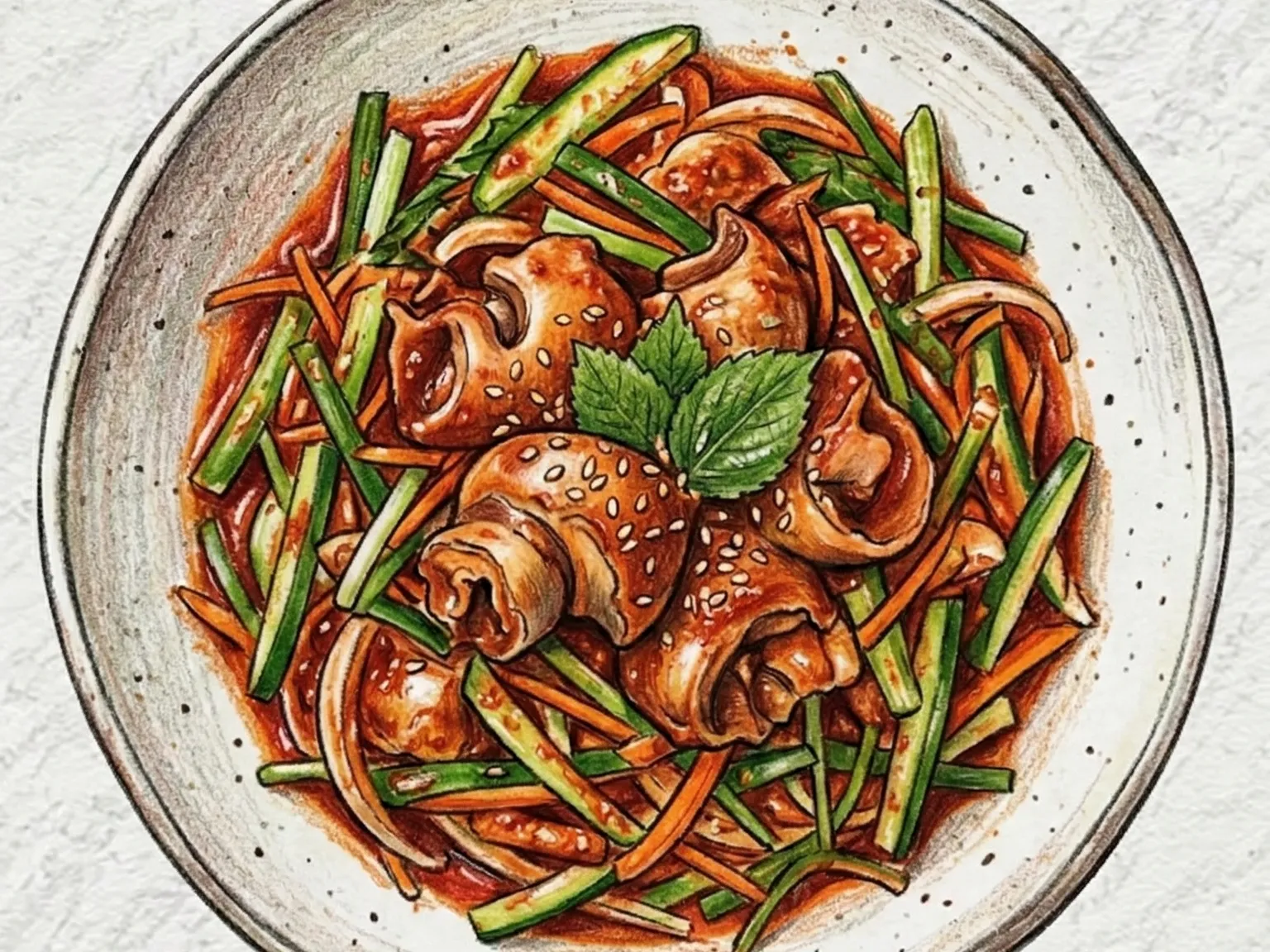
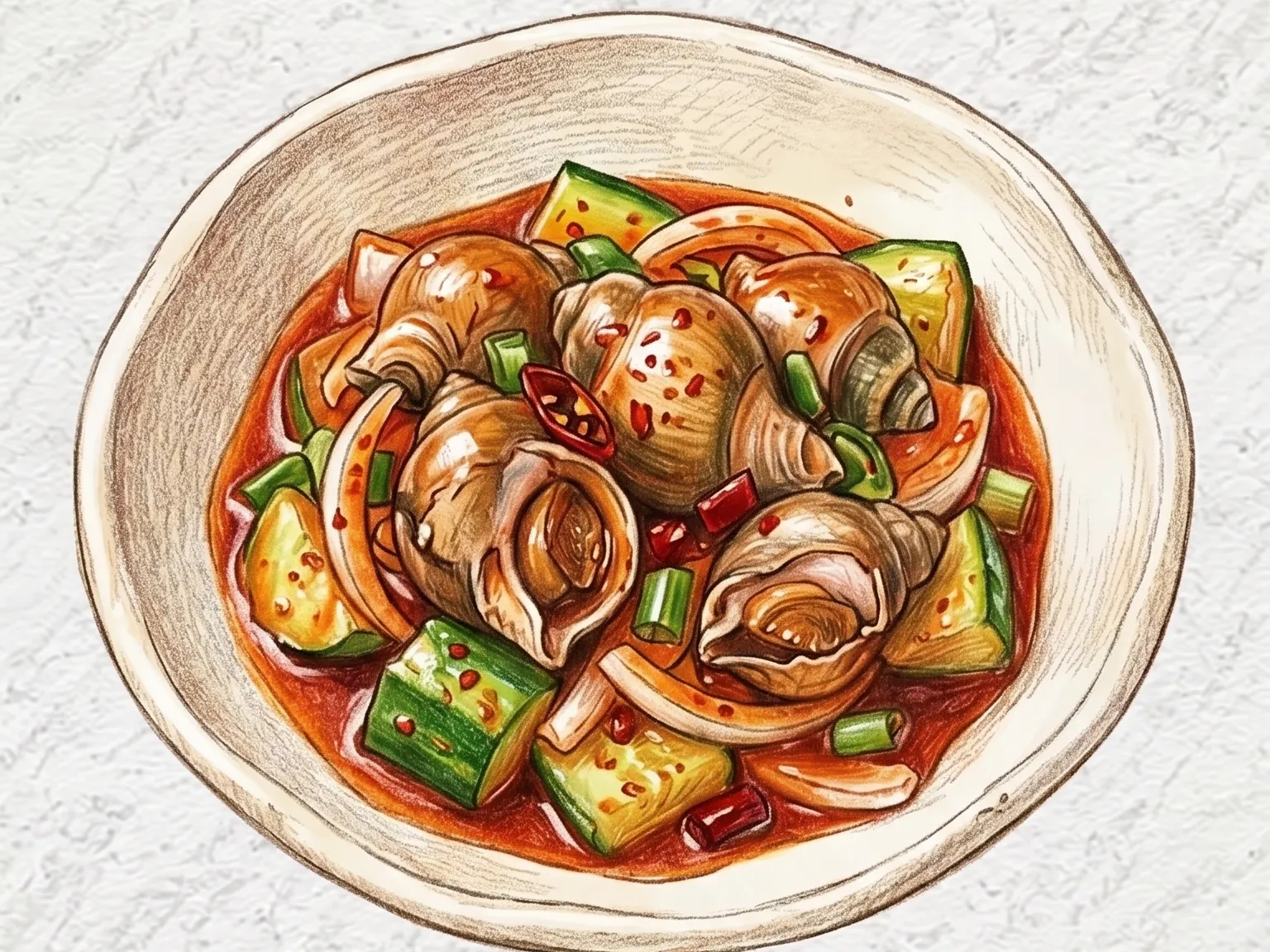
Korean Spicy Sea Snail Salad
Drain 200 g canned sea snails for at least 3 minutes so the canning liquid does not thin the dressing, and soak the sliced onion in cold water for 5 minutes to soften its bite. Stir 2 tbsp gochujang, 1 tbsp gochugaru, 1 1/2 tbsp vinegar, and 1 tbsp sugar until the sugar dissolves, coat the snails first, then toss in the cucumber, onion, and green onion quickly, lifting rather than pressing. Mix in 1 tsp each of sesame oil and sesame seeds just once or twice and serve immediately, before the vegetables release water.
Quick answer
- Total time
- 18 min
- Level
- Easy
- Servings
- 2 servings
- Ingredients
- 10
About this dish
Springy canned sea snails (golbaengi) are tossed with cucumber, onion and scallion in a hot, sour and sweet sauce of gochujang, chili flakes, vinegar and sugar, a classic drinking snack in Korea.
Read more
A 5-minute soak in cold water takes the harsh edge off the onion so it blends into the sauce. The snails drain well in a sieve first, as leftover brine from the can thins the sauce until it no longer clings. The plate goes to the table right away: once dressed, the salt starts drawing water out of the vegetables. Spooned over thin somyeon noodles, it becomes golbaengi somyeon, with the noodles soaking up the dressing.
Ingredients
Instructions
- 1
Drain 200 g canned sea snails in a fine strainer for at least 3 minutes.
Cut any large pieces in half so they are easy to eat and can be coated evenly without excess canning liquid thinning the dressing.
- 2
Slice 70 g onion thinly, soak it in cold water for 5 minutes, then drain it well.
This softens the sharp bite so the onion blends into the spicy, sour dressing instead of overpowering the sea snails.
- 3
Rinse 80 g cucumber and 30 g green onion, then slice them into even thin strips.
Do not cut them too finely, because overly thin vegetables soften quickly once the salty dressing touches them.
- 4
In a mixing bowl, combine 2 tbsp gochujang, 1 tbsp gochugaru, 1.5 tbsp vinegar, and 1 tbsp sugar.
Stir until the sugar dissolves and the sauce looks glossy, smooth, and evenly red.
- 5
Add the sea snails to the dressing first and coat them lightly, then add cucumber, onion, and green onion.
Toss quickly with your fingertips or utensils, lifting rather than pressing, so the vegetables stay crisp.
- 6
Finish with 1 tsp sesame oil and 1 tsp sesame seeds, mixing just once or twice.
Serve immediately before the vegetables release water, either on its own or spooned over plain somyeon noodles if using them.
Use-up ingredient planner
Turn these ingredients into two more meals
The overlap excludes basic seasonings. Open the next recipe and your selected dishes will stay with you.
Korean Spicy Whelk Stir-fry
canned sea snails, cucumber
Korean Grilled Beef Short Ribs with Scallions
onion, green onion
Korean Gochujang Fish Cake Stir-fry
onion, green onion