Gomchi-guk (Eelpout Fish Radish Soup)
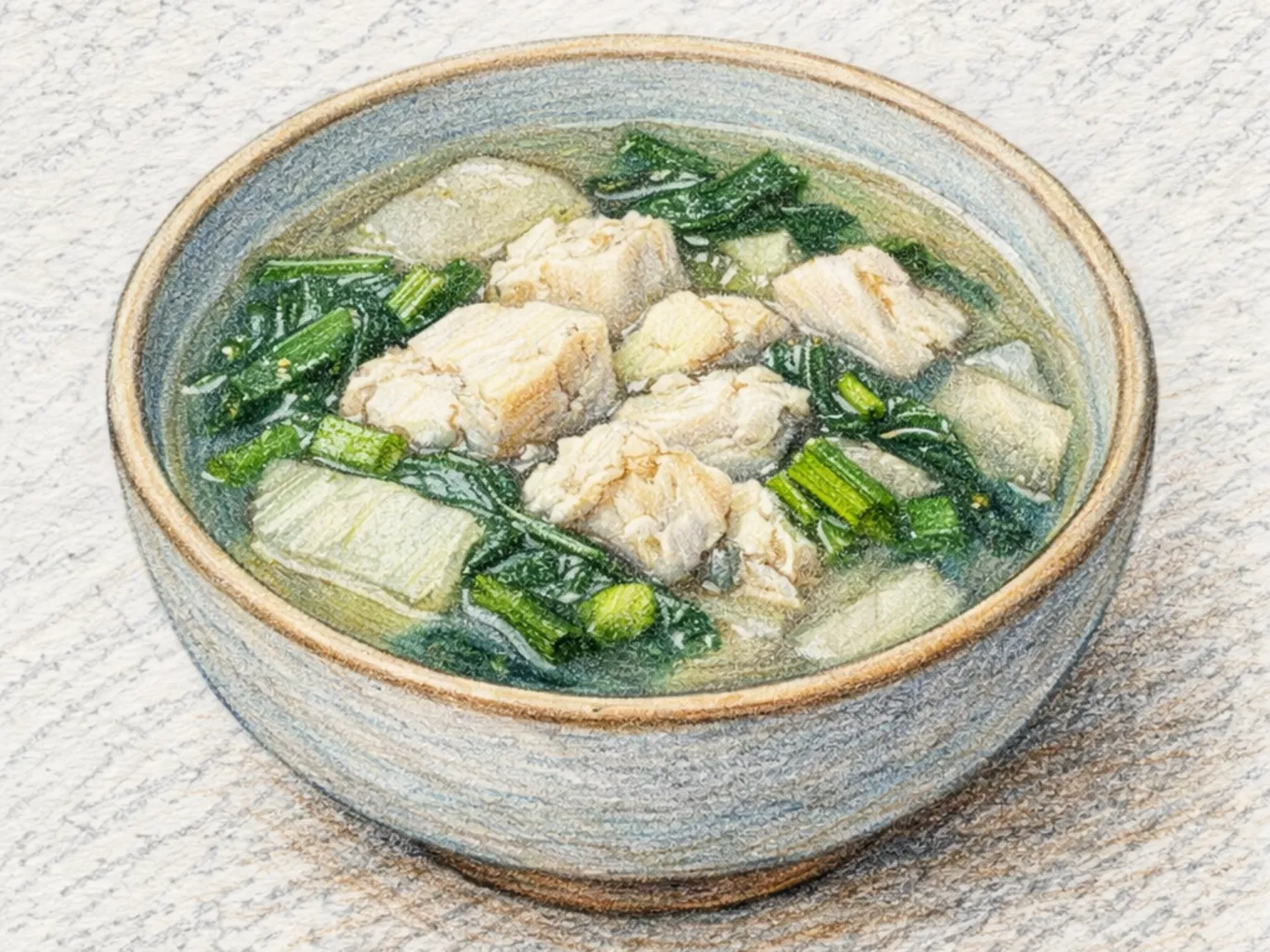
Gomchi-guk is an East Coast Korean fish soup made with eelpout, a soft-fleshed deep-sea fish rich in natural gelatin. The fish is cut into chunks and simmered with radish in plain water, producing a broth that is remarkably clean yet carries a gentle marine richness and a slightly viscous body from the dissolved collagen. Radish tames any fishiness and adds a refreshing sweetness, while a splash of cheongju rice wine helps eliminate residual off-notes. As the soup cooks, the eelpout flesh breaks apart and melds into the liquid, making the broth and the fish nearly inseparable. Garlic and green onion provide the finishing aromatics. This is a regional specialty of the Gangwon and North Gyeongsang coastal towns, where it is typically served bubbling in a stone pot during the winter months. For those who live far from the coast, frozen or dried eelpout can approximate the experience.
Adjust Servings
Instructions
- 1
Clean the eelpout, remove innards, and cut into pieces.
- 2
Slice radish thinly and diagonally slice green onion.
- 3
Boil radish in water for 10 minutes to sweeten the broth.
- 4
Add fish, rice wine, and garlic, then simmer over medium heat for 8 minutes.
- 5
Season with salt, add green onion, and boil briefly to finish.
As an Amazon Associate, we may earn from qualifying purchases.
Tips
Nutrition (per serving)
More Recipes

Korean Fish Soup (White Fish and Radish Clear Broth)
Saengseon-guk is a traditional Korean fish soup made with white-fleshed fish and radish in a clear broth. The radish simmers first, building a base of natural sweetness, before garlic and soup soy sauce are added for depth. The fish goes in once the radish is halfway cooked, and timing matters - it should cook only until the flesh turns opaque and begins to flake, as prolonged boiling would break it apart and cloud the broth. Tofu and sliced Korean chili peppers join near the end, adding soft texture and a mild kick. Green onion finishes the bowl with a fresh note. The result is a light, transparent soup where the fish's own clean, marine flavor does most of the work. It is the kind of straightforward home cooking that appears on Korean dinner tables throughout the year, requiring little more than fresh fish and basic pantry staples.

Korean Clear Puffer Fish Soup
Cleaned puffer fish is simmered with Korean radish and water dropwort in a clear broth that highlights the fish's clean, delicate flavor. The radish goes in first to build a sweet base, and the puffer fish cooks for ten minutes to release its protein-rich, low-fat essence into the stock. Water dropwort added at the very end provides a fresh herbal lift, and only professionally prepared, food-safe puffer fish should ever be used.

Jaecheop-guk (Korean Marsh Clam Clear Soup)
Crystal-clear broth, impossibly deep flavor - jaecheop-guk is Korea's prized marsh clam soup, a Hadong specialty worth traveling for. Tiny freshwater clams from the Seomjin River are purged in salted water, then simmered until they open and release their concentrated liquor into the broth. The result is a translucent soup with a remarkably clean umami - far more intense than the small size of the clams would suggest. Chopped chives are added at the end, their sharp green flavor lifting the broth with a bright finish. Soup soy sauce and garlic provide restrained seasoning. The soup has a long-standing reputation in Korea as one of the best hangover remedies, and in Hadong it is served in restaurants that specialize in nothing else, drawing visitors specifically for this one bowl.

Gul-guk (Clear Oyster Radish Soup)
Gul-guk is a clear Korean oyster soup built on the simplest possible foundation: water, radish, and fresh oysters. The radish simmers first, lending a cool sweetness to the broth before the oysters are slid in near the end to preserve their plump, springy texture. Seasoning is deliberately restrained-soup soy sauce and minced garlic are enough-because the oysters themselves provide an intense, briny depth that needs no amplification. The resulting bowl is translucent and clean-tasting, with a lingering marine finish. Along Korea's south coast, where winter oyster harvests are abundant, this soup often appears on breakfast tables or as a gentle remedy after a long night.

Korean Fermented Flounder Sikhae
Gajami sikhae is a traditional fermented flounder dish from Korea's East Coast, made by mixing salt-cured flounder fillets with julienned radish, cooked glutinous rice, gochugaru, and fish sauce, then fermenting the mixture in a sealed vessel at low temperature for over a week. The starch from the glutinous rice serves as a substrate for lactic acid bacteria, producing a mild, rounded acidity distinct from the sharp saltiness of conventional jeotgal. Radish adds moisture and a crunchy contrast, and as fermentation progresses, the fish protein breaks down into concentrated umami compounds. Less salty than typical fermented seafood, sikhae can be eaten directly over rice as a regional winter banchan from the Gangwon and Hamgyeong provinces.

Korean Mild Puffer Fish Stew
This clear-broth stew features puffer fish fillet simmered with Korean radish, bean sprouts, and water dropwort. The fish yields a firm, delicate bite, while the radish slowly releases its sweetness into the soup soy sauce-seasoned broth. Finished with fragrant water dropwort and green onion, it is a light yet restorative dish traditionally enjoyed as a hangover remedy.