Korean Beef Bone Broth Thin Noodles
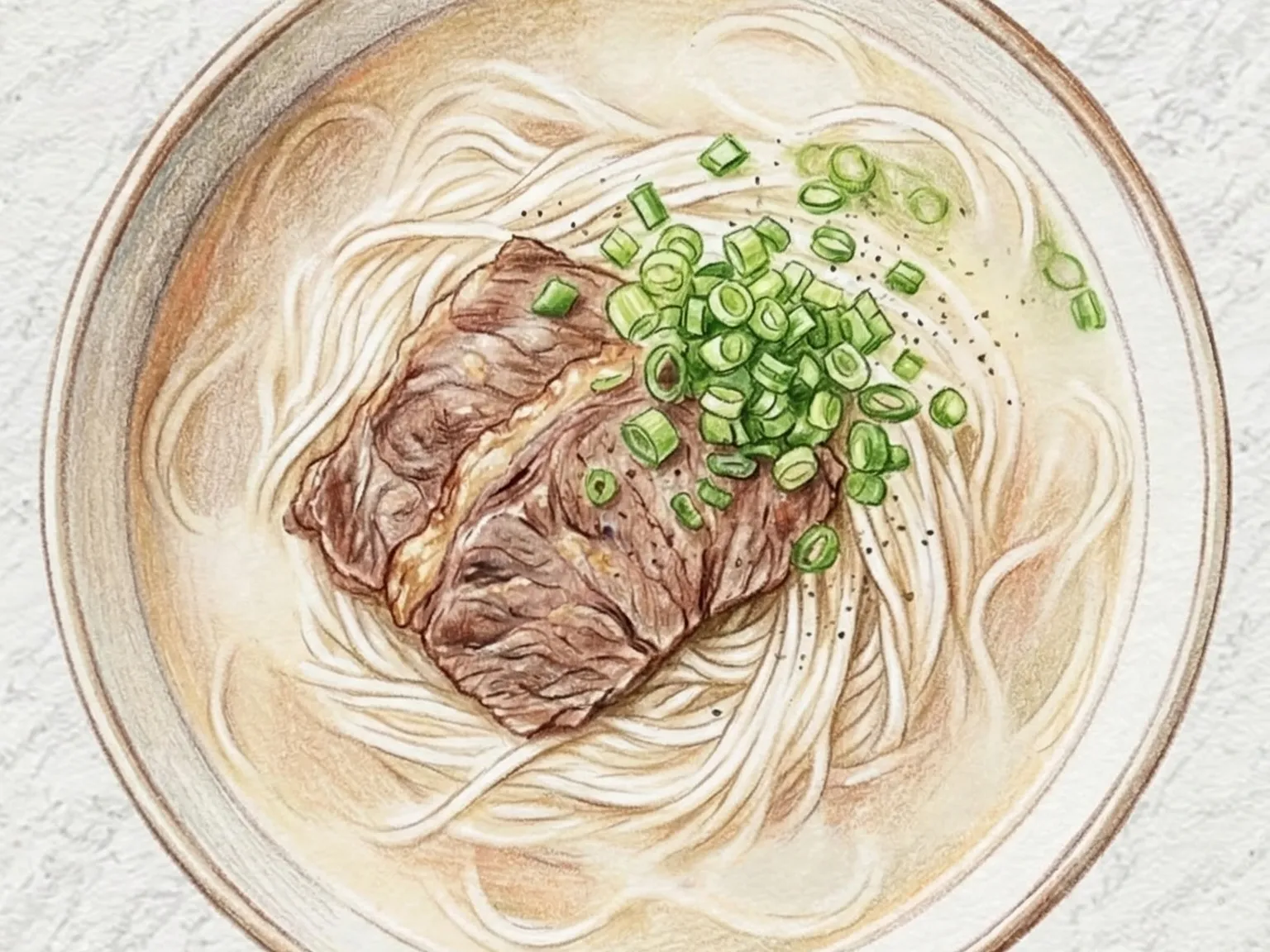
Gomguk somyeon serves thin wheat noodles in a deeply extracted beef bone broth that has simmered until it turns cloudy and rich with dissolved collagen. The broth coats the palate with a heavy, lingering umami, and sliced boiled beef laid on top adds a meaty, lean contrast. Seasoning stays minimal - just salt and black pepper - so the broth's natural intensity speaks for itself. A scattering of sliced green onion on the surface cuts through the richness with a fresh, sharp note.
Adjust Servings
Instructions
- 1
Boil noodles 3 minutes, rinse in cold water.
- 2
Heat beef bone broth and season with salt.
- 3
Place noodles in a bowl and pour hot broth over.
- 4
Top with sliced beef, green onion, and black pepper.
As an Amazon Associate, we may earn from qualifying purchases.
Tips
Nutrition (per serving)
More Recipes

Korean Anchovy Broth Thin Noodle Soup
Anchovy somyeon is the noodle soup Korean families turn to when the kitchen has nothing special - dried anchovies, a strip of kelp, and a bundle of thin wheat noodles are all it takes. The broth is built by simmering dried anchovies and dashima in water for fifteen minutes, then straining for a clear, umami-rich liquid with a faint oceanic sweetness. Somyeon - hair-thin wheat noodles - cook in a separate pot to prevent their starch from clouding the broth, then are rinsed under cold water until the strands separate cleanly. The noodles sit in a bowl of the hot broth, topped with sliced scallion, a drop of sesame oil, and sometimes a sheet of toasted gim. The appeal lies in its restraint: no chili, no fermented paste, just clean anchovy flavor meeting springy noodles. Korean mothers have served this as a quick lunch for generations, and it remains comfort food in its most distilled form.

Korean Doenjang Thin Noodle Soup
Doenjang somyeon is a simple Korean noodle soup of thin wheat noodles in an anchovy broth flavored with fermented soybean paste. Potato, zucchini, and onion - whatever is on hand in the refrigerator - go into the broth first, releasing moisture and natural sugars that round out the doenjang's earthy depth. The somyeon cook in just three to four minutes, so they go in last to avoid becoming soggy. Sliced green onion scattered on top adds a bright, fresh note to the fermented broth. The ingredient list is short and flexible, making this a practical weeknight dinner with more flavor depth than its simplicity suggests.

Gomtang (Slow-Simmered Ox Bone Beef Soup)
Gomtang is a quintessential Korean bone soup made by simmering beef leg bones and brisket in water for five to six hours or longer until the broth turns opaque and milky white. The prolonged cooking extracts collagen, marrow, and fat from the bones, giving the liquid a luxuriously creamy texture and a deep beefy flavor that needs only salt and pepper to taste complete. The brisket is removed partway through, sliced thin against the grain, and placed back atop the steaming broth for serving. Green onion and a generous shake of black pepper cut through the richness. The most common way to eat gomtang is with a bowl of rice submerged directly into the soup, letting the grains soak up the milky broth. This is slow food in the truest sense - the hours of effort yield a pot that can feed a family for two days - and remains one of the dishes Koreans crave most when the temperature drops.

Korean Yuja Chicken Cold Somyeon
Yuja chicken naeng somyeon is a Korean cold noodle dish served in a clear chicken-radish broth brightened with yuja (citron) syrup. The broth is chilled before serving, and its combination of mild chicken flavor and floral citrus aroma sets it apart from other cold noodle soups. Shredded poached chicken breast is placed on top of the cold somyeon along with cucumber or cherry tomatoes. The broth is deliberately kept lean, with no heavy oils. If the broth is prepared in advance, the final assembly takes under 30 minutes.

Korean Spicy Beef Soup Noodles
Yukgaejang guksu starts with a deep broth made by simmering beef brisket until the liquid turns rich and full-bodied. The meat is shredded along the grain and returned to the pot alongside fernbrake, bean sprouts, and green onion that have been seasoned with gochugaru, sesame oil, and garlic before a brief stir-fry. This pre-seasoning step lets the chili heat dissolve into the oil, producing a rounded spiciness rather than raw powder burn. Korean soup soy sauce adjusts the salt level without clouding the broth's color. Thin wheat somyeon noodles are boiled separately and added at the end so they absorb the broth without turning mushy. Swapping in glass noodles changes the texture to a chewier, more slippery bite that holds onto the soup longer.

Naju Gomtang (Naju Clear Brisket Beef Soup)
Naju-gomtang is a traditional beef soup from Naju in Korea's Jeolla Province, renowned for its clear yet profoundly savory broth. Beef brisket and shank are simmered together at a gentle, sustained heat for at least two hours - never a hard boil, which would cloud the liquid. The extended low simmer draws collagen and flavor from the connective tissue, producing a broth that appears light but coats the palate with rich, beefy depth. The meat is removed, shredded or thinly sliced, and returned to the strained broth. Seasoning is minimal - soup soy sauce and salt - because the entire point is the pure, unadorned taste of long-simmered beef. Sliced green onion and a crack of black pepper go on just before serving, adding brightness without complicating the broth.