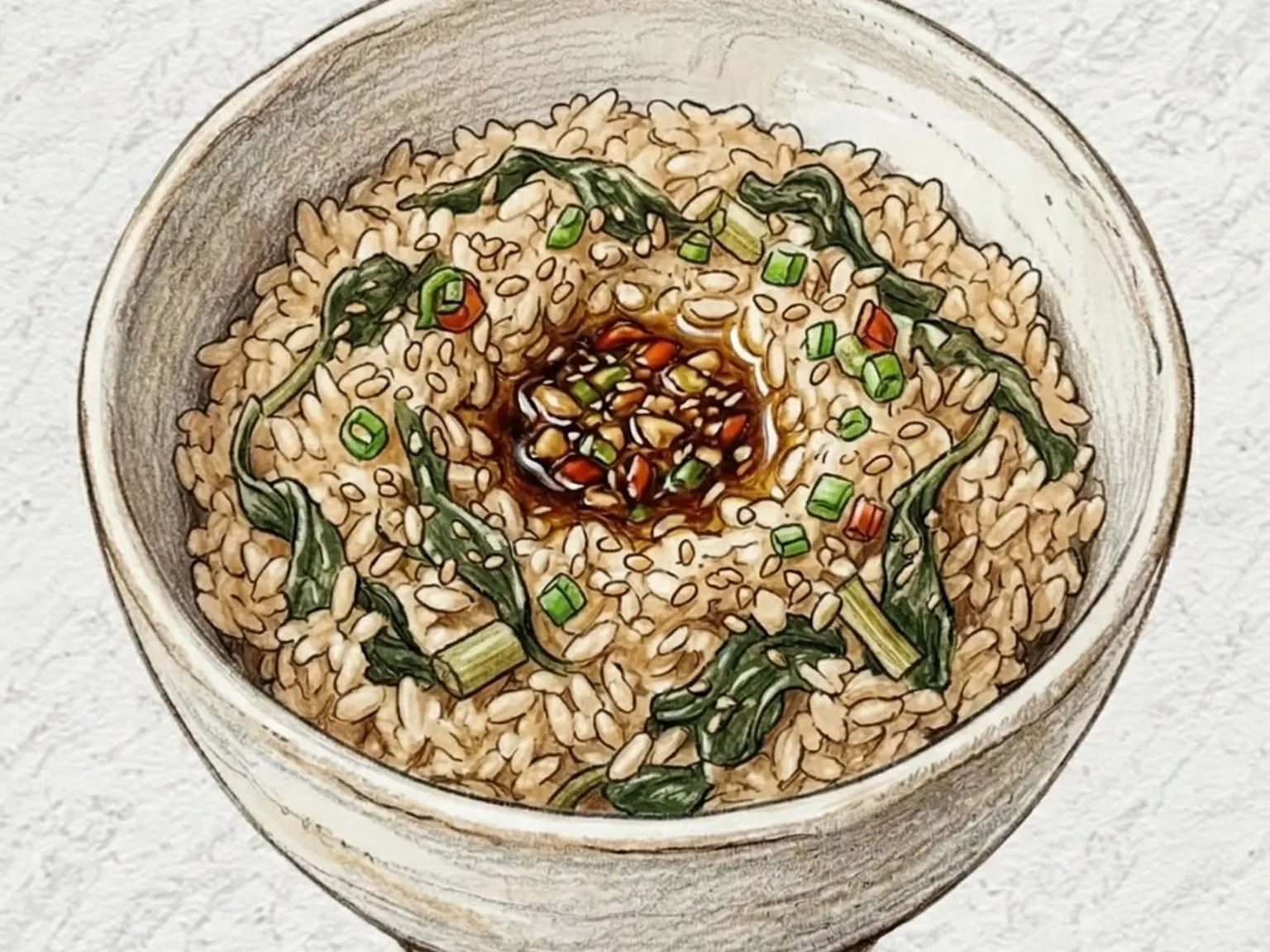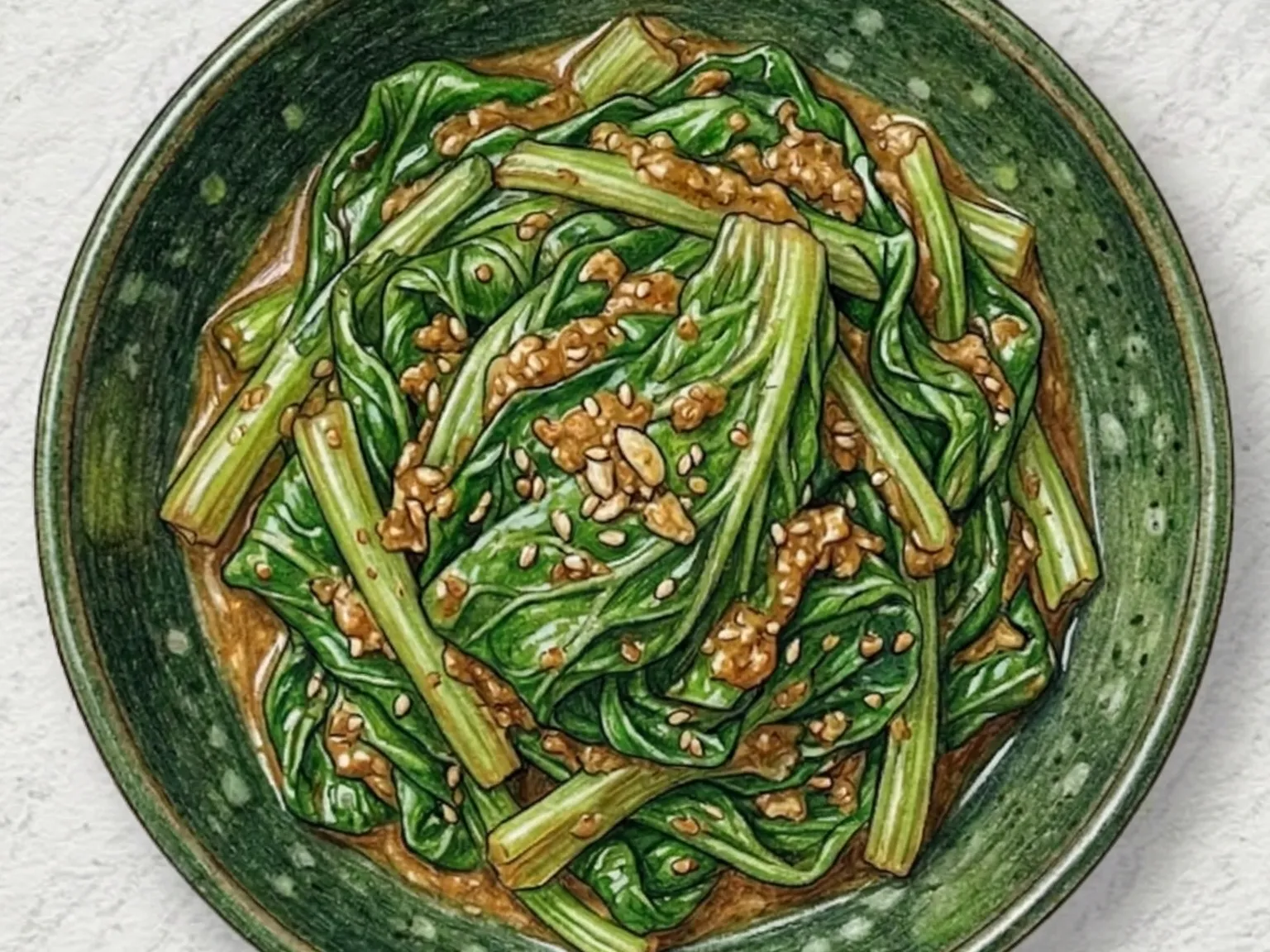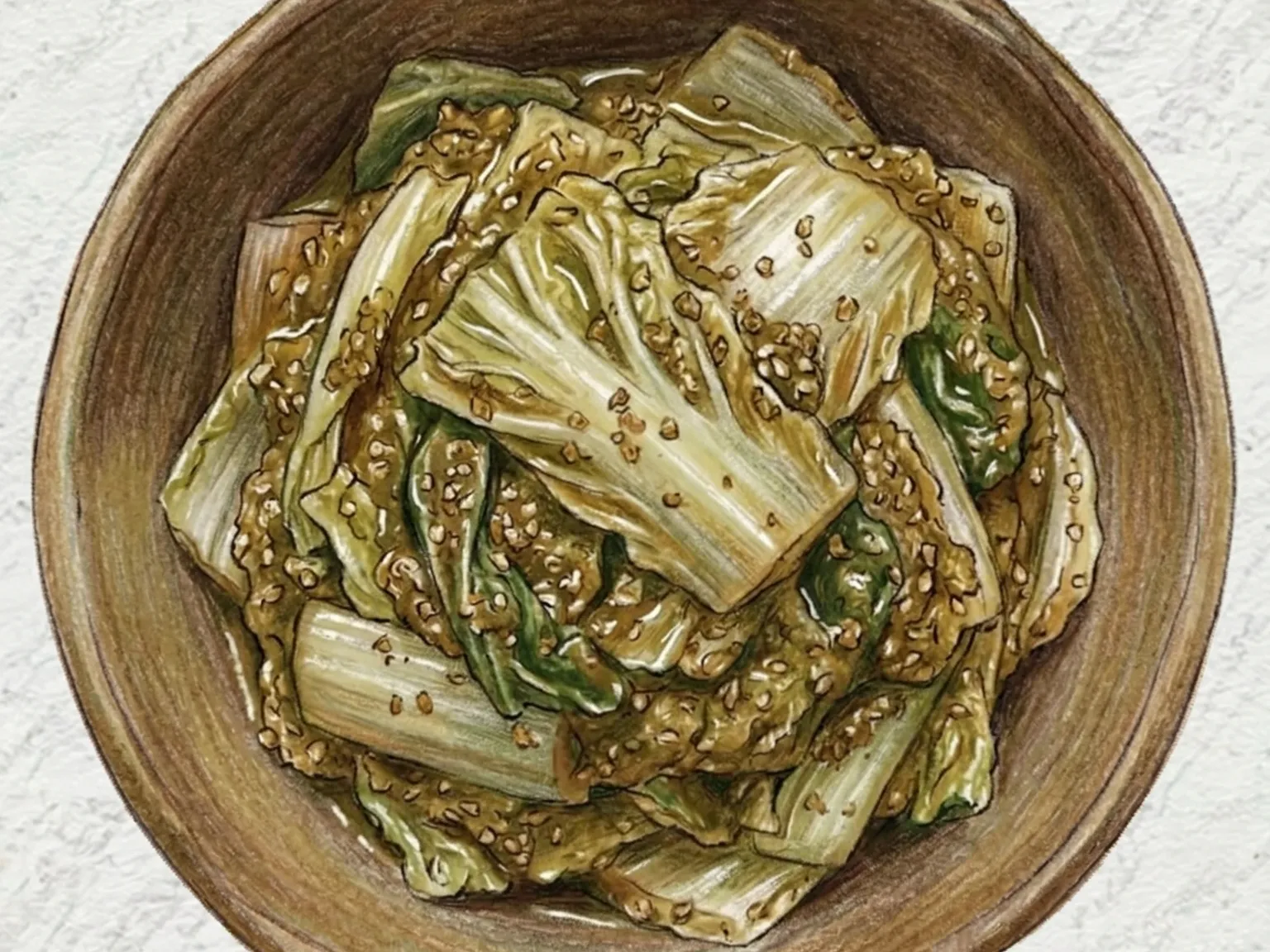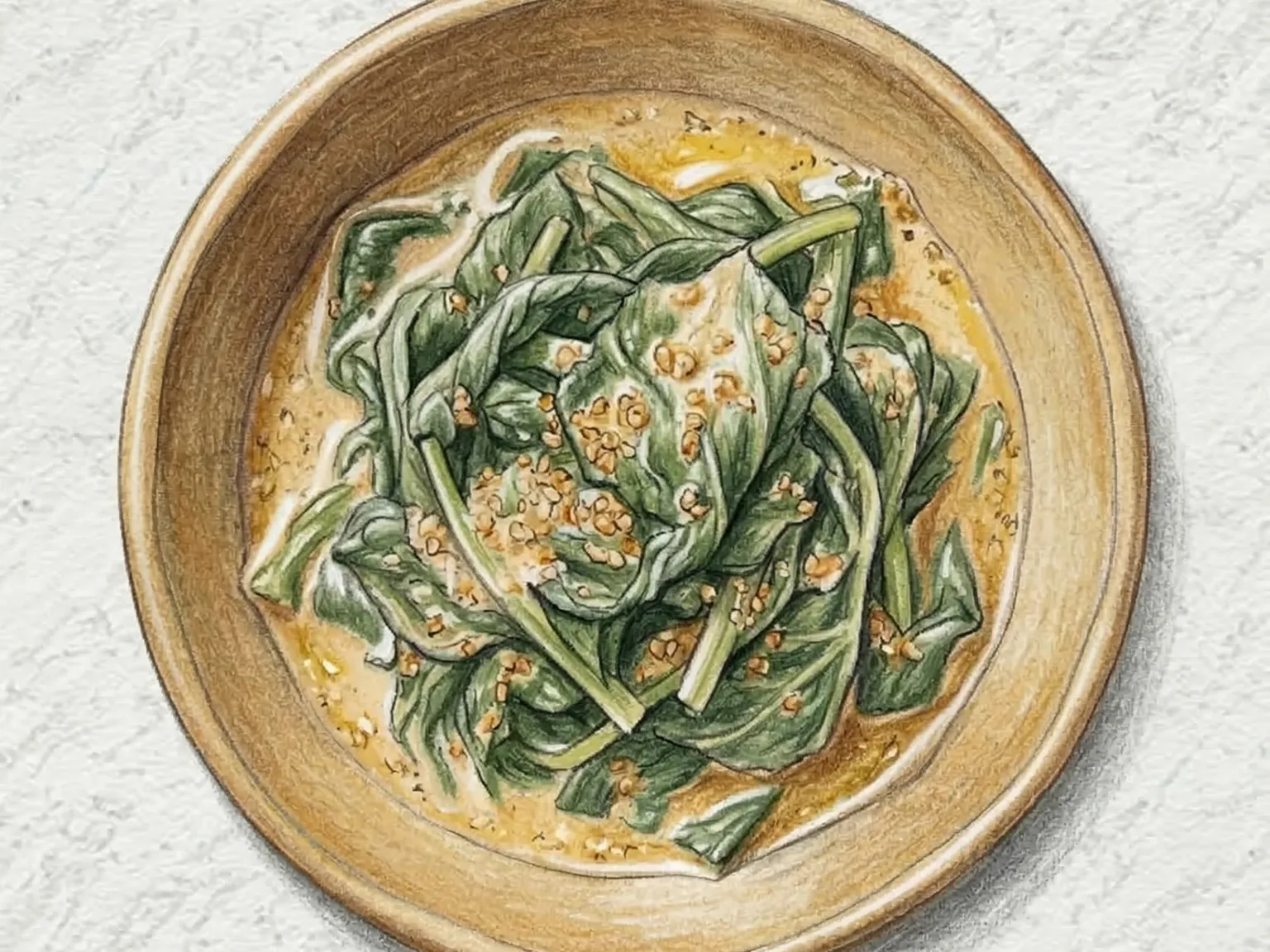
Korean Steamed Thistle Greens with Perilla
Quick answer
Gondre deulkkae jjim is a steamed side dish of blanched thistle greens cooked down with ground perilla seeds, perilla oil, and soup soy sauce.
What makes this special
- Gondre deulkkae jjim combines thistle greens with perilla powder for a clean, nutty finish.
- Perilla powder added just before turning off heat keeps the nuttiness clean
- Thistle's soft fibrous strands hold perilla oil seasoning in every bite
Key ingredients
Core cooking flow
- 1 Rinse 220g blanched thistle greens several times in cold water to remove grit caught in the fibers.
- 2 Mix 1.5 tbsp soup soy sauce, 1 tsp minced garlic, 120ml water, and the salt in a bowl.
- 3 Put the cut greens and seasoning mixture in a pot, then toss gently by hand...
Gondre deulkkae jjim is a steamed side dish of blanched thistle greens cooked down with ground perilla seeds, perilla oil, and soup soy sauce. The greens are seasoned with garlic and oil first, then covered and left to steam over low heat so the liquid is slowly absorbed into the fibrous leaves rather than evaporating away. Adding the perilla powder toward the end of cooking, rather than at the beginning, prevents the nutty flavor from turning bitter or chalky from prolonged heat exposure. The soft, absorbent fibers of the thistle greens hold the seasoning exceptionally well, meaning each bite carries a concentrated burst of savory, nutty flavor throughout. Pulling the pan off the heat while a little texture remains in the greens keeps the dish from turning mushy. Green onion cut into rough pieces is added on top at the end, and a final drizzle of perilla oil revives the aroma. The ingredient list is short, but the result is a deeply satisfying dish often piled over hot rice or served as a companion to gondre bibimbap.
Instructions
Read the steps as a cooking flow: prep, heat, seasoning, doneness control, and finish.
- 1Season
Rinse 220g blanched thistle greens several times in cold water to remove grit caught in the fibers.
Squeeze firmly so excess water does not dilute the seasoning, then cut the greens into 5cm lengths.
- 2Season
Mix 1.5 tbsp soup soy sauce, 1 tsp minced garlic, 120ml water, and the salt in a bowl.
Stir until the salt dissolves so the seasoning spreads evenly instead of clinging to one part of the greens.
- 3Season
Put the cut greens and seasoning mixture in a pot, then toss gently by hand so the liquid reaches between the strands.
Drizzle in 1 tbsp perilla oil and turn the greens once more to coat them.
- 4Control
Cover the pot and steam over medium-low heat for about 8 minutes.
The bottom should stay lightly moist, not dry, so add water 2 tbsp at a time if the liquid disappears too quickly.
- 5Step
When the greens are tender but not collapsing, lower the heat.
Add 3 tbsp ground perilla seeds and stir quickly so the powder thickens the remaining liquid without forming dry clumps or tasting chalky.
- 6Finish
Scatter the roughly sliced green onion over the top and drizzle with the remaining 0.5 tbsp perilla oil.
Turn the greens once, then turn off the heat while they are still moist and serve with rice.
After the steps
Pick a recipe that fits this dish.
Continue with shared ingredients, meal pairings, or a similar method.
Recipes That Go Well With This
More Steamed →Based on shared ingredients and meal pairing
Korean Chwinamul with Doenjang
This banchan brings together chwinamul, a foraged spring green with a pronounced bitter edge, and doenjang, Korea's pungent fermented soybean paste, producing a side dish where two assertive flavors push against each other and settle into something deeper than either alone. The greens are blanched for two minutes, squeezed firmly to remove excess water, and cut to an even length before seasoning. Doenjang, soup soy sauce, minced garlic, sesame oil, and perilla powder are added and worked in by hand, pressing the thick paste into the porous leaf tissue so that the salty, fermented depth clings to every strand and the seasoning does not slide off during plating. The natural bitterness of the chwinamul does not disappear under the doenjang but transforms instead, losing its sharpness and becoming layered and rounded. Letting the dressed greens rest for five minutes before serving allows the seasoning to penetrate fully, which sharpens and deepens the overall flavor in a way that is noticeable even from the first resting period. In winter months, dried chwinamul soaked overnight in cold water is used instead of fresh; the texture is softer and less fibrous but the compatibility with doenjang holds completely.
Korean Steamed Zucchini with Salted Shrimp
Aehobak saeujeot jjim belongs to a class of Korean dishes where the ingredient list is deliberately short and fermentation carries the flavor. The only seasoning is salted shrimp - saeujeot - minced fine and dissolved in water with garlic to form a light broth. That minimal liquid does more than it looks: as zucchini cooks in it, the brine's concentrated umami soaks into each piece, delivering more depth than the simple preparation suggests. Half-moon slices go into the pot, the broth is poured over, and the lid goes on over medium-low heat. This method sits between steaming and braising - moisture stays trapped in the pot, heat distributes evenly, and the zucchini cooks through without going soft or watery. Perilla oil and sesame seeds added off the heat balance the fermented note of the shrimp paste with a round, nutty fragrance. The dish comes from Korean countryside cooking, where salted seafood was the default seasoning long before soy sauce was widely available. It pairs well alongside richer, oil-forward mains where something clean and lightly briny makes sense.
Korean Braised Burdock Root
Julienned burdock root is simmered in soy sauce, sugar, and corn syrup with enough water to submerge the strips, then reduced slowly until the liquid thickens into a concentrated glaze. Unlike stir-fried burdock, this braised version cooks under a lid at moderate heat, giving the tough fibers time to soften while retaining a pleasantly chewy core. Soy sauce penetrates deep into the root during the extended simmer, establishing a salty foundation that the corn syrup then balances with a mellow sweetness. As the braising liquid reduces, the sugars begin to caramelize, darkening the color and adding a layer of complexity to burdock's naturally earthy, woody flavor. The dish is done when nearly all the liquid has evaporated and each strip glistens with a thick, lacquered coating. Vinegar added at the start prevents the burdock from discoloring and contributes a faint tartness that keeps the sweetness in check. Stored in a sealed container, the jorim remains good in the refrigerator for close to ten days.
Korean Steamed Tofu with Spinach
Sigeumchi dubu jjim is a Korean steamed side dish of firm tofu, spinach, and shiitake mushrooms seasoned with soy sauce and soup soy sauce, then covered and cooked over gentle heat until everything is just done. Pressing the tofu firmly between layers of kitchen paper to remove excess moisture is a necessary first step; water left in the tofu dilutes the seasoning and turns the cooking liquid murky. When the spinach and mushrooms are arranged alongside the tofu and the seasoning is spooned over everything before the lid goes on, the steam released by the vegetables cooks the dish evenly without any added water. Shiitake mushrooms bring a concentrated umami that gives unexpected depth to what is otherwise a very simple soy-based seasoning. A drizzle of perilla oil and a scattering of sesame seeds at the end add a distinctly nutty, aromatic finish that lifts the entire dish. Low in calories and rich in plant protein, it fits naturally into a light weeknight dinner as a side dish that is as nourishing as it is unfussy.
Serve with this
Korean Seasoned Tofu Pouch Sushi (Yubu Chobap)
Yubu chobap consists of seasoned tofu pouches filled with sushi rice. The preparation begins by mixing rice vinegar, sugar, and salt into hot rice, using a cutting motion to preserve the grains. Sesame oil and toasted sesame seeds are added for aroma, along with finely diced carrot and cucumber to bring color and a crisp texture. The tofu pouches are lightly pressed and filled to about 80 percent of their capacity, preventing the skin from tearing during shaping. With each bite, the pouch releases a sweet and savory sauce absorbed by the tofu, which goes well with the seasoned rice. Since they are convenient to carry and eat by hand, they are popular for lunchboxes, quick snacks, and picnics.
Korean Crown Daisy Soy Pickle
Ssukgat jangajji is a soy-brined pickle made with crown daisy greens, capturing the herb's distinctively bitter, aromatic character in a quick-cured form. A boiling mixture of soy sauce, vinegar, and sugar is poured directly over the trimmed greens, which wilts them just enough to expel raw grassiness while locking in the clean, herbal fragrance underneath. Thin slices of lemon layered between the greens as they steep introduce a citrus brightness that cuts through the saltiness of the soy and keeps the brine from tasting flat. Whole black peppercorns contribute a gentle background heat that tidies up the finish. The jar goes into the refrigerator once cooled, and the pickle is ready to eat after just twenty-four hours, making it one of the most practical options when a side dish is needed on short notice. The herbal fragrance is at its sharpest within the first week of refrigeration, after which the aroma gradually fades. It pairs well as a rice topping or served alongside grilled pork or beef.
Gamja Jogae-guk (Potato Manila Clam Soup)
Gamja jogae guk is a clear Korean soup that brings together the briny, umami-rich depth of manila clams and the gentle softness of potato in a light, unpretentious broth. The clams are purged of sand first, then added to a pot with potato cut into thin, flat slabs and sliced onion. As the clams open, they release a natural shellfish liquor that seasons the water without any additional stock, giving the broth a quiet but genuine depth. The potato slices cook down gradually, releasing a slight starchiness into the liquid that softens the broth's texture compared to a pure seafood soup. The moment the clams open is the cue to lower the heat, since leaving them in a boiling pot turns the flesh rubbery. Soup soy sauce adjusts the salt level without darkening the clear broth, and sliced green onion scattered over the top at the end adds a clean, grassy note. Despite having only a handful of ingredients and taking fewer than twenty minutes from start to finish, the pairing of clam and potato builds a layered, refreshing flavor that makes this one of the more satisfying simple soups in everyday Korean cooking.
Similar recipes
Korean Steamed Tofu with Soy Sauce
Dubu-jjim is firm tofu steamed and topped with a seasoning sauce of soy sauce, gochugaru, chopped green onion, garlic, and sesame oil. Cutting the tofu into thick slabs before steaming lets heat penetrate evenly, producing pieces with slight resistance on the outside and a silky interior. The soy and chili sauce drizzled over the warm tofu seeps into each slice, delivering salty and mildly spicy flavors throughout. Sesame oil and seeds finish with a toasted aroma. Cooked without any added oil, it is a clean, protein-rich banchan that fits well on a vegetarian spread. Lightly salting the tofu before steaming draws out excess moisture, which allows the seasoning sauce to absorb more deeply and firms up the texture.
Korean Steamed Eggplant with Seasoning
Steaming whole eggplants preserves the moisture trapped inside the purple skin, creating a silky and soft texture that sliced pieces cannot replicate. This traditional Korean side dish relies on the technique of tearing the cooked eggplant by hand along its natural grain rather than using a knife. The resulting irregular surface area allows the dressing of soy sauce, garlic, and red pepper flakes to cling effectively to every fiber. Sesame oil and toasted seeds contribute a nutty fragrance while sliced green onions provide a fresh finish to the light seasoning. Adding perilla powder increases the nuttiness, and incorporating canned tuna provides enough protein to serve the dish as a primary component of a meal. Adding minced cheongyang chilies into the sauce increases the heat for a spicier version. Since the preparation takes less than thirty minutes, it remains a common choice during hot summer months. The dish keeps its consistency well in the refrigerator for about twenty-four hours after cooling.
Korean Gourd Namul Stir-fry
Baknamul deulkkae bokkeum is a Korean stir-fried side dish made from rehydrated dried bottle gourd strips coated in ground perilla seed. The dried gourd strips - thin slices of the gourd's inner flesh dried until pale and brittle - need at least thirty minutes of soaking to recover their characteristic chewy bite. Minced garlic is sauteed in perilla oil first to build a fragrant base, then the soaked strips go in along with soup soy sauce and small additions of water to braise them through. Ground perilla seed is added generously at the end, stirred in while the heat reduces the remaining liquid. As the moisture disappears, the perilla powder binds into a clinging, sauce-like coating on each strip rather than sitting as dry powder. This is the key technique: the coating should be smooth and adherent, not dusty. The whole dish is done in about ten minutes and offers a mild, chewy counterpoint to stronger-flavored banchan on the table.