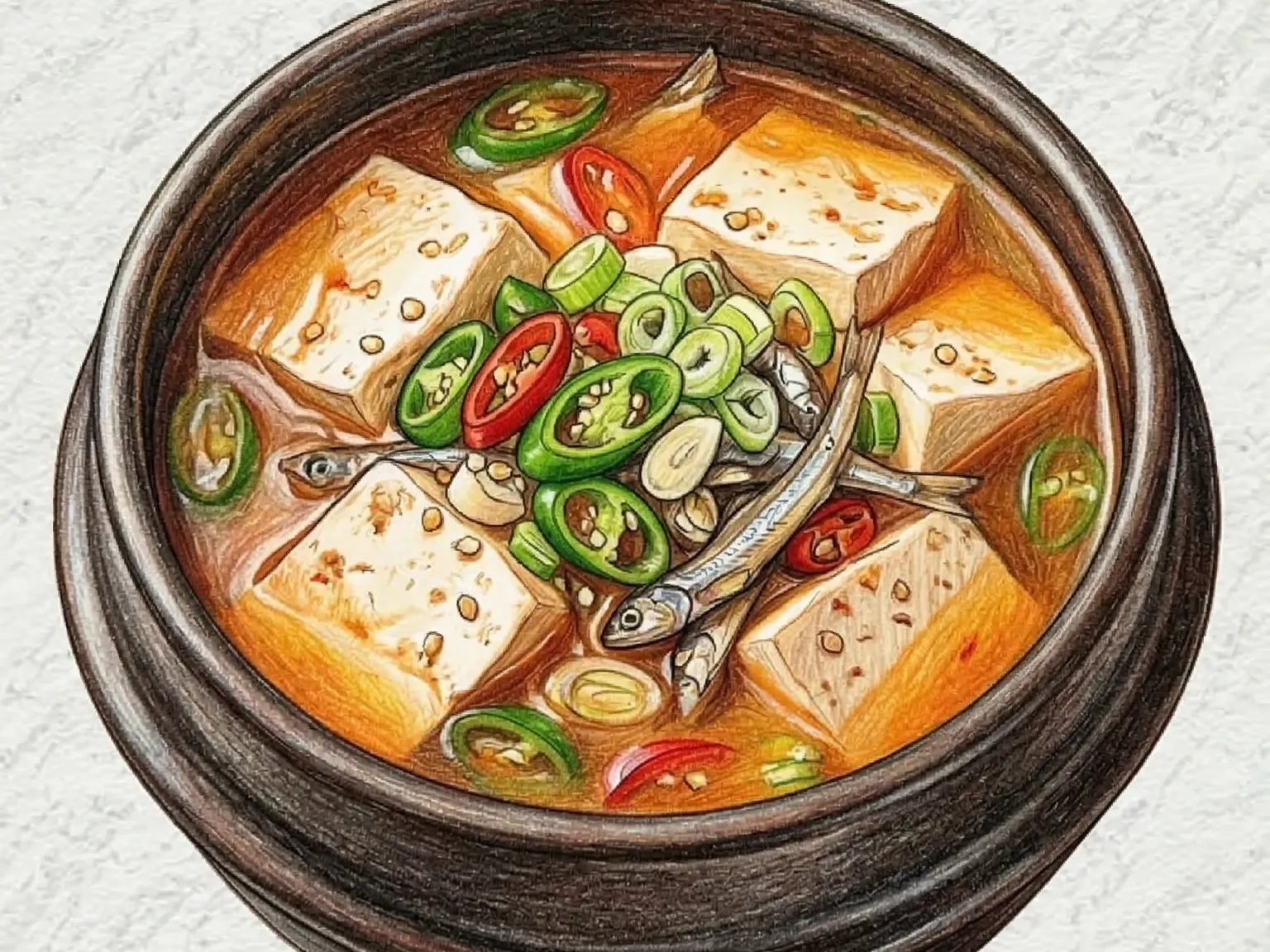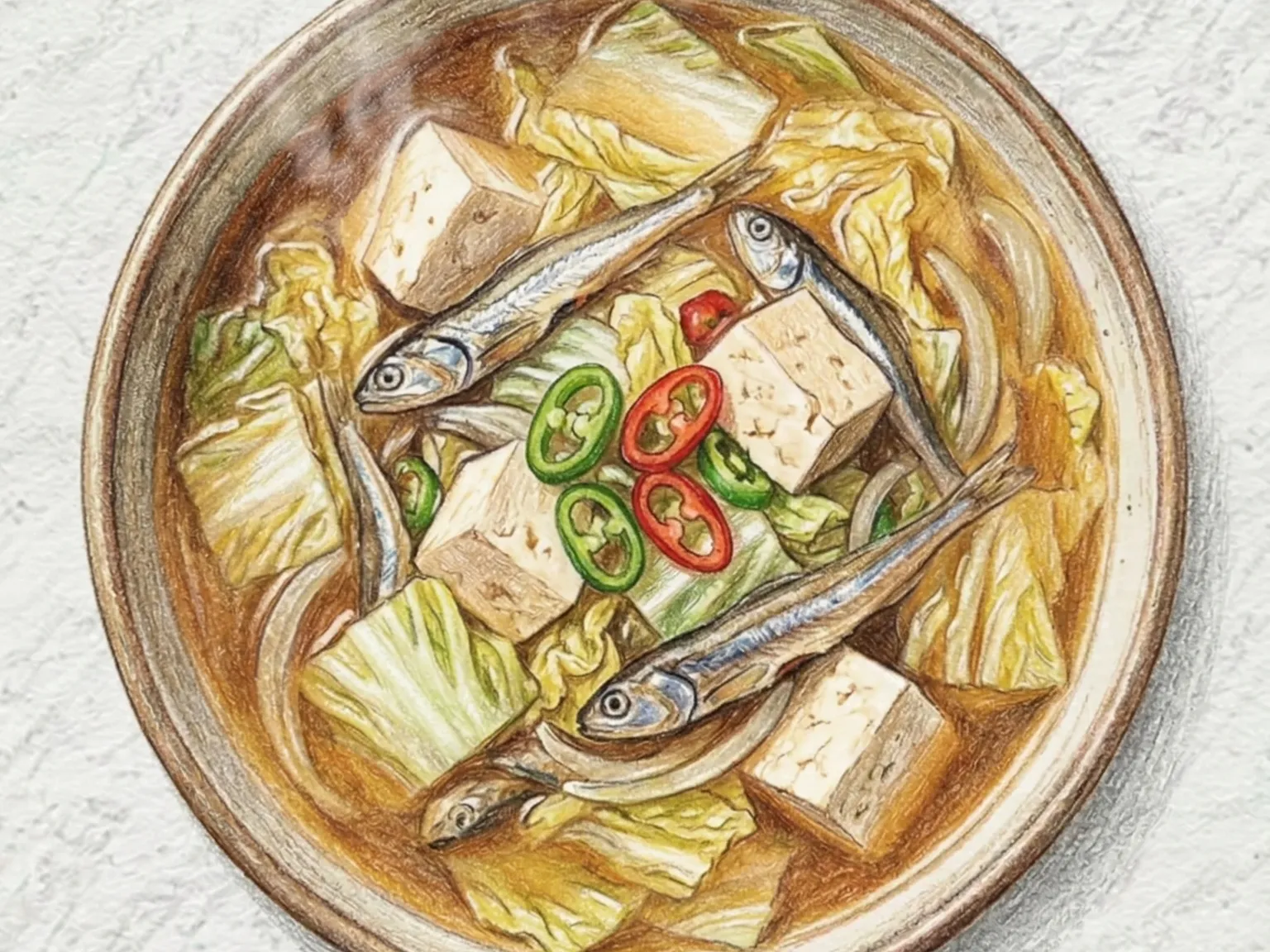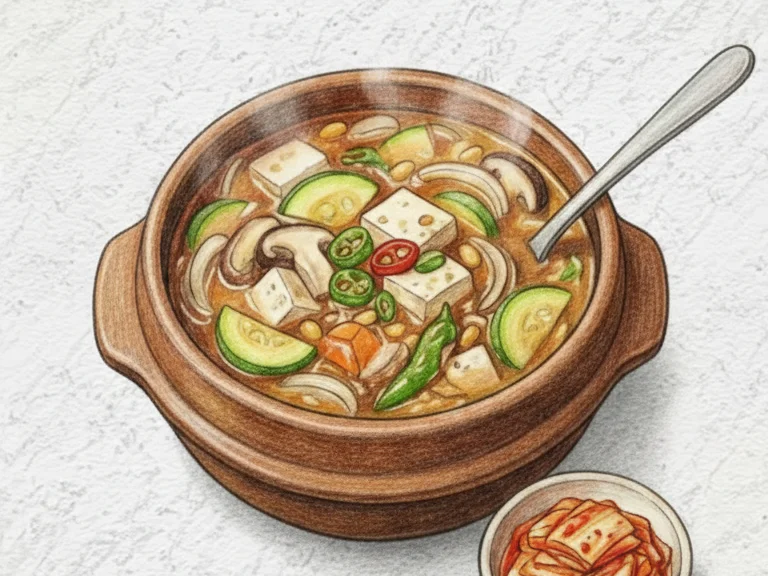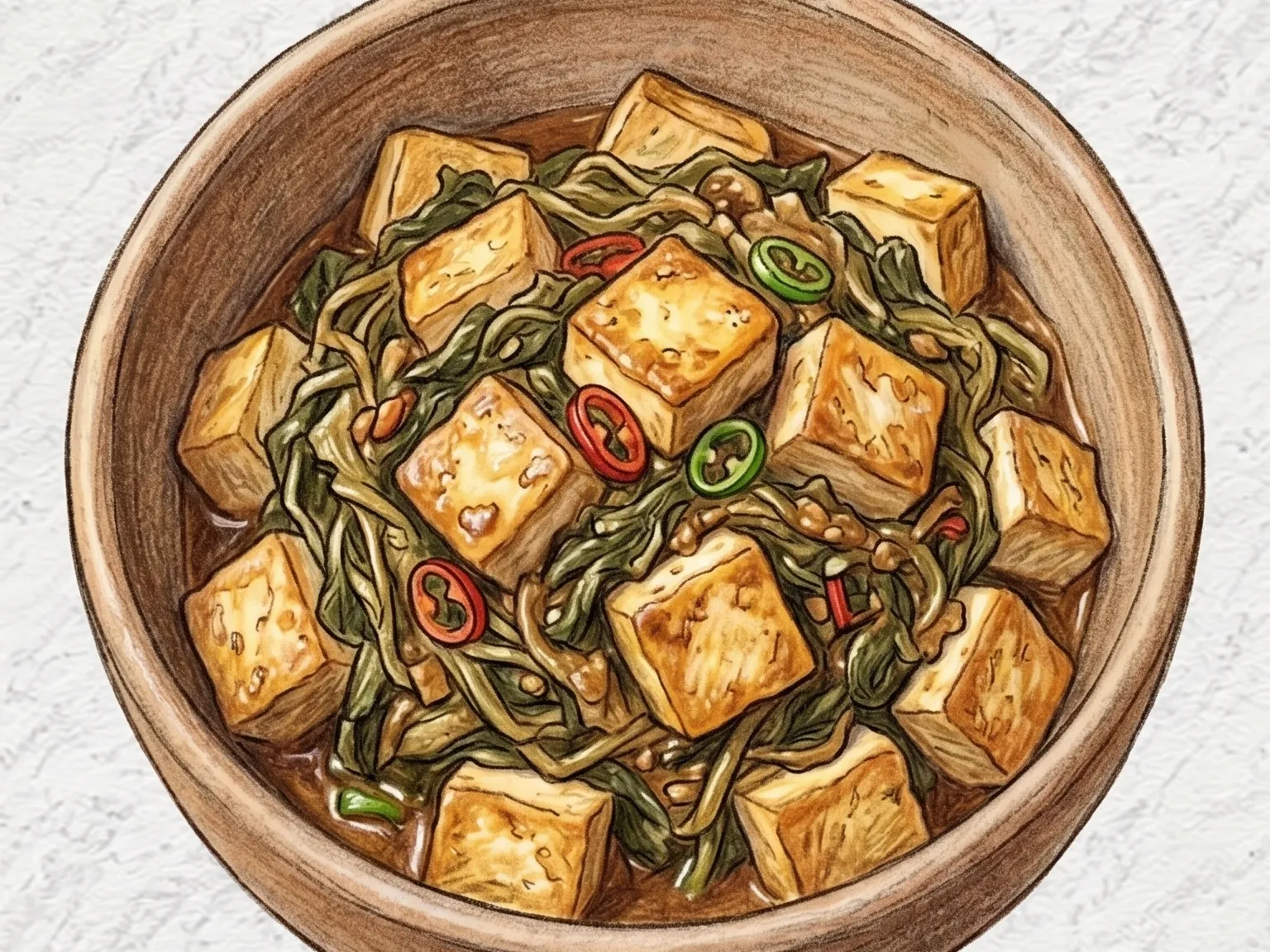
Korean Gondre Dubu Doenjang Bokkeum (Thistle Tofu Doenjang Stir-fry)
Stir-fry Medium

Korean Gondre Dubu Doenjang Bokkeum (Thistle Tofu Doenjang Stir-fry)

Quick answer

Gondre dubu doenjang bokkeum is a stir-fried side dish that pairs pan-seared firm tofu with blanched gondre thistle greens in a doenjang-based sauce.

What makes this special

  • Pan-seared tofu and thistle greens are simmered in doenjang for an earthy, rustic side dish.
  • Pre-searing tofu forms a crust that holds its shape through braising
  • Doenjang dissolved in water coats every strand of thistle greens evenly
Total time
28 min
Level
Medium
Servings
2 servings
Ingredients
9
Calories
226 kcal
Protein
14 g

Key ingredients

blanched gondre greensfirm tofuonioncheongyang chiliminced garlic

Core cooking flow

  1. 1 Squeeze excess moisture from 180 g blanched gondre greens, then cut them into bite-size lengths.
  2. 2 Warm a pan over medium heat and add half of the perilla oil.
  3. 3 Add the remaining perilla oil to the same pan, then stir in 70 g onion and 1 teaspoon minced garlic.

Gondre dubu doenjang bokkeum is a stir-fried side dish that pairs pan-seared firm tofu with blanched gondre thistle greens in a doenjang-based sauce. Searing the tofu separately in perilla oil before combining it with the greens is the step that makes the difference: the firm, lightly crisped surface that forms holds its shape through the subsequent stir-frying and absorbs the seasoning without breaking down into chunks. Doenjang dissolved in a small amount of water is stirred through the gondre so the fermented paste coats every strand evenly, and a small addition of soup soy sauce deepens the savory character without pushing the salt level too high. Sliced cheongyang chili adds a gentle heat that lingers at the finish. Perilla oil, with its nutty, herbal scent, binds the flavors and gives the dish its distinctive aromatic character. Gondre is a thistle variety grown in the Gangwon mountain region and pairs particularly well with doenjang because its earthy, slightly sweet fragrance complements the depth of the fermented paste.

Prep 18min Cook 10min 2 servings

Instructions

Read the steps as a cooking flow: prep, heat, seasoning, doneness control, and finish.

6 steps
  1. 1
    Prep

    Squeeze excess moisture from 180 g blanched gondre greens, then cut them into bite-size lengths.

    Press 200 g firm tofu gently to remove surface water and cut it into 1.5 cm cubes so it sears instead of steaming.

  2. 2
    Control

    Warm a pan over medium heat and add half of the perilla oil.

    Spread the tofu in one layer, cook about 3 minutes while turning gently, and remove it when the edges look lightly golden and firmer.

  3. 3
    Heat

    Add the remaining perilla oil to the same pan, then stir in 70 g onion and 1 teaspoon minced garlic.

    Keep the heat at medium and cook about 1 minute, just until the onion starts to soften and the garlic smells fragrant.

  4. 4
    Control

    Dissolve 1 tablespoon doenjang in 3 tablespoons water before adding it to the pan.

    Add the gondre and stir-fry over medium heat for about 3 minutes, turning the greens so the paste coats the strands evenly.

  5. 5
    Finish

    If the gondre still feels tough, add 1 tablespoon more water and cook about 1 minute longer.

    Lower the heat slightly if the pan looks dry, because doenjang can scorch before the greens finish softening.

  6. 6
    Season

    Return the seared tofu, then add 1 teaspoon soup soy sauce and 1 sliced cheongyang chili.

    Fold gently for about 2 minutes, stopping when the tofu stays intact, the seasoning looks glossy, and the chili heat is mixed through.

After the steps

Pick a recipe that fits this dish.

Continue with shared ingredients, meal pairings, or a similar method.

Recipes That Go Well With This

More Stir-fry →

Based on shared ingredients and meal pairing

Korean Perilla Sprout & Tofu Soybean Paste Stir-fry
Shared ingredient: onion Stir-fry

Korean Perilla Sprout & Tofu Soybean Paste Stir-fry

Kkaetsun dubu doenjang bokkeum pairs pan-seared firm tofu with perilla sprouts in a doenjang sauce. The tofu must be pressed dry with paper towels before it goes into the pan; residual moisture causes the oil to spit and prevents the surface from crisping. Dissolving the doenjang in water before adding it to the pan distributes the saltiness evenly and stops the paste from scorching against the hot surface. The doenjang coats the golden tofu pieces with a salty, earthy glaze, while perilla sprouts, far softer than mature perilla leaves, release a delicate perilla-sesame fragrance as they wilt into the sauce. The contrast between the crisp tofu edges and the just-wilted greens gives the dish its defining texture. Cheongyang chili cuts through the fermented weight of the doenjang with a clean, sharp heat that brightens the aftertaste. A final drizzle of perilla oil added off the heat brings the fragrance back to the surface before serving. When perilla sprouts are not available, mature perilla leaves cut into thick strips work as a direct substitute.

Korean Oi Dubu Bokkeum (Cucumber Tofu Stir-fry)
Shared ingredient: firm tofu Stir-fry

Korean Oi Dubu Bokkeum (Cucumber Tofu Stir-fry)

Oi-dubu-bokkeum stir-fries half-moon cucumber slices and cubed firm tofu with soup soy sauce, garlic, and a light touch of Korean chili flakes. The tofu is pan-fried to golden first to prevent crumbling, then set aside while garlic and onion build flavor in the same pan. Cucumber goes in for just 90 seconds - long enough to warm through but short enough to stay crisp and juicy. The tofu returns for a final toss with sesame oil, creating a dish defined by the contrast between cool, crunchy cucumber and warm, soft tofu under a clean soy-based seasoning.

Korean Pork Belly Kimchi Fried Rice
Serve together Rice

Korean Pork Belly Kimchi Fried Rice

Pork belly is diced small and rendered in a hot pan until golden, producing enough fat to cook the entire dish without additional oil. Aged kimchi and onion go into that rendered fat, where the kimchi's sharp tang softens into the pork's richness. Gochujang and soy sauce season the rice as it joins the pan, and aggressive high-heat stir-frying keeps each grain distinct rather than clumpy. Day-old cold rice works best because its lower moisture content yields a drier, crispier result, and a fried egg on top provides a creamy counterpoint when the yolk breaks.

Korean Beurokolli Dubu Doenjang Bokkeum (Broccoli Tofu Doenjang Stir-fry)
Similar recipe Stir-fry

Korean Beurokolli Dubu Doenjang Bokkeum (Broccoli Tofu Doenjang Stir-fry)

Broccoli florets and firm tofu are stir-fried in a sauce made by dissolving doenjang in water, producing a Korean vegetarian side dish with layered fermented-soybean depth. Pan-searing the tofu in perilla oil until golden before combining with the other ingredients prevents crumbling during stir-frying and creates a crisp shell around a soft center. The broccoli is blanched for only 40 seconds to lock in its crunch, then added to the pan where the doenjang sauce coats each floret and suppresses any raw green bitterness, converting it into a mellow savoriness. Because doenjang carries significant salt on its own, soy sauce should be adjusted only at the very end after tasting. Toasted sesame seeds scattered over the top add a final layer of nuttiness. The dish provides plant-based protein from the tofu and dietary fiber from the broccoli in a single well-balanced plate. For a spicier variation, a small amount of gochujang stirred into the doenjang sauce deepens both the color and the heat without needing extra chili flakes. The ratio of doenjang to water also matters: too little water leaves the sauce overly salty and the broccoli unevenly coated, while too much thins the fermented depth. A starting ratio of one part doenjang to two parts water by volume gives consistent results.

Serve with this

Manduguk (Korean Dumpling Clear Broth Soup)
Soups Easy

Manduguk (Korean Dumpling Clear Broth Soup)

Manduguk is a Korean dumpling soup in which hand-folded dumplings stuffed with ground pork, tofu, scallion, and garlic are dropped into a clear, simmering broth, typically anchovy-kelp stock or beef broth, and cooked until they float. As the dumplings cook, their thin wheat-flour wrappers release a subtle starch that gives the broth a barely perceptible body, while the filling leaks savory juices that enrich the liquid gradually. A thin drizzle of beaten egg stirred in near the finish creates silken wisps on the surface of the broth and gives the bowl a more finished appearance. Shredded egg strips and crumbled dried seaweed scattered on top add a pleasant contrast in color and a faint oceanic note to the flavor. Many Korean households serve manduguk on Lunar New Year as an alternative to tteokguk, and some combine the two by adding sliced rice cakes alongside the dumplings. Dumplings can be made in large batches and frozen raw, which means this soup can be pulled together quickly on weeknights without sacrificing any of the flavor that comes from homemade filling. A small dish of soy-vinegar dipping sauce served alongside lets each person adjust the seasoning at the table, and the light acidity of the sauce cuts through the mild broth in a way that makes the contrast between the two worth trying.

🏠 Everyday 🎉 Special Occasion
Prep 10min Cook 15min 4 servings
Korean Beef & Quail Egg Soy Braise
Side dishes Medium

Korean Beef & Quail Egg Soy Braise

Jangjorim is how Korean cooks make beef last all week. Eye-round is simmered, shredded along the grain, and braised in concentrated soy sauce with sugar, garlic, and whole black peppercorns. Quail eggs are added to the pot and absorb the dark liquid until chestnut brown throughout. Low heat reduces the sauce to a thick, glossy coating on every strand of meat and the surface of each egg. Served cold, jangjorim is intensely salty - meant for small bites with plain rice, where one piece of soy-stained beef carries an entire mouthful of grain.

🏠 Everyday 🍱 Lunchbox
Prep 20min Cook 45min 4 servings
Korean Mushroom Dumpling Hot Pot
Stews Easy

Korean Mushroom Dumpling Hot Pot

Mandu jeongol is a generous hot pot of twelve large dumplings simmered with napa cabbage, shiitake mushrooms, oyster mushrooms, and bok choy in anchovy-kelp stock. The two varieties of mushroom add layers of umami to the clear broth, while the cabbage and bok choy soften and release their natural sweetness as they cook. The dumplings cook directly in the simmering stock, their wrappers gradually turning chewy as the filling flavors seep into the surrounding liquid. Soup soy sauce and garlic provide a clean, understated seasoning that keeps the broth from overshadowing any single ingredient. The right moment to eat is when the vegetables have wilted and the dumplings float to the surface, signaling they are cooked through. The absence of any spice or strong seasoning makes this one of the more universally approachable hot pots, suited for all ages. Leftover broth absorbs cooked rice or soaked glass noodles easily, turning what remains into a satisfying finish to the meal.

🏠 Everyday 🎉 Special Occasion
Prep 15min Cook 20min 4 servings

Similar recipes

Korean Shepherd's Purse Tofu Stir-fry
Stir-fry Easy

Korean Shepherd's Purse Tofu Stir-fry

Naengi-dubu-bokkeum is a spring-seasonal Korean stir-fry that pairs shepherd's purse - a wild herb with a distinctive earthy bitterness - with cubed firm tofu in perilla oil and soy sauce. The tofu is pan-seared until golden to build a crust, then set aside while onion and garlic cook in the same pan before soy sauces go in. The tofu returns along with the cleaned, trimmed shepherd's purse, which needs only two minutes of gentle tossing to wilt without losing its herbal bite. A final drizzle of perilla oil and a pinch of toasted sesame seeds layer nuttiness over the herb's green, slightly bitter fragrance.

🏠 Everyday 🍱 Lunchbox
Prep 18min Cook 10min 2 servings
Korean Crumbled Tofu Stir-fry
Side dishes Easy

Korean Crumbled Tofu Stir-fry

Dubu seoboro - crumbled tofu stir-fry - is a Korean banchan that transforms a block of tofu into something resembling a dry, granular scramble. The tofu is crumbled by hand into rough, irregular pieces rather than diced, creating a range of textures from large curds to fine crumbs that hold seasoning differently. Squeezed thoroughly in a cloth to remove as much moisture as possible, it then goes into a hot pan with diced carrot, onion, and zucchini. The key technique is cooking on high heat without stirring too often, allowing the tofu crumbles to develop lightly golden edges before soy sauce and sesame oil go in at the end. The result is a fluffy, granulated side dish that soaks into rice like a savory topping - satisfying without being rich. Popular in Korean daycare and school lunches because it delivers plant protein in a form that children eat willingly, and it travels cleanly in lunchboxes without leaking. The ingredient cost is low and the cooking time short, which makes it one of the first recipes to reach for when the refrigerator is running low on banchan.

🥗 Light & Healthy 🏠 Everyday
Prep 12min Cook 10min 2 servings
Korean Seasoned Mallow Greens
Side dishes Easy

Korean Seasoned Mallow Greens

Auk namul muchim turns mallow greens - a plant used in Korean cooking since the Joseon era, most commonly in doenjang-guk - into a seasoned side dish. The leaves are soft and contain natural mucilaginous compounds that produce a distinctly slippery texture when blanched. The greens go into boiling water for exactly 40 seconds: too short and a raw grassy smell lingers, too long and the mucilage releases excessively, causing the leaves to clump and stick together. After blanching, they are wrung firmly dry and worked by hand with doenjang, soup soy sauce, minced garlic, and chopped scallion so the fermented paste penetrates the porous leaf structure rather than just coating the surface. Mixing the doenjang with garlic before adding the greens helps temper the raw sharpness of the paste. Sesame oil drizzled in last adds a glossy sheen and rounds out the fermented soy flavor against the soft, mild character of the greens.

🏠 Everyday 🍱 Lunchbox
Prep 9min Cook 3min 4 servings

Tips

If gondre feels tough, add 1 tbsp water and cook a bit longer.
Pre-searing tofu helps it hold shape and texture.

Nutrition (per serving)

Calories
226
kcal
Protein
14
g
Carbs
10
g
Fat
15
g