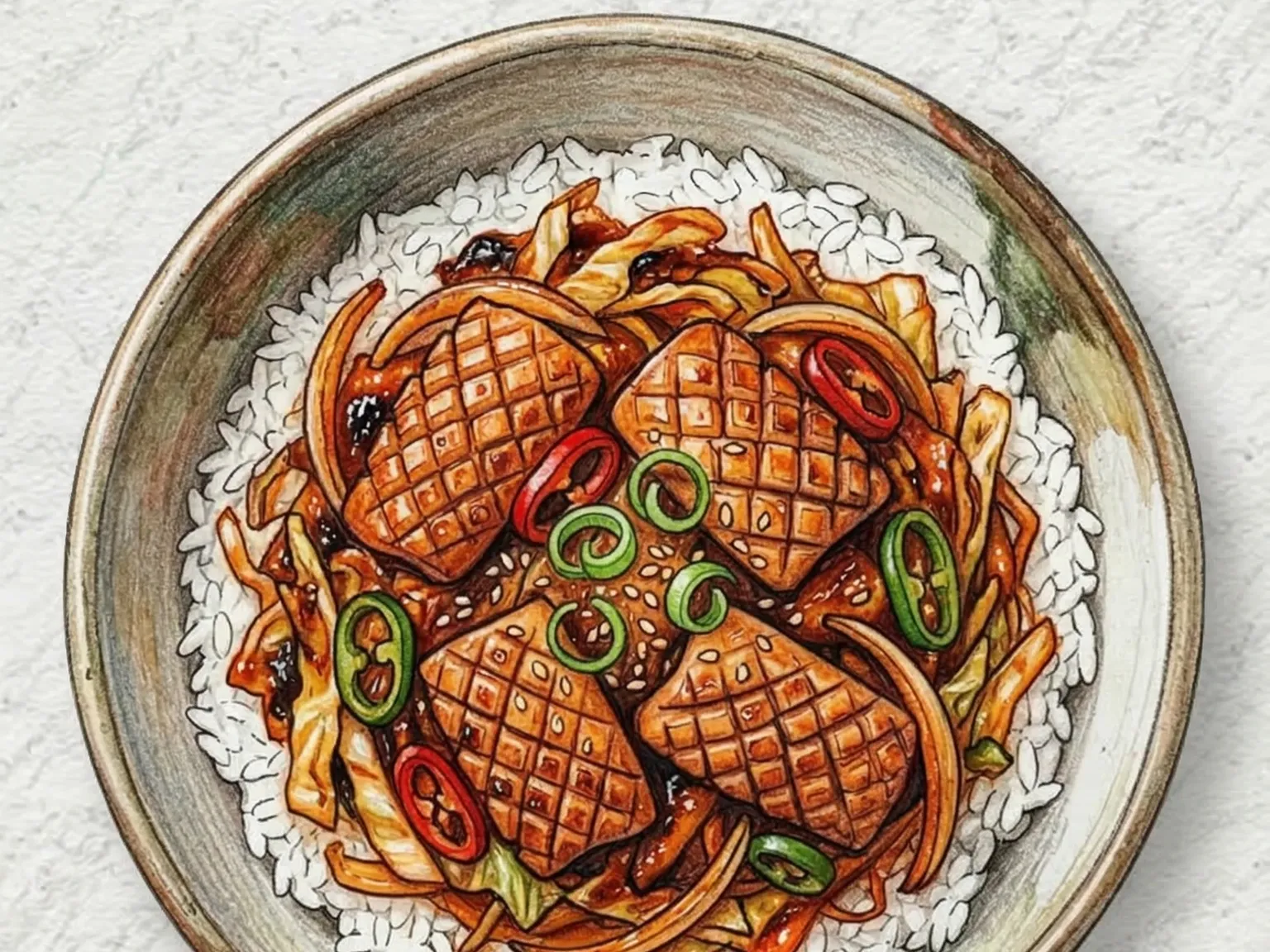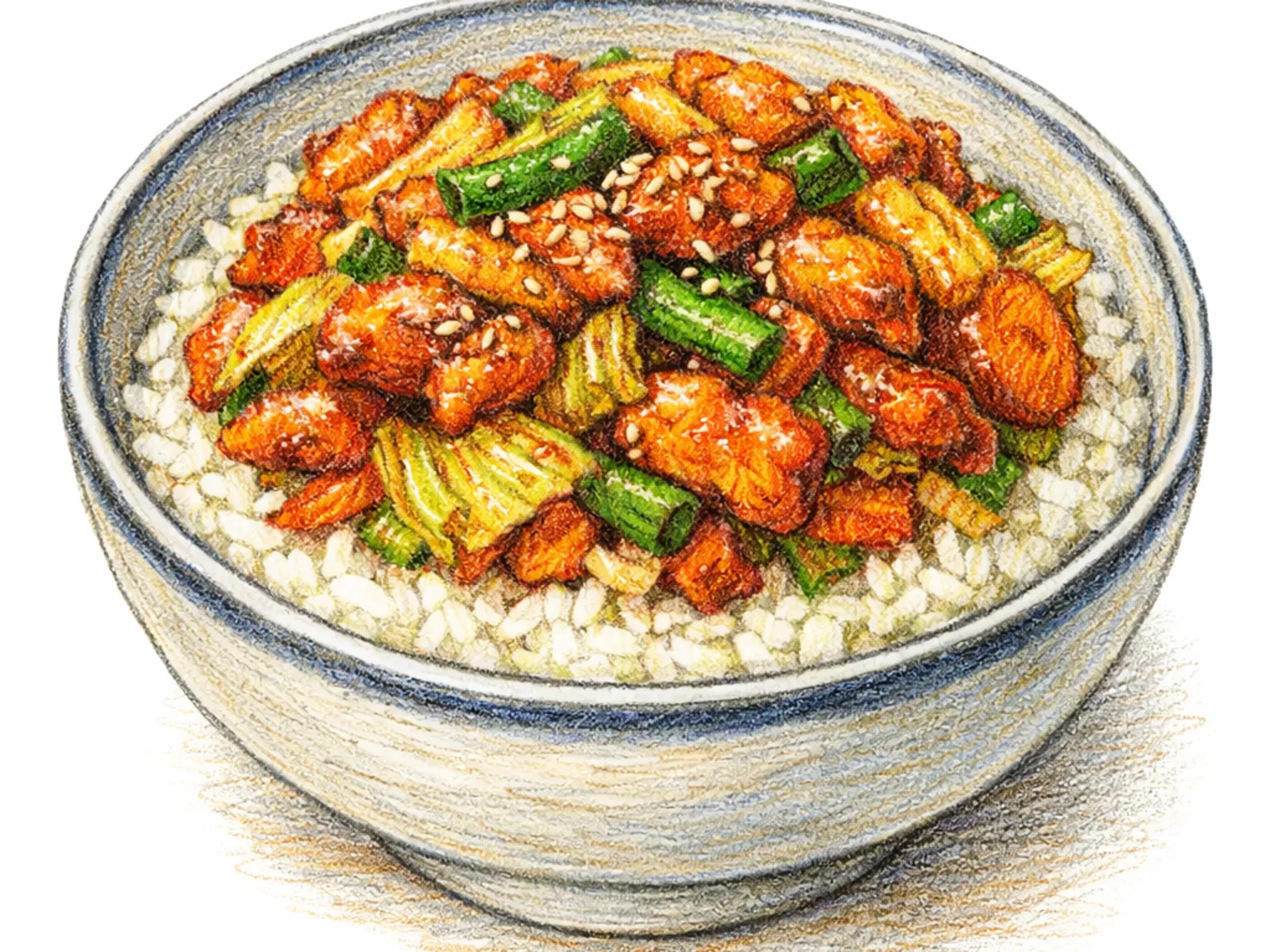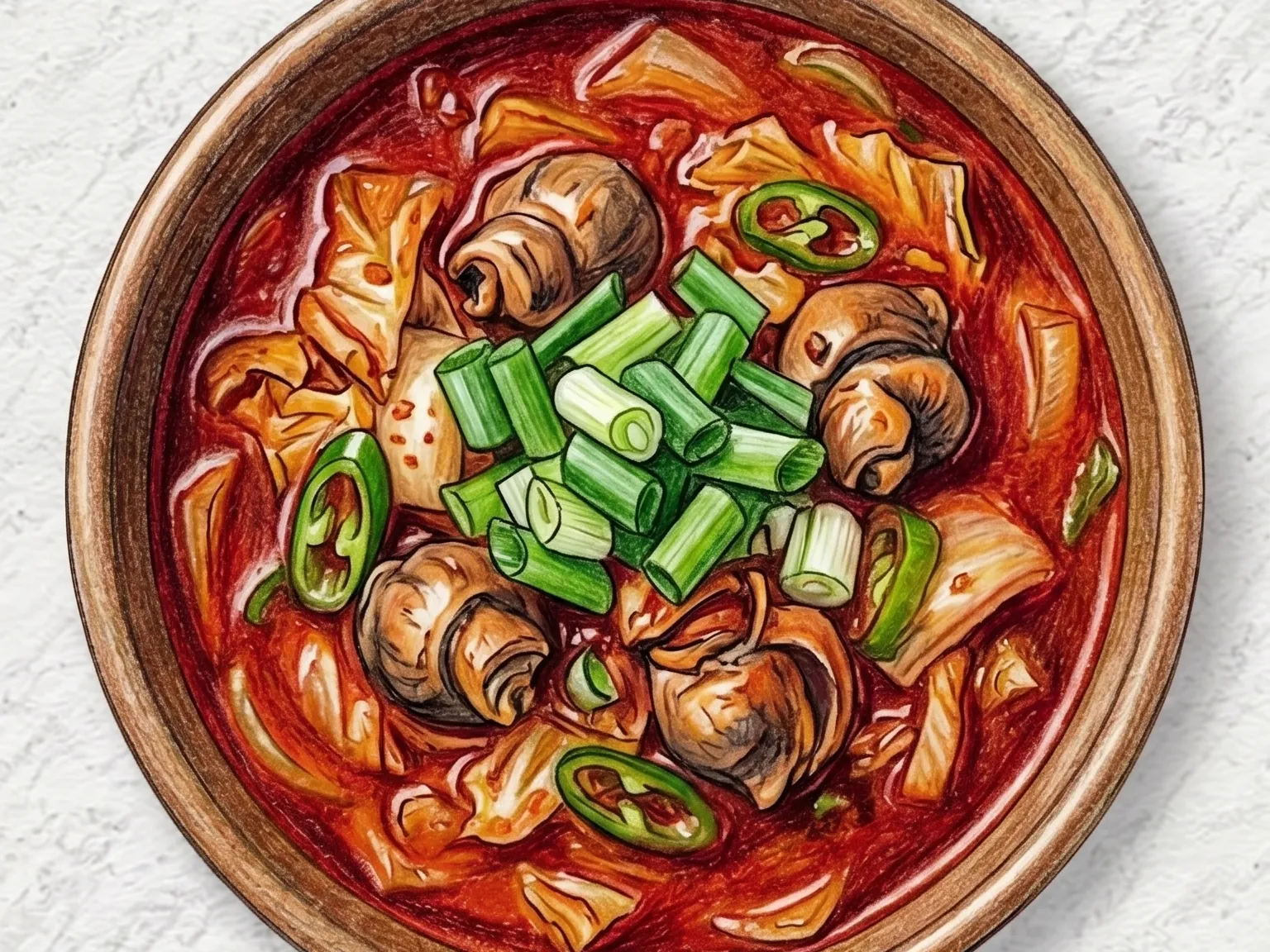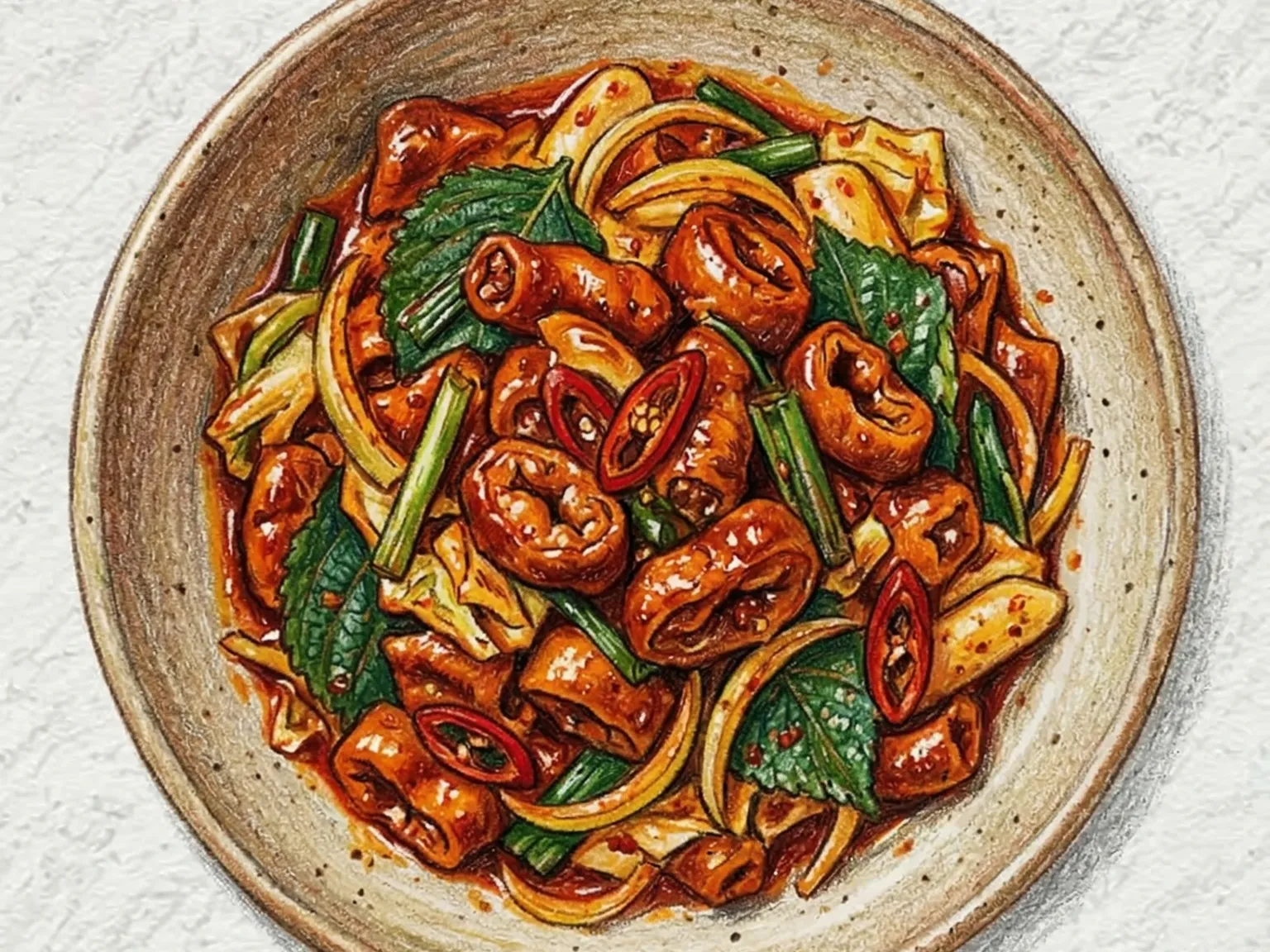
Korean Spicy Beef Intestine Stir-fry
Gopchang-bokkeum is a Korean stir-fry of cleaned beef intestines tossed over high heat with onion, cabbage, scallion, gochujang, and gochugaru. The intestines develop a springy chew while releasing their natural fat, which melds with the spicy seasoning to create an intensely savory sauce. Vegetables stay crisp and soak up the bold flavors as the dish cooks quickly. It is one of the most popular late-night dishes in Korea, often served sizzling on a hot plate alongside rice and soju.
Adjust Servings
Instructions
- 1
Blanch the intestines for 5 minutes to remove impurities.
- 2
Cut onion, cabbage, and scallion into chunky pieces.
- 3
Mix gochujang, gochugaru, soy sauce, and garlic.
- 4
Stir-fry intestines first, render some fat, then add the sauce.
- 5
Add vegetables and stir-fry quickly over high heat until just softened.
As an Amazon Associate, we may earn from qualifying purchases.
Tips
Nutrition (per serving)
More Recipes

Korean Spicy Beef Stir-Fry
Sogogi gochujang-bokkeum marinates thin-sliced beef in a paste of gochujang, soy sauce, sugar, and minced garlic, then stir-fries it over high heat. The chili paste's spiciness and the sugar caramelize together on the meat's surface, building a dark, sticky glaze with layered heat. Onion cooked alongside the beef releases moisture that helps the seasoning distribute evenly across every slice. A finish of sesame oil adds a roasted nuttiness on top of the bold, spicy-sweet profile -- intensely flavored enough that a small portion carries a full bowl of rice.

Korean Stir-fried Sundae and Tripe
Sundae-gopchang-bokkeum is a bunsik-style stir-fry combining blanched beef tripe and Korean blood sausage (sundae) with cabbage, onion, and scallion in a gochujang-gochugaru sauce. The tripe is seared first for a lightly charred exterior, then the spicy sauce is built in the pan before vegetables are added. Sundae goes in last and cooks briefly to prevent the casing from splitting. Each component brings a distinct texture - springy tripe, dense chewy sundae, and sweet crunchy cabbage - unified by the bold, spicy coating.

Korean Spicy Stir-fried Chicken Feet
Dakbal-bokkeum stir-fries chicken feet in a sauce built from gochujang, red pepper flakes, and soy sauce. Chicken feet are mostly skin and cartilage, giving them a chewy, gelatinous texture that is central to the dish's appeal. Gochujang and red pepper flakes create a double layer of heat, while sugar trails behind with a sweet lingering note. Adding cheongyang chili peppers intensifies the spice even further. The thin bones require eating by hand and stripping the skin with your teeth, a process that is part of the experience itself.

Korean Beef Brisket Kimchi Stir-Fry
Paper-thin slices of beef brisket are laid in a dry pan and cooked until their marbled fat renders out completely, then squeezed aged kimchi is stir-fried in that rendered beef fat without a single drop of added oil. The beef tallow replaces cooking oil entirely, coating the kimchi in a rich, beefy fragrance that vegetable oil cannot replicate. Aged kimchi carries a pronounced sourness from deep fermentation, and half a teaspoon of sugar is enough to round off that acidity and bring the sweet-salty balance into focus. High heat and a short cook time keep the kimchi from going mushy; low and slow turns the entire pan into a soft, porridge-like mass where individual textures disappear. Half a tablespoon of sesame oil swirled in after the flame is off lifts the aroma, and finely sliced green onion scattered on top adds a clean, fresh counterpoint to the heavy richness underneath. Five ingredients and under fifteen minutes of cooking produce a dish that can carry an entire bowl of rice.

Korean Grilled Beef Intestine
Crackling-crisp on the outside, bouncy and rich on the inside - gopchang-gui is the Korean grilled beef intestine dish that keeps barbecue lovers coming back for more. The offal is scrubbed with coarse salt and flour, blanched for five minutes to remove any raw organ smell, then seasoned with garlic, salt, pepper, and sesame oil before hitting a hot pan. As the intestine sears, its internal fat renders out, crisping the exterior into a crackling shell while the interior stays springy and chewy. Blotting away rendered fat with paper towels as it accumulates in the pan prevents the gopchang from frying in its own grease and keeps the texture cleanly crisp. Served immediately while still sizzling with a pile of fresh garlic chives on the side, the pungent green bite of the chives cuts through the richness.

Korean Beef Intestine Hot Pot
Gopchang jeongol is a hot pot built around beef intestines and tripe, simmered in a beef bone stock. The 500 grams of intestines and 200 grams of tripe provide a chewy, bouncy texture that defines the dish. Napa cabbage and oyster mushrooms balance the richness of the offal, while gochujang and gochugaru season the broth with a moderate heat. Served bubbling at the table, this communal dish is meant to be shared.