Korean Grilled Beef Intestine
Quick answer
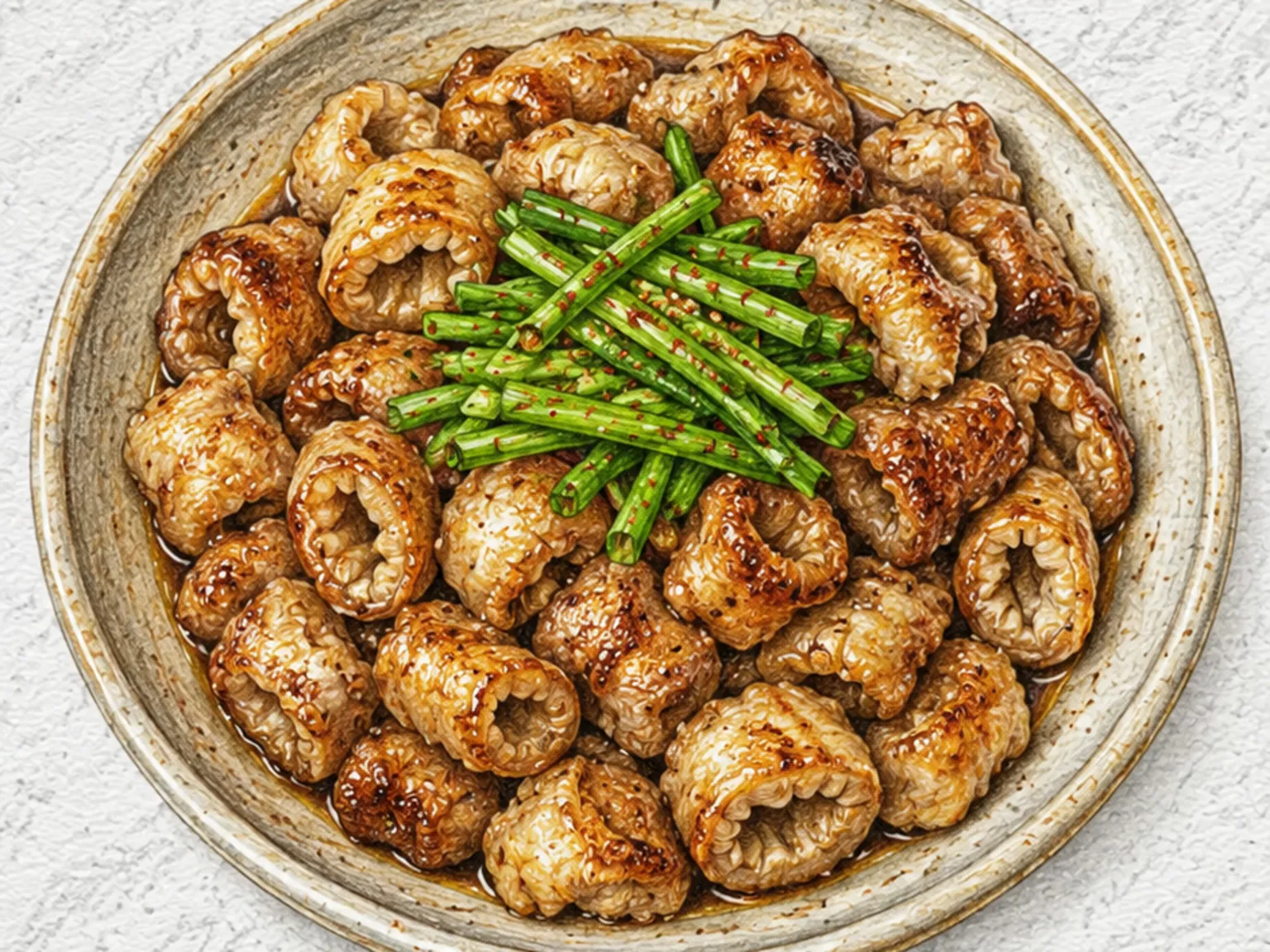
Gopchang-gui is Korean grilled beef small intestine, prized for its crackling exterior and springy interior that develop simultaneously on a high-heat pan.
What makes this special
- Gopchang-gui features salt-rubbed beef small intestine with a crackling exterior and springy center.
- Coarse salt rub and 5-minute blanching are two-stage odor removal
- Draining off rendered fat mid-cook keeps the texture crisp not greasy
Key ingredients
Core cooking flow
- 1 Rub 600 g beef intestine with 1 tbsp coarse salt and 2 tbsp flour for about 5 minutes.
- 2 Rinse several times under running water until no floury coating remains.
- 3 Press the blanched intestine dry with paper towels, then cut it into bite-size pieces.
Gopchang-gui is Korean grilled beef small intestine, prized for its crackling exterior and springy interior that develop simultaneously on a high-heat pan. The preparation begins by kneading the raw intestine with coarse salt and flour to scrub away impurities and draw out off-flavors, then par-boiling for five minutes to strip away residual organ smell before any seasoning is applied. Once patted dry and seasoned with minced garlic, salt, pepper, and sesame oil, the intestine hits a very hot pan where its internal fat renders out rapidly. As the fat releases, it essentially fries the outer surface from the inside, producing a deeply golden crust while the inner walls stay bouncy and chewy. Blotting the accumulated rendered fat from the pan at intervals with paper towels prevents the gopchang from stewing in grease and keeps the crust sharply crisp rather than slick. Served immediately off the heat with a heap of fresh garlic chives alongside, the pungent, vegetal bite of the chives cuts cleanly through the richness of the intestine and refreshes the palate for the next piece.
Instructions
Read the steps as a cooking flow: prep, heat, seasoning, doneness control, and finish.
- 1Season
Rub 600 g beef intestine with 1 tbsp coarse salt and 2 tbsp flour for about 5 minutes.
Work the mixture into the inner folds so the flour loosens mucus and helps pull away odor-causing residue.
- 2Heat
Rinse several times under running water until no floury coating remains.
Drop the intestine into boiling water for 5 minutes, then drain it in a colander and let the surface moisture run off thoroughly.
- 3Season
Press the blanched intestine dry with paper towels, then cut it into bite-size pieces.
Toss with 1 tbsp minced garlic, 0.5 tsp salt, 0.5 tsp black pepper, and 1 tsp sesame oil so the seasoning coats every piece.
- 4Control
Heat a dry pan well over medium-high heat.
Arrange the intestine in a single layer without crowding, and leave it untouched for the first 2 minutes so its own fat starts rendering instead of steaming.
- 5Heat
When rendered fat pools in the pan, carefully blot it with paper towels.
Once the underside turns golden and the edges look crisp, flip the pieces and cook the other side for another 2-3 minutes.
- 6Finish
Turn off the heat when the outside is crisp and the center still feels springy rather than dry.
Cut 60 g garlic chives into 4 cm lengths, serve them alongside the hot gopchang-gui, and eat immediately.
After the steps
Pick a recipe that fits this dish.
Continue with shared ingredients, meal pairings, or a similar method.
Recipes That Go Well With This
More Grilled →Based on shared ingredients and meal pairing
Korean Grilled Beef Daechang
Daechang-gui is Korean grilled beef large intestine, cleaned and lightly seasoned with salt, black pepper, minced garlic, and sesame oil before being seared on a high-heat pan. The thick layer of fat lining the inside of the intestine renders quickly over intense heat, and it is this fat that produces the dish's characteristic richness and crisp exterior as the outer surface browns. The fat is also the reason moderation matters: too much rendered fat left in the pan makes the finished dish greasy rather than luxuriously fatty, so blotting with a paper towel midway through cooking keeps the balance. Adding julienned onion and garlic chives at the end introduces vegetable moisture and fresh, sharp aromatics that cut through the heaviness. Daechang is one of the most sought-after cuts at Korean gopchang restaurants, where it is cooked tableside on a grill and eaten immediately - because the intestine tightens and toughens as it cools, eating it directly off the heat is the only way to catch it at its best. Soju or cold beer alongside is standard, and the contrast between the fatty meat and the cold, clean drink is a central part of the experience.
Korean Seafood Hot Pot Soup
Haemul-tang is a Korean seafood hot pot that throws together crab, shrimp, clams, and squid in a fiery, brick-red broth. The liquid starts with gochugaru and plenty of garlic, building a spicy base that the seafood then amplifies with its own briny juices. Radish chunks soften as the pot bubbles, thickening the broth slightly and adding a cool sweetness behind the heat. Green onions and cheongyang peppers go in toward the end for a sharp, vegetal bite. The magic of haemul-tang lies in the convergence of flavors: crab shells release a sweet, crustacean stock; clams open to spill their liquor; shrimp and squid contribute distinct textures from snappy to chewy. The pot is brought to the table still at a rolling boil, and diners pick through the shells and tentacles while the broth continues to concentrate.
Korean Grilled Eel Rice Bowl
Jangeeo deopbap is a bowl of grilled freshwater eel over steamed rice, where the key technique is building up a thick, lacquered glaze through multiple applications of a sweet-salty sauce reduced from soy sauce, mirin, sugar, and ginger juice. The eel starts skin-side down on the grill over medium heat for around five minutes to crisp the skin, then is flipped and basted repeatedly with the sauce as it finishes cooking. A single coat of sauce produces a pale, thin color, so at least two applications and ideally three or more are needed to build the characteristic glossy surface. With each additional coat, the sugars in the sauce react with heat through both Maillard browning and caramelization, layering flavor with every pass. Because freshwater eel is naturally fatty, fat drips during grilling can cause flare-ups, so heat control is important throughout the process. Sansho pepper dusted on at the end cuts through the eel's inherent richness with a sharp, numbing fragrance that balances the sweet glaze and keeps the dish from feeling heavy.
Korean Grilled Pork Makchang
Makchang-gui is a Korean grilled pork large intestine dish where the offal is thoroughly cleaned, blanched for seven minutes to remove impurities and excess fat, then coated in a marinade of gochujang, soy sauce, sugar, minced garlic, gochugaru, sesame oil, and black pepper. The blanching step eliminates off-flavors and firms the intestine's texture so it holds up on the grill without falling apart. After fifteen minutes of marinating, the deeply wrinkled surface absorbs the sweet-spicy sauce, which caramelizes into a dark, sticky glaze over medium heat as the interior moisture slowly evaporates. The result is a chewy exterior with a rich, fatty interior that releases its flavor gradually with each bite. Patience with medium heat prevents the sugar-heavy sauce from scorching before the intestine is cooked through. Scissored into bite-sized pieces at the table and wrapped in perilla leaves or napa cabbage with a dab of doenjang, makchang-gui is a late-night staple in Korean grilled meat restaurants, particularly in the Daegu and Busan regions where the dish is most deeply rooted.
Serve with this
Crispy Seaweed Chips
Basak gim-bugak is a traditional Korean snack made of seaweed sheets coated with glutinous rice paste and fried until crispy. The process begins by cooking a thick mixture of water, glutinous rice flour, and salt. After cooling the paste, it is spread thinly onto half of a seaweed sheet. The sheet is folded in half and coated with another thin layer of paste to build a double-layer structure. Sesame seeds are scattered on top before drying. The sheets are dried in a dehydrator or an air fryer at 80 degrees Celsius until stiff and hard. Ensuring the seaweed is completely dry, especially at the edges, is crucial for a crisp outcome. The dried pieces are flash-fried in hot oil at 180 degrees Celsius for just two to three seconds. They puff up instantly and must be removed quickly to prevent burning.
Korean Stuffed Bossam Kimchi
Bo-kimchi is a premium Korean stuffed kimchi where brined napa cabbage leaves are wrapped around a filling of julienned radish, water dropwort, chestnuts, jujubes, shrimp, and pine nuts, then tied into bundles and left to ferment. Each ingredient in the stuffing develops its own flavor during fermentation, building a complex, layered taste enclosed in a single neat package. Shrimp and pine nuts contribute richness and a roasted note, while chestnuts and jujubes add subtle sweetness that lifts this well above everyday kimchi. Originating in the Gaeseong region and tracing its lineage through Goryeo-era court cuisine, it is a kimchi reserved for holidays and formal occasions.
Similar recipes
Korean Spicy Beef Intestine Stir-fry
Gopchang-bokkeum is a Korean stir-fry of cleaned beef intestines tossed over high heat with onion, cabbage, scallion, gochujang, and gochugaru. The intestines develop a springy chew while releasing their natural fat, which melds with the spicy seasoning to create an intensely savory sauce. Vegetables stay crisp and soak up the bold flavors as the dish cooks quickly. It is one of the most popular late-night dishes in Korea, often served sizzling on a hot plate alongside rice and soju. Adding seasoning in stages makes it easier to adjust saltiness, sweetness, and heat without covering the base ingredients.
Korean Grilled Neobiani Beef Patties
Neobiani-gui is a Korean royal-court grilled beef patty made by kneading finely minced beef with minced onion, green onion, soy sauce, sugar, garlic, sesame oil, and black pepper, then shaping the mixture into thin oval patties and pan-frying until caramelized. The dish traces its origins to the royal court cuisine of the Joseon dynasty, where the seasoning was kept deliberately restrained to let the beef's natural flavor take center stage. Squeezing excess moisture from the minced onion before mixing strengthens the patty's structure, and the onion's natural sugars caramelize during cooking, adding a gentle, almost floral sweetness to the crust. Resting the shaped patties in the refrigerator for fifteen minutes firms the protein bonds so the patties hold their shape in the pan. Cooking over medium-low heat is essential: the surface develops a glossy, lacquered sear while the interior cooks through evenly, and excessive heat risks charring the outside before the center is done. The finished patties carry a thin, aromatic glaze from the soy sauce and sesame oil, making them a refined centerpiece on the Korean table.
Korean Grilled Beef Short Ribs with Scallions
Galbisal-pachae-gui is a Korean grilled beef dish featuring short rib finger meat marinated in dark soy sauce, sugar, sesame oil, and garlic for at least one hour, then seared over high heat and served under a pile of cold-dressed shredded green onion. Rib finger meat sits between the rib bones and carries a well-balanced ratio of fat to lean, which allows the soy marinade to penetrate the fat layers and produce a deep, lingering savory flavor when exposed to direct heat. High heat causes the edges of the marinated meat to char quickly, creating a brief overlap of caramelized sweetness and smoke that defines the overall aroma of the dish. The shredded green onion is soaked in cold water until the sharp raw pungency fades and the cell walls firm up, then lightly tossed with sesame oil and toasted sesame to complement rather than compete with the heavy soy note of the beef. When a piece of hot seared meat and a tangle of cold scallion are eaten together, the contrast between the temperature, the rich beef fat, and the clean, sharp allium flavor creates a layered experience that cannot be replicated by eating either component alone. This dish is often made for home gatherings centered on table grilling, and the visual contrast of dark caramelized beef against the white-green scallion mound makes it striking as a shared centerpiece.
Korean Beef Intestine Hot Pot
Gopchang jeongol is a hot pot built around beef intestines and tripe, simmered in a rich bone stock. The 500 grams of intestines and 200 grams of tripe provide a chewy, bouncy texture that defines the dish. Napa cabbage and oyster mushrooms balance the richness of the offal, while gochujang and gochugaru season the broth with a moderate heat. Thorough cleaning is essential before cooking: the intestines should be scrubbed repeatedly with coarse salt and flour to eliminate any off-odor, then blanched briefly to skim away the fat that rises to the surface, which makes the final broth noticeably cleaner. Once the pot is set up at the table and brought to a rolling boil, the offal turns glossy and the broth deepens into a dark, spicy richness. Wrapping pieces of intestine in perilla leaves with a smear of doenjang is a popular eating method, and the remaining broth is often used to make a finishing fried rice after the main course is done. Served bubbling at the table, this communal dish is meant to be shared.