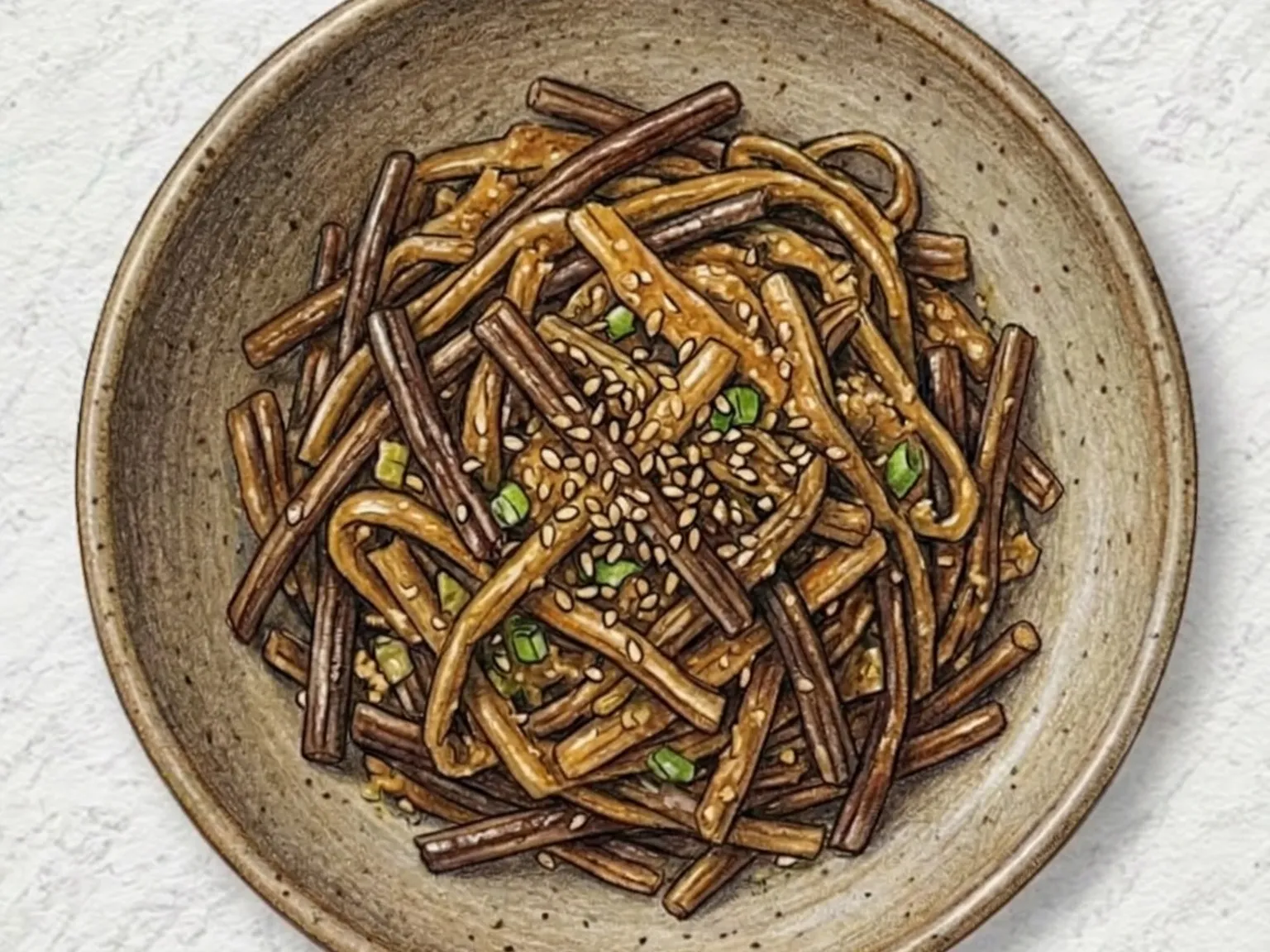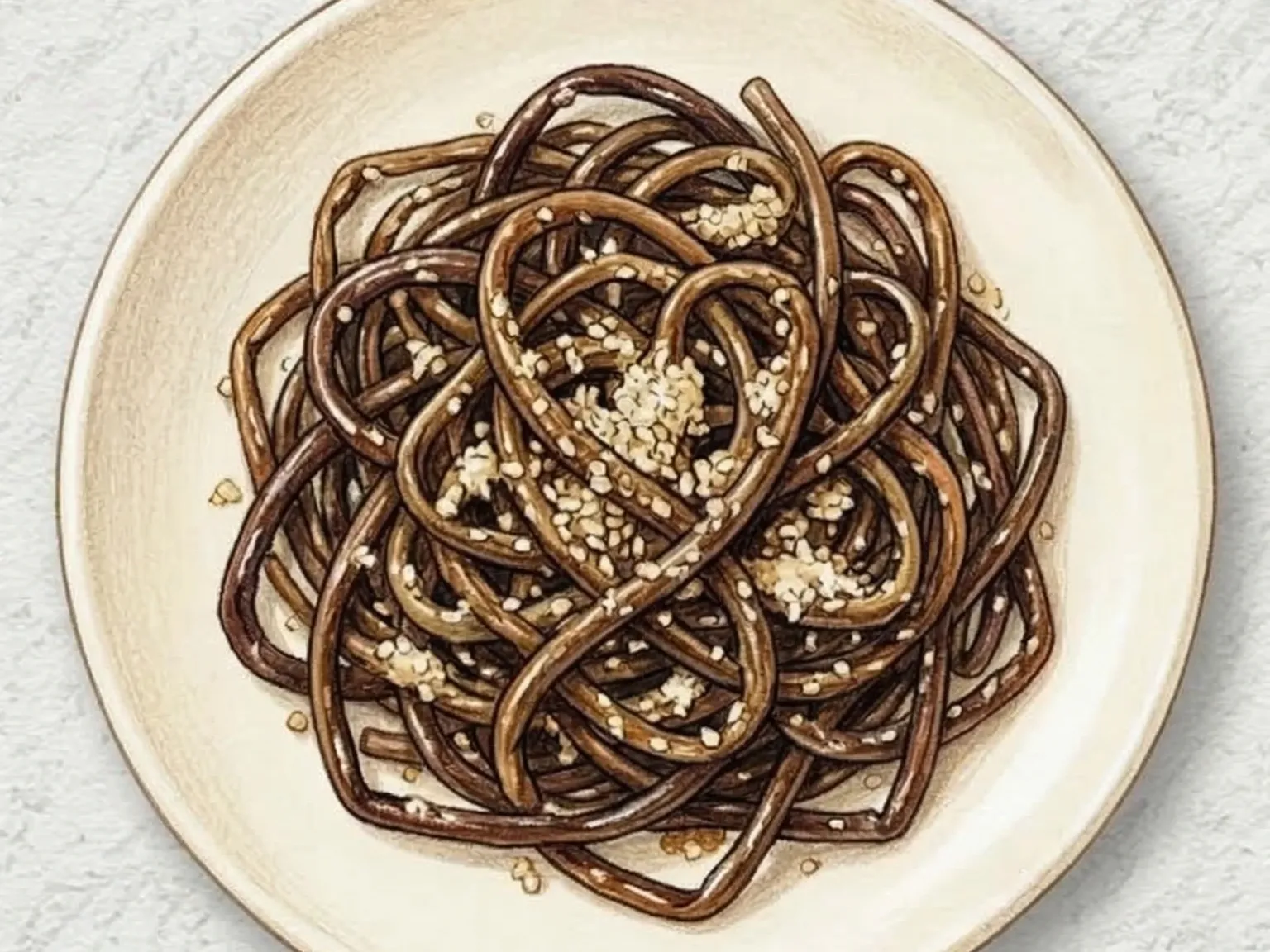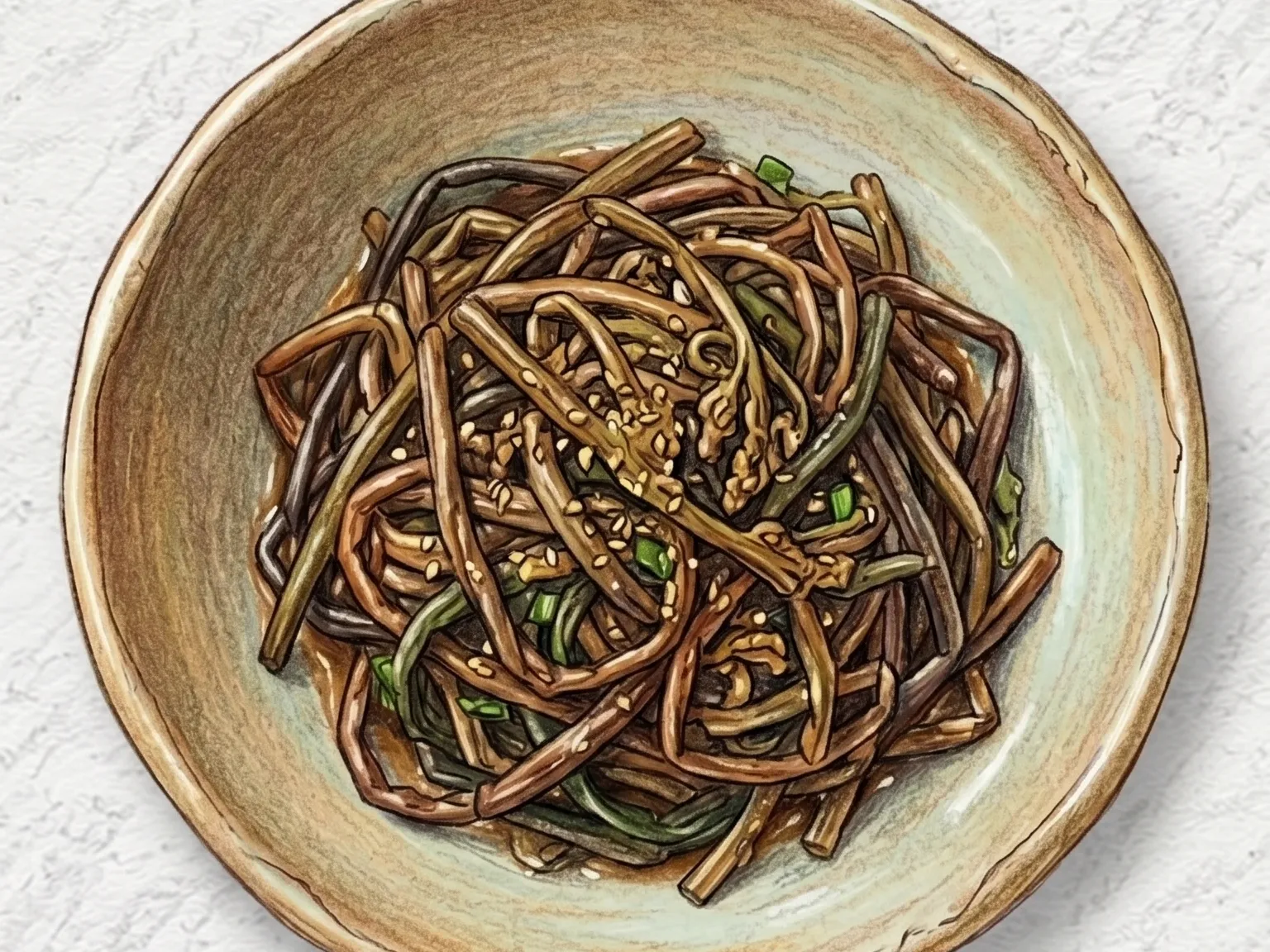
Korean Stir-fried Bracken Fern
Gosari-bokkeum is a classic Korean side dish of rehydrated bracken fern stir-fried with soy sauce, minced garlic, and perilla oil. The fern absorbs the nutty perilla aroma during cooking, while soy sauce layers in a deep, earthy savoriness. Its texture stays tender with a slight bite, making it easy to eat alongside other dishes. Gosari-bokkeum is a staple component of bibimbap and appears on nearly every Korean holiday table as one of the essential namul dishes.
Adjust Servings
Instructions
- 1
Trim bracken and cut into 6 cm pieces, removing tough parts.
- 2
Heat perilla oil and stir-fry garlic and onion for 1 minute.
- 3
Add bracken and stir-fry 2 minutes to coat with oil.
- 4
Add soy sauce and water, then braise-stir over medium heat for 4 minutes.
- 5
Add green onion and sesame seeds, stir-fry 1 more minute.
As an Amazon Associate, we may earn from qualifying purchases.
Tips
Nutrition (per serving)
More Recipes

Korean Bracken Fern Namul with Perilla
This perilla-scented bracken fern namul begins by pre-seasoning 250 grams of boiled bracken with soup soy sauce, minced garlic, and half the perilla oil for five minutes so the flavor seeps into the chewy fibers. Green onion is sauteed briefly in the remaining perilla oil to build an aromatic base before the seasoned bracken joins the pan for a two-minute stir-fry that drives off excess moisture. Adding water and ground perilla seeds, then simmering gently for five minutes, transforms the dish into a lightly sauced namul where every strand carries a nutty, earthy depth. Sesame seeds scattered at the end add a visual accent and a faint crunch that complements the bracken's dense chew.

Stir-fried Korean Radish Namul
Mu-namul-bokkeum is a foundational Korean namul made by stir-frying julienned daikon radish in perilla oil until the root's natural sweetness emerges. Cutting the radish into matchstick-sized strips and salting for five minutes draws out excess moisture, which is essential - without this step, the pan steams rather than sears, and the namul turns watery. Garlic goes into the perilla oil first to build an aromatic base, then the radish strips are tossed over medium heat for three to four minutes. During this process, heat converts the radish's starch into sugars, replacing the raw pungency with a mellow sweetness. Soup soy sauce seasons without muddying the color the way regular soy sauce would. A brief two-minute rest with the lid on finishes softening the radish while keeping moisture in check. This namul serves as one of the five-color toppings in bibimbap and is a required dish on ancestral rite tables (jesa). A final sprinkle of sesame seeds adds a toasted nuttiness.

Korean Stir-Fried Taro Stems
Boiled taro stems are stir-fried in perilla oil with soy sauce and garlic to create a banchan prized for its uniquely chewy texture. Dried taro stems, once soaked and simmered, lose their rawness but retain a springy, almost rubbery bite along the center of each stalk, setting them apart from softer namul greens. Stir-frying in perilla oil first builds a nutty base note, and soy sauce with minced garlic layers savory depth onto the stems' neutral flavor. A splash of stock added mid-cook allows the seasoning to penetrate the fibrous interior during a brief simmer. Sliced green onion introduces a fresh aromatic accent, and a finishing spoonful of ground perilla seeds dissolves into the residual moisture, creating a creamy coating that clings to each piece. Mixed into a bowl of steamed rice, the chewy stems provide satisfying resistance with every bite, and their mild character lets them complement bolder dishes like doenjang jjigae without competing for attention.

Korean Stir-fried Aster Scaber with Garlic
This dish stir-fries rehydrated chwi-namul (aster scaber greens) with garlic and soup soy sauce, preserving the wild greens' characteristic bitter-herbal aroma. Perilla oil is used for cooking, and its earthy fragrance pairs naturally with the greens, while ground perilla seeds add another layer of nuttiness. Green onion contributes a subtle sweetness that balances the slight bitterness. As the rehydrated greens lose moisture in the pan, they firm up and develop a satisfying chew. Served over rice, the pronounced herbal flavor carries a whole bowl.

Korean Stir-fried Anchovies
Myeolchi-bokkeum is a foundational Korean banchan of small dried anchovies glazed in a sweet-salty coating of soy sauce and oligosaccharide syrup. The anchovies are first dry-roasted in a clean pan on low heat for three minutes to remove fishiness and build crunch. A sauce of garlic, soy sauce, and syrup is bubbled separately, and the anchovies are tossed back in for a quick, even coating. Sesame oil and toasted sesame seeds finish the dish; once fully cooled, the glaze sets firm, giving the anchovies a snappy texture that keeps well in an airtight container for over a week.

Korean Stir-Fried Eggplant Banchan
Gaji bokkeum transforms eggplant - a vegetable Koreans have cultivated since the Goryeo period - into a quick, oil-glazed banchan where the cooking speed matters as much as the seasoning. The eggplant is sliced into half-moons, and the pan must be scorching hot before the pieces enter; any hesitation and the eggplant will steam rather than sear, turning it into a soggy mass. High heat with minimal oil produces lightly charred edges while the interior turns silky and almost custardy. Soy sauce, garlic, and sesame oil go in during the final thirty seconds, sizzling against the hot surface and coating each piece in a thin, caramelized layer. The dish has a concentrated, clean umami taste without the heaviness of a braised preparation. Korean home cooks make this as a weeknight banchan precisely because it takes under ten minutes from cutting board to table.