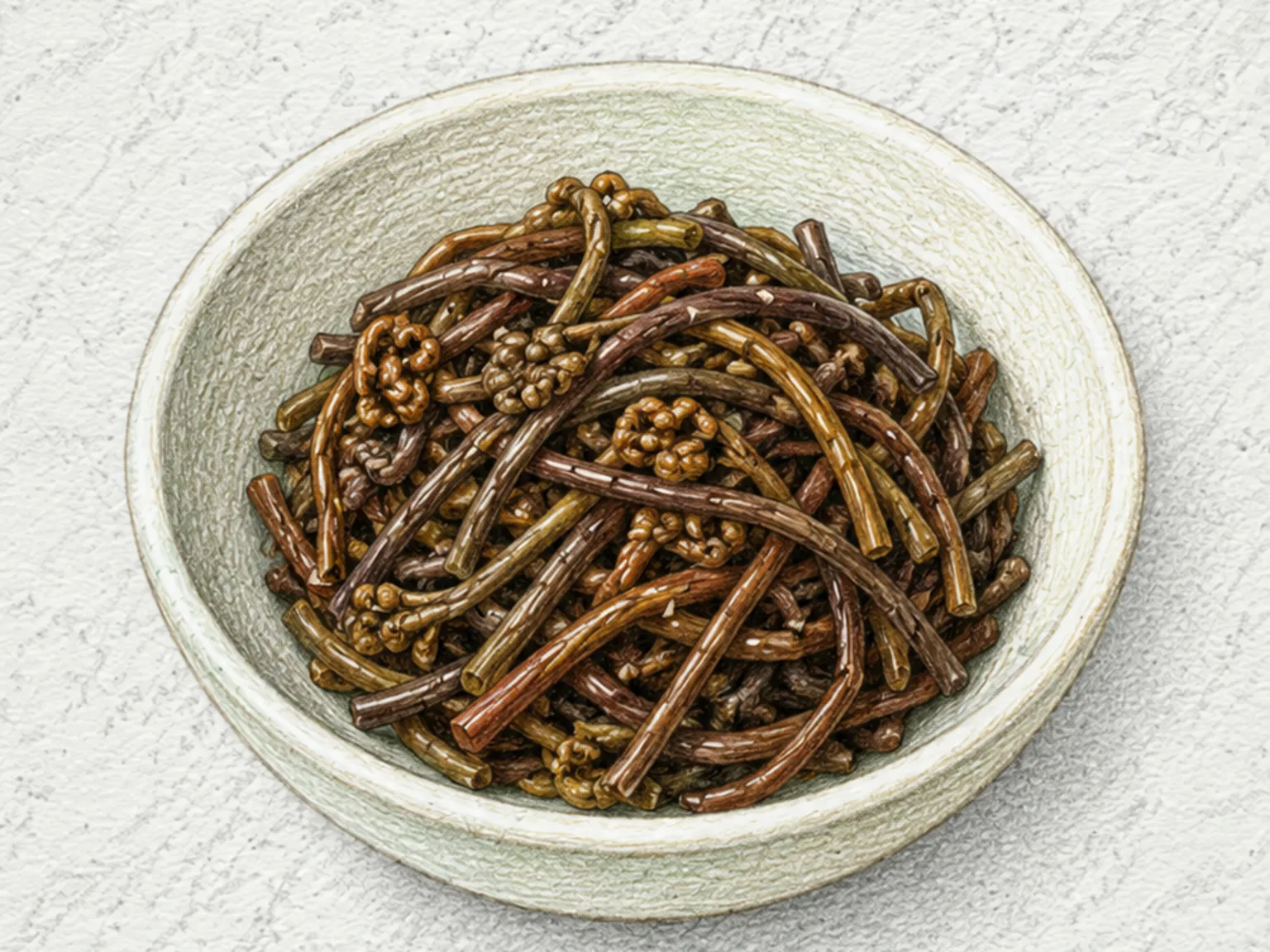
Korean Seasoned Bracken Fern
Check the base ends of 200 g boiled bracken fern while cutting it into 5 to 6 cm lengths, and discard pieces that still feel stiff or stringy. Stir-fry in 1 tbsp perilla oil over medium heat for 2 minutes, add 2 tbsp soy sauce and the minced garlic for 1 more minute, then pour in 100 ml water, cover, and braise on medium-low for 8 to 10 minutes. Turn off the heat while a little liquid remains and toss with 1 tbsp sesame oil and 1 tsp sesame seeds.
Quick answer
- Total time
- 30 min
- Level
- Easy
- Servings
- 4 servings
- Ingredients
- 7
About this dish
Bibimbap rarely goes without it and ancestral rite tables almost always include it, so bracken namul tends to be made in large holiday batches and eaten over several days.
Read more
Records of eating it go back to the Three Kingdoms period, and the traditional cooking fat is perilla oil, not sesame. It tastes fine straight from the fridge.
Ingredients
Instructions
- 1
Gently squeeze excess water from 200 g boiled bracken fern, then cut it into 5 to 6 cm lengths.
Check the base ends as you cut, and discard any pieces that still feel stiff or stringy when pressed.
- 2
Finely mince 2 garlic cloves before heating the pan so they are ready to add quickly.
Add 1 tablespoon perilla oil to a skillet and warm it over medium heat for about 30 seconds, just until fragrant.
- 3
Add the bracken fern and stir-fry over medium heat for 2 minutes.
Toss and separate the strands so the perilla oil coats them evenly, but do not let the pan run dry or the fern may toughen.
- 4
Add 2 tablespoons soy sauce and the minced garlic, then stir-fry for 1 more minute.
Stop this stage when the garlic smells aromatic and the bracken darkens slightly, before the garlic browns or turns bitter.
- 5
Pour in 100 ml water, cover the pan, and lower the heat to medium-low.
Braise for 8 to 10 minutes, stirring once halfway through, until the liquid is mostly absorbed into the fibrous strands.
- 6
Turn off the heat when only a little liquid remains on the bottom of the pan.
Add 1 tablespoon sesame oil and 1 teaspoon sesame seeds, toss gently, and let the dish cool slightly before serving.
Use-up ingredient planner
Turn these ingredients into two more meals
The overlap excludes basic seasonings. Open the next recipe and your selected dishes will stay with you.
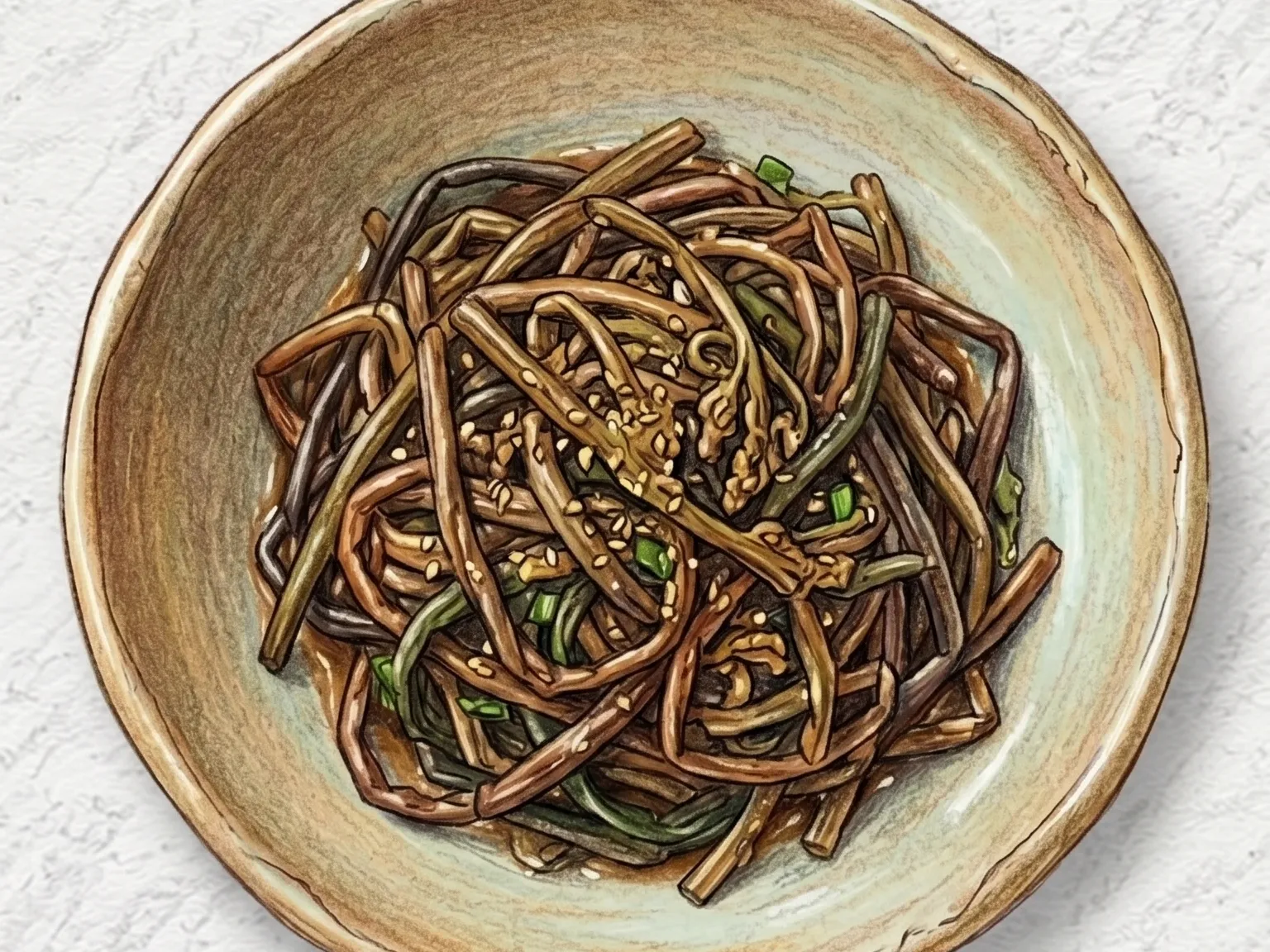
Korean Stir-fried Bracken Fern
Boiled bracken fern, Sesame seeds
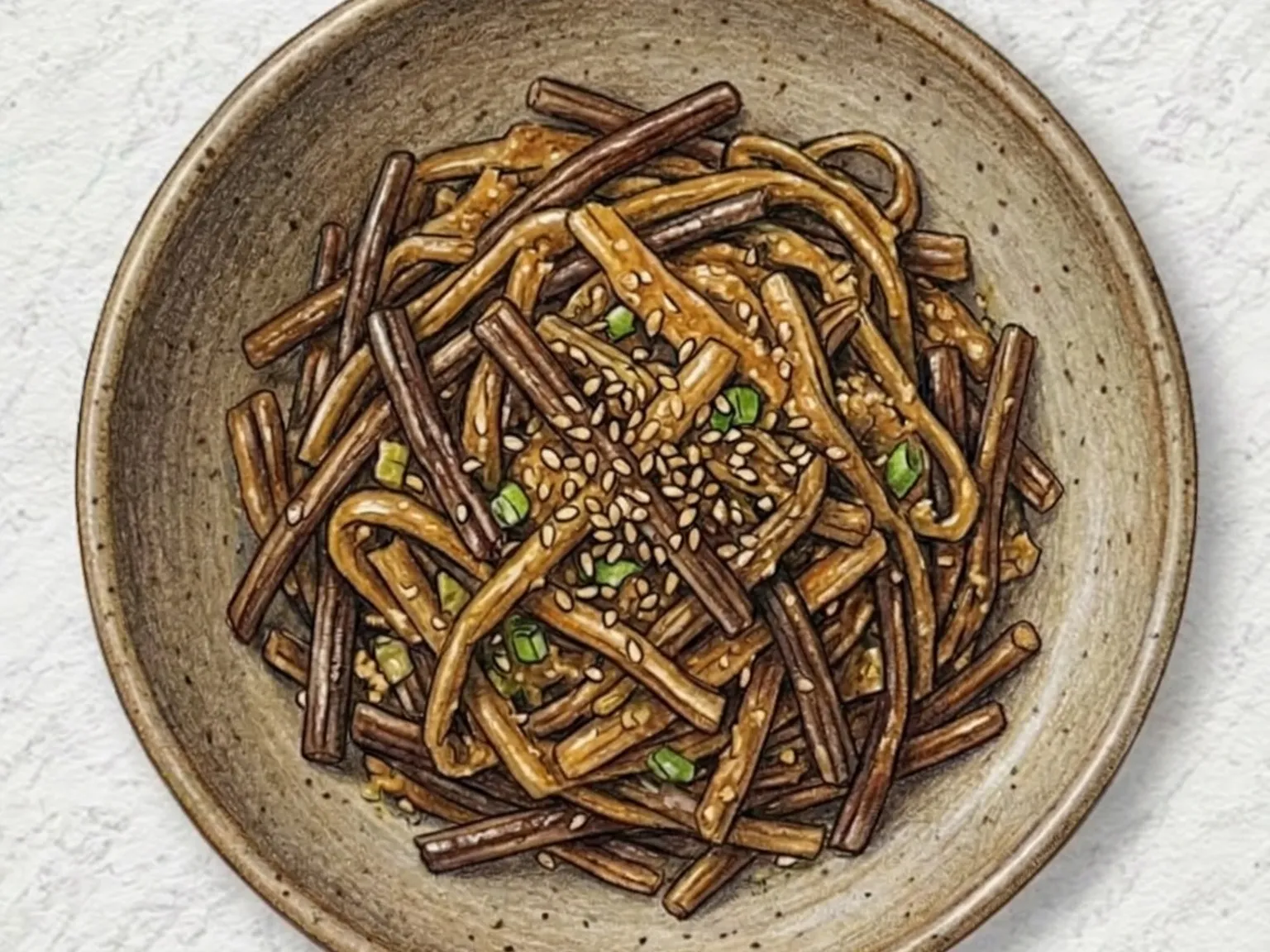
Korean Fernbrake Namul with Doenjang
Boiled bracken fern, Sesame seeds
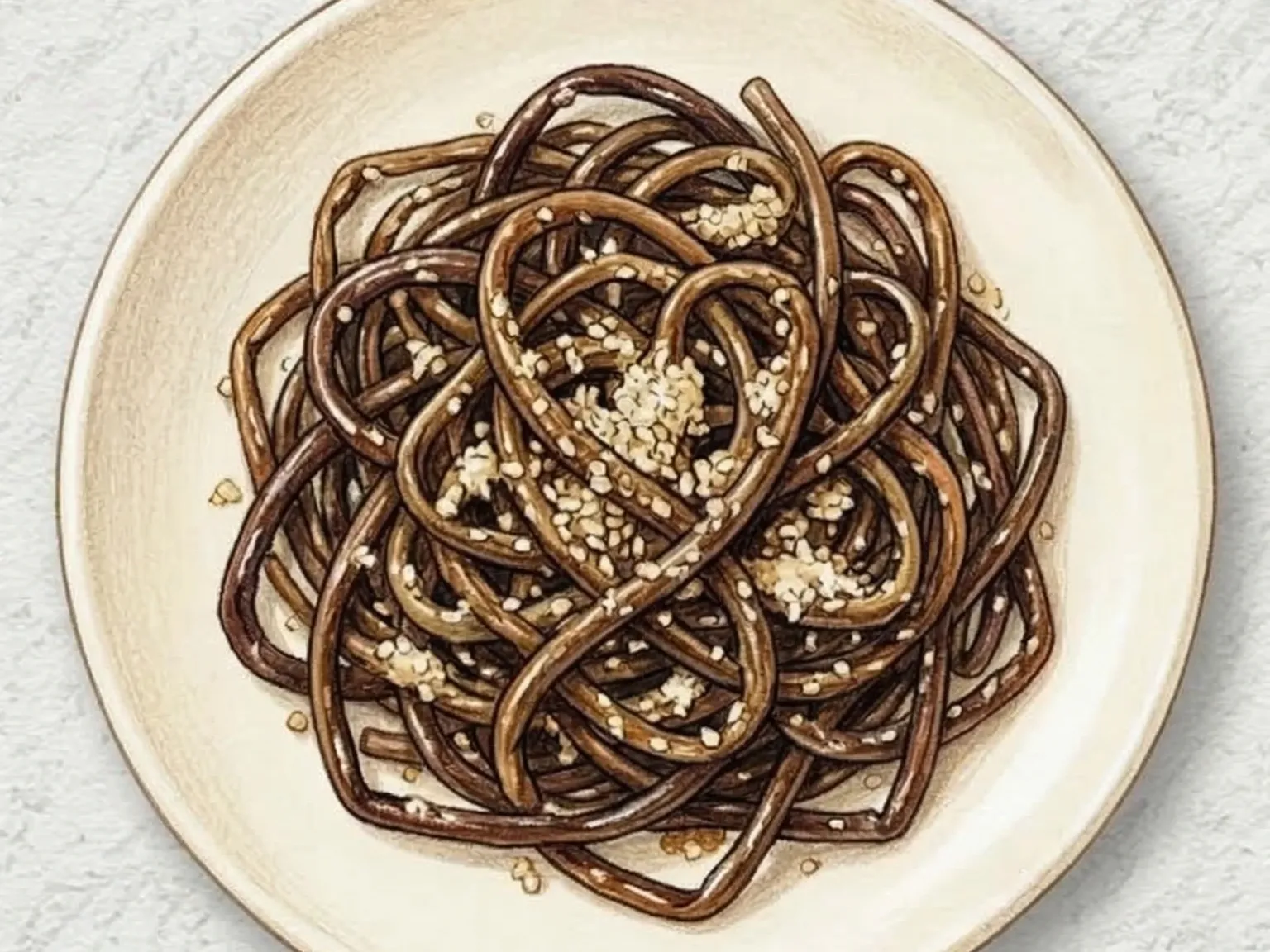
Perilla Gosari Namul
Boiled bracken fern, Sesame seeds
Tips
Variations
Fernbrake Namul with Doenjang
Fernbrake Namul with Doenjang highlights boiled fernbrake and doenjang. It has a clean, nutty finish with a soft but springy bite.
Bracken Fern Namul with Perilla
Bracken Fern Namul with Perilla highlights boiled bracken fern and perilla oil. It has a clean, nutty finish with a soft but springy bite.