Korean Fernbrake Namul with Doenjang
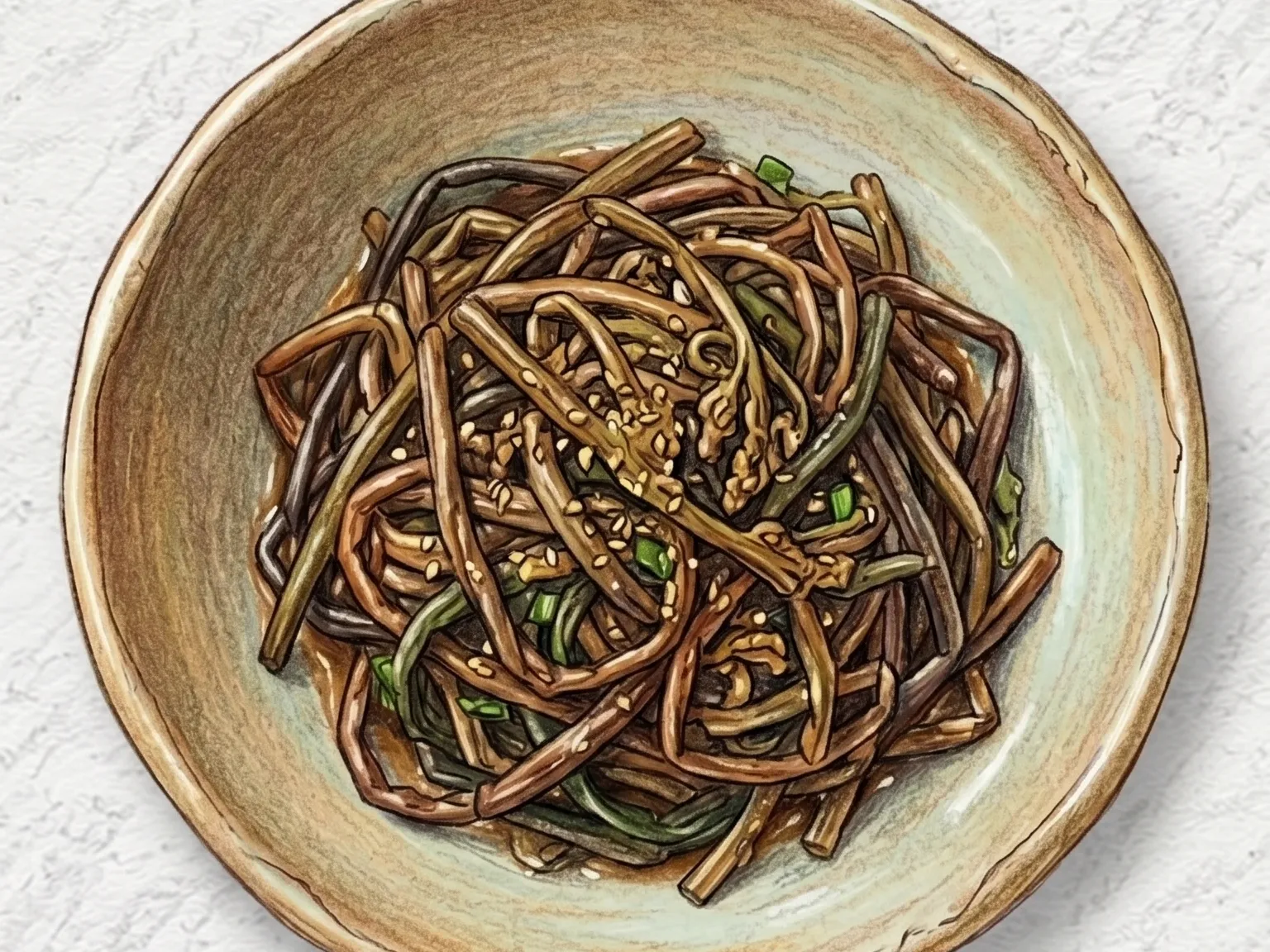
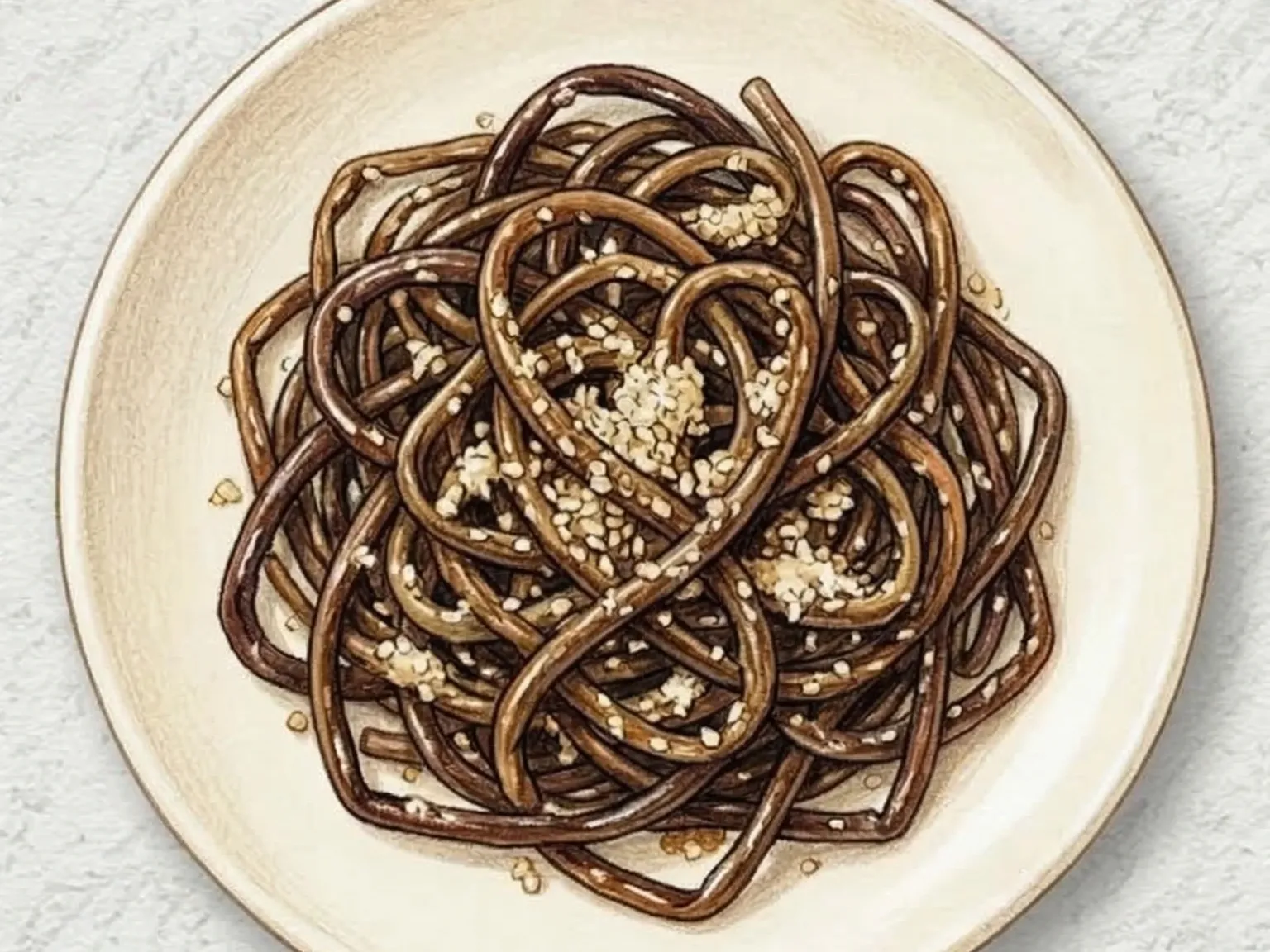
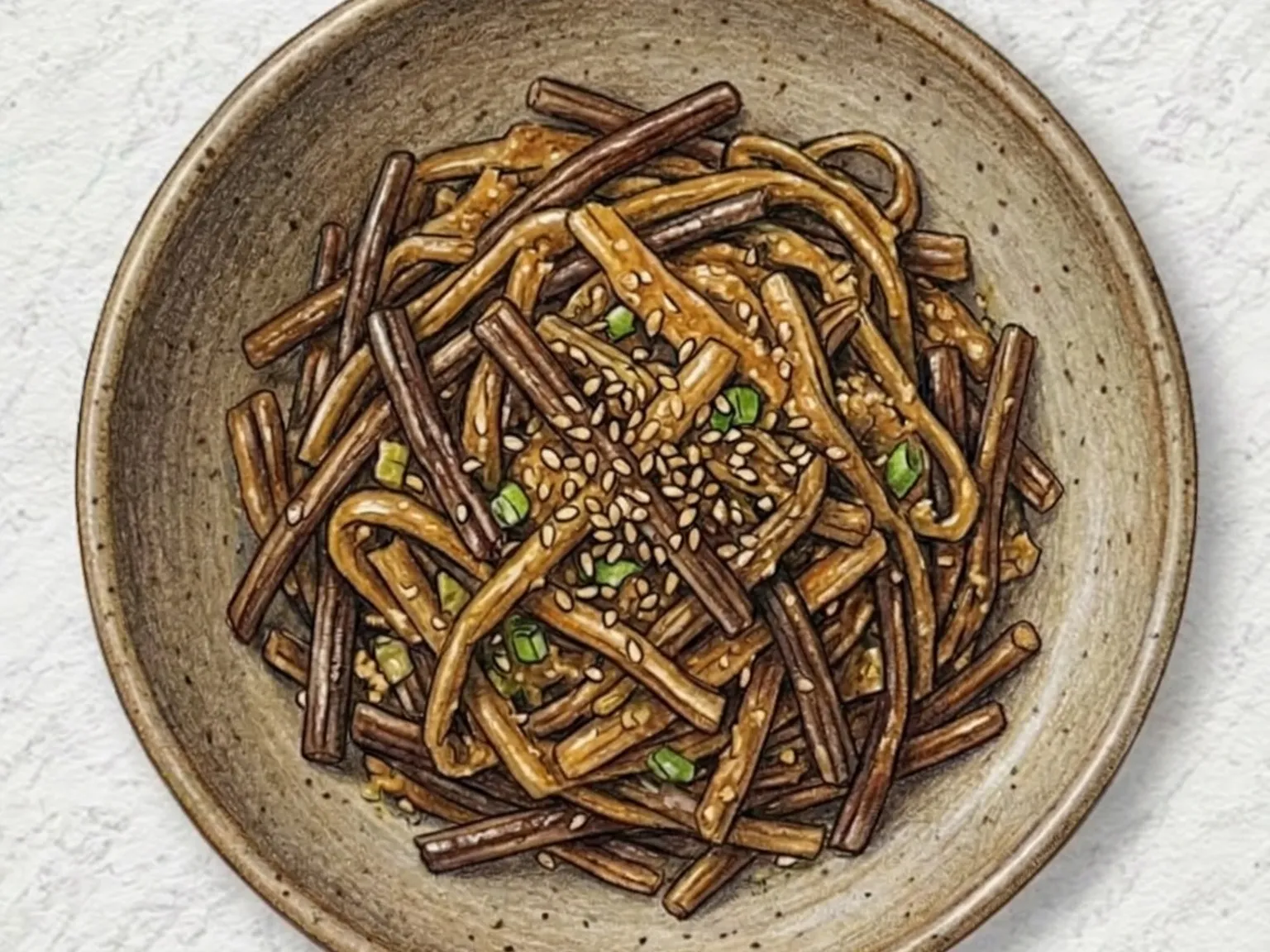
This doenjang variation of gosari namul replaces the soy-sauce-forward seasoning of the standard version with fermented soybean paste, producing a banchan with significantly more depth. Rehydrated and boiled bracken is stir-fried in perilla oil, then doenjang and soup soy sauce are added with a splash of water for a five-minute braise over medium-low heat. The paste's funky, fermented umami penetrates the fern's porous fibers, building a flavor density that the plain soy version cannot match. Perilla powder stirred in at the end transforms the remaining liquid into a thick, nutty coating around each strand. Richer and more layered than its soy-sauce counterpart, this namul delivers deep flavor when mixed into a bowl of steamed rice.
Adjust Servings
Instructions
- 1
Cut boiled fernbrake into 6 cm lengths and trim tough parts.
- 2
Mix doenjang, soup soy sauce, garlic, and water for sauce.
- 3
Heat perilla oil in a pan and stir-fry fernbrake for 2 minutes.
- 4
Add sauce and cook on medium-low for 6 minutes until absorbed.
- 5
Add chopped green onion and sesame seeds, then cook 1 more minute.
As an Amazon Associate, we may earn from qualifying purchases.
Tips
Nutrition (per serving)
More Recipes

Korean Bracken Fern Namul with Perilla
This perilla-scented bracken fern namul begins by pre-seasoning 250 grams of boiled bracken with soup soy sauce, minced garlic, and half the perilla oil for five minutes so the flavor seeps into the chewy fibers. Green onion is sauteed briefly in the remaining perilla oil to build an aromatic base before the seasoned bracken joins the pan for a two-minute stir-fry that drives off excess moisture. Adding water and ground perilla seeds, then simmering gently for five minutes, transforms the dish into a lightly sauced namul where every strand carries a nutty, earthy depth. Sesame seeds scattered at the end add a visual accent and a faint crunch that complements the bracken's dense chew.

Korean Seasoned Mallow Greens
Mallow greens have appeared in Korean cooking since the Joseon era, typically in doenjang-guk. For this namul, they are blanched just 40 seconds - supple but not collapsed. After squeezing dry, they are rubbed gently with doenjang, soup soy sauce, and garlic so the fermented paste penetrates the porous leaves. A finish of sesame oil adds a glossy coating. The distinctive mucilaginous quality - slightly slippery on the tongue - sets this apart from other Korean greens.

Korean Blanched Young Napa with Doenjang
Eolgari - young napa cabbage - is harvested before the heads have formed a tight ball, giving it thinner, more pliable leaves than mature baechu. A one-minute blanch wilts the leaf portion while the pale stems retain a gentle crunch. Dressed with doenjang, soup soy sauce, garlic, and sesame oil, the fermented paste penetrates the tender leaves quickly, coating each piece in a salty, earthy layer. The dish belongs to the Korean countryside tradition of making namul from whatever greens are growing between major kimchi harvests. Eolgari is available at Korean markets from late spring through early fall, and its mild flavor makes it one of the most approachable doenjang-dressed greens for people new to Korean namul.

Korean Seasoned Napa Cabbage Namul
Boiled napa cabbage dressed with doenjang and perilla, passed down through generations of Korean home cooks. The cabbage boils two minutes - leaves collapse while white stems stay slightly firm - then is rinsed, squeezed, and cut. Perilla oil gives a distinctly herbal quality, and perilla powder thickens the dressing into a paste clinging to each piece. This quiet, understated banchan pairs well with clear soups and plain rice.

Korean Doenjang Braised Tofu
Doenjang-dubu-jorim is a Korean braised tofu dish cooked in a fermented soybean paste sauce. The doenjang penetrates the tofu as it simmers, infusing each slice with a nutty, salty depth characteristic of Korean fermented condiments. Zucchini and onion cook alongside the tofu, contributing natural sweetness that tempers the salt. It is an economical, easy-to-prepare side dish that keeps well in the refrigerator for several days.

Korean Stir-fried Bracken Fern
Gosari-bokkeum is a classic Korean side dish of rehydrated bracken fern stir-fried with soy sauce, minced garlic, and perilla oil. The fern absorbs the nutty perilla aroma during cooking, while soy sauce layers in a deep, earthy savoriness. Its texture stays tender with a slight bite, making it easy to eat alongside other dishes. Gosari-bokkeum is a staple component of bibimbap and appears on nearly every Korean holiday table as one of the essential namul dishes.