Korean Bracken Fern and Beef Stew
Quick answer
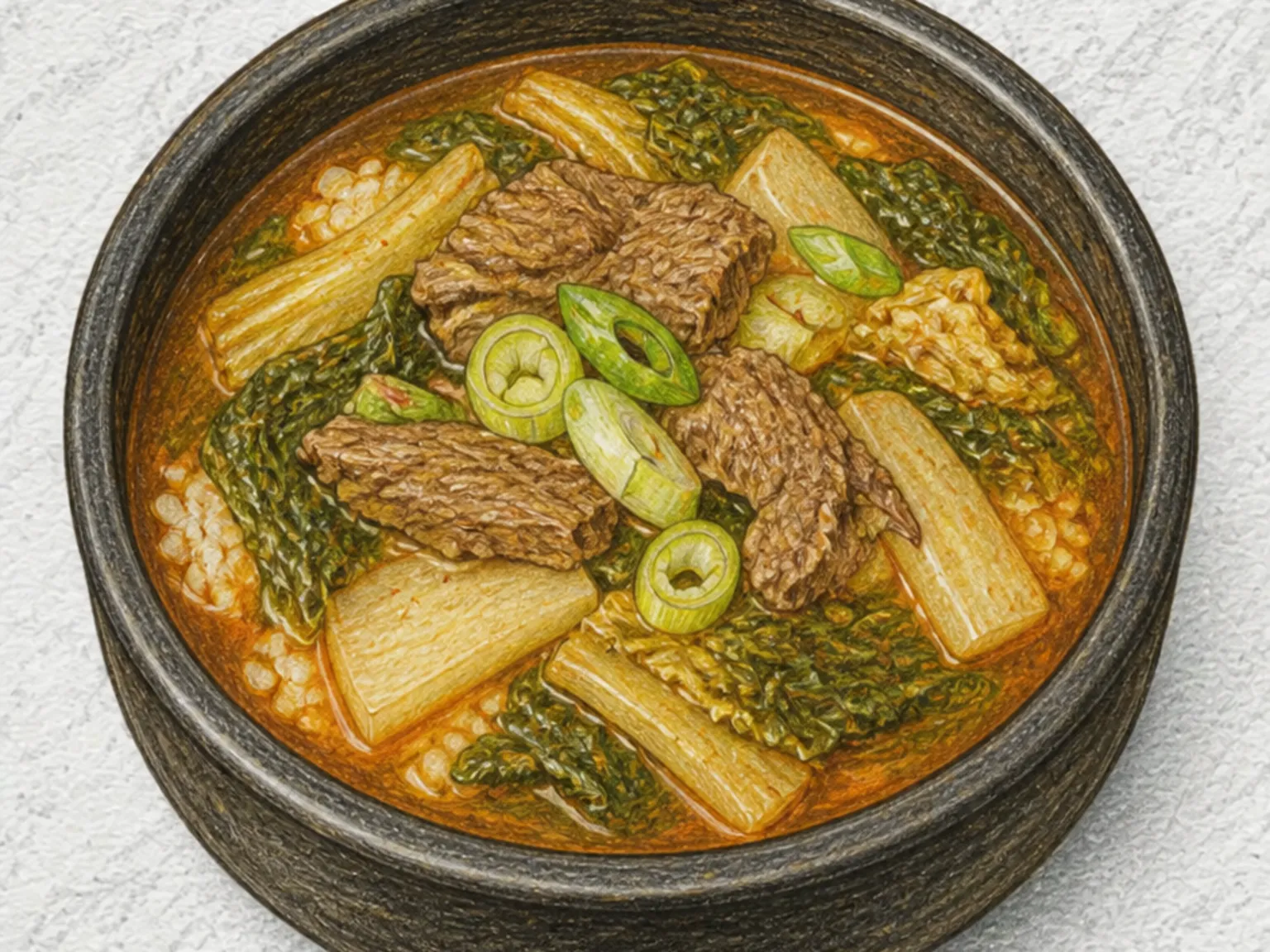
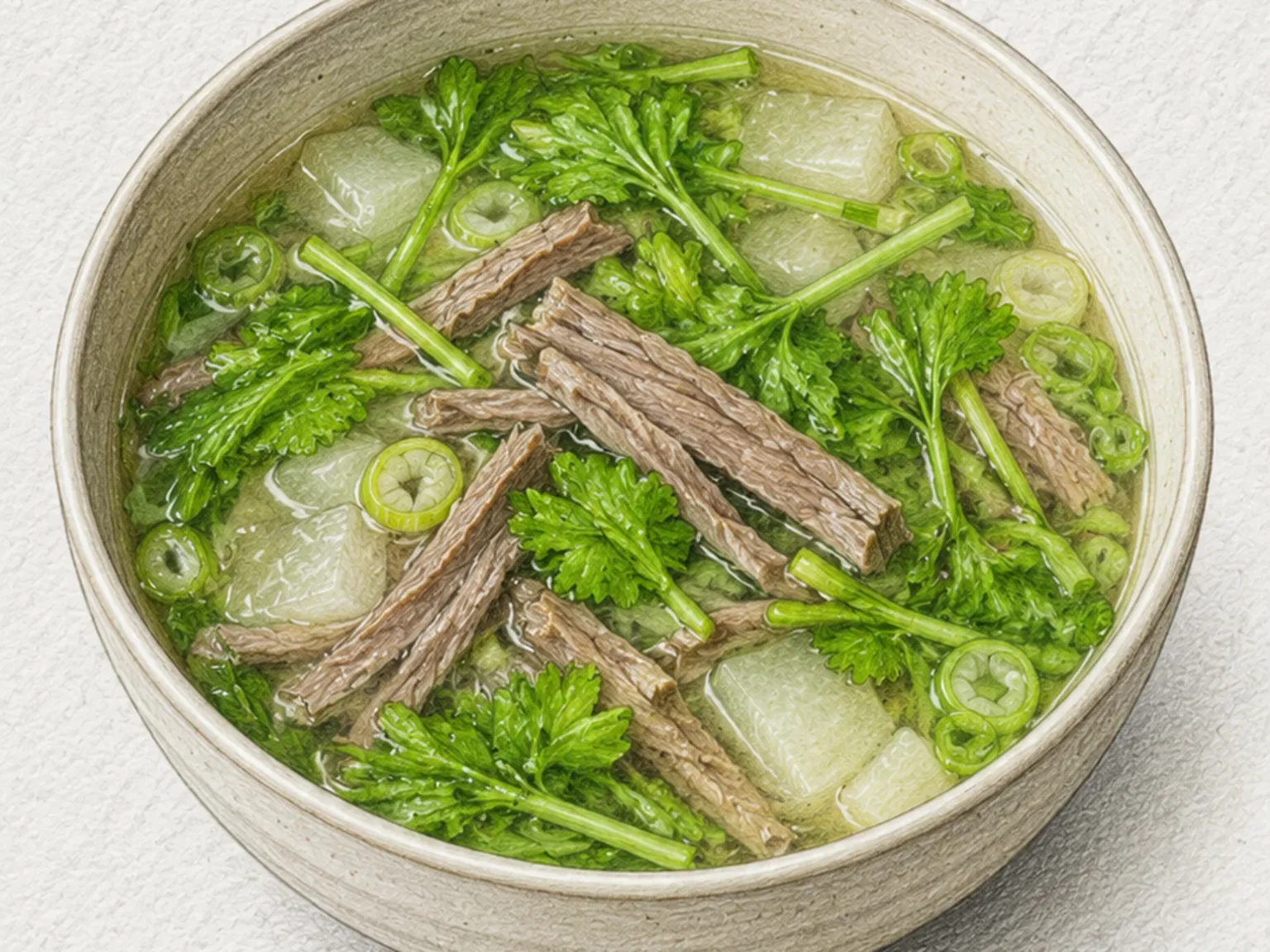
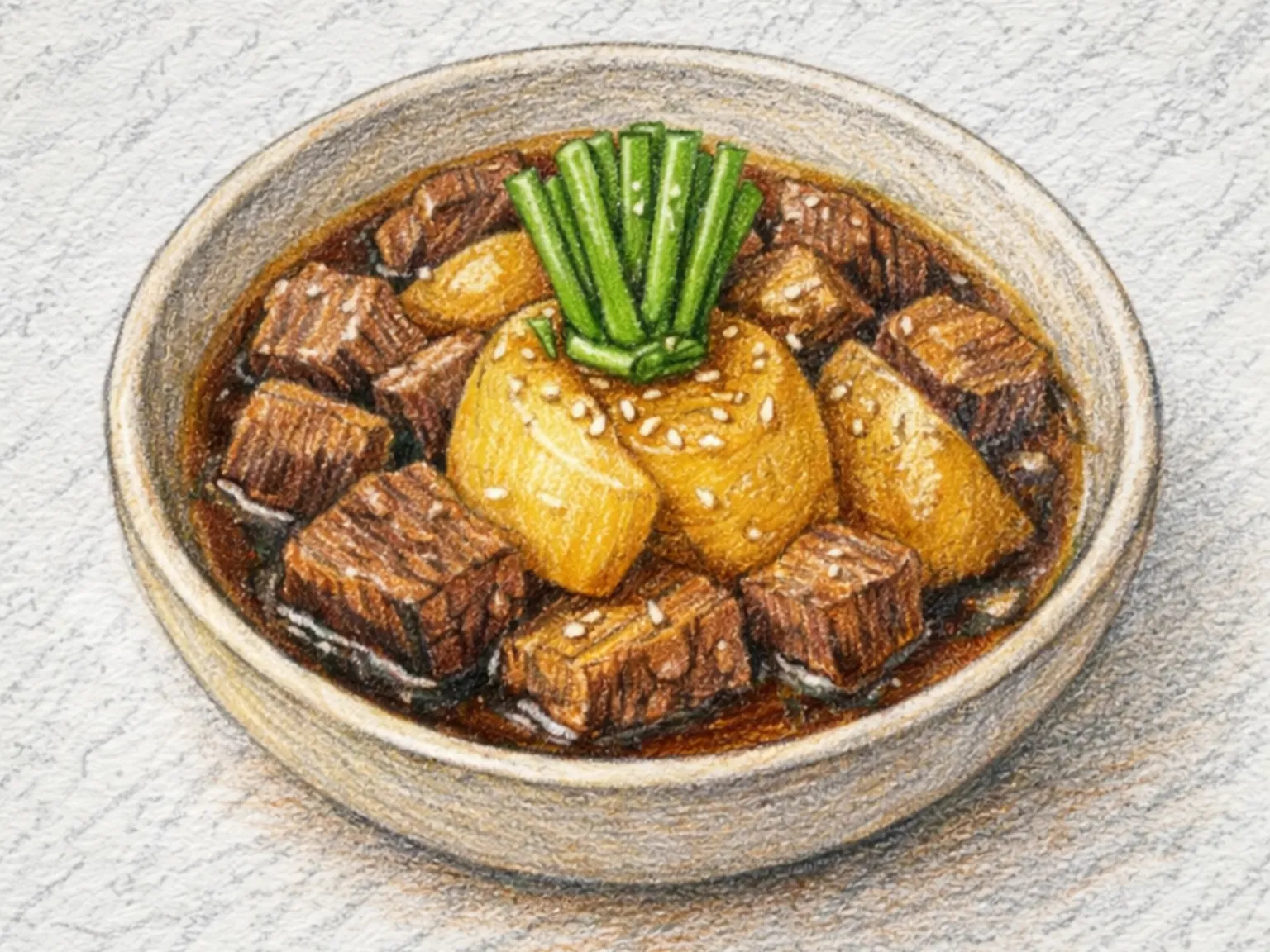
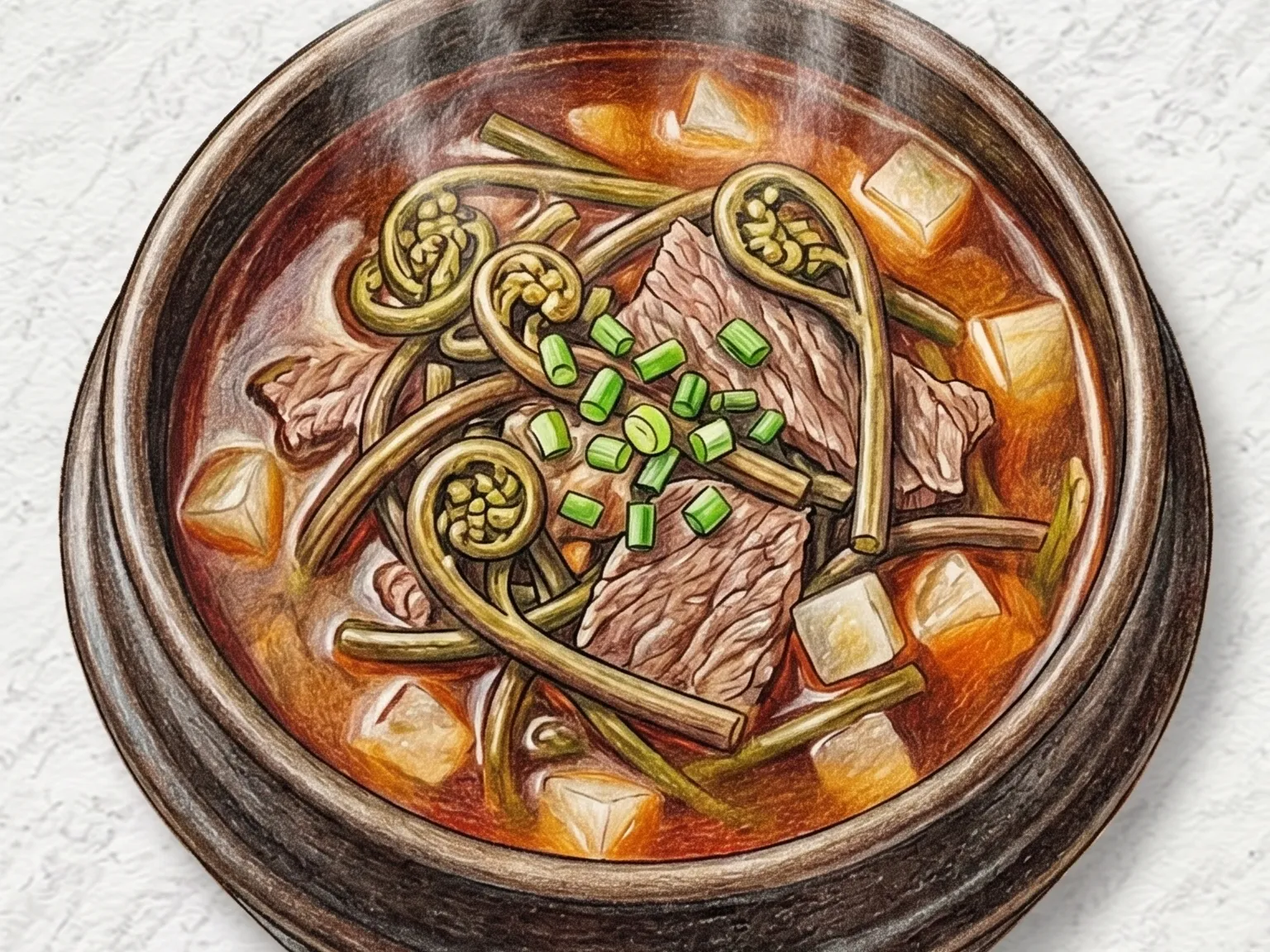
Gosari-soegogi-jjigae is a Korean stew of parboiled bracken fern and beef brisket simmered together in a clear, gochugaru-seasoned broth.
What makes this special
- Gosari-soegogi-jjigae highlights the springy texture of bracken fern in a savory beef broth.
- Rehydrated bracken fern has a dual crisp-yet-soft texture
- Beef brisket stock with guk-ganjang builds a clear but spicy broth
Key ingredients
Core cooking flow
- 1 Soak 250g of beef brisket in cold water for 20 minutes to remove blood, then...
- 2 Combine the beef and 1200ml of water in a pot.
- 3 Cut 220g of boiled bracken fern into 6 cm lengths.
Gosari-soegogi-jjigae is a Korean stew of parboiled bracken fern and beef brisket simmered together in a clear, gochugaru-seasoned broth. Bracken has a distinctly springy yet tender texture once fully rehydrated, and it absorbs the beefy broth deeply, carrying the earthy, herbal notes of the fern through each piece. Korean radish adds a clean, slightly sweet dimension to the broth, while soup soy sauce and gochugaru together build depth and a moderate heat that defines the stew's character. This stew is closely associated with Korean ceremonial cooking, appearing regularly at holiday tables and ancestral rites where its grounding flavors are particularly valued. Bracken must be thoroughly boiled and soaked in cold water to remove natural toxins and soften the texture before it can be used; brisket should be soaked to draw out the blood before cutting so the broth stays clear and does not turn murky during cooking.
Instructions
Read the steps as a cooking flow: prep, heat, seasoning, doneness control, and finish.
- 1Heat
Soak 250g of beef brisket in cold water for 20 minutes to remove blood, then cut into 3 cm bite-size pieces.
Slice 180g of Korean radish into thin, 2 cm squares for even cooking.
- 2Control
Combine the beef and 1200ml of water in a pot.
Simmer over medium heat for 15 minutes, frequently skimming off any rising foam and impurities to ensure the broth remains clear and clean.
- 3Season
Cut 220g of boiled bracken fern into 6 cm lengths.
Toss them thoroughly with 1.5 tbsp soup soy sauce, 1 tbsp minced garlic, and 1 tbsp Korean chili flakes until the seasoning is evenly distributed.
- 4Season
Add the sliced radish to the beef broth and boil for 8 minutes until it becomes translucent.
Once the radish is tender, add the seasoned bracken fern and stir to incorporate the spices.
- 5Control
Reduce the heat to medium-low and simmer for 10 more minutes.
This allows the earthy aroma of the bracken and the rich savory notes of the beef to meld deeply into the broth.
- 6Finish
Add one stalk of sliced green onion and cook for 1 minute.
Taste the stew and adjust with salt or soup soy sauce if needed, ensuring a spicy yet clean finish before serving.
After the steps
Pick a recipe that fits this dish.
Continue with shared ingredients, meal pairings, or a similar method.
Recipes That Go Well With This
More Stews →Based on shared ingredients and meal pairing
Korean Beef Cabbage Leaf Stew
This comforting Korean stew features tender beef brisket and blanched napa cabbage outer leaves simmered in doenjang stock. Thinly sliced brisket is first seared in perilla oil, then stir-fried with doenjang and gochugaru for a minute to bloom the aromas. Water and the cabbage leaves are added, and the pot is simmered over medium-low heat for twenty-five minutes. This slow cooking allows the rich meat broth to permeate the fibrous leaves, making them tender. The perilla oil adds a nutty finish that balances the salty notes of the fermented soybean paste. Slicing the beef against the grain ensures the meat remains soft and easy to chew. Blanching the greens beforehand reduces grassy flavors and yields a cleaner soup. The stew is seasoned with soup soy sauce and finished with sliced green onions before being served hot.
Korean Bracken Fern Namul with Perilla
This perilla-scented bracken fern namul begins by pre-seasoning 250 grams of boiled bracken with soup soy sauce, minced garlic, and half the perilla oil for five minutes so the flavor seeps into the chewy fibers. Green onion is sauteed briefly in the remaining perilla oil to build an aromatic base before the seasoned bracken joins the pan for a two-minute stir-fry that drives off excess moisture. Adding water and ground perilla seeds, then simmering gently for five minutes, transforms the dish into a lightly sauced namul where every strand carries a nutty, earthy depth. Sesame seeds scattered at the end add a visual accent and a faint crunch that complements the bracken's dense chew.
Korean Tuna Fried Rice (Quick Canned Tuna Stir-Fried Rice)
Chamchi bokkeumbap is a staple Korean home-style fried rice made by stir-frying canned tuna together with its oil alongside diced onion, carrot, and green onion, then folding in cooked rice and seasoning with soy sauce and sesame oil. The tuna oil distributes through the rice during frying, coating each grain and building a savory, nutty richness that needs little else to feel complete. It is the kind of meal that comes together from pantry and fridge staples with no advance planning: one can of tuna plus whatever vegetables are on hand covers the whole recipe. Cold leftover rice works better than freshly cooked because lower moisture content keeps the grains separate and gives the fried rice its characteristic loose texture. Maintaining high heat throughout prevents clumping and develops a slight char on the rice that adds depth.
Korean Beef Mushroom Stew
Soegogi-beoseot-jjigae is a Korean stew featuring thinly sliced beef with oyster mushrooms and shiitake mushrooms in a beef stock base. The beef stays tender throughout the cooking time because it is cut thin, and the two varieties of mushrooms contribute layered umami that deepens the broth considerably. Firm tofu absorbs the surrounding liquid and takes on the flavors of the stew while adding protein and body to the pot. Onion and green onion provide sweetness and fragrance that round out the savory base. The stew is seasoned simply with soup soy sauce and garlic, which keeps the natural flavors of beef and mushroom prominent. Tearing oyster mushrooms by hand along their grain allows the broth to penetrate the fibers better than cutting, and removing the tough stems from shiitake mushrooms before adding them keeps the broth clean and free of bitterness.
Serve with this
Korean Stir-fried Dried Shrimp
Geon-saeu-bokkeum transforms a handful of dried shrimp, a Korean pantry staple, into a quick, crunchy banchan that earns its reputation as a rice thief. The shrimp are dry-toasted in a pan first to drive off residual moisture, intensifying their briny aroma and building the foundation for a crisp final texture. Soy sauce, rice syrup or oligosaccharide, and garlic are added and reduced over low heat until the shrimp are wrapped in a thin, glossy sweet-salty glaze. The timing matters: the moment the syrup bubbles once, the heat must drop immediately, because leaving it even slightly too long hardens the coating into a tooth-testing shell rather than a pliable lacquer. A finish of sesame oil and whole sesame seeds adds a nutty warmth that rounds out this compact side dish. Finely sliced Cheongyang chili mixed in during the last minute produces a spicier variation, and a small handful of almonds or peanuts stirred in enriches the chew. The finished banchan keeps well in a sealed container at room temperature for several days, making it as practical as it is flavorful.
Korean Soy Pickled Onions
Yangpa jangajji is a soy-pickled onion made by immersing large-cut onion chunks in a boiled brine of soy sauce, vinegar, and sugar. The hot brine tempers the raw onion's sharp, pungent bite on contact, and as the pickle matures in the refrigerator the sweet-salty seasoning penetrates evenly through each piece. Cutting the onion along its fiber rather than against it keeps the texture firm and crisp after pickling, whereas thin cross-cut slices tend to soften quickly in the acidic brine. Sliced cheongyang chili peppers added to the jar gradually release their heat into the liquid, lending a gentle, lingering spiciness that offsets the sweetness and keeps the flavors from becoming one-dimensional. The pickle is ready after one day of refrigeration but improves noticeably at three days or more as the seasoning continues to deepen. It is a staple accompaniment to grilled meats like samgyeopsal, where its acidity and crunch cut through richness and refresh the palate between bites. It also works well over bibimbap or cold noodles. The brine can be brought back to a boil and reused for a second batch of onions, making this an economical pantry item.
Korean Chive Clam Jeon (Garlic Chive and Clam Seafood Pancake)
Buchu-bajirak-jeon is a seafood pancake of garlic chives and clam meat, pan-fried in a batter made with a mix of all-purpose pancake flour and rice flour. The rice flour addition increases the chew and gives the finished jeon a slightly more resilient texture than plain flour batters. Clam meat releases a briny, oceanic liquid as it cooks that seeps into the batter and flavors it throughout, while the chives add a sharp, grassy counterpoint. Minced garlic and diagonally sliced cheongyang chili worked into the batter suppress any fishiness and build a layered fragrance. A generous amount of oil in the pan over medium heat produces edges that crisp and brown like the outside of a fritter. Waiting until the bottom is fully set before flipping prevents the pancake from tearing. Served with soy dipping sauce or a seasoned soy mixture, the clean salinity of the clams comes through clearly.
Similar recipes
Korean Mushroom Bulgogi Jeongol
Soy sauce-marinated beef and a mix of shiitake and enoki mushrooms simmer together in a generous broth, with the beef's umami and the shiitake's deep, earthy scent building into the stock as the jeongol cooks. Sweet potato noodles absorb that concentrated broth, picking up its full flavor in every chewy strand. Onion's natural sweetness moderates the saltiness of the soy-based stock, and the garlic-infused liquid makes the dish work equally well as a rice accompaniment or a drinking table side. The jeongol is typically left on a portable burner at the table and eaten continuously as it cooks.
Korean Perilla Leaf Beef Stew
Korean perilla leaf beef stew is a savory broth dish that combines thinly sliced beef with perilla leaves. The cooking process starts by marinating the beef with soup soy sauce and minced garlic, then stir-frying it briefly with sliced onions to extract its natural flavors. Anchovy stock is then poured into the pot and brought to a boil. Red pepper flakes, soup soy sauce, and garlic are added to build a spicy broth, followed by cubes of firm tofu that simmer for several minutes to absorb the seasoning. At the very end of cooking, twelve fresh perilla leaves are sliced and added to the pot for just a minute or two along with green onions. This late addition ensures the delicate, herbal aroma of the perilla leaves is preserved, infusing the entire stew. Seasoned primarily with soup soy sauce, the stew highlights the distinct taste of beef and perilla without heavy seasonings.
Korean Bracken Fern Pickles
Gosari jangajji is a Korean pickled bracken fern made by submerging boiled bracken stems in a brine of dark soy sauce, vinegar, sugar, and rice wine. The fern's earthy, nutty aroma weaves together with the soy umami in layers, deepening with each bite as the flavors come into focus. Though the stems are boiled until soft, the plant's natural fiber retains enough structure to give a satisfying chew, and dried chili and garlic added to the brine contribute a quiet warmth that builds gradually. Vinegar's acidity cuts through the heavier, loamy earthiness that raw bracken can carry, leaving the aftertaste clean and bright. Refrigerated, the jangajji keeps comfortably for over a week, making it a practical, ready-to-serve banchan. For anyone familiar only with gosari namul, this pickled version is a worthwhile discovery.