Korean Bracken and Beef Soup
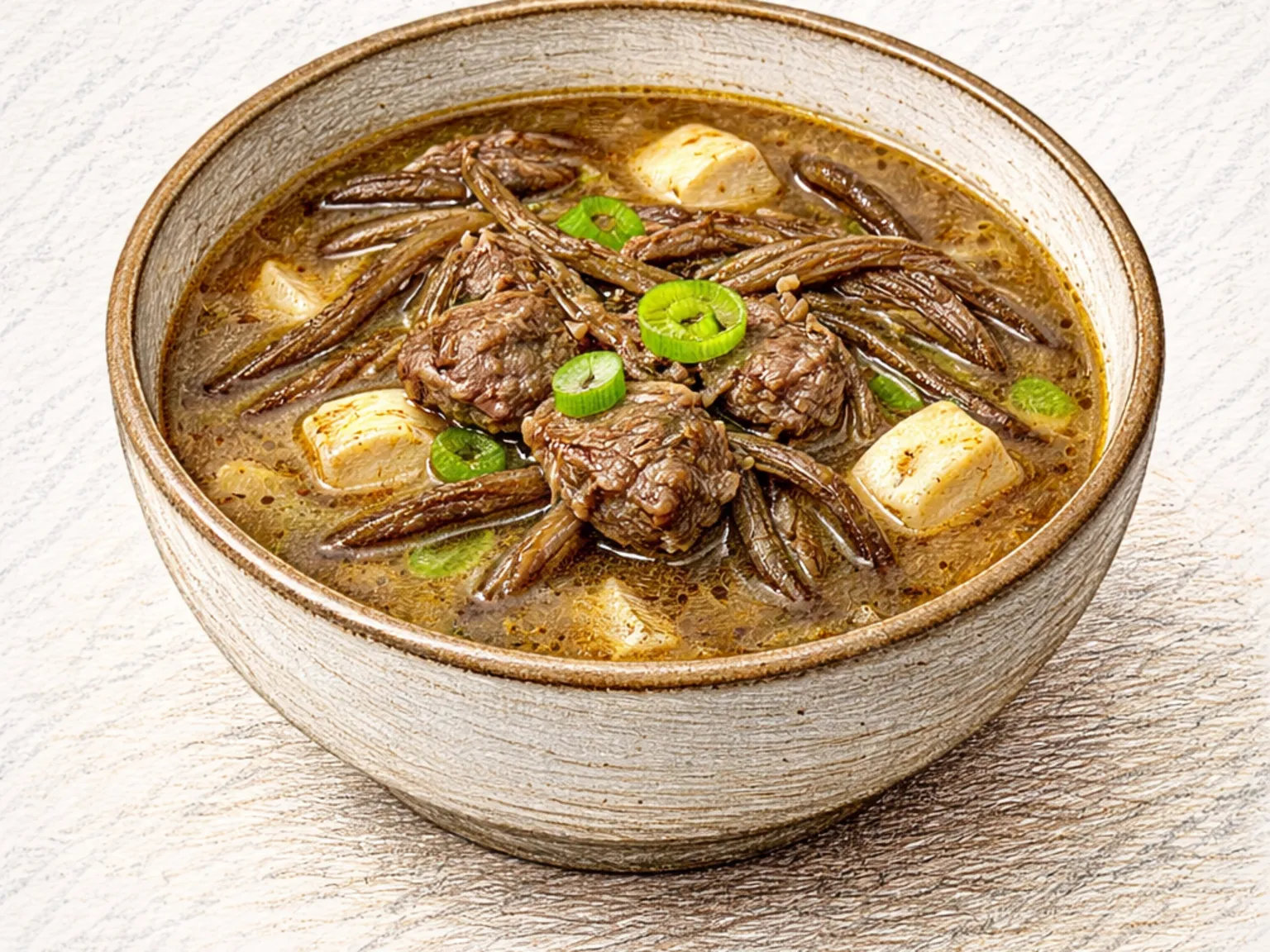
Gosari sogogi-guk is a hearty Korean soup combining rehydrated bracken fern with beef in a doenjang-seasoned broth. The bracken, soaked overnight until pliable, retains a distinctive chewiness that stands out against the soft tofu or vegetables typical in other doenjang soups. Stir-frying the bracken and beef together in sesame oil before adding water builds a savory base that plain boiling cannot achieve. Doenjang dissolves into the stock and wraps everything in its deep, fermented richness, while garlic and green onion sharpen the aroma. This soup has strong ties to Korean holidays - bracken is one of the classic namul vegetables prepared for Chuseok and Lunar New Year, and leftover soaked fern often ends up in a pot of soup the following day. The combination of chewy fern, soft beef, and earthy broth makes it satisfying in a way that feels unmistakably Korean.
Adjust Servings
Instructions
- 1
Rehydrate bracken, stir-fry with beef.
- 2
Add water, doenjang, garlic and simmer.
- 3
Add green onion, adjust seasoning and serve.
As an Amazon Associate, we may earn from qualifying purchases.
Tips
Nutrition (per serving)
More Recipes

Korean Mallow Soup (Joseon-Era Doenjang Mallow Soup)
Auk-guk - mallow doenjang soup - has been part of Korean home cooking since the Joseon era, when auk (mallow) was one of the most commonly grown leafy greens in household gardens. The soup starts with an anchovy-kelp stock that provides a clean umami foundation. Doenjang is pushed through a sieve into the simmering broth to dissolve evenly without lumps, and garlic adds a quiet pungency beneath the fermented paste. Mallow leaves, torn by hand into rough pieces, wilt into the broth in under a minute. What sets auk-guk apart from other doenjang-guks is the mallow's distinctive texture - the leaves have a natural mucilage that gives the soup a slightly thickened, slippery quality on the tongue, unlike the clean broth of a spinach or radish version. Traditionally associated with nursing mothers in Korean folk wisdom, who ate it to promote milk production. The soup is at its best in early summer when fresh mallow is at peak tenderness.

Korean Clam Doenjang Soup
Bajirak doenjang guk is a Korean home-style soup where manila clams and doenjang combine to layer oceanic umami with fermented soybean depth. Starting the clams in cold water and bringing it to a boil draws their flavor out gradually, building a rich stock base as the temperature rises. The doenjang is dissolved through a strainer to keep the broth smooth and free of grainy particles, and its amount should be reduced from the usual quantity because the clams themselves contribute significant saltiness. Tofu and Korean zucchini add soft textures; the zucchini releases a gentle sweetness into the broth as it cooks through. Minced garlic harmonizes with the fermented aroma of the doenjang, and scallion added in the final minute preserves its fresh sharpness. No separate anchovy or kelp stock is needed because the clams provide enough umami on their own, making the soup's approach deliberately simple: just water, clams, and doenjang produce a broth with surprising depth.

Korean Spicy Chicken Soup
Dakgaejang is a spicy Korean chicken soup modeled on the classic beef yukgaejang, using a whole chicken boiled and shredded as the protein base. The shredded meat, rehydrated bracken fern, and bean sprouts are tossed in a seasoning of gochugaru, soy sauce, and sesame oil, then simmered in the reserved chicken broth. As the chili flakes dissolve into the oil, they create a broth that is simultaneously fiery and layered rather than one-dimensionally hot. Bracken adds a chewy, almost meaty resistance alongside the snappy bean sprouts, and making chili oil separately before stirring it in deepens the heat with a roasted, smoky undertone.

Kimchi Soegogi-guk (Fermented Kimchi Beef Soup)
Kimchi-soegogi-guk is a Korean soup that unites two powerhouse ingredients-well-fermented kimchi and beef-in a ruddy, aromatic broth. The beef is stir-fried in sesame oil first, building a savory foundation, then chopped kimchi joins the pan and cooks until its acidity mellows and merges with the rendered fat. Water is added, and as the pot simmers, the kimchi continues to break down, thickening the liquid and staining it a deep red. Soup soy sauce and garlic adjust the seasoning, while blocks of tofu absorb the surrounding flavors and provide a soft counterpoint to the chewy beef. The finished soup is robust and warming, with the tangy complexity of aged kimchi meeting the clean savoriness of beef in every spoonful. It pairs inseparably with a bowl of steamed rice, which soaks up the broth and balances the heat.

Korean Ox Bone Broth (Milky Collagen-Rich Marrow Soup)
Sagol-guk is a Korean beef bone broth made by simmering marrow bones for hours until the liquid turns milky white from dissolved collagen and marrow. The seasoning is minimal - just green onion, garlic, and a touch of salt - letting the bone's natural richness speak for itself. The bones can be reboiled three or four times, each batch yielding progressively lighter broth. It is traditionally served piping hot with rice, seasoned to taste at the table.

Korean Beef and Broccoli Stir-Fry
Sogogi broccoli-bokkeum stir-fries thinly sliced beef with broccoli florets in a glaze of oyster sauce and soy sauce. The beef is seared first over high heat to lock in its juices, then the broccoli -- blanched just enough to keep its bite -- joins the pan. Oyster sauce binds the two main ingredients with concentrated savory depth, and garlic plus a final drizzle of sesame oil layer on fragrance. The sauce coats every surface with a glossy sheen, making this a complete main dish that needs nothing beyond steamed rice.