Korean Dried Persimmon Cinnamon Tea

Korean Dried Persimmon Cinnamon Tea

Quick answer

Gotgam-gyepi-cha is a traditional Korean winter tea made by slowly simmering dried persimmon, a cinnamon stick, fresh ginger, and jujubes in water for close to thirty minutes.

What makes this special

  • Dried persimmon and cinnamon sticks simmer for forty minutes to extract a deep, warming aroma.
  • Two gotgam, two cinnamon sticks, and three ginger slices simmered 40 minutes in 1.5L water extract deep aroma
  • As gotgam softens, its viscous fructose dissolves into the broth and thickens it
Total time
40 min
Level
Easy
Servings
2 servings
Ingredients
7
Calories
145 kcal
Protein
2 g

Key ingredients

dried persimmoncinnamon stickfresh gingerjujubedark brown sugar

Core cooking flow

  1. 1 Remove the stems from 3 dried persimmons and cut each one into quarters.
  2. 2 Add 1000 ml water, 1 cinnamon stick, the sliced ginger, and 5 jujubes to a pot.
  3. 3 When it starts boiling, lower the heat to medium-low and simmer gently for 20 minutes.

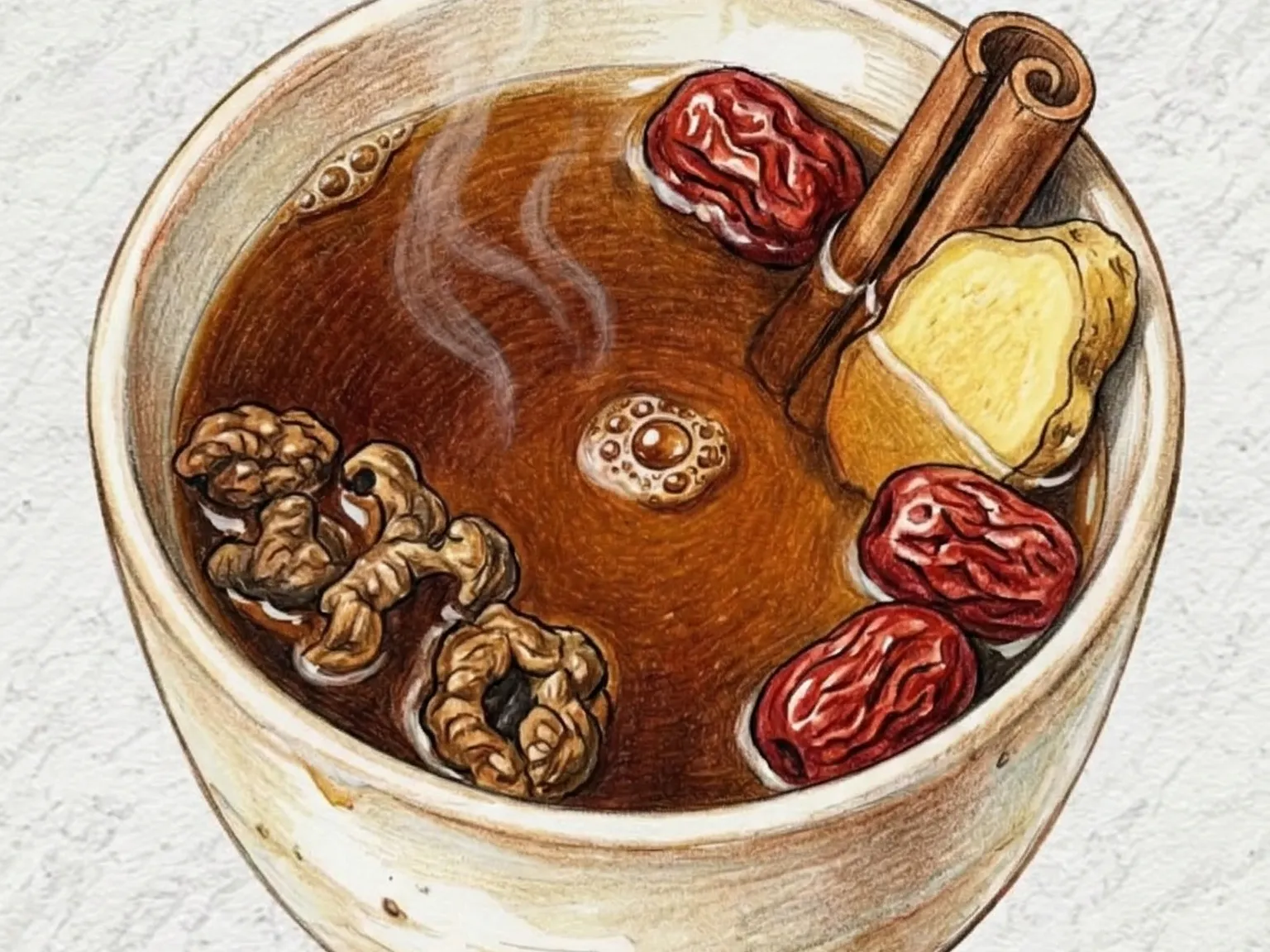
Gotgam-gyepi-cha is a traditional Korean winter tea made by slowly simmering dried persimmon, a cinnamon stick, fresh ginger, and jujubes in water for close to thirty minutes. Cinnamon, ginger, and jujube are added first and simmered for twenty minutes to establish the spiced backbone of the drink, building a deeply aromatic and gently sweet base before the persimmon is introduced. Quartered dried persimmons and dark brown sugar are then added for another eight to ten minutes, during which the fruit softens and its dense, concentrated fructose dissolves into the broth, giving the liquid a slight viscosity along with a rich, jammy sweetness. Because dried persimmons vary considerably in sugar content, the amount of dark brown sugar should be adjusted or omitted entirely when the fruit is particularly sweet, to prevent the drink from becoming cloying. Once strained through a fine mesh and poured into cups, the tea is a clear, reddish-amber color. A whole walnut is placed on top -- its firm crunch and toasted nuttiness contrast sharply with the warm, fragrant liquid and serve as a visual as well as textural counterpoint. The warming combination of ginger and cinnamon makes this tea well suited to cold weather, and it often appears alongside sikhye and sujeonggwa on holiday tables.

Prep 10min Cook 30min 2 servings
Recipes by ingredient → ginger

Instructions

Read the steps as a cooking flow: prep, heat, seasoning, doneness control, and finish.

6 steps
  1. 1
    Control

    Remove the stems from 3 dried persimmons and cut each one into quarters.

    Peel 15 g fresh ginger and slice it very thinly so its aroma extracts quickly during simmering.

  2. 2
    Control

    Add 1000 ml water, 1 cinnamon stick, the sliced ginger, and 5 jujubes to a pot.

    Heat over high heat until the water reaches a full boil with steady bubbling.

  3. 3
    Control

    When it starts boiling, lower the heat to medium-low and simmer gently for 20 minutes.

    Keep the liquid at a quiet bubble until the color deepens to reddish brown and the spice aroma becomes clear.

  4. 4
    Season

    If the cinnamon aroma becomes too strong, remove the stick before continuing.

    Add the prepared dried persimmons and 30 g dark brown sugar, then stir lightly until the sugar dissolves.

  5. 5
    Control

    Keep the heat at medium-low and simmer for 8 to 10 more minutes.

    When the persimmon softens and the tea turns slightly viscous, taste it and adjust the sugar if the fruit is already very sweet.

  6. 6
    Finish

    Strain the tea through a fine sieve and collect only the clear liquid.

    Pour it into warm cups, top with 1 tbsp walnut pieces, and serve before it cools so the aroma stays vivid.

After the steps

Pick a recipe that fits this dish.

Continue with shared ingredients, meal pairings, or a similar method.

Recipes That Go Well With This

More Drinks →

Based on shared ingredients and meal pairing

Cinnamon Persimmon Ice (Korean Spiced Punch Scraped Ice Dessert)
Shared ingredient: dried persimmon Desserts

Cinnamon Persimmon Ice (Korean Spiced Punch Scraped Ice Dessert)

Sujeonggwa granita converts the traditional Korean cinnamon-ginger punch into a flaky frozen dessert by sweetening the steeped liquid with dark brown sugar and then breaking it into coarse crystals through repeated scraping. Cinnamon sticks and fresh ginger are simmered in water for at least twenty minutes to draw out the full depth of both spices before being strained. The sweetened liquid is poured into a shallow metal tray, which chills more quickly and freezes more evenly than deep containers. Every hour for three to four rounds a fork is dragged through the solidifying surface, breaking up any sheets of ice and encouraging the formation of separate, granular crystals. Scraping more frequently and starting promptly after the first hour produces a finer, more uniform texture, while leaving it too long between sessions allows solid blocks to form that are harder to break up. The spice compounds concentrate into each ice shard as the water freezes around them, so the granita delivers a cold but intensely flavored mouthful at every bite. Thin strips of dried persimmon and pine nuts placed on top before serving add the same garnishes used in traditional sujeonggwa: the persimmon brings a sticky chewiness and concentrated sweetness, while the pine nuts contribute a mild, buttery richness that contrasts with the crunchy, crystalline ice beneath.

Korean Cinnamon Tea (Spiced Jujube Ginger Honey Brew)
Shared ingredient: ginger Drinks

Korean Cinnamon Tea (Spiced Jujube Ginger Honey Brew)

Gyepi-cha is a traditional Korean cinnamon tea made by simmering whole cinnamon sticks and fresh ginger in water over low heat for at least twenty-five minutes. The long, gentle simmer is what separates gyepi-cha from an infusion: the bold, sweet-spicy aroma of the cinnamon builds gradually, saturating the liquid rather than merely scenting it. Ginger contributes a sharp, deeply warming bite that stays present long after each sip, creating a slow, spreading heat in the chest. Six jujubes are cooked alongside the spices; their flesh softens and eventually breaks down, lending the broth a faint fruitiness and a slight natural body. Dark brown sugar and honey are both used to construct a sweetness that is layered rather than flat, with the molasses depth of the sugar underpinning the floral brightness of the honey. Before serving, a few pine nuts are floated on the surface, where their oily richness drifts down to complement the spice. This is a drink associated with cold weather and recovering health, often prepared during winter or whenever warmth is needed from the inside out.

Crispy Seaweed Chips
Serve together Side dishes

Crispy Seaweed Chips

Basak gim-bugak is a traditional Korean snack made of seaweed sheets coated with glutinous rice paste and fried until crispy. The process begins by cooking a thick mixture of water, glutinous rice flour, and salt. After cooling the paste, it is spread thinly onto half of a seaweed sheet. The sheet is folded in half and coated with another thin layer of paste to build a double-layer structure. Sesame seeds are scattered on top before drying. The sheets are dried in a dehydrator or an air fryer at 80 degrees Celsius until stiff and hard. Ensuring the seaweed is completely dry, especially at the edges, is crucial for a crisp outcome. The dried pieces are flash-fried in hot oil at 180 degrees Celsius for just two to three seconds. They puff up instantly and must be removed quickly to prevent burning.

Korean Cinnamon Persimmon Punch
Similar recipe Drinks

Korean Cinnamon Persimmon Punch

Sujeonggwa is a Korean cinnamon-ginger punch made by simmering cinnamon sticks and sliced ginger in water for 25 minutes, then straining and sweetening the clear liquid with dark brown sugar. The warm, slightly sweet spice of cinnamon and the sharp rising heat of ginger meet the molasses-toned depth of the sugar, building a flavor that is spicy, sweet, and aromatic in equal measure. Quartered dried persimmon slices are added to the chilled punch, where they slowly absorb the liquid and soften into a jam-like texture over time, while floating pine nuts contribute a gentle nuttiness to each sip. Overnight refrigeration in a sealed container melds the individual flavors into something more unified, making the punch cleaner and more rounded when served cold. Sujeonggwa has long been served at Korean holiday tables during Lunar New Year and ancestral rite ceremonies, and its spiced warmth is also considered a natural digestive aid after heavy meals.

Serve with this

Gotgam Cream Cheese Roll (Dried Persimmon Rolls)
Desserts Easy

Gotgam Cream Cheese Roll (Dried Persimmon Rolls)

Gotgam cream cheese roll is a no-cook Korean dessert that requires nothing more than a knife, a bowl, and a refrigerator. Dried persimmons are slit open and flattened into thin sheets, each one acting as the outer wrapper. The filling is cream cheese mixed with honey and fresh lemon juice to balance its natural richness with acidity, and finely chopped walnuts are folded in throughout to add a crunchy, nutty element to every bite. The filling is spread across the opened persimmon, which is then rolled tightly and wrapped in plastic wrap. Twenty minutes in the refrigerator firms the roll enough to slice cleanly. Dipping the knife in warm water and wiping it dry before each cut produces the smoothest cross-sections. The finished slices reveal clearly defined layers: the chewy, caramel-sweet dried persimmon on the outside, the tangy cream cheese in the middle, and flecks of walnut distributed throughout. The combination makes it a natural pairing with wine or a polished addition to a traditional holiday table.

🍺 Bar Snacks 🎉 Special Occasion
Prep 20min 2 servings
Mixed Korean Tempura
Street food Medium

Mixed Korean Tempura

Modeum twigim is an assorted Korean tempura platter featuring sweet potato, squid, shrimp, onion, and carrot dipped in a light batter of frying powder mixed with cold water, then deep-fried at 170 degrees Celsius until crisp. Keeping the water cold and mixing minimally prevents gluten development, yielding a thin, shattering crust rather than a heavy coating. Each ingredient brings its own character: sweet potato offers starchy sweetness, squid and shrimp contribute oceanic umami, and onion and carrot release their natural moisture and fragrance as they fry. Because each ingredient has a different density and water content, maintaining a steady oil temperature is essential so every piece cooks through at the center while staying crisp at the surface. Served with a small bowl of soy sauce, the platter lets the clean frying flavor and the individual taste of each ingredient come through without any additional seasoning.

🍺 Bar Snacks 🧒 Kid-Friendly
Prep 20min Cook 15min 4 servings
Yuja Saenggang Baked Donuts (Yuja Ginger Baked Donuts)
Baking Easy

Yuja Saenggang Baked Donuts (Yuja Ginger Baked Donuts)

The preparation of these doughnuts involves folding yuja marmalade and finely grated fresh ginger into a light batter base. The mixture is then transferred to a doughnut pan and baked in the oven rather than being fried in oil. This specific cooking method produces an oil-free doughnut characterized by a soft and fluffy crumb that is highly fragrant with citrus notes. The yuja component contributes a floral and complex citrus profile that offers a perfumed quality more intricate than the flavor of a standard lemon or orange. Complementing this, the ginger provides a mild and warm spiciness that persists quietly in the background of each bite. Because the doughnuts are baked, the internal structure stays light, which ensures that the specific flavor of the yuja is not masked by the presence of frying oil. While the doughnuts are still warm from the oven, a thin honey glaze is brushed over the surface. This application creates a glossy appearance and adds a layer of sweetness that functions to seal in the moisture of the crumb. During the preparation of the batter, the ingredients should be combined only until the dry components are just incorporated. Mixing the batter too much will lead to a finished product that is tough and dense. Filling the pan cavities to eighty percent of their capacity allows for an even rise and prevents the batter from spilling over the edges during baking. Finally, the doughnuts require a five-minute rest period within the pan after they are removed from the oven. This time allows the structure to firm up, ensuring that each doughnut can be removed cleanly from the mold.

🧒 Kid-Friendly
Prep 18min Cook 14min 4 servings

Similar recipes

Korean Kudzu Root Tea (Earthy Herbal Root Brew)
Drinks Easy

Korean Kudzu Root Tea (Earthy Herbal Root Brew)

Chik-cha is a traditional Korean tea made by soaking dried kudzu root in cold water to remove dust, then slowly simmering it with sliced ginger, scored jujubes, and a cinnamon stick for at least twenty-five minutes on low heat. The kudzu root releases an earthy, starchy depth that forms the tea's backbone, while ginger adds warm pungency and cinnamon contributes a sweet, woody spice layer. Honey is stirred in only after the heat is turned off to preserve its floral aroma, and longer simmering intensifies the kudzu's flavor. In traditional Korean medicine, kudzu root has long been used to address fever and thirst, and the tea was commonly brewed at the first sign of a cold. Straining out the solids and storing the tea in a thermos keeps it warm and drinkable throughout the day.

🍺 Bar Snacks 🥗 Light & Healthy
Prep 10min Cook 35min 2 servings
Korean Heotgae Tea (Oriental Raisin Tree Hangover Herbal Brew)
Drinks Easy

Korean Heotgae Tea (Oriental Raisin Tree Hangover Herbal Brew)

Heotgae-cha is a traditional Korean herbal tea made by simmering dried oriental raisin tree fruit with jujubes, ginger, and cinnamon over low heat for thirty-five minutes. The dried heotgae fruit, small and knobby in appearance, is astringent and muted in raw form, but prolonged simmering draws out a deep, earthy sweetness that gradually fills the water. Jujubes add natural sweetness and a faint fruity note, ginger contributes a sharp warmth that lingers at the tip of the tongue, and cinnamon layers in a gentle, aromatic sweetness, building a multi-layered flavor that develops slowly over the long cooking time. Honey is stirred in at the end to adjust sweetness to taste. In Korean traditional medicine, the oriental raisin tree has long been associated with supporting liver function and alleviating hangover symptoms, which is why the tea has been consumed as a morning-after drink for generations. Among Korean office workers accustomed to frequent after-work drinking gatherings, heotgae-cha remains one of the most commonly reached-for hangover remedies.

🍺 Bar Snacks 🥗 Light & Healthy
Prep 5min Cook 35min 4 servings
Baesuk (Korean Poached Pear Punch)
Desserts Easy

Baesuk (Korean Poached Pear Punch)

Baesuk is a traditional Korean punch made by slowly simmering whole or large-cut Korean pear with ginger, whole black peppercorns, and dried jujubes. As the pear cooks over low heat, its juice gradually dissolves into the liquid, building a natural sweetness that forms the drink's backbone. Ginger contributes a warm, peppery sharpness that interlocks with the pear's sweetness, producing a flavor that is comforting yet clean. Whole peppercorns are added sparingly and function as an aromatic element rather than a source of actual heat. Jujubes add a faint reddish tint and a mild fruity undertone to the liquid. Honey is stirred in after the heat is turned off and the temperature has dropped slightly to preserve its fragrance; because the pear already provides significant sweetness, the honey amount should start small and be adjusted by taste. Overnight refrigeration allows the ginger and pear flavors to penetrate more fully, rounding out the drink. Pine nuts floated on the surface before serving add a subtle oily richness to the finish of each sip. Historical records indicate that baesuk appeared on royal banquet tables during the Joseon dynasty and at aristocratic tea spreads, and Korean traditional medicine has long recommended it as a remedy for cold prevention and digestive support. Even today it remains a seasonal drink associated with holidays and ancestral rite preparations.

🧒 Kid-Friendly
Prep 15min Cook 35min 4 servings

Tips

If persimmons are very sweet, reduce sugar to about 20g.
Remove the cinnamon stick early if the aroma gets too strong.

Nutrition (per serving)

Calories
145
kcal
Protein
2
g
Carbs
33
g
Fat
2
g