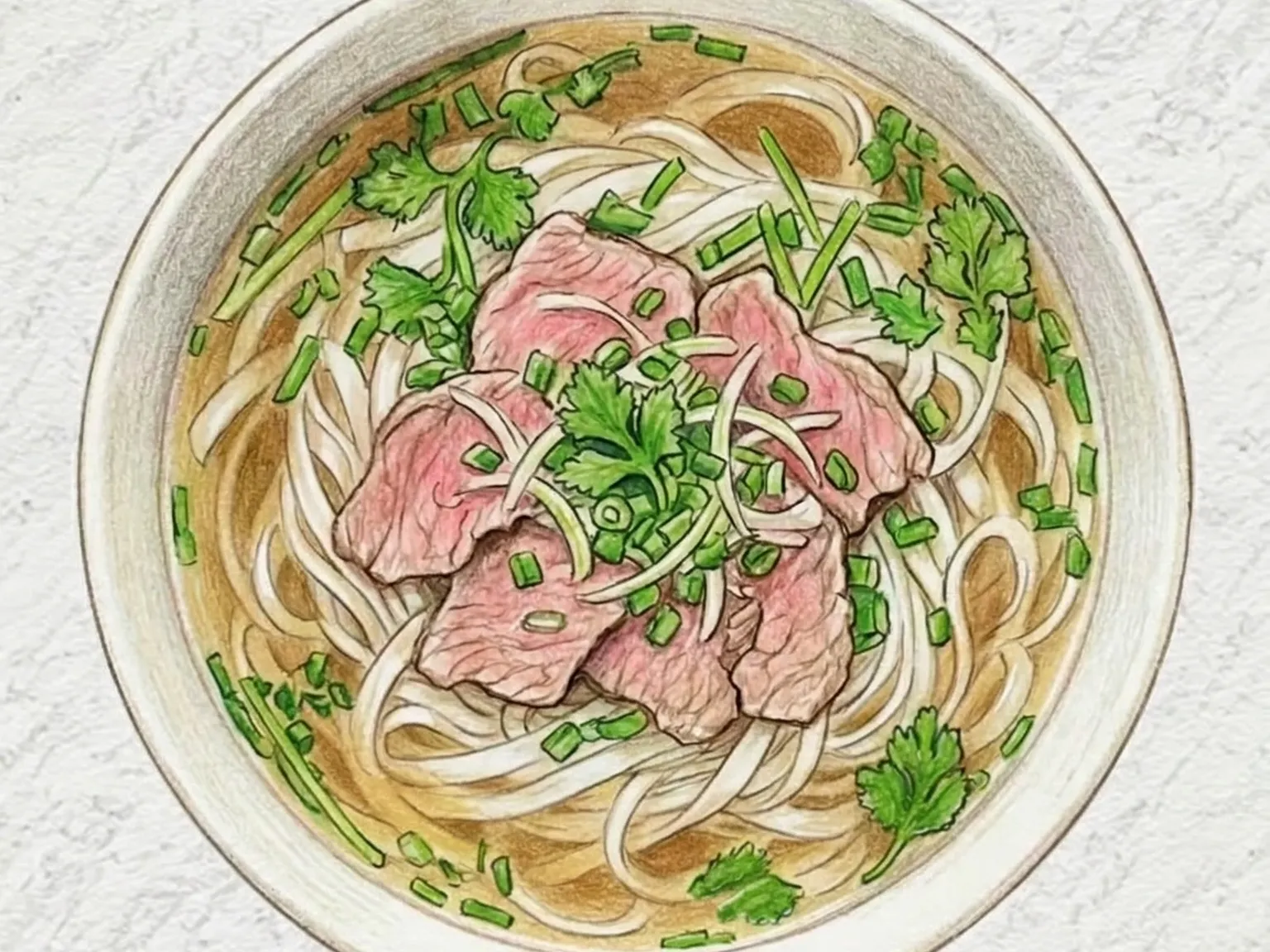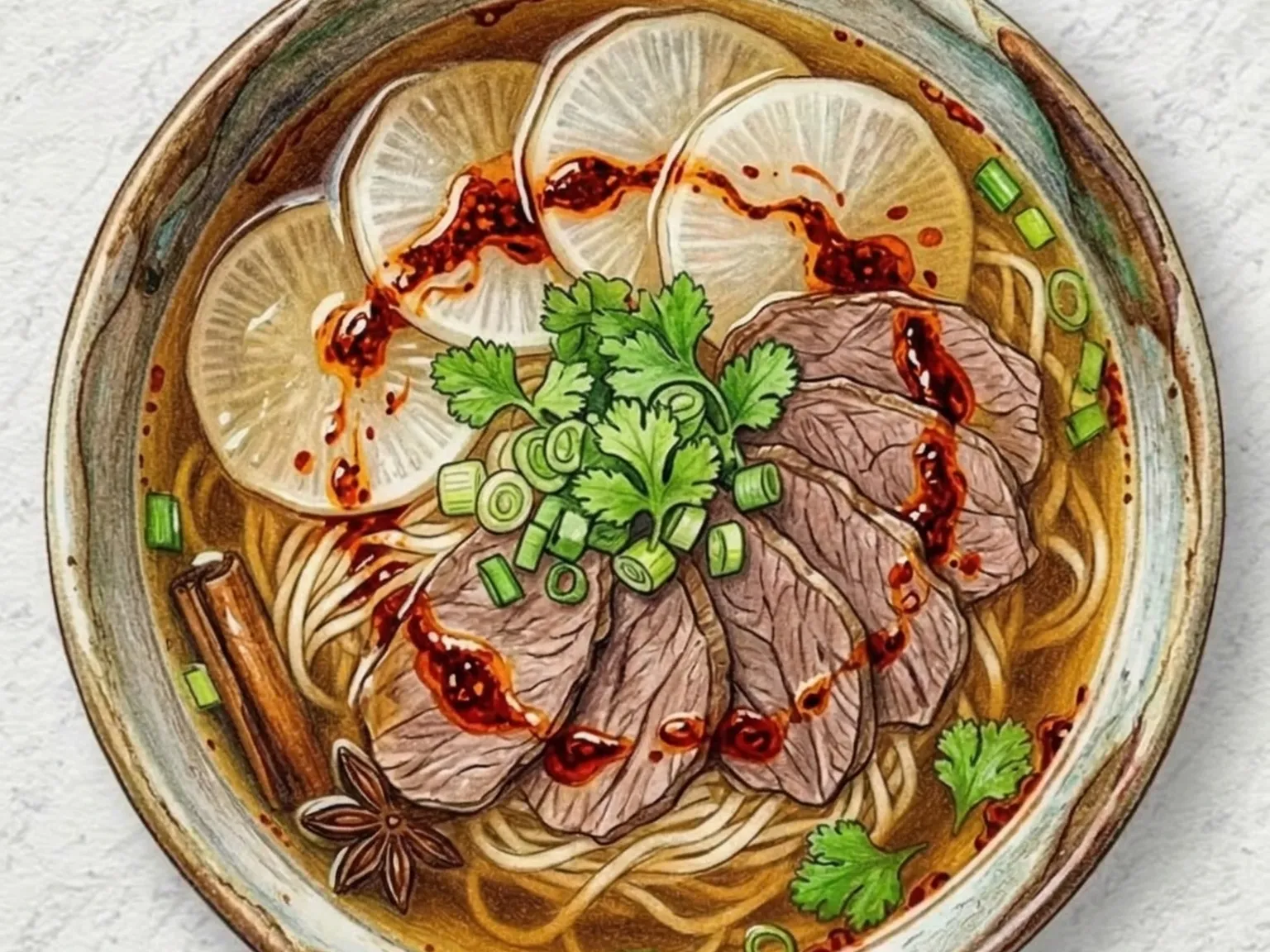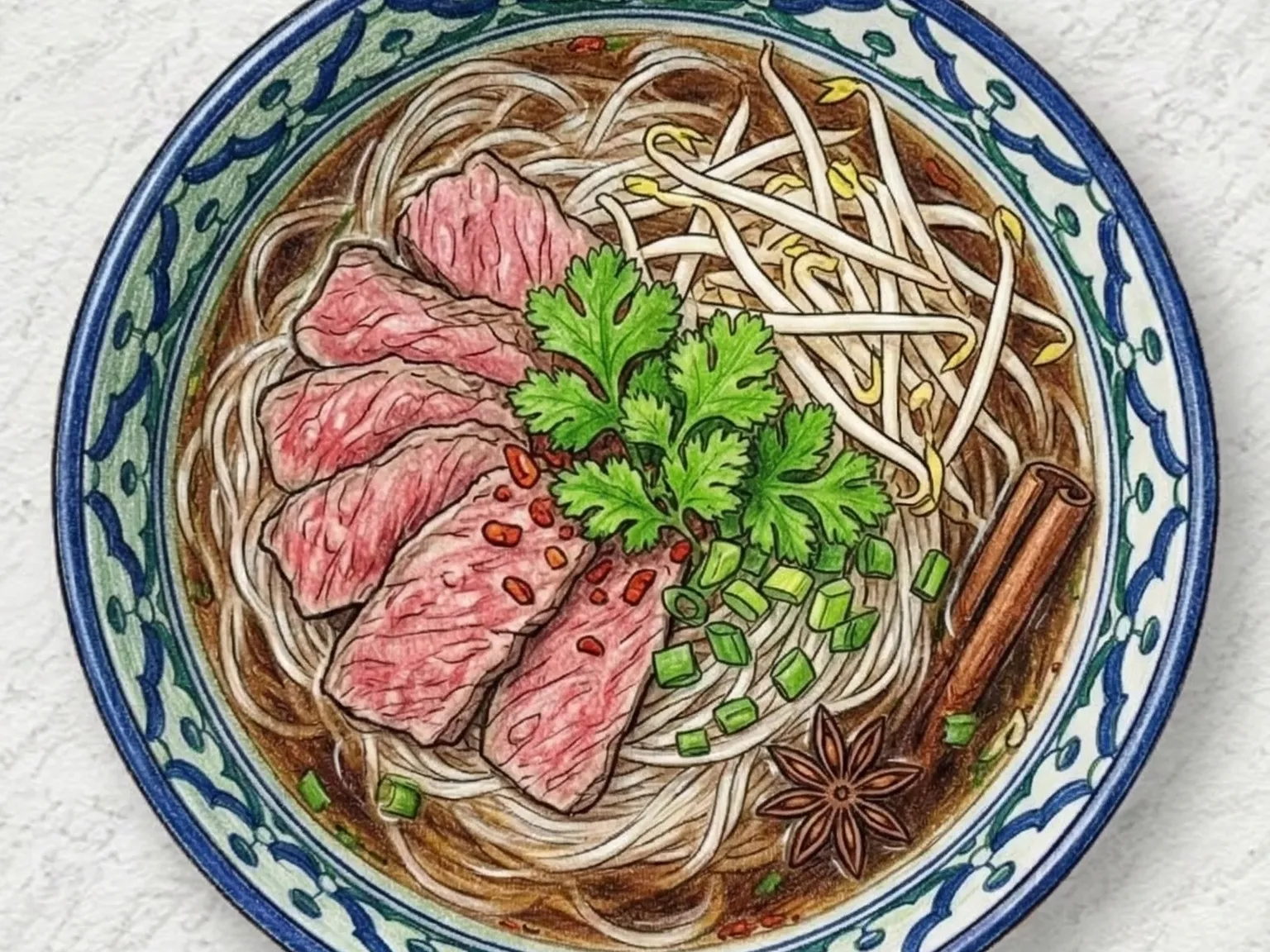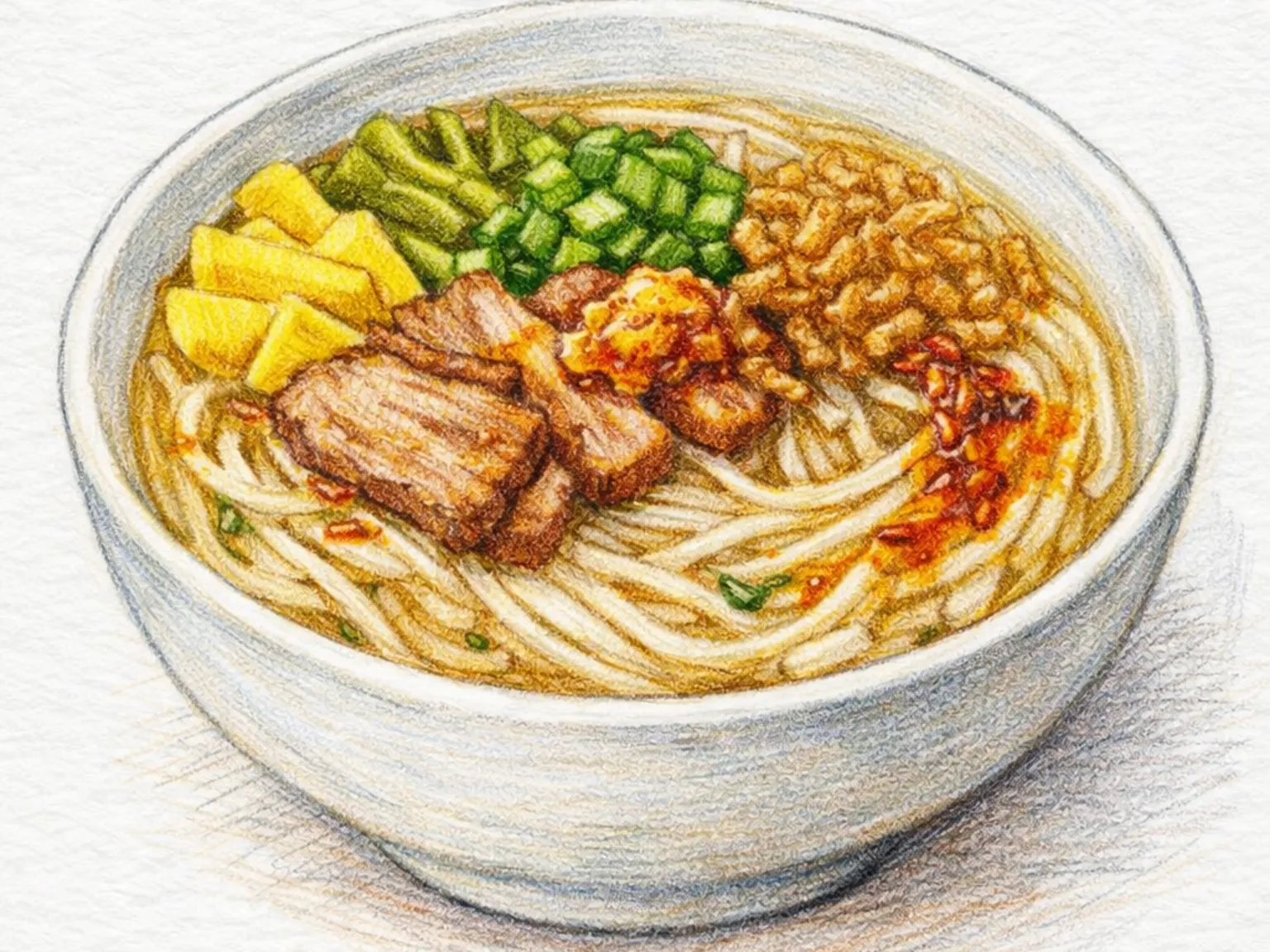
Guilin Rice Noodles (Silky Rice Noodles in Beef Brisket Broth)
Quick answer
Guilin rice noodles are the signature noodle dish of Guilin in Guangxi, China, built on a clear beef brisket broth that has been simmered until the collagen fully dissolv...
What makes this special
- Silky rice noodles absorb the clear beef brisket broth in this traditional Guilin recipe.
- Rice flour noodles absorb the brisket broth deeply, carrying its umami
- Pickled radish acidity and crunch break the richness of the broth
Key ingredients
Core cooking flow
- 1 Soak 180 g beef brisket in cold water to draw out blood, then place it in a...
- 2 Lift out the cooked brisket and let it cool briefly so the juices settle and the slices hold their shape.
- 3 Combine 900 ml beef broth with 1 tbsp soy sauce and 1 tsp sliced garlic.
Guilin rice noodles are the signature noodle dish of Guilin in Guangxi, China, built on a clear beef brisket broth that has been simmered until the collagen fully dissolves and the liquid turns deeply savory without becoming heavy. The slender rice noodle strands are smooth and slightly springy, and they absorb the broth as the bowl sits. Soy sauce seasons the soup with a salty, round undertone rather than any sharp edge. Pickled daikon radish is added as a topping for its crisp bite and vinegary tang, which cuts through the richness of the beef broth and resets the palate between mouthfuls. A drizzle of chili oil introduces a warm, slow-building heat that spreads through the soup. Fresh cilantro placed on top at the end adds a bright, citrus-forward herbal fragrance that ties the Southeast Asian-influenced profile of the bowl together. The combination of broth, noodles, and contrasting toppings is what makes Guilin rice noodles a dish people return to repeatedly.
Instructions
Read the steps as a cooking flow: prep, heat, seasoning, doneness control, and finish.
- 1Control
Soak 180 g beef brisket in cold water to draw out blood, then place it in a pot with enough water to cover.
Simmer over low heat for at least 1 hour, until a chopstick slides in with little resistance.
- 2Heat
Lift out the cooked brisket and let it cool briefly so the juices settle and the slices hold their shape.
Cut it against the grain into thin 2 to 3 mm slices to keep the meat from feeling tough in the bowl.
- 3Control
Combine 900 ml beef broth with 1 tbsp soy sauce and 1 tsp sliced garlic.
Simmer gently over low heat for 10 minutes, then skim off foam and floating oil so the broth stays clear and clean tasting.
- 4Heat
Cook 220 g rice noodles in boiling water according to the package time.
When the strands look translucent and no firm center remains, rinse briefly under cold water to remove starch and prevent sticking.
- 5Prep
Drain the noodles thoroughly in a sieve before placing them in a deep serving bowl.
Arrange the thin brisket slices in a single layer on top, leaving space so the hot broth can warm the meat evenly.
- 6Finish
Pour the hot broth over the noodles until they are submerged, then add 60 g pickled radish and 20 g cilantro.
Drizzle 1 tbsp chili oil at the very end so its aroma stays vivid when served.
After the steps
Pick a recipe that fits this dish.
Continue with shared ingredients, meal pairings, or a similar method.
Recipes That Go Well With This
More Noodles →Based on shared ingredients and meal pairing
Lanzhou Beef Noodles (Clear Spiced Beef Shank Soup Noodles)
Lanzhou beef noodles are a clear-broth noodle soup originating from Lanzhou in China's Gansu province. Beef shank is soaked in cold water for thirty minutes to draw out blood, blanched, then simmered for two hours with star anise, a cinnamon stick, ginger, and garlic. Diligent skimming during the early stages of simmering is what keeps the broth transparent despite its long cooking time. Daikon radish is added to the strained broth and simmered until translucent, and the seasoning is kept to soy sauce and salt. The cooked beef is sliced thin and arranged over noodles in the bowl, with green onion, cilantro, and a drizzle of chili oil on top. Traditional versions use hand-pulled noodles stretched to order, but store-bought Chinese wheat noodles work as a practical substitute at home. The long cook time yields a broth that is clear yet deeply savory, which is the defining quality of this noodle.
Crossing the Bridge Noodles
Crossing bridge noodles is the signature dish of Yunnan province in China, served as a bowl of boiling-hot, clear chicken broth sealed under a thin layer of hot oil, accompanied by separate plates of paper-thin raw meats, vegetables, tofu skin, quail eggs, and rice noodles. The oil cap acts as an insulating lid, holding the broth at a temperature high enough to cook raw ingredients the moment they touch the surface. Meat sliced so thin it is nearly translucent turns opaque within seconds without any external heat source. Diners add ingredients in a deliberate sequence, starting with items that need the most time and ending with the noodles, which go in last to prevent them from absorbing broth and softening. By the time the bowl is finished, each component has reached its ideal texture inside the single vessel. The dish takes its name from a legend about a devoted wife who carried soup across a long bridge to her husband studying for imperial examinations, relying on the oil layer to keep the broth hot for the entire journey.
Yu Sheng Prosperity Salad
Yu sheng prosperity salad arranges thinly sliced sashimi-grade salmon and finely julienned daikon, carrot, and cucumber in a ring on a large platter, dressed with plum sauce, lemon juice, and sesame oil, then tossed vigorously just before eating. The salmon must be sashimi-grade for food safety, and patting it dry before slicing thin allows the sweet-tart plum sauce to cling more effectively to the fish surface. Cutting all vegetables as finely as possible maximizes the surface area in contact with the dressing, ensuring every chopstick-full carries the full spectrum of flavors. Keeping the prepared vegetables chilled maintains the freshness of the raw fish once assembled. Sesame seeds sprinkled on top add a nutty aroma that layers over the fruity plum sauce, completing the festive character of the dish.
Wonton Noodle Soup
Wonton noodle soup is a Cantonese classic that pairs thin egg noodles with shrimp-and-pork wontons in a clear pork bone broth. The broth is deliberately kept light and clean, relying on long simmering rather than heavy seasoning for its flavor. Each wonton has a thin wrapper that barely conceals a filling with noticeable shrimp texture. The egg noodles are springy and slightly alkaline, a hallmark of Hong Kong-style noodle making. Wrapping wontons from scratch adds about 30 minutes of prep, though pre-made wontons shorten the process significantly.
Serve with this
Korean Flower Crab Pancake
Fresh blue crab meat is picked clean, coated in a mixture of all-purpose flour and Korean pancake mix, dipped in beaten egg, and pan-fried until the surface turns golden. The crab's natural sweetness and mild brininess stay intact throughout the process, and minced ginger cuts through any residual fishiness without announcing itself in the finished jeon. Black pepper is added in small amounts - just enough to clean up the aftertaste without competing with the delicate crab. The egg coating holds moisture inside, keeping the meat tender while the outside crisps to a light, golden crust. A generous amount of crab filling in each piece is what makes the texture satisfying.
Korean Stir-fried Balloon Flower Root
Doraji -- balloon flower root -- has been cultivated in Korea for centuries, valued in cooking and herbal medicine alike. The raw root carries a pronounced bitterness from saponins, so it must be shredded into thin strips, rubbed vigorously with salt, left for ten minutes, then rinsed twice in cold water. The salt scrub draws out the saponins while preserving the root's firm, snappy bite. A base of green onion goes into the pan first to build a fragrant oil, then the prepared doraji stir-fries for two minutes before gochujang, soy sauce, and oligosaccharide syrup go in for another three minutes. The heat is raised at the end to drive off moisture, so the sauce tightens and clings to each strip rather than pooling in the pan. The result is a glossy, sweet-spicy banchan with a distinctly chewy pull.
Korean Salted Yellow Croaker Jeotgal
Jogi jeotgal is a Korean salted and fermented yellow croaker made by gutting the fish, layering it in coarse sea salt for an initial multi-day cure in the refrigerator, then folding in gochugaru, garlic, ginger, and rice wine for a second stage of aging. Over the extended fermentation, fish protein breaks down into a concentrated savory depth that bears no resemblance to the raw ingredient, while the sea salt continuously draws out moisture and causes the flesh to contract and firm. Gochugaru and ginger suppress the fermentation smell and add a mild heat and aromatic warmth, while rice wine smooths out the sharp, rough edges that develop early in the process. The finished jeotgal is used in small amounts, placed over rice or added to kimchi jjigae as a flavor amplifier, a condiment that delivers significant depth from a very small quantity.
Similar recipes
Korean-Chinese Chicken Broth Noodles
Gis-myeon is a Korean-Chinese noodle soup in which thin wheat noodles are served in a clear, pale chicken broth topped with delicate ribbons of egg that have been poured in a fine stream and cooked into floating wisps. The broth begins with chicken breast simmered in water with aromatics; once the stock is strained and clarified, the cooked chicken is shredded into fine threads and reserved as the main garnish. Beaten egg is drizzled very slowly into the gently boiling stock while stirring in one direction, which produces the characteristic silk-like strands rather than broken scrambled curds. The seasoning is deliberately minimal: only soup soy sauce and salt are used, keeping the broth light, clean, and transparent enough to see the noodles beneath. A small measure of starch slurry stirred in just before serving gives the liquid a subtle viscosity that allows it to cling to each strand of noodle, ensuring flavor in every bite rather than leaving a watery pool at the bottom of the bowl.
Sesame Spicy Tantanmen (Chinese Creamy Sesame Chili Oil Noodle Soup)
Tantanmen is a noodle soup of Chinese origin that is defined by the combination of a creamy sesame-based broth and the sharp heat of chili oil. This pairing creates a bowl of noodles that features nutty, spicy, and savory characteristics all at once. The preparation of the broth starts with a base of chicken stock. To this base, sesame paste is added and whisked thoroughly until it has fully dissolved into the liquid. The result of this process is a thick, tan-colored soup base that emits a prominent fragrance of roasted nuts. The meat topping for the dish is prepared separately by frying ground pork with minced garlic and fresh ginger. During this cooking process, doubanjiang, which is a paste made from fermented chili beans, is stirred into the pork to add saltiness and depth. The meat is cooked until it is well-browned and has a crumbly consistency, after which it is spooned over the noodles to provide a rich component to the final assembly. To balance the density of the broth, bok choy is blanched and added to the bowl, offering a crisp and vegetal element that provides a contrast to the liquid. Just before serving, a final drizzle of chili oil is applied to the surface of the soup, where it gathers in small pools and releases its aroma with the heat. The noodles are generally cooked until they are just short of being fully done, which allows them to maintain a firm and chewy texture while they remain submerged in the hot liquid. Each individual ingredient, from the sesame and chili to the fermented beans and pork, contributes its own specific layer of flavor. As these different elements gradually merge together in the bowl, the taste of the soup continues to develop and change while the meal is consumed slowly.
Yangchunmian (Shanghai Clear Soy Broth Noodle Soup)
Yangchunmian is a Shanghai noodle soup that focuses on a clear, soy-seasoned broth and fresh wheat noodles. The broth uses a chicken stock base seasoned with light soy sauce and sugar, heated gently to remain clear. Fresh wheat noodles are boiled until tender yet springy, while bok choy is blanched briefly in the same water to keep its green color and crisp texture. The noodles are placed in bowls, seasoned with white pepper for a clean aroma, and submerged in the hot broth. Thinly sliced scallions and the blanched bok choy are added as simple garnishes, finished with a drizzle of sesame oil to provide a layer of nutty warmth. Without heavy toppings, the dish relies on the clean flavor of the seasoned broth. It is served immediately while hot to prevent the noodles from softening.