Korean Chrysanthemum Tea (Floral Jujube Goji Berry Brew)
Gukhwa-cha is a traditional Korean flower tea brewed from dried chrysanthemum buds steeped in water at 80 to 85 degrees Celsius for three to four minutes, which draws out the gentle floral fragrance without turning bitter. Jujubes and goji berries are added to the pot: the jujubes contribute a mild natural sweetness while the goji berries bring a faintly tart, herbal note that rounds out the chrysanthemum's aroma. A spoonful of honey and a squeeze of lemon juice are stirred in at the end to brighten the finish. The resulting tea is pale golden, lightly sweet, and carries a lingering floral scent that makes it a common after-meal drink in Korea.
Adjust Servings
Instructions
- 1
Rinse dried chrysanthemum quickly in cold water.
- 2
Simmer jujubes in water for 5 minutes to extract sweetness.
- 3
Lower heat and add chrysanthemum and goji berries.
- 4
Steep for 3 minutes, then turn off heat.
- 5
Strain and finish with honey and lemon juice.
- 6
Serve warm in preheated cups.
As an Amazon Associate, we may earn from qualifying purchases.
Tips
Nutrition (per serving)
More Recipes

Korean Corn Silk Tea (Roasted Corn Jujube Grain Brew)
Oksusu-suyeom-cha is a Korean tea brewed by simmering dried corn silk and corn kernels in water on low heat for 25 minutes. The corn silk is rinsed briefly in cold water to remove dust, then combined with kernels and jujubes in a pot where the silk releases a subtle, naturally sweet flavor and the kernels contribute a toasted grain-like nuttiness. Keeping the simmer time under control is important because over-boiling draws out an unpleasant astringency, so the tea is strained promptly at the 25-minute mark. A spoonful of honey adjusts the sweetness and a tiny pinch of salt sharpens the flavor profile; the tea works well served warm, but chilling it overnight makes the natural sweetness more pronounced and refreshing.

Korean Roasted Buckwheat Tea
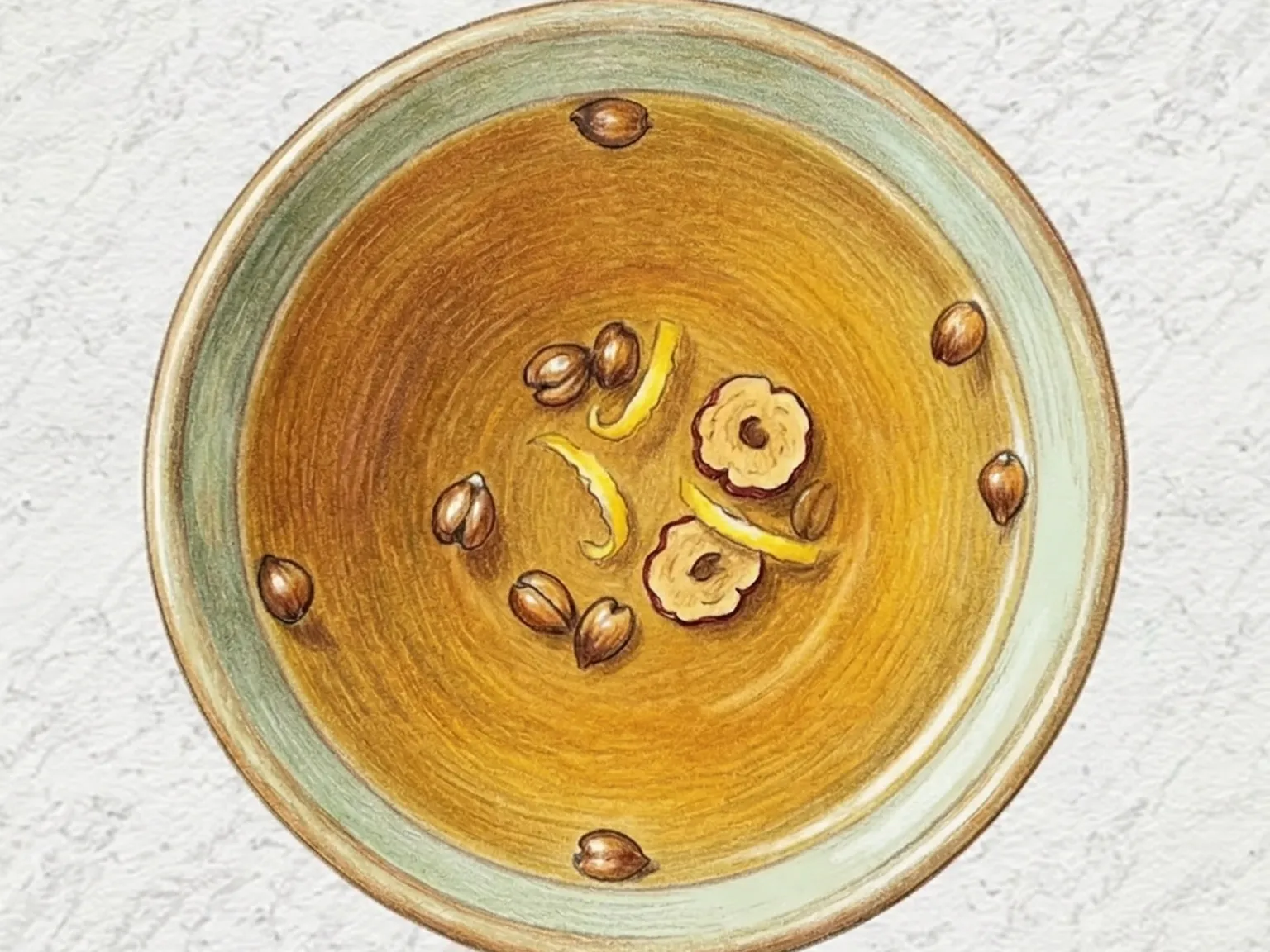
Memil-cha is a Korean roasted buckwheat tea brewed by simmering toasted buckwheat groats in water on low heat for about ten minutes. The roasting brings out a deep, toasty grain aroma that fills each cup with earthy warmth. Jujube and a thin strip of lemon peel contribute gentle sweetness and a faint citrus lift during the steep. Being naturally caffeine-free, it works equally well served hot in winter or chilled over ice in summer.

Korean Lotus Leaf Tea (Roasted Rice and Lotus Brew)
Yeonnip-cha is a Korean lotus leaf tea brewed by simmering dried lotus leaf with roasted brown rice, jujube, and ginger for 15 minutes, then steeping covered for three additional minutes to concentrate the aroma. The lotus leaf contributes a clean, grassy fragrance that pairs with the toasty, nutty character of the roasted rice, creating a light but layered flavor. Jujube and ginger smooth out any sharp vegetal edges, making the tea approachable even for first-time drinkers, and rice syrup is stirred in for gentle sweetness. Brewing time should not exceed 20 minutes to avoid astringency, and the tea is naturally caffeine-free.

Korean Roasted Brown Rice Tea
Hyeonmi-cha is made by dry-roasting brown rice over medium heat until the grains turn golden and undergo the Maillard reaction, which intensifies their toasty, nutty aroma. The roasted rice is then steeped in water for about twenty minutes, yielding a clear amber liquid with a clean grain flavor. A slice of ginger and a few jujubes added during steeping contribute warm spice and gentle sweetness that layer over the base roasted note. Honey and a pinch of salt sharpen the overall flavor, and the tea is naturally caffeine-free, making it suitable for drinking at any hour.

Green Tea Dasik Cookies (No-Bake Korean Matcha Pressed Cookies)
Nokcha dasik are Korean pressed tea cookies formed by binding roasted soybean powder and matcha with honey, rice syrup, and a touch of sesame oil, then stamping the mixture in a traditional wooden mold. No oven or heat is needed; the key is achieving a moisture ratio that lets the dough hold together under pressure without cracking. On the tongue, the cookie dissolves gently, releasing the toasty depth of roasted soybean first, followed by the grassy bitterness of green tea that cleans the palate. The embossed pattern from the mold gives each piece a refined, ornamental appearance, and a brief air-dry at room temperature firms the surface enough for neat storage.

Candied Tangerine Peel (Korean Citrus Honey Confection)
Gyul jeonggwa is a traditional Korean candied confection made by slicing tangerine peels into 0.8 cm strips, blanching them twice in salted water to draw out bitterness, then simmering in a syrup of sugar, honey, and cinnamon for thirty-five to forty minutes on low heat. Leaving a moderate amount of white pith intact preserves the essential citrus oils that give the finished candy its bright, aromatic character. As the peels cook, they turn translucent and absorb the syrup, developing a dense, chewy texture similar to a fruit jelly. A splash of lemon juice at the end prevents the syrup from crystallizing and rounds out the sweetness with a clean acidic note, and drying the pieces on a rack for an hour after cooking yields a non-sticky surface.