Korean Soupy Tteokbokki (Rice Cakes in Spicy Gochujang Broth)
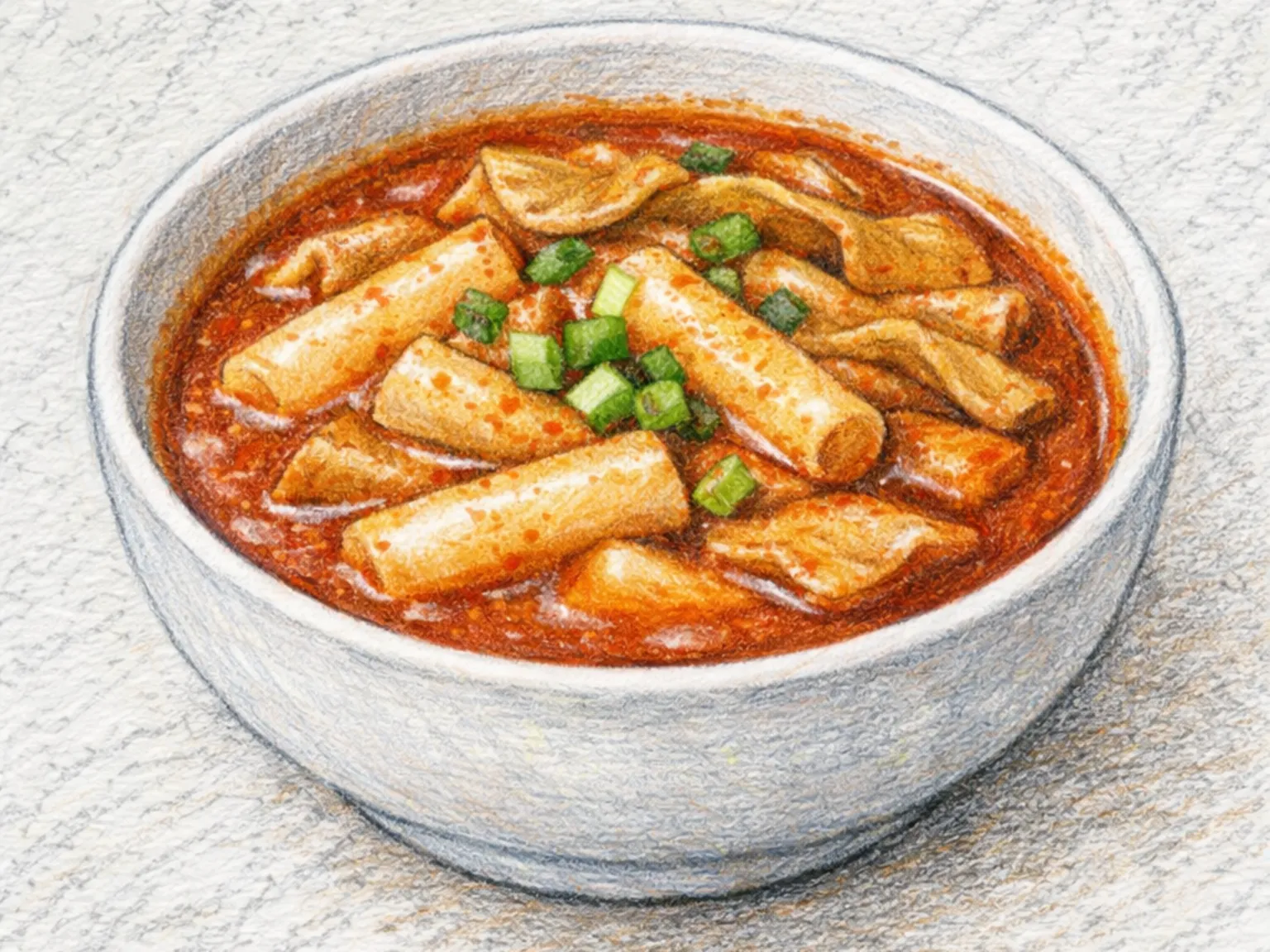
Gukmul-tteokbokki is a broth-based tteokbokki where rice cakes and fish cakes simmer in a kelp stock seasoned with gochujang, gochugaru, soy sauce, and sugar. Unlike dry or stir-fried versions, the generous broth lets the seasoning penetrate each rice cake while the fish cakes boost the soup's savory depth. Simmering over medium heat for eight to ten minutes softens the rice cakes while preserving a chewy core, and scallions stirred in at the end add freshness. The leftover broth is commonly enjoyed with a bowl of rice stirred in or with added ramyeon noodles.
Adjust Servings
Instructions
- 1
Simmer water with kelp over medium heat for 10 minutes to make broth.
- 2
Remove kelp, then dissolve gochujang, gochugaru, soy sauce, and sugar in the broth.
- 3
Add rice cakes and fish cakes, simmer for 8–10 minutes over medium heat.
- 4
Once rice cakes are tender, add green onion and simmer 1 more minute.
As an Amazon Associate, we may earn from qualifying purchases.
Tips
Nutrition (per serving)
More Recipes

Korean Spicy Rice Cakes (Gochujang Braised Chewy Tteok with Fish Cake)
Tteokbokki is Korea's signature street-food dish, made by simmering cylindrical rice cakes and flat fish cake in a sauce of gochujang, gochugaru, sugar, and soy sauce. As the broth reduces, starch from the rice cakes thickens the liquid into a glossy, clinging glaze that coats every piece. The fish cake absorbs the surrounding spice while contributing its own subtle seafood depth to the pot. A scattering of green onion added at the last moment introduces a bright, herbal note that cuts through the sweet heat.

Korean Oil Tteokbokki (Dry-Stir-Fried Rice Cakes in Chili Soy Glaze)
Gireum-tteokbokki is a dry-style tteokbokki where rice cakes are stir-fried in oil and coated with a concentrated paste of gochugaru, soy sauce, sugar, and garlic - no broth involved. Blooming the chili flakes briefly in oil draws out their nutty aroma rather than raw heat, and the soy sauce and sugar build layered sweetness and umami on top. Without liquid, the seasoning clings tightly to each rice cake's surface, creating an intense glaze. Green onion and sesame seeds added at the end provide a fresh bite and fragrance to balance the rich coating.

Korean Mala Cup Tteokbokki
This cup-style tteokbokki combines gochujang with mala sauce to deliver both Korean chili heat and the numbing tingle of Sichuan peppercorn. Rice cakes and fish cake are simmered for six to seven minutes, stirring constantly, until the broth reduces into a thick, clinging glaze, then finished with sliced green onion. Because mala sauce saltiness varies widely between brands, starting with one tablespoon and adjusting upward is the safest approach.

Korean Sotteok Sotteok Skewers
Sotteok-sotteok is a Korean street snack of alternating mini sausages and cylinder rice cakes on a skewer, pan-grilled and coated in a sweet-spicy glaze of gochujang, ketchup, and oligosaccharide syrup. The rice cakes are soaked in warm water beforehand to soften them, ensuring they cook through on the pan and achieve maximum chewiness. Sausages are lightly scored to prevent splitting, and the skewers are rolled over medium heat until evenly browned. The glaze is tossed on quickly over low heat so it clings in a glossy layer, and the sauce gradually seeps into the rice cakes with each bite.

Eomuk-guk (Fish Cake Radish Clear Soup)
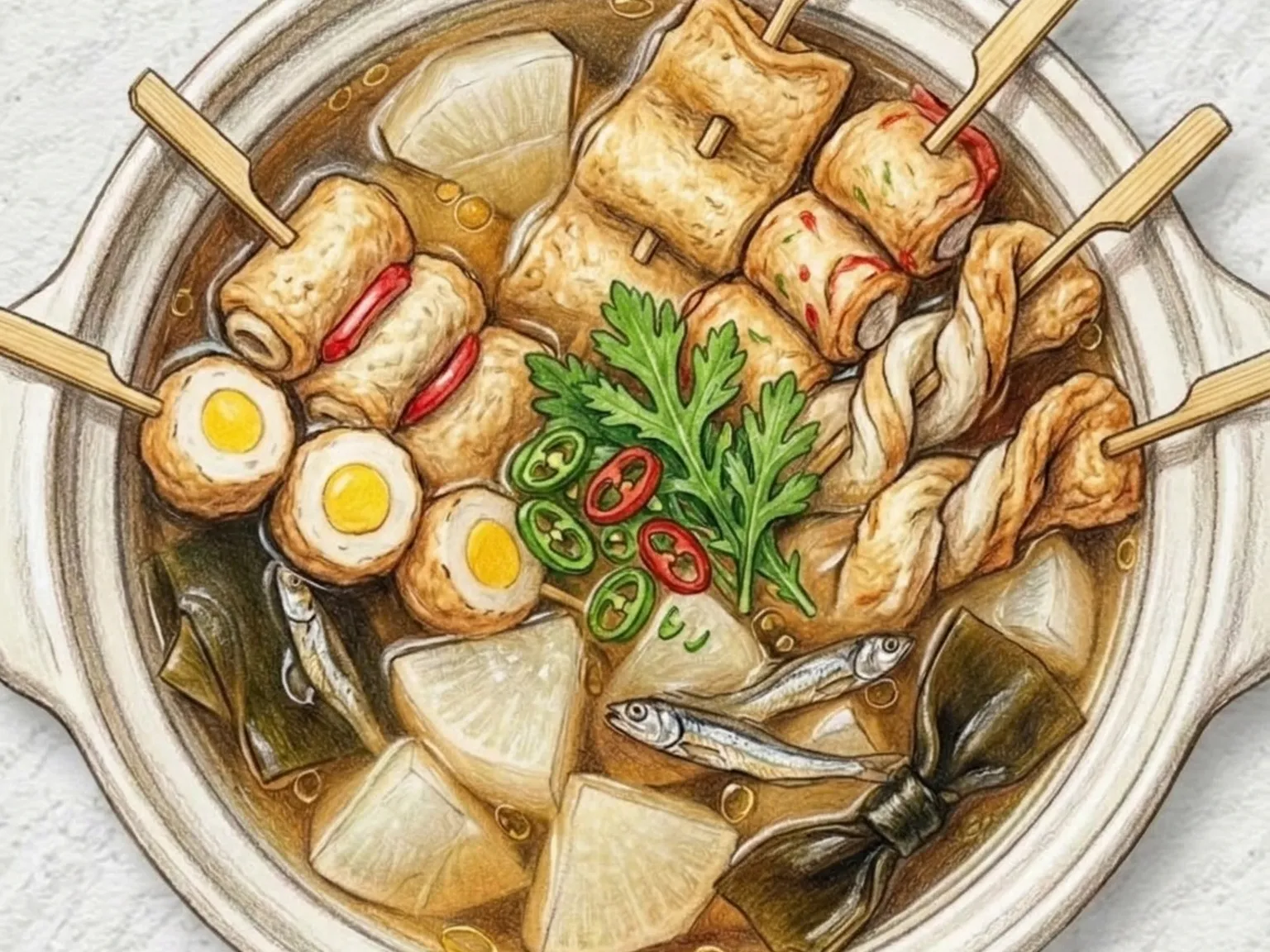
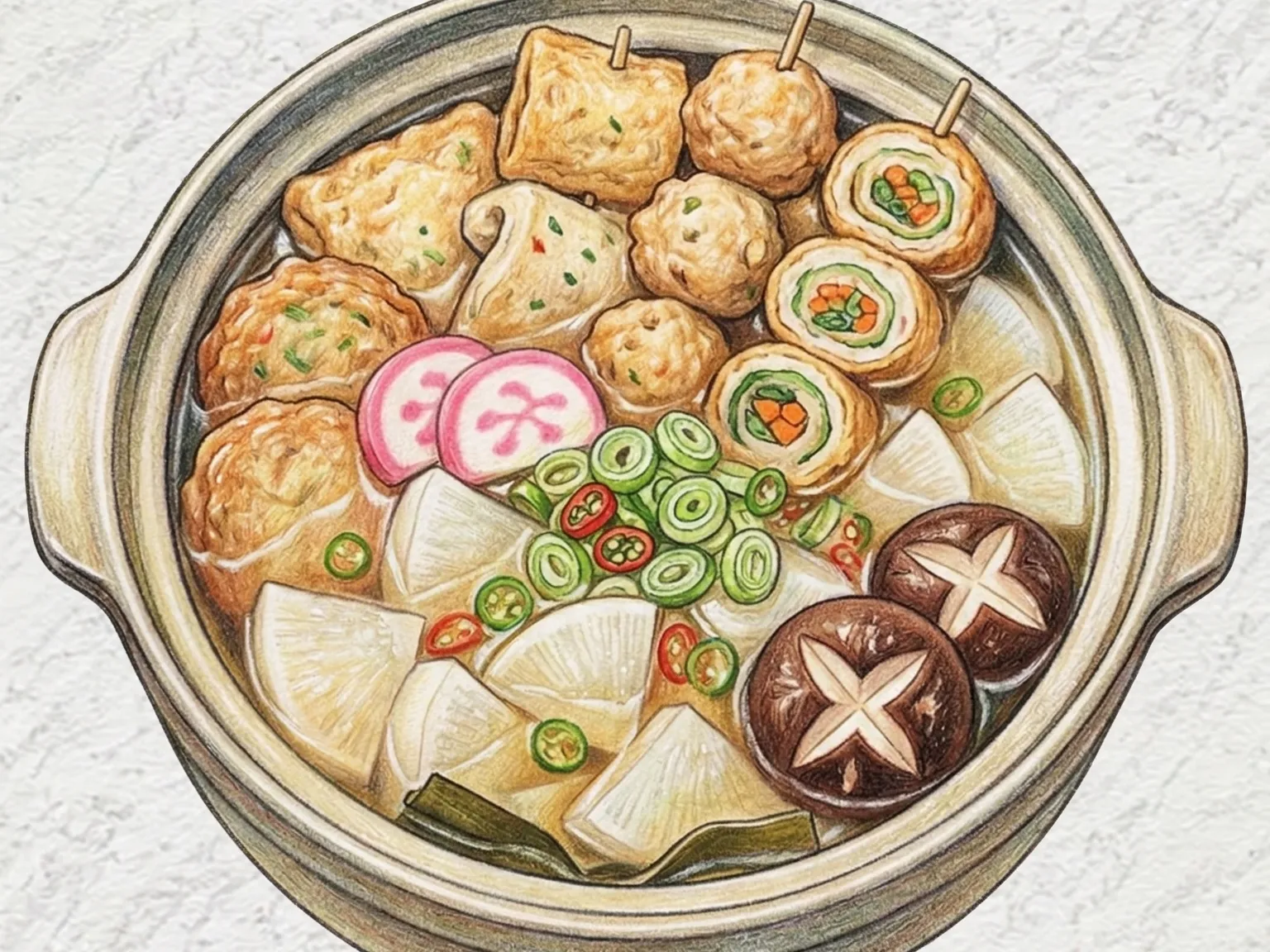
Eomuk-guk is a straightforward Korean fish cake soup that relies on radish-infused water for its clean, faintly sweet base. Sliced fish cakes simmer in the broth for six minutes, long enough to soak up the seasoning of soup soy sauce and garlic without falling apart. A finish of green onion and black pepper lifts the aroma and adds a touch of warmth. The entire pot comes together in about twenty minutes, making it a practical choice when you need a warm bowl in a hurry.

Korean Silkworm Pupae Broth
Beondegi-tang simmers canned silkworm pupae in a broth seasoned with soup soy sauce, gochugaru, and minced garlic. Sliced green onion and hot green chili cook alongside for eight minutes, letting the chili heat infuse the liquid while the pupae release a deep, earthy umami into every spoonful. Adding a splash of the canning liquid intensifies the savory depth, and the soup is best served piping hot so the aromatics stay lively.