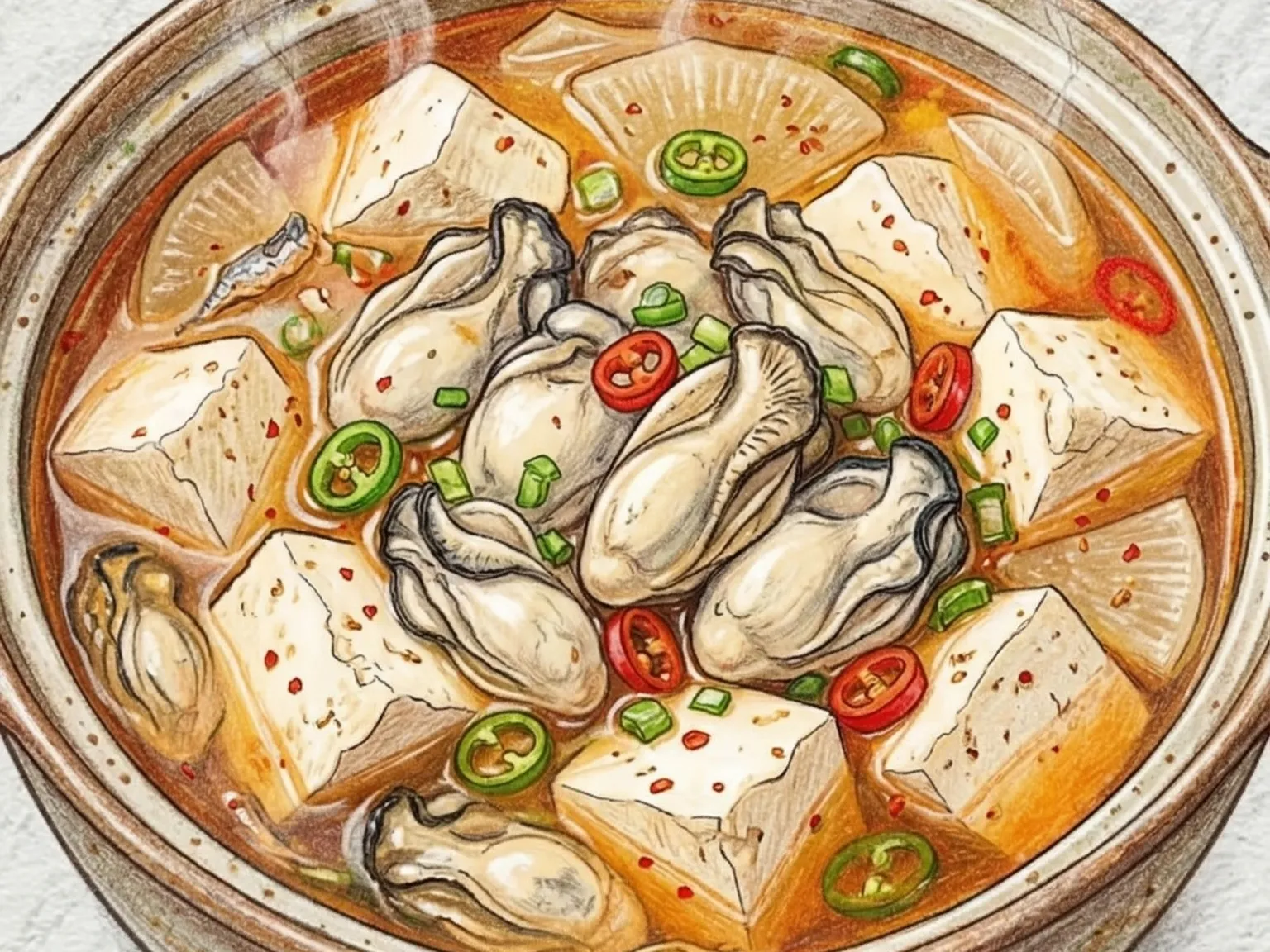
Korean Gul Dubu Jjigae (Oyster Tofu Stew)
Gul dubu jjigae pairs 180 grams of fresh oysters with firm tofu in an anchovy-kelp stock. The oysters plump up as they cook, releasing their briny juices into the broth. Korean radish adds a mild sweetness, while gochugaru and a Cheongyang chili counter any fishiness with their heat. The generous 300 grams of tofu make this a substantial meal. This stew is best enjoyed during winter months when oysters are at their peak.
Adjust Servings
Instructions
- 1
Rinse oysters gently in light salt water and drain well.
- 2
Add stock and radish to a pot, then simmer 7 minutes over medium heat.
- 3
Season with soup soy sauce, minced garlic, and gochugaru.
- 4
Add large tofu cubes and simmer 5 more minutes.
- 5
Add oysters and cook just 2 minutes, then finish with green onion and chili.
As an Amazon Associate, we may earn from qualifying purchases.
Tips
Nutrition (per serving)
More Recipes

Korean Oyster Kimchi Stew
This stew marries fresh oysters with aged kimchi, two ingredients that peak during the Korean winter. The oysters contribute a briny sweetness, while the well-fermented kimchi provides a deep, sour backbone. A tablespoon of perilla oil adds a nutty aroma that distinguishes this from standard kimchi jjigae. Simmered in anchovy stock with radish, gochugaru, and garlic, the broth develops a layered complexity that reflects the quality of its core ingredients.

Korean Oyster & Crown Daisy Stew
This stew combines oysters with crown daisy greens, a leafy herb that brings a pleasantly bitter, aromatic quality to the broth. The 220 grams of oysters provide the savory seafood base, while the crown daisy is added late to preserve its fragrance. Korean radish and firm tofu fill out the bowl, and soup soy sauce keeps the seasoning clean. The pairing of briny shellfish and herbal greens is a traditional Korean combination not often seen outside home kitchens.

Korean Webfoot Octopus Tofu Stew
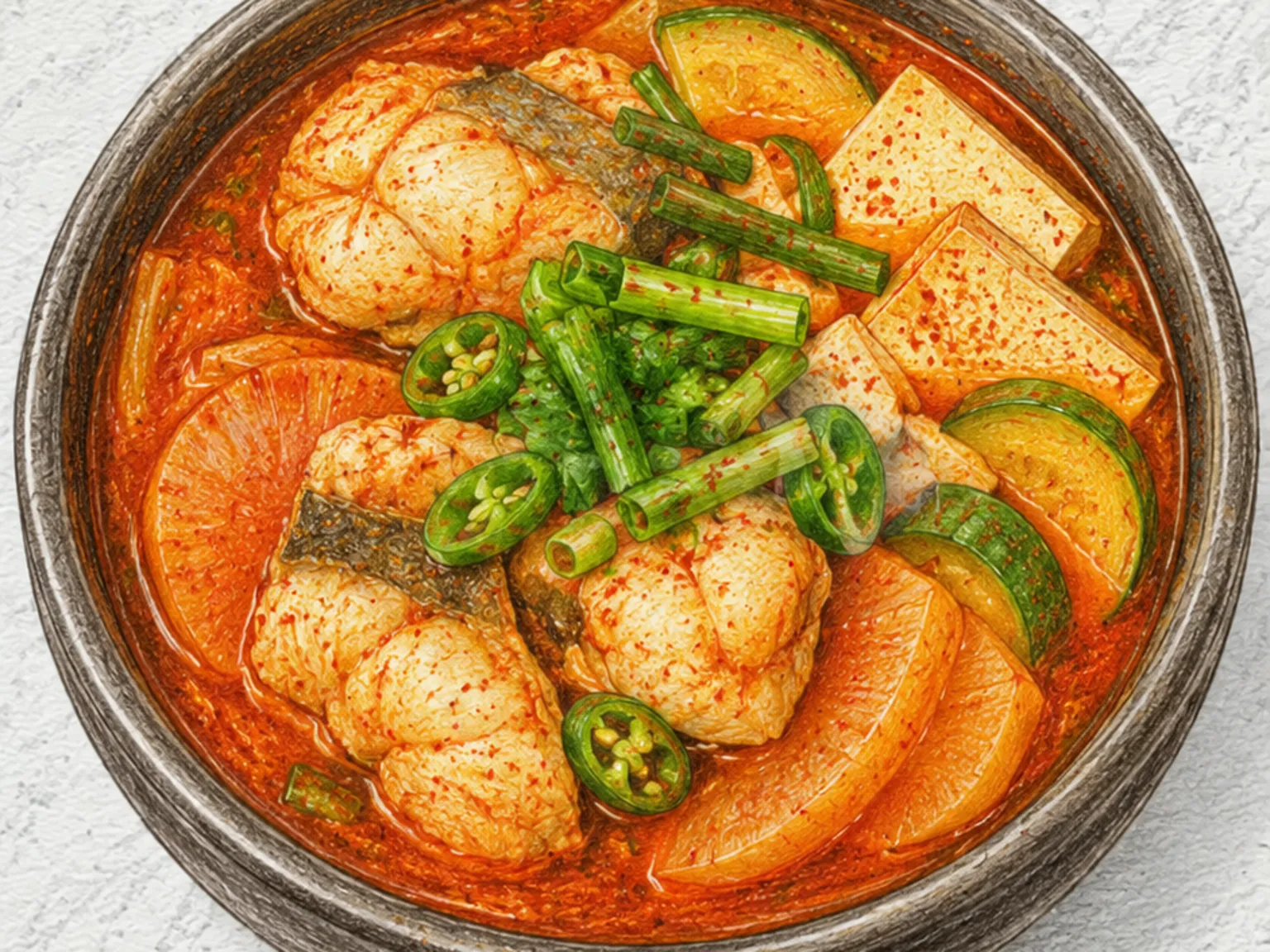
This stew combines chewy webfoot octopus with soft tofu in a gochugaru-seasoned anchovy broth. A full 450g of jjukkumi provides a satisfying, bouncy texture in every bite, while the tofu cubes soak up the spicy liquid for a softer contrast. Rice wine tempers any fishiness, and soup soy sauce deepens the umami base. Zucchini and onion contribute natural sweetness, rounding out the broth into a well-balanced seafood stew.

Gul-dubu-guk (Oyster Soft Tofu Kelp Soup)
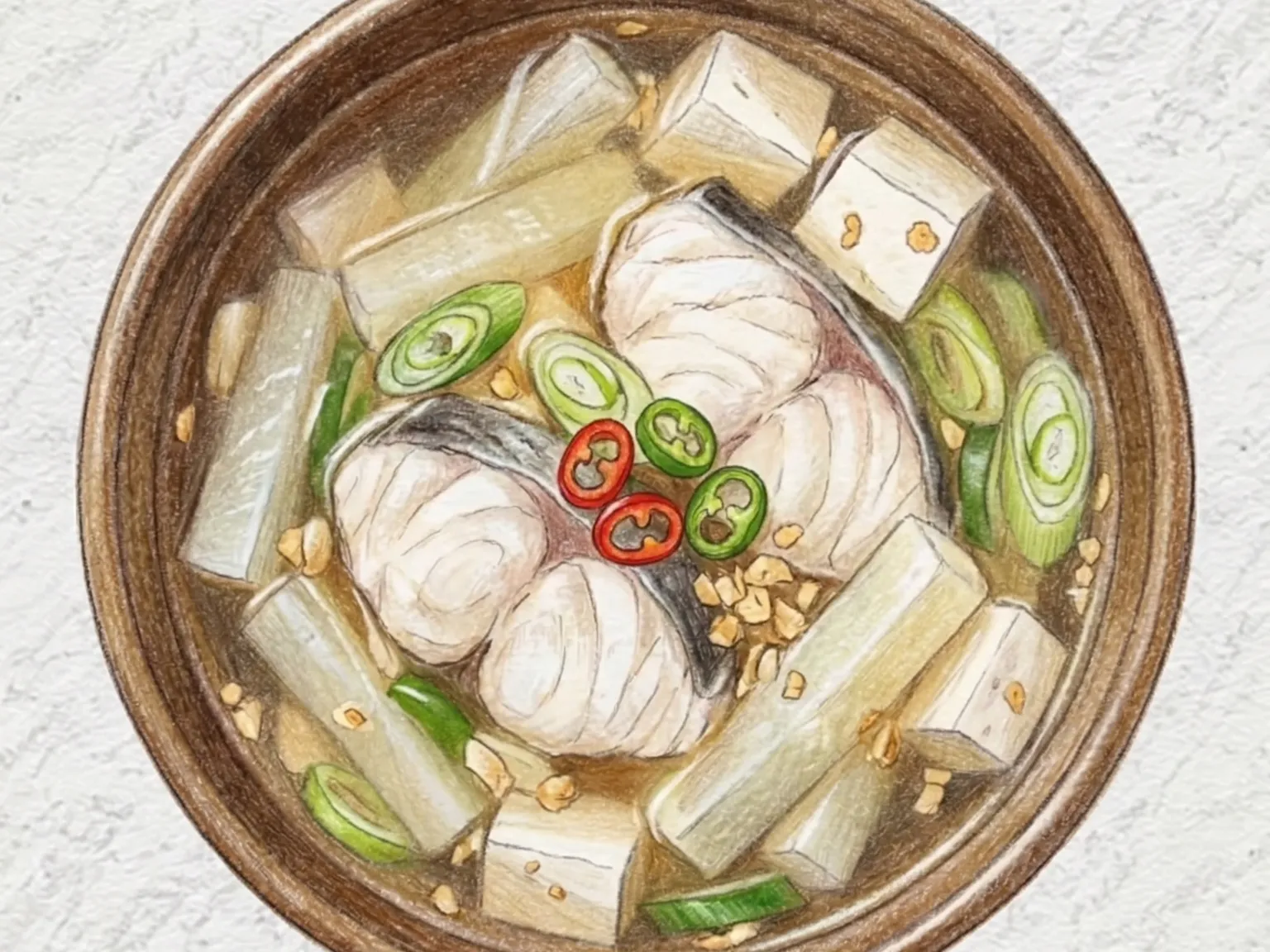
Gul-dubu-guk is a winter Korean soup that pairs plump seasonal oysters with blocks of soft tofu in a clear kelp-based broth. The oysters go in at the very end of cooking to keep them bouncy and briny rather than rubbery, while the tofu absorbs the surrounding ocean-inflected liquid. Thin slices of radish simmer from the start, releasing a gentle sweetness that rounds out the broth. Seasoning stays minimal-just soup soy sauce and garlic-so the natural salinity of the oysters can carry the flavor. A scattering of sliced green onion finishes the bowl with a fresh, aromatic note. It is a staple on cold-weather tables along the southern coast where oysters are harvested.

Korean Oyster Soft Tofu Soup
Gul-sundubu-tang is a Korean soup that brings together briny fresh oysters and silky soft tofu in a lightly spicy broth. The flavor base starts with garlic and gochugaru bloomed in sesame oil, which gives the entire pot a warm, aromatic heat. Sliced zucchini and onion go in next, contributing a natural sweetness that tempers the chili. Water is added, and once simmering, spoonfuls of wobbly sundubu tofu are dropped in, followed by the oysters at the very last moment so they stay plump rather than tough. Soup soy sauce adjusts the salt. The finished bowl is rust-red, gently spicy, and layered: the tofu melts on the tongue, the zucchini offers a mild crunch, and the oysters deliver bursts of sea flavor throughout.

Korean Soybean Paste Stew
Doenjang jjigae is one of the most iconic stews in Korean home cooking. Fermented soybean paste is dissolved into a simple broth and simmered with tofu, potato, zucchini, and onion until everything melds together. Garlic and a Cheongyang chili add aromatic warmth and a mild kick that lifts the rich, earthy base. This is the kind of everyday stew that anchors a Korean meal, pairing effortlessly with rice and any combination of banchan.