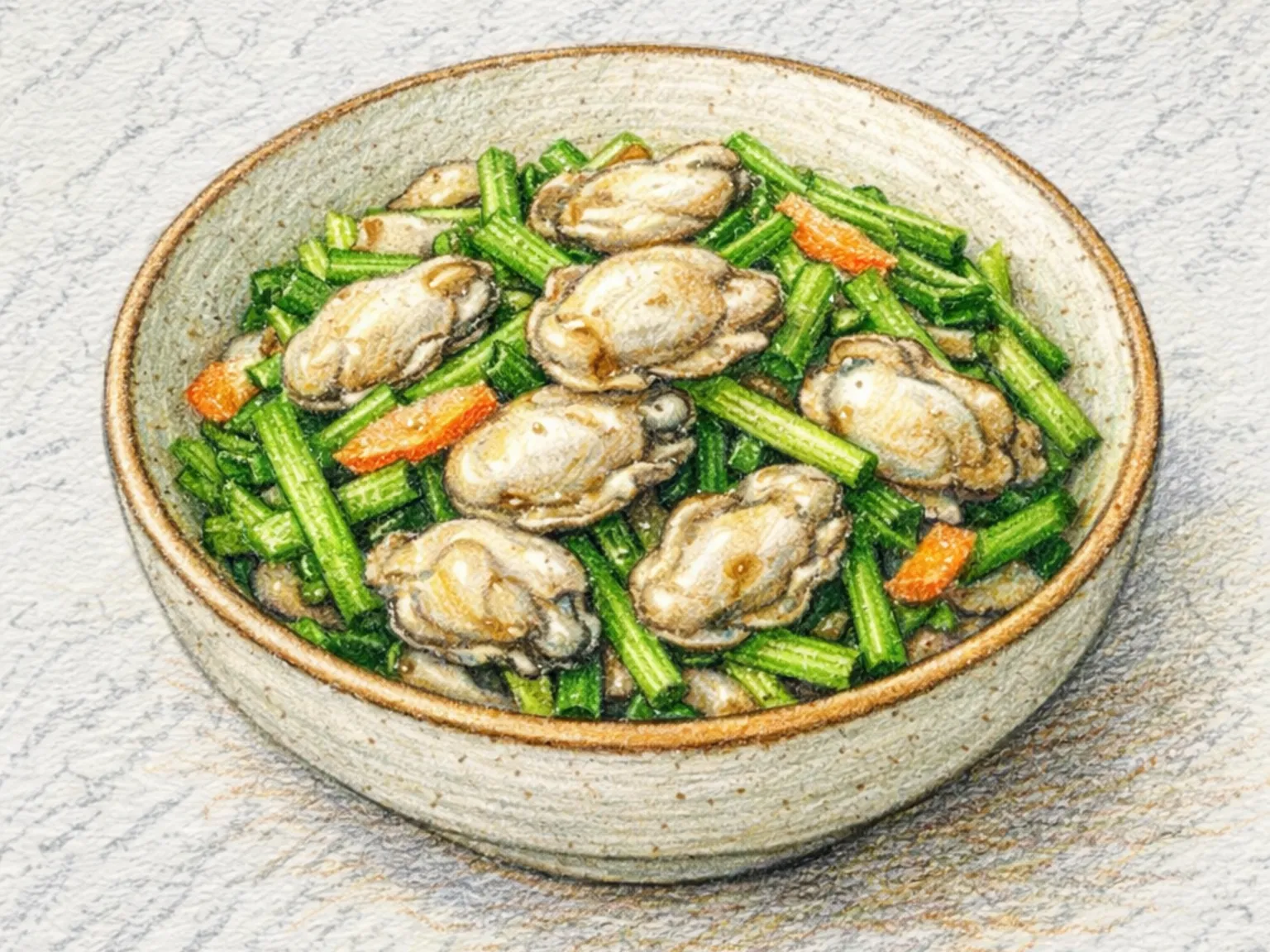
Korean Oyster Water Parsley Stir-fry
Gul-minari-bokkeum stir-fries plump raw oysters with fragrant water parsley (minari), gochugaru, and light soy sauce over high heat. The oysters cook just enough to firm up while keeping their juicy brine, and the minari retains its crunch and herbal freshness. The briny sweetness of the oysters meets the clean, grassy note of minari, creating a balanced and refreshing dish. It is best prepared in winter when oysters are at their plumpest and most flavorful.
Adjust Servings
Instructions
- 1
Rinse oysters gently in salted water, then drain well.
- 2
Cut minari into 5 cm pieces and slice onion thinly.
- 3
Heat oil over medium heat and stir-fry garlic and green onion for 30 seconds.
- 4
Add onion and cook 1 minute, then add oysters and stir-fry quickly for 1 minute 30 seconds.
- 5
Mix in gochugaru and soup soy sauce, then add minari and wilt for 40 seconds.
- 6
Turn off heat, drizzle sesame oil, toss lightly, and serve immediately.
As an Amazon Associate, we may earn from qualifying purchases.
Tips
Nutrition (per serving)
More Recipes

Korean Tomato Dalgyal Bokkeum (Tomato Egg Stir-fry)
Tomato-dalgyal-bokkeum uses a two-stage cooking method: eggs are scrambled to about 70% doneness and set aside, then returned to the pan with seared tomatoes for a final quick toss. The tomatoes release a small amount of juice when cooked briefly with oyster sauce and sugar, and the partially set eggs absorb this liquid to stay soft and moist. Bright tomato acidity, mild egg richness, and oyster sauce umami layer together without any single flavor dominating. Sharing roots with Chinese tomato egg stir-fry (xihongshi chaodan), it crosses easily into Korean home cooking.

Korean Napa Cabbage Shrimp Stir-fry
Baechu saeu bokkeum is a Korean stir-fry of napa cabbage and medium shrimp seasoned with soy sauce and fish sauce. The shrimp are deveined and scored along the back so they curl attractively and absorb seasoning more readily. They go into a hot oiled pan first for thirty seconds to sear the surface, then are removed while the cabbage stems are stir-fried until slightly wilted. Soy sauce, fish sauce, and minced garlic are added along with the cabbage leaves, and the shrimp return to the pan for a final thirty-second toss so everything seasons evenly. Sliced cheongyang chili and scallion go in last for a hit of heat and freshness. The entire stir-fry stays under three to four minutes of active cooking, which preserves the crunch of the cabbage stems and the firm bite of the shrimp. The combination of soy sauce and fish sauce provides a layered saltiness that brings out the natural sweetness of both the cabbage and the shrimp.

Korean Garlic Scape Bacon Stir-fry
Maneuljjong bacon bokkeum is a side dish built on rendered bacon fat, in which garlic scapes and onion are stir-fried and finished with soy sauce and oligosaccharide syrup for a glossy coat. The bacon's smoky saltiness provides a deep flavor base that requires no additional complex seasoning, and the garlic scapes counter it with a sharp, crisp bite. The syrup creates a thin lacquer on the surface that balances the salt with gentle sweetness. Sesame seeds top the finished dish, and reducing the soy sauce compensates if the bacon runs particularly salty.

Korean Garlic Scape Clam Stir-fry
Maneuljjong-jogae-bokkeum is a Korean stir-fry of clam meat and garlic scapes tossed quickly over high heat with soy sauce, oyster sauce, and minced garlic. The clams contribute a briny, oceanic depth that pairs with the salty-sweet seasoning, while the garlic scapes - cut into 4 cm pieces and barely cooked - retain their firm, snappy bite. Diagonally sliced red chili adds a gentle warmth without overwhelming the seafood flavor. The dish cooks in under ten minutes, relying on speed and high heat to keep the clams soft and the scapes crunchy.

Korean King Oyster Mushroom Stir-fry with Perilla
This stir-fry combines 250 grams of julienned king oyster mushrooms with onion, cooked rapidly over high heat in a blend of perilla oil and cooking oil to prevent the mushrooms from releasing too much water. Garlic is sauteed for 20 seconds first to infuse the oil, followed by onion for one minute to draw out its natural sweetness. The mushrooms then go in for a quick two-minute toss before soup soy sauce and a splash of water are added to create a light braising liquid. One and a half tablespoons of ground perilla seeds are stirred in during the final minute, thickening the sauce into a creamy coating without becoming pasty. Scallion is added off heat for a finishing touch of color and freshness.

Korean Water Parsley Kimchi
Minari kimchi is a quick Korean water parsley kimchi made by wilting the stems in salt for just ten minutes, then tossing them in a seasoning of gochugaru, anchovy fish sauce, and plum syrup with blended onion. The brief brining preserves the stem's crisp texture and cool herbal aroma, while the fish sauce grounds the light vegetable with a seafood umami foundation. Plum syrup's fruit acidity softens the chili heat, leaving a bright, clean finish. Paired with samgyeopsal or boiled pork, the water parsley's fresh fragrance cuts through the fat and resets the palate between bites.