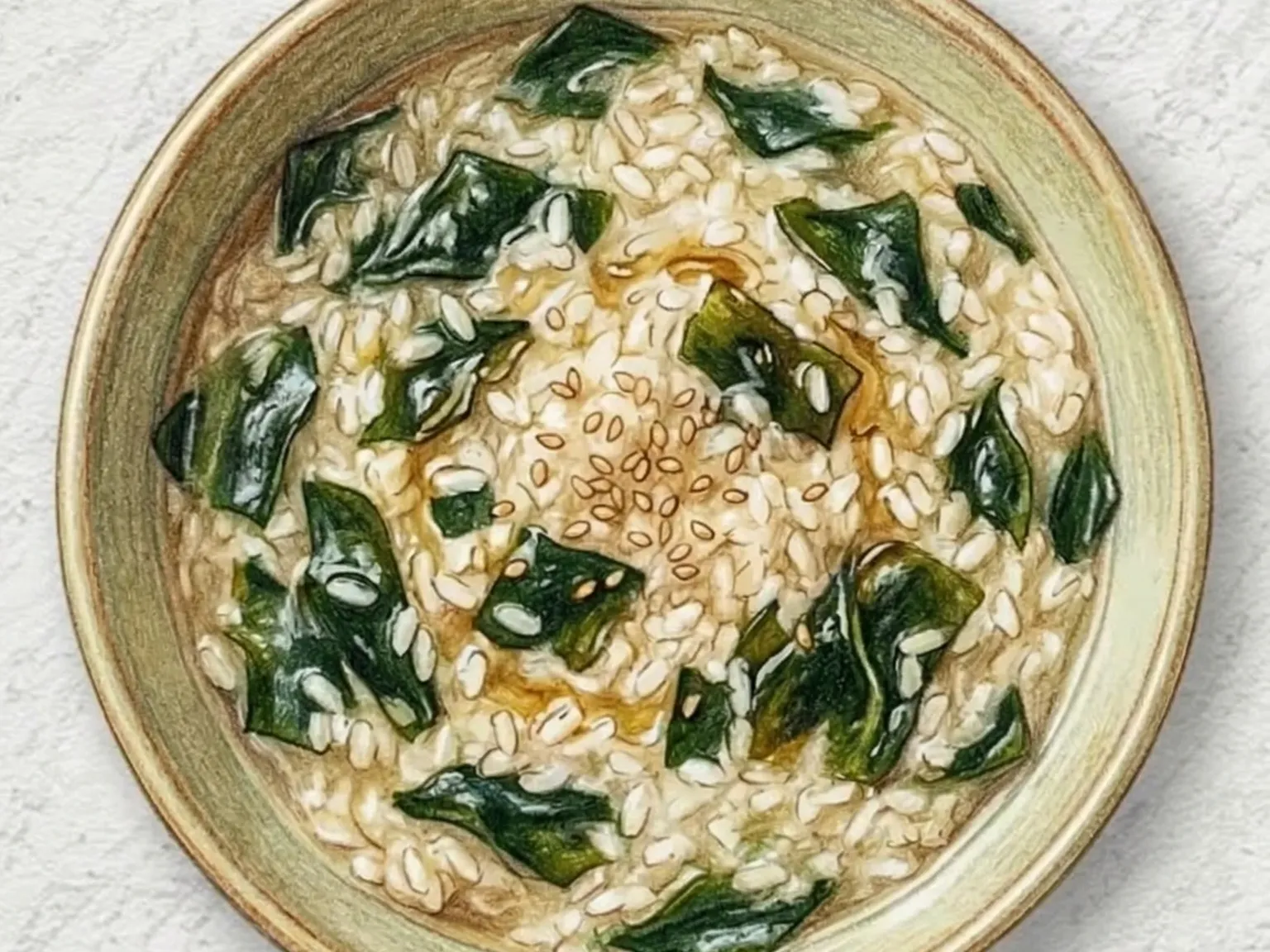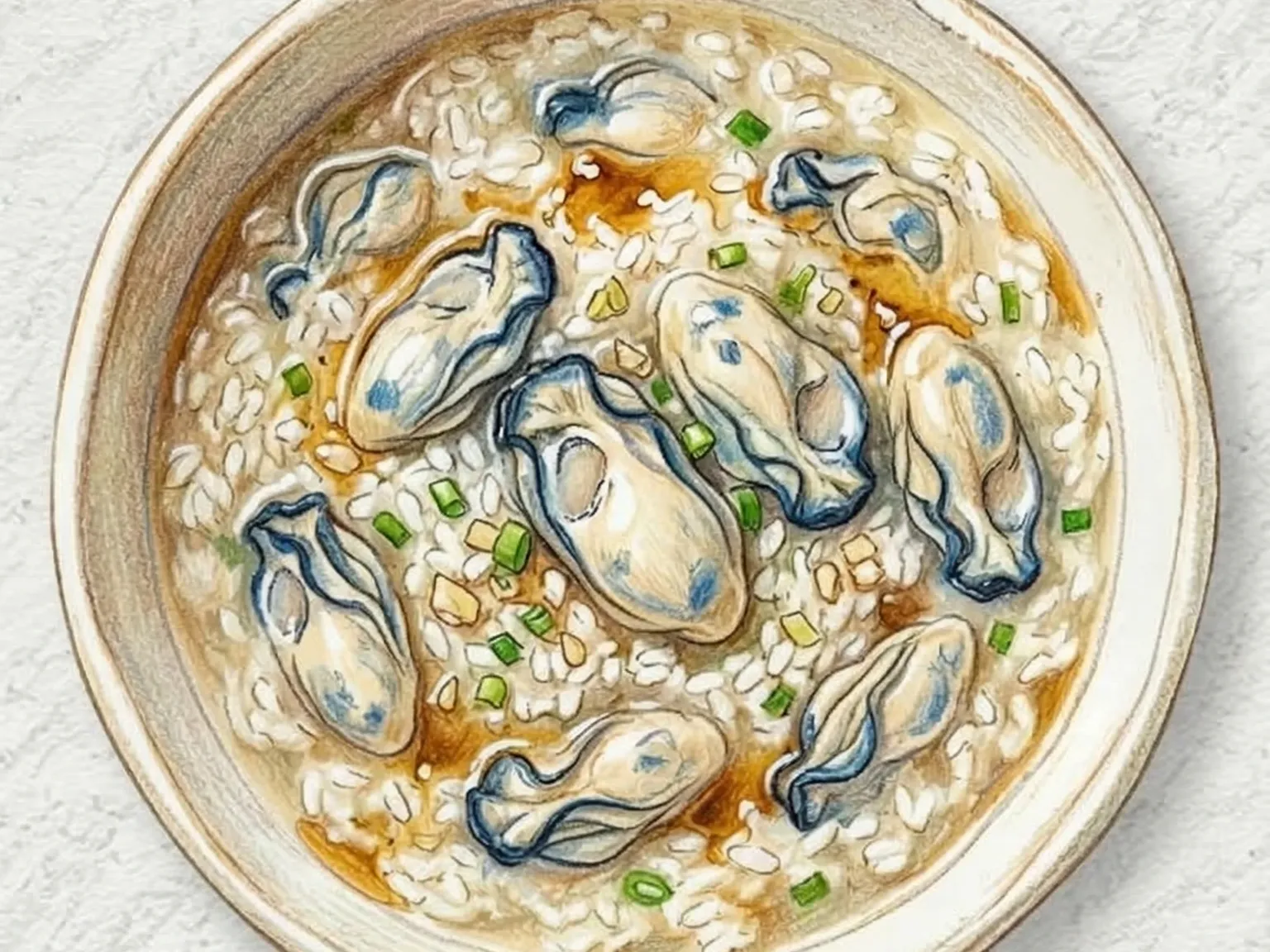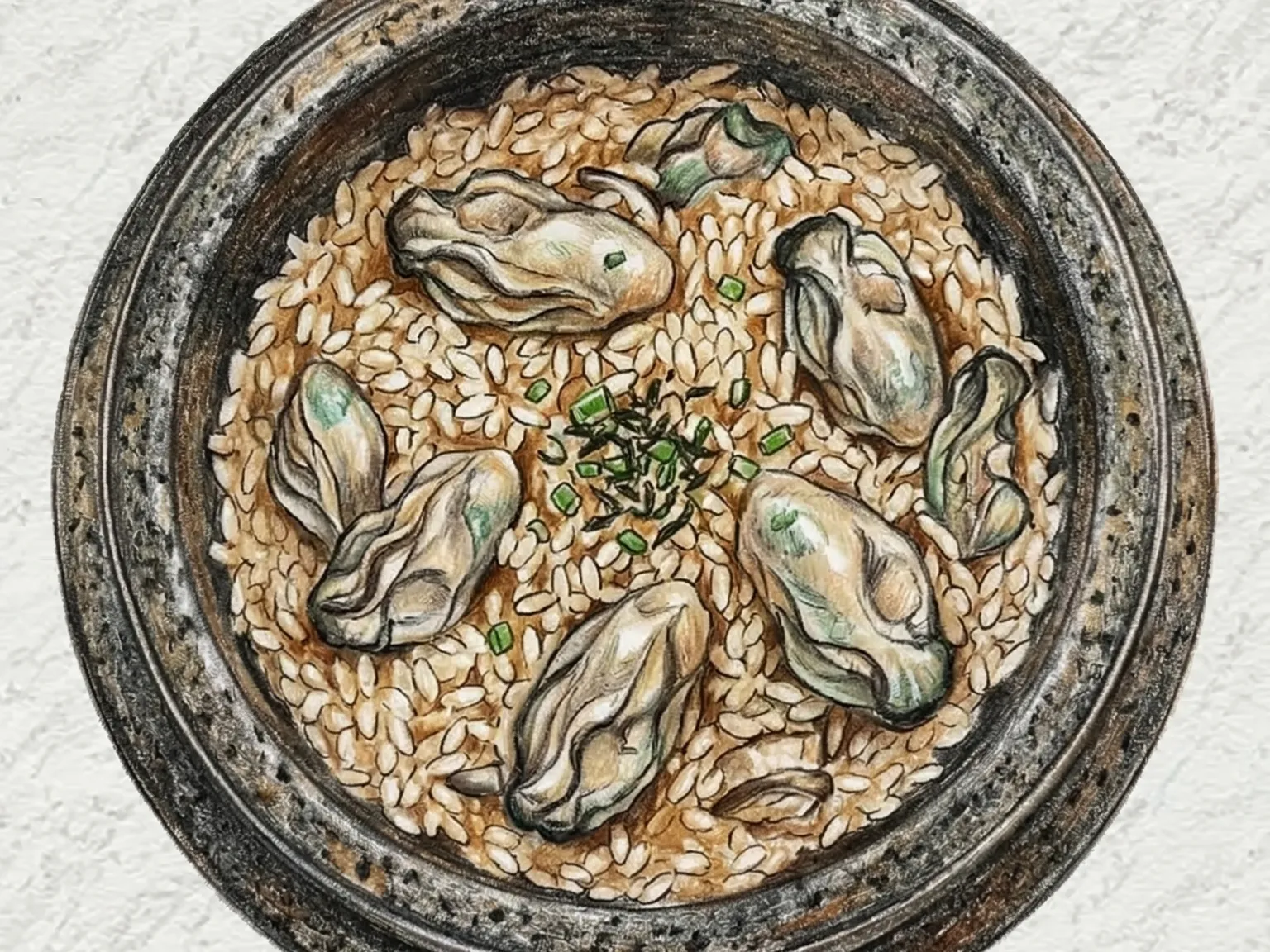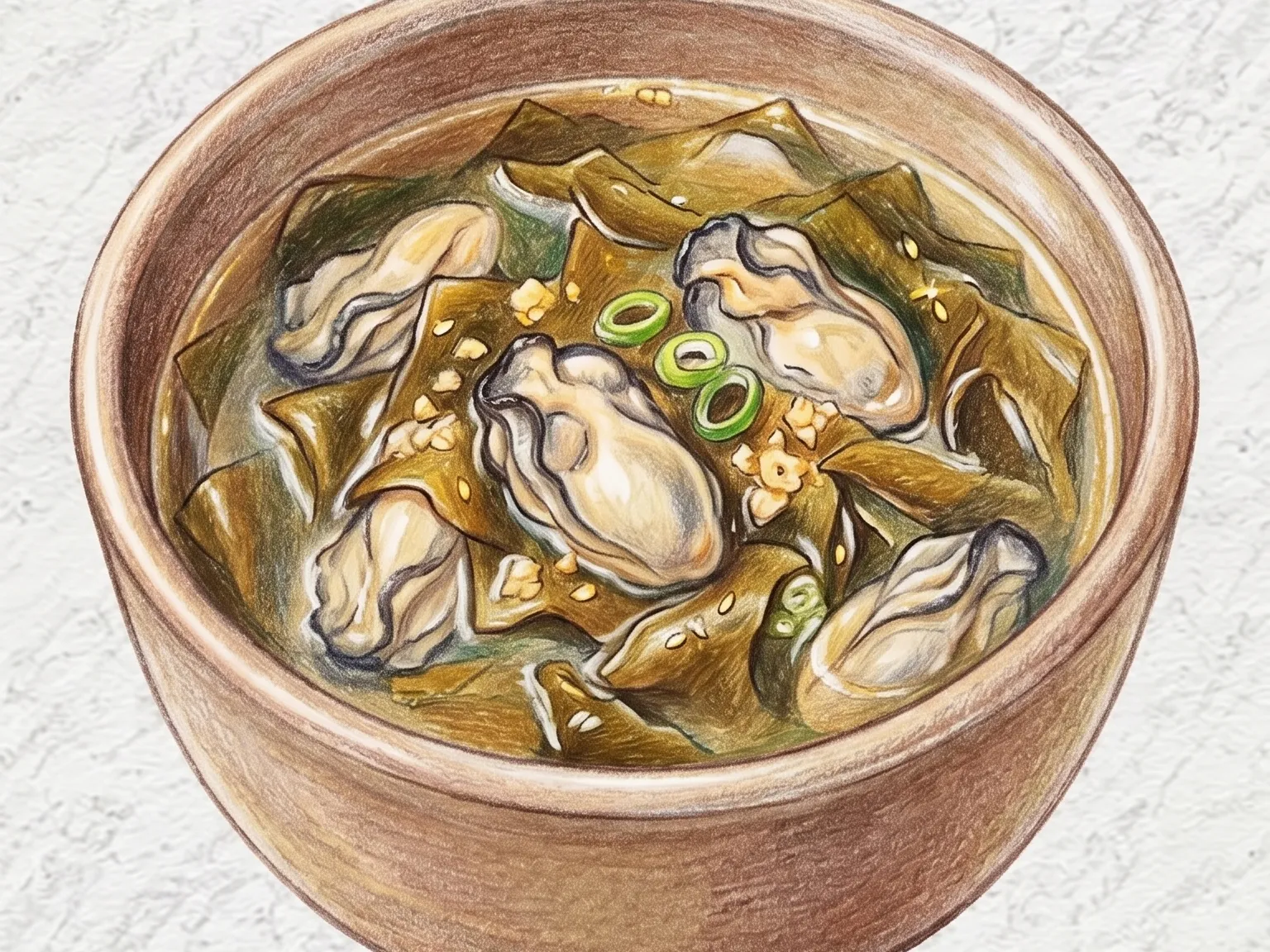
Korean Oyster Seaweed Soup
Gul-miyeok-guk is a Korean seaweed soup enriched with fresh oysters, traditionally eaten for postpartum recovery and birthday celebrations. The cooking begins by sautéing rehydrated seaweed and oysters together in sesame oil, a step that coats every strand and shell in a nutty fragrance before water is added. As the soup simmers, the seaweed releases minerals and a subtle brininess that merges with the oysters' own ocean flavor. Soup soy sauce and garlic keep the seasoning grounded. The winter months, when oysters are at their fattest, are the prime season for this version, and the contrast between the slippery seaweed and the firm oyster gives each spoonful a shifting texture.
Adjust Servings
Instructions
- 1
Soak dried seaweed in cold water 20 minutes, then cut into pieces.
- 2
Wash oysters in salted water and drain.
- 3
Heat sesame oil in pot and stir-fry seaweed for 2 minutes.
- 4
Add water and garlic, bring to boil.
- 5
Add oysters and simmer 3 minutes, season with soy sauce and salt.
As an Amazon Associate, we may earn from qualifying purchases.
Tips
Nutrition (per serving)
More Recipes

Korean Flounder Seaweed Soup
Gajami miyeok-guk is a seaweed soup centered on a whole flounder. Rehydrated seaweed is stir-fried in sesame oil first to deepen its fragrance, then the fish is added with water and simmered until the broth turns milky from the gelatin in the bones. Soy sauce and garlic are the only seasonings, keeping the focus on the flounder's mild sweetness and the mineral taste of the seaweed. Blanching the fish briefly before adding it to the pot removes any lingering fishiness, leaving a clean, nourishing bowl.

Korean Mushroom Seaweed Soup
Rehydrated seaweed and two kinds of mushrooms are first stir-fried in sesame oil to concentrate their flavors before being simmered in water for twenty minutes. The sesame oil blooms the mushroom umami while the seaweed lends a gentle oceanic undertone to the broth. Seasoned with soup soy sauce and salt at the end, the soup has a calm, deep flavor with contrasting textures of soft seaweed and slightly chewy mushrooms.

Korean Fish Soup (White Fish and Radish Clear Broth)
Saengseon-guk is a traditional Korean fish soup made with white-fleshed fish and radish in a clear broth. The radish simmers first, building a base of natural sweetness, before garlic and soup soy sauce are added for depth. The fish goes in once the radish is halfway cooked, and timing matters - it should cook only until the flesh turns opaque and begins to flake, as prolonged boiling would break it apart and cloud the broth. Tofu and sliced Korean chili peppers join near the end, adding soft texture and a mild kick. Green onion finishes the bowl with a fresh note. The result is a light, transparent soup where the fish's own clean, marine flavor does most of the work. It is the kind of straightforward home cooking that appears on Korean dinner tables throughout the year, requiring little more than fresh fish and basic pantry staples.

Korean Seaweed and Oyster Soup
Maesaengi-gul-guk combines two peak-winter ingredients, capsosiphon seaweed and fresh oysters, in a single light broth. Julienned radish and garlic are sauteed in sesame oil to establish sweetness, then water is added and brought to a boil before the oysters go in for three minutes. The seaweed is added last and simmered for only two minutes to preserve its silky texture and subtle marine scent. Soup soy sauce and a pinch of salt are the only seasonings needed, since the oysters release enough brininess to flavor the broth on their own.

Korean Clam Seaweed Onmyeon (Warm Noodle Soup)
A soothing bowl of thin noodles in clear clam broth with soft seaweed - Korea's go-to comfort soup for cold mornings and recovery days. The clams release a clean, briny stock that forms the backbone of the dish, and simmering radish alongside softens the saltiness into something refreshing. The seaweed unfurls in the hot broth, contributing its own quiet marine umami. Seasoning stays minimal - soup soy sauce and salt only - so nothing masks the natural flavor of the shellfish. This is a light, restorative bowl often eaten for morning recovery or when a gentle, clear-tasting meal is preferred.

Korean Maesaengi Oyster Porridge
Maesaengi gul juk is a warming Korean winter porridge built on sesame-oil-toasted rice simmered in anchovy-kelp stock. Delicate strands of maesaengi seaweed lend a mild oceanic fragrance, while plump oysters release briny juices that deepen the broth. The rice is stir-fried in sesame oil before the stock goes in, giving the porridge a nutty backbone. Maesaengi goes in at the very end to keep its vivid green color and fresh sea aroma intact.