Charim

2686 Korean & World Recipes

2686+ Korean recipes, clean and organized. Ingredients to instructions, all at a glance.

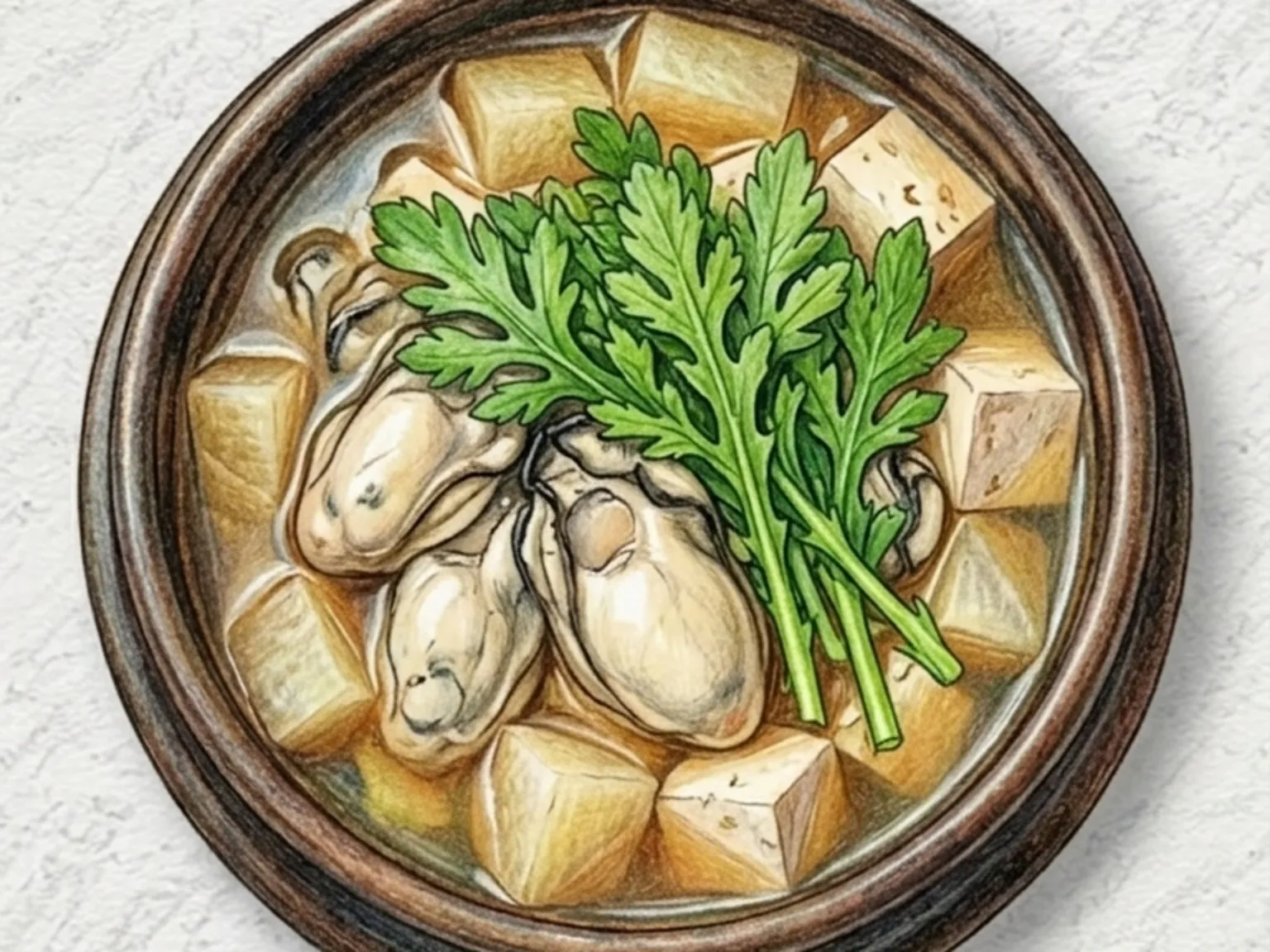
Korean Oyster & Crown Daisy Stew
Stews Easy

Korean Oyster & Crown Daisy Stew

This stew combines oysters with crown daisy greens, a leafy herb that brings a pleasantly bitter, aromatic quality to the broth. The 220 grams of oysters provide the savory seafood base, while the crown daisy is added late to preserve its fragrance. Korean radish and firm tofu fill out the bowl, and soup soy sauce keeps the seasoning clean. The pairing of briny shellfish and herbal greens is a traditional Korean combination not often seen outside home kitchens.

Prep 15min Cook 20min 2 servings

Adjust Servings

2servings
servings

Instructions

  1. 1

    Rinse oysters briefly in salted water and drain well.

  2. 2

    Boil stock with radish for 7 minutes to build sweetness.

  3. 3

    Add chili flakes, minced garlic, and soup soy sauce to season.

  4. 4

    Add tofu and oysters, then simmer on medium-low for 5 minutes.

  5. 5

    Add green onion and crown daisy, cook 1-2 more minutes, then turn off heat.

  6. 6

    Finish with a little pepper if desired and serve immediately.

🛒Shop Ingredients on Amazon

As an Amazon Associate, we may earn from qualifying purchases.

Tips

Add oysters late; overcooking makes them tough.
Crown daisy wilts fast, so cook it very briefly.

Nutrition (per serving)

Calories
285
kcal
Protein
27
g
Carbs
13
g
Fat
14
g

More Recipes

Korean Gul Dubu Jjigae (Oyster Tofu Stew)
StewsEasy

Korean Gul Dubu Jjigae (Oyster Tofu Stew)

Gul dubu jjigae pairs 180 grams of fresh oysters with firm tofu in an anchovy-kelp stock. The oysters plump up as they cook, releasing their briny juices into the broth. Korean radish adds a mild sweetness, while gochugaru and a Cheongyang chili counter any fishiness with their heat. The generous 300 grams of tofu make this a substantial meal. This stew is best enjoyed during winter months when oysters are at their peak.

🏠 Everyday
Prep 12minCook 18min2 servings
Korean Oyster Kimchi Stew
StewsMedium

Korean Oyster Kimchi Stew

This stew marries fresh oysters with aged kimchi, two ingredients that peak during the Korean winter. The oysters contribute a briny sweetness, while the well-fermented kimchi provides a deep, sour backbone. A tablespoon of perilla oil adds a nutty aroma that distinguishes this from standard kimchi jjigae. Simmered in anchovy stock with radish, gochugaru, and garlic, the broth develops a layered complexity that reflects the quality of its core ingredients.

🏠 Everyday
Prep 12minCook 18min2 servings
Korean Webfoot Octopus Tofu Stew
StewsMedium

Korean Webfoot Octopus Tofu Stew

This stew combines chewy webfoot octopus with soft tofu in a gochugaru-seasoned anchovy broth. A full 450g of jjukkumi provides a satisfying, bouncy texture in every bite, while the tofu cubes soak up the spicy liquid for a softer contrast. Rice wine tempers any fishiness, and soup soy sauce deepens the umami base. Zucchini and onion contribute natural sweetness, rounding out the broth into a well-balanced seafood stew.

🏠 Everyday
Prep 18minCook 22min4 servings
Korean Hard Clam Radish Stew
StewsMedium

Korean Hard Clam Radish Stew

Sweet radish broth meets briny hard clams in this clean, deeply flavored Korean stew that needs no stock -- just clams, radish, and 35 minutes. The radish goes into the pot first and boils for ten minutes to release its natural sweetness, which forms the foundation of the broth before the clams are added. Once the clams open, their concentrated marine flavor layers over the radish sweetness, creating a broth that is both clean and deeply flavored. Seasoning is kept minimal with soup soy sauce and minced garlic, added after the clams open so the garlic cooks through without remaining raw. Thick-cut firm tofu absorbs the surrounding broth, acting as a sponge for the clam umami. Diagonally sliced cheongyang and red chilies go in last, contributing a mild heat and visual contrast to the pale broth. Any clams that fail to open must be removed to keep the liquid free of grit. The stew demonstrates how two primary ingredients, clams and radish, can produce a complex broth without relying on anchovy or kelp stock.

🏠 Everyday🎉 Special Occasion
Prep 20minCook 25min4 servings
Korean Oyster Soft Tofu Soup
SoupsEasy

Korean Oyster Soft Tofu Soup

Gul-sundubu-tang is a Korean soup that brings together briny fresh oysters and silky soft tofu in a lightly spicy broth. The flavor base starts with garlic and gochugaru bloomed in sesame oil, which gives the entire pot a warm, aromatic heat. Sliced zucchini and onion go in next, contributing a natural sweetness that tempers the chili. Water is added, and once simmering, spoonfuls of wobbly sundubu tofu are dropped in, followed by the oysters at the very last moment so they stay plump rather than tough. Soup soy sauce adjusts the salt. The finished bowl is rust-red, gently spicy, and layered: the tofu melts on the tongue, the zucchini offers a mild crunch, and the oysters deliver bursts of sea flavor throughout.

🏠 Everyday
Prep 12minCook 18min2 servings
Korean Spicy Pollock Stew
SoupsMedium

Korean Spicy Pollock Stew

Dongtae-tang is a Korean spicy pollock stew made with frozen pollock, radish, tofu, and green onion in a gochugaru-laced broth. Radish is simmered first for ten minutes to establish a sweet, clean base, then chili flakes, soup soy sauce, and garlic transform the liquid into a vivid red, peppery stock. The pollock must be cut into large pieces after thawing and cooked for no more than ten minutes - overcooking draws a bitter, fishy taste from the bones and causes the flesh to disintegrate. Tofu and cheongyang chili added in the final five minutes absorb the spicy broth, softening its intensity while the chili seeds add sharp bursts of heat.

🏠 Everyday
Prep 20minCook 30min4 servings
More Stews →