Korean Oyster Soft Tofu Soup
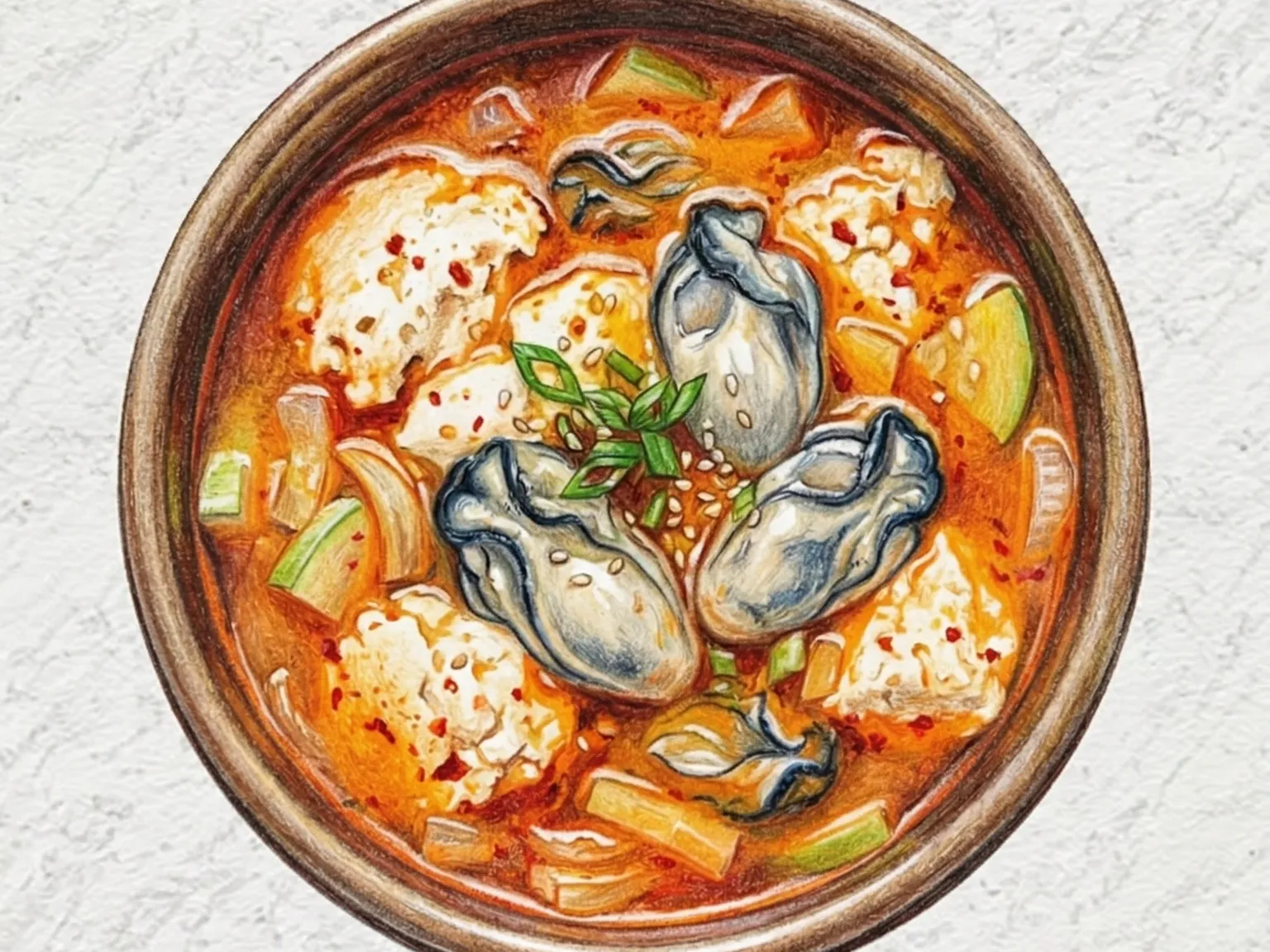
Gul-sundubu-tang is a Korean soup that brings together briny fresh oysters and silky soft tofu in a lightly spicy broth. The flavor base starts with garlic and gochugaru bloomed in sesame oil, which gives the entire pot a warm, aromatic heat. Sliced zucchini and onion go in next, contributing a natural sweetness that tempers the chili. Water is added, and once simmering, spoonfuls of wobbly sundubu tofu are dropped in, followed by the oysters at the very last moment so they stay plump rather than tough. Soup soy sauce adjusts the salt. The finished bowl is rust-red, gently spicy, and layered: the tofu melts on the tongue, the zucchini offers a mild crunch, and the oysters deliver bursts of sea flavor throughout.
Adjust Servings
Instructions
- 1
Rinse oysters gently in salted water and drain.
- 2
Heat sesame oil and bloom garlic with chili flakes over low heat.
- 3
Add onion and zucchini, stirring for 2 minutes.
- 4
Pour in water, bring to boil, then add large spoonfuls of soft tofu.
- 5
Add oysters and soup soy sauce, simmer only 3-4 minutes.
- 6
Taste and finish with a pinch of salt if needed.
As an Amazon Associate, we may earn from qualifying purchases.
Tips
Nutrition (per serving)
More Recipes

Korean Gul Dubu Jjigae (Oyster Tofu Stew)
Gul dubu jjigae pairs 180 grams of fresh oysters with firm tofu in an anchovy-kelp stock. The oysters plump up as they cook, releasing their briny juices into the broth. Korean radish adds a mild sweetness, while gochugaru and a Cheongyang chili counter any fishiness with their heat. The generous 300 grams of tofu make this a substantial meal. This stew is best enjoyed during winter months when oysters are at their peak.

Korean Soft Tofu Stew (Silken Tofu in Spicy Clam Broth)
Sundubu-jjigae is one of Korea's most iconic stews, featuring silken soft tofu in a fiery broth with clams, ground pork, and gochugaru. Sesame oil, chili flakes, and garlic are fried together first to create a fragrant base, then the liquid is added and brought to a rolling boil. Two eggs are cracked on top and left to set softly in the bubbling stew. The clams contribute a clean brininess while the pork grounds the dish with meaty depth, and it is traditionally served still boiling in an earthenware pot.

Korean Oyster Kimchi Stew
This stew marries fresh oysters with aged kimchi, two ingredients that peak during the Korean winter. The oysters contribute a briny sweetness, while the well-fermented kimchi provides a deep, sour backbone. A tablespoon of perilla oil adds a nutty aroma that distinguishes this from standard kimchi jjigae. Simmered in anchovy stock with radish, gochugaru, and garlic, the broth develops a layered complexity that reflects the quality of its core ingredients.

Gul-dubu-guk (Oyster Soft Tofu Kelp Soup)
Gul-dubu-guk is a winter Korean soup that pairs plump seasonal oysters with blocks of soft tofu in a clear kelp-based broth. The oysters go in at the very end of cooking to keep them bouncy and briny rather than rubbery, while the tofu absorbs the surrounding ocean-inflected liquid. Thin slices of radish simmer from the start, releasing a gentle sweetness that rounds out the broth. Seasoning stays minimal-just soup soy sauce and garlic-so the natural salinity of the oysters can carry the flavor. A scattering of sliced green onion finishes the bowl with a fresh, aromatic note. It is a staple on cold-weather tables along the southern coast where oysters are harvested.

Gul-guk (Clear Oyster Radish Soup)
Gul-guk is a clear Korean oyster soup built on the simplest possible foundation: water, radish, and fresh oysters. The radish simmers first, lending a cool sweetness to the broth before the oysters are slid in near the end to preserve their plump, springy texture. Seasoning is deliberately restrained-soup soy sauce and minced garlic are enough-because the oysters themselves provide an intense, briny depth that needs no amplification. The resulting bowl is translucent and clean-tasting, with a lingering marine finish. Along Korea's south coast, where winter oyster harvests are abundant, this soup often appears on breakfast tables or as a gentle remedy after a long night.

Korean Clam Soft Tofu Soup
Bajirak sundubu guk is a Korean soup where manila clam broth meets soft tofu for a texture that is simultaneously silky and full of marine flavor. Radish simmers first to release its cool sweetness into the water, and when the purged clams are added afterward, the radish sweetness wraps around the clams' saltiness, creating a balanced base. Once the shells open, soft tofu is scooped in with a large spoon and left largely undisturbed; stirring too vigorously dissolves the tofu completely and clouds the broth, while gentle placement preserves its pillowy, cloud-like texture. Soup soy sauce and minced garlic provide seasoning, and scallion goes in at the end for aroma. Each spoonful delivers the soft tofu holding a pocket of clam-infused broth, making the eating experience both mild and deeply flavored at once. Because clam meat toughens with prolonged cooking, the tofu should go in immediately after the shells open and the soup should finish within three minutes.