Korean Grilled Yellow Corvina (Gulbi)
Grilled Medium

Korean Grilled Yellow Corvina (Gulbi)

Quick answer

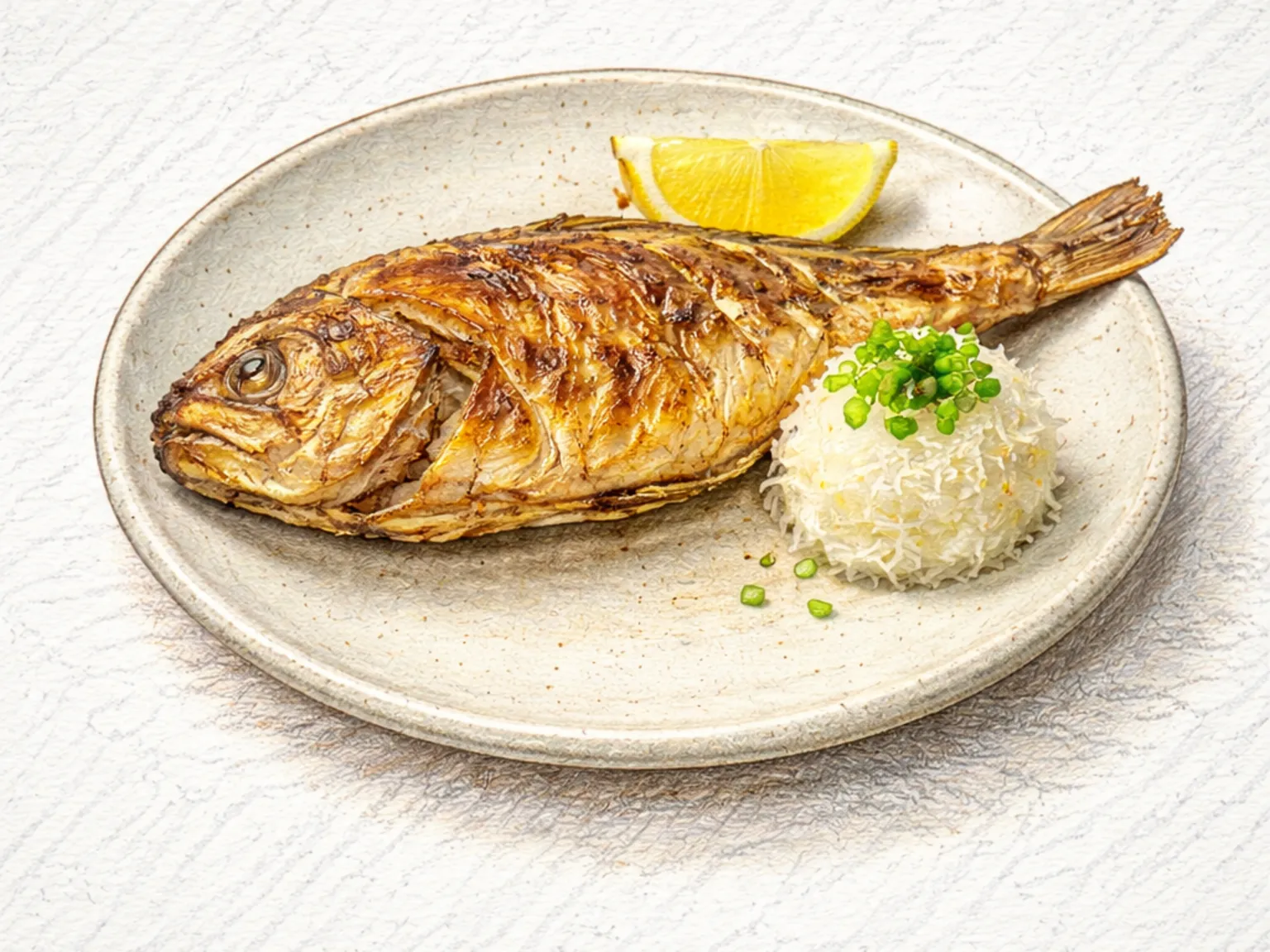
Gulbi-gui is a Korean grilled dried yellow corvina, a traditional side dish made by soaking salt-preserved corvina in rice-rinse water for ten minutes to temper its salin...

What makes this special

  • Gulbi-gui (Grilled Yellow Corvina) is salt-preserved fish soaked in rice water to temper salinity.
  • Rice water soak tames the intense salt before grilling
  • Drying concentrates umami through protein condensation
Total time
25 min
Level
Medium
Servings
2 servings
Ingredients
6
Calories
290 kcal
Protein
29 g

Key ingredients

dried yellow corvinarice-rinse watercooking oilchopped scallionsesame oil

Core cooking flow

  1. 1 Submerge 2 dried yellow corvina in 2 cups rice-rinse water and soak for just 10 minutes.
  2. 2 Wipe the surface very dry, then make 2 to 3 shallow scores along the back and belly sides.
  3. 3 Spread 1 tablespoon cooking oil evenly in a pan and preheat over medium heat for about 1 minute.

Gulbi-gui is a Korean grilled dried yellow corvina, a traditional side dish made by soaking salt-preserved corvina in rice-rinse water for ten minutes to temper its salinity, patting it dry, scoring the skin, then pan-frying each side for four to five minutes until crisp. The drying process concentrates the fish's protein and umami so intensely that it needs almost no additional seasoning-just the residual salt in the flesh provides enough flavor to carry a full bowl of rice. A drizzle of sesame oil at the end coats the surface with a toasted nutty fragrance, and a scattering of chopped scallion and sesame seeds adds visual contrast along with a mild herbal note. Its compact, chewy texture and bold saltiness make it one of the most efficient banchan dishes, where a single small fish can anchor an entire meal.

Prep 15min Cook 10min 2 servings
Recipes by ingredient → sesame oil toasted sesame seeds

Instructions

Read the steps as a cooking flow: prep, heat, seasoning, doneness control, and finish.

6 steps
  1. 1
    Season

    Submerge 2 dried yellow corvina in 2 cups rice-rinse water and soak for just 10 minutes.

    Lift them out on time so the excess salt softens without washing away too much concentrated umami.

  2. 2
    Heat

    Wipe the surface very dry, then make 2 to 3 shallow scores along the back and belly sides.

    Keep the cuts light so the flesh stays intact and does not split during frying.

  3. 3
    Control

    Spread 1 tablespoon cooking oil evenly in a pan and preheat over medium heat for about 1 minute.

    Add the fish when the oil moves easily across the surface, before it starts smoking.

  4. 4
    Step

    Place the gulbi in the pan and keep the heat at medium for 4 to 5 minutes.

    Do not move it early, because the edges need to brown and the skin needs to firm before turning.

  5. 5
    Heat

    Turn the fish over and cook the second side for another 4 to 5 minutes.

    When the flesh feels firm and the skin crisps, lower the heat slightly if the surface browns too fast.

  6. 6
    Finish

    Turn off the heat and drizzle 1 teaspoon sesame oil lightly over the fish for aroma.

    Sprinkle with 1 tablespoon chopped scallion and 1 teaspoon sesame seeds, then serve right away while the skin is crisp.

After the steps

Pick a recipe that fits this dish.

Continue with shared ingredients, meal pairings, or a similar method.

Recipes That Go Well With This

More Grilled →

Based on shared ingredients and meal pairing

Korean Grilled Semi-dried Pollock
Shared ingredient: toasted sesame seeds Grilled

Korean Grilled Semi-dried Pollock

Kodari-gui is a Korean grilled semi-dried pollock dish where the fish is pan-fried while being brushed repeatedly with a glaze made from soy sauce, gochujang, oligosaccharide syrup, minced garlic, and sesame oil. Semi-drying the pollock removes a substantial portion of its moisture, concentrating the protein into a dense, chewy texture that absorbs seasoning far more readily than fresh fish. It also strips away the fishy undertone that fresh pollock carries, making the end result noticeably cleaner on the palate. As the fish cooks, the sugars in the glaze undergo caramelization layer by layer, building a glossy, dark coating that catches the heat and deepens in flavor with every pass. Applying the sauce in a thick coat from the start leads to burning before the inside is properly cooked through, so the technique calls for flipping once a side is set and applying the glaze in multiple thin brushings. Soaking the dried fish in cold water for about ten minutes before cooking softens the flesh while still allowing the surface to grip the seasoning. Sesame seeds scattered over the finished fish add a toasted, nutty finish, and the dish is best served hot over steamed white rice.

Korean Grilled Dried Pollack
Shared ingredient: toasted sesame seeds Drinks

Korean Grilled Dried Pollack

Hwangtae-po-gui is a grilled dried pollack snack prepared by brushing seasoning paste onto semi-dried hwangtae fillets and cooking them over medium-low heat. Hwangtae is pollack that has been freeze-dried repeatedly through winter cycles, a process that puffs up the flesh and gives it a softer grain and chewier texture than ordinary dried fish. A paste of gochujang, soy sauce, and oligosaccharide syrup is spread on both sides and grilled slowly so the sugars caramelize into a glossy, sticky coating. Minced garlic, sesame oil, and sesame seeds add roasted richness, and each torn piece delivers alternating salty and sweet notes. Cooking over high heat is a common mistake that chars the surface while leaving the interior hard and dry, so maintaining a low, patient heat is what allows the seasoning to penetrate fully and the fillet to stay moist. The finished snack pairs well with makgeolli or soju, and dipping torn pieces into mayonnaise is a widely practiced variation that softens the saltiness with a creamy counterpoint.

Korean Stir-fried Potato and Shrimp
Serve together Side dishes

Korean Stir-fried Potato and Shrimp

Gamja-saeu-bokkeum pairs julienned potatoes with shell-on medium shrimp in a clean, garlic-forward stir-fry. The potatoes are soaked in cold water first to remove surface starch, as skipping this step leads to clumping in the pan and a starchy, heavy texture. Garlic sizzles in oil to build an aromatic base before the shrimp go in, cooking until half-done so their natural sweetness transfers to the potato strips when the two are combined. Seasoned with nothing more than salt, pepper, and a finish of sesame oil, this banchan lets the contrast between the potato's floury bite and the shrimp's springy snap carry the dish. Thin slices of Cheongyang chili pepper can be added for a clean, sharp heat that makes the stir-fry even more compatible as a rice side dish. The combination of orange shrimp, pale yellow potato, and green chili also gives the finished plate a natural visual balance.

Korean Grilled Yellow Croaker
Similar recipe Grilled

Korean Grilled Yellow Croaker

Yellow croaker is scaled and gutted, then salted for ten minutes to draw surface moisture out of the flesh, which simultaneously reduces any fishy odor and firms the exterior slightly before cooking. A light dusting of flour creates a thin barrier between the skin and the hot oil, preventing the delicate skin from sticking to the pan and forming a fine crisp layer that holds the juices inside. The mild, clean white flesh of yellow croaker is one of its most valued qualities, and the flour coating allows that flavor to express itself without interruption from heavy seasoning. Knowing when to flip is the central technique: the fish should not be touched until the underside has turned fully golden-brown and released naturally from the pan surface, at which point two wide spatulas used simultaneously keep the body intact through the turn. Yellow croaker has been a fixture on ancestral memorial tables (jesa-sang) and ceremonial spreads throughout Korean history, and remains a steady everyday banchan alongside rice and soup.

Serve with this

Korean Spicy Baby Octopus Fried Rice
Rice Medium

Korean Spicy Baby Octopus Fried Rice

Jjukkumi bokkeumbap is a spicy fried rice built around webfoot octopus, where every element of the technique exists to preserve the squid's signature springy chew. The octopus is first rubbed with salt to strip off the surface slime, then cut to bite-size and seared over high heat for no more than three minutes. The gochujang-based sauce, bolstered with chili flakes, soy sauce, sugar, and garlic, concentrates spice and umami before the rice enters the pan and soaks up the red seasoning grain by grain. A drizzle of sesame oil at the end adds a nutty fragrance that lifts the dish slightly, and melted cheese is a popular addition for softening the heat without dulling the flavor. The oceanic character of the octopus - its brininess and elasticity - gives this fried rice a depth that ground pork or vegetables simply do not replicate. Not overcooking the octopus is the single most important decision in the recipe.

🏠 Everyday 🍱 Lunchbox
Prep 15min Cook 12min 2 servings
Korean Spicy Fermented Squid Jeotgal
Kimchi Medium

Korean Spicy Fermented Squid Jeotgal

Ojingeo jeotgal is a Korean fermented squid preserve made by salting cleaned, finely chopped squid for one hour to firm the flesh and extract moisture, then dressing it in a paste of gochugaru, minced garlic, ginger, fish sauce, and corn syrup. The salt cure intensifies the squid's natural chewiness, and cutting the pieces small accelerates seasoning absorption during the two-to-three-day cold fermentation. Chili flakes coat every surface in a deep red layer that delivers steady heat, while corn syrup adds gloss and a mild sweetness that prevents the salt from dominating. Spooned over steamed rice, each piece offers a firm, springy chew followed by a wave of fermented umami. Mixing in a touch of sesame oil before serving softens the saltiness and adds a nutty fragrance that rounds out each mouthful.

🍱 Lunchbox 🏠 Everyday
Prep 30min 4 servings
Korean Seafood Hot Pot Soup
Soups Medium

Korean Seafood Hot Pot Soup

Haemul-tang is a Korean seafood hot pot that throws together crab, shrimp, clams, and squid in a fiery, brick-red broth. The liquid starts with gochugaru and plenty of garlic, building a spicy base that the seafood then amplifies with its own briny juices. Radish chunks soften as the pot bubbles, thickening the broth slightly and adding a cool sweetness behind the heat. Green onions and cheongyang peppers go in toward the end for a sharp, vegetal bite. The magic of haemul-tang lies in the convergence of flavors: crab shells release a sweet, crustacean stock; clams open to spill their liquor; shrimp and squid contribute distinct textures from snappy to chewy. The pot is brought to the table still at a rolling boil, and diners pick through the shells and tentacles while the broth continues to concentrate.

🏠 Everyday 🎉 Special Occasion
Prep 25min Cook 30min 4 servings

Similar recipes

Korean Spicy Marinated Mackerel Grill
Grilled Medium

Korean Spicy Marinated Mackerel Grill

Godeungeo yangnyeom-gui is Korean spicy marinated mackerel, made by coating thick fish pieces in a paste of gochujang, soy sauce, sugar, minced garlic, ginger juice, and sesame oil, resting them for thirty minutes or longer, then grilling over medium heat with repeated turning. The mackerel's subcutaneous fat melts as the fish cooks, feeding the caramelization of the sugars in the marinade and forming a glossy, deep-red crust across the skin and flesh. Ginger juice pulls double duty: it neutralizes the raw fishy odor and introduces a subtle freshness that sits beneath the fermented heat of the gochujang. Because the fat content is high, a strong flame causes the marinade to scorch quickly, so steady medium heat and patient turning are essential for an even char. A wedge of lemon served alongside cuts through the rendered fat and sharpens the overall flavor.

🍺 Bar Snacks 🏠 Everyday
Prep 30min Cook 15min 2 servings
Korean Grilled Atka Mackerel
Grilled Easy

Korean Grilled Atka Mackerel

Atka mackerel is seasoned with salt and pepper, wiped down with diluted vinegar to settle the fishiness, then pan-grilled on both sides until golden. The fish is naturally high in fat, and as it cooks the oil renders from within and permeates the flesh, building a rich, savory depth without any sauce at all. Thicker sections benefit from a brief covered rest on medium heat, which carries heat evenly to the center before the surface can scorch. A wedge of lemon at the side cuts through the rendered fat with clean brightness, making this grilled fish equally good as a rice side or a drinking snack.

🍺 Bar Snacks 🏠 Everyday
Prep 10min Cook 12min 2 servings
Korean Braised Dried Radish Greens with Doenjang
Side dishes Medium

Korean Braised Dried Radish Greens with Doenjang

Dried radish greens, once rehydrated and boiled tender, are braised in a doenjang-based seasoning until the liquid reduces to a concentrated glaze. The fermented soybean paste melts into the coarse fibers of the greens, infusing each strand with deep, earthy umami. A splash of anchovy stock is added after the initial stir-fry in perilla oil, and the pan is covered so the greens can absorb the broth slowly over low heat. As the liquid evaporates, the seasoning thickens and clings to every piece, producing a chewy, salty-savory bite that releases its flavors gradually when chewed. Gochugaru contributes a mild, lingering warmth rather than sharp heat, while garlic softens into a mellow sweetness that rounds out the intensity of the doenjang. Patience during the final reduction is essential: only when the braising liquid has nearly disappeared does the dish reach the dense, flavorful consistency that makes it an ideal topping for steamed rice.

🏠 Everyday 🍱 Lunchbox
Prep 18min Cook 20min 4 servings

Tips

You usually do not need extra salt.

Nutrition (per serving)

Calories
290
kcal
Protein
29
g
Carbs
1
g
Fat
18
g