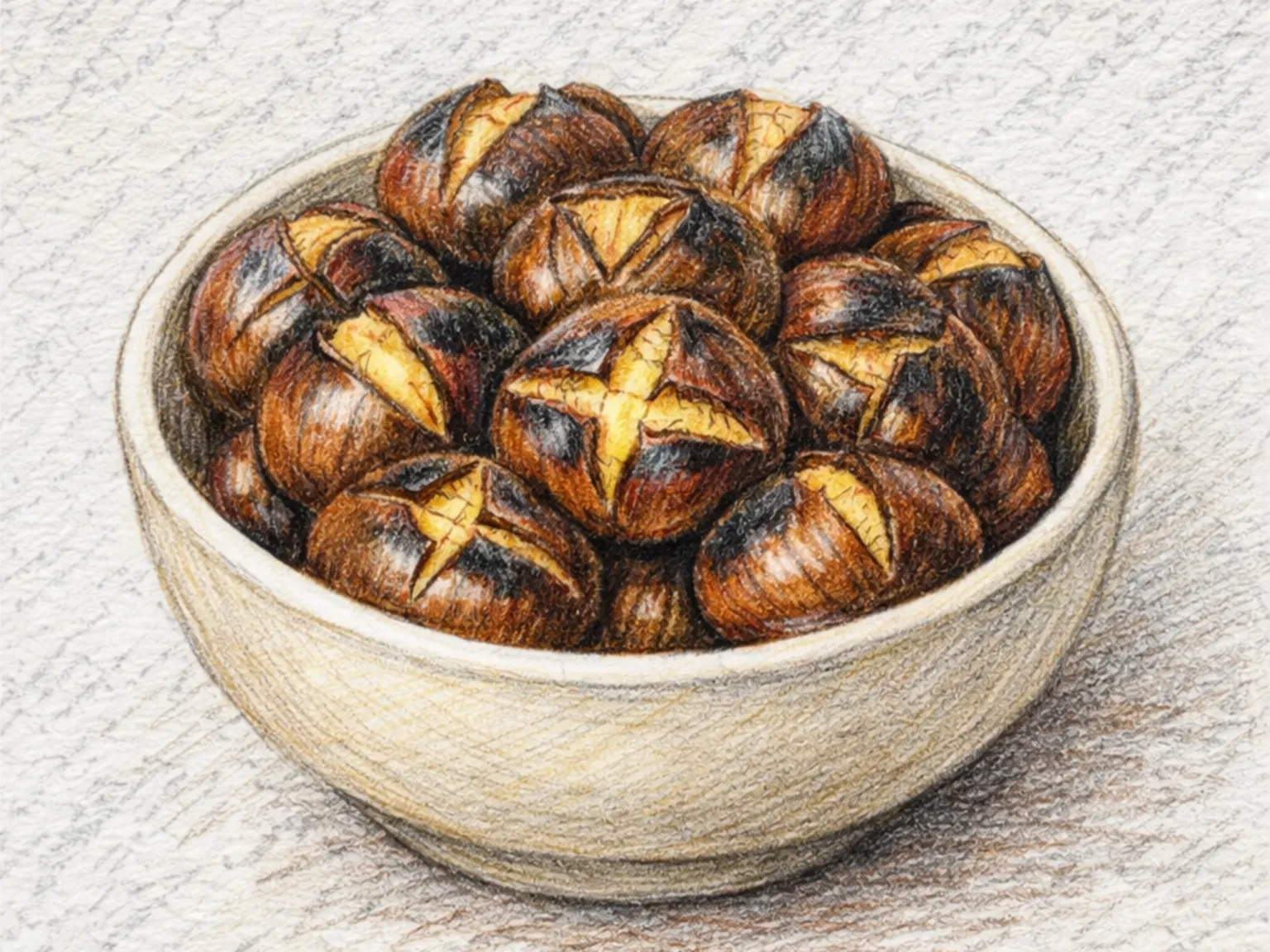
Korean Roasted Chestnuts

Korean Roasted Chestnuts

Quick answer

Gunbam is Korean roasted chestnuts, a seasonal street food sold from carts across Korea from late autumn through early spring.

What makes this special

  • Scoring an X-shaped cut into chestnut shells allows steam to escape during roasting at 210 degrees Celsius, producing smoky and sweet seasonal street food.
  • X-scored shell vents steam and prevents explosive cracking
  • 210°C for 20-25 min converts starch to sugar for nutty aroma
Total time
35 min
Level
Easy
Servings
2 servings
Ingredients
6
Calories
210 kcal
Protein
3 g

Key ingredients

raw chestnutswatersaltsugarbutter

Core cooking flow

  1. 1 Soak 500 g raw chestnuts in 600 ml water mixed with 1 tablespoon salt for 20 minutes.
  2. 2 Drain the chestnuts in a strainer and dry them with a clean cloth.
  3. 3 Place each chestnut rounded side up and score an X almost to the inner skin.

Gunbam is Korean roasted chestnuts, a seasonal street food sold from carts across Korea from late autumn through early spring. An X-shaped cut is scored through the shell of each chestnut before roasting. This cut serves a structural purpose: it creates a vent for steam to escape during cooking, preventing the shell from cracking unpredictably. Roasting at 210 degrees Celsius for 20 to 25 minutes converts the starches inside to sugars, deepening the sweetness and building a toasty, nutty flavor that plain raw chestnut does not have. Soaking the chestnuts in salted water for 20 to 30 minutes before roasting cleans any debris from the surface and imparts a faint background seasoning. Wrapping the freshly roasted batch in a dry cloth for five minutes while they rest lets residual steam work between the outer shell and the thin inner skin, making the inner skin easier to peel. The chestnuts should be eaten hot, while the flesh is still floury and crumbles gently against the tooth. Tossed with a little butter and sugar while warm, they take on a sheen and extra sweetness that amplifies their fragrance.

Prep 10min Cook 25min 2 servings
Recipes by ingredient → butter

Instructions

Read the steps as a cooking flow: prep, heat, seasoning, doneness control, and finish.

6 steps
  1. 1
    Season

    Soak 500 g raw chestnuts in 600 ml water mixed with 1 tablespoon salt for 20 minutes.

    Skim off any floating debris, then rub the shells under running water until the surface feels clean.

  2. 2
    Prep

    Drain the chestnuts in a strainer and dry them with a clean cloth.

    Do this before scoring because wet shells slip easily, making the X cut uneven and harder to control.

  3. 3
    Prep

    Place each chestnut rounded side up and score an X almost to the inner skin.

    If the cut is too shallow the shell will not open, while a very deep cut can split the flesh.

  4. 4
    Heat

    Toss the scored chestnuts with 1 teaspoon cooking oil until lightly coated.

    Preheat the oven fully to 210°C, then spread the chestnuts in one layer on a pan with the cuts facing up.

  5. 5
    Finish

    Roast for 20 to 25 minutes, until the X opens into a V shape and the shells turn brown.

    Start checking smaller chestnuts at 20 minutes so they do not dry out before the larger ones finish.

  6. 6
    Finish

    Wrap the hot chestnuts in a dry cloth for 5 minutes so residual steam loosens the inner skin.

    While still warm, toss with 1 tablespoon butter and 1 tablespoon sugar, then serve before the texture firms.

After the steps

Pick a recipe that fits this dish.

Continue with shared ingredients, meal pairings, or a similar method.

Recipes That Go Well With This

More Street food →

Based on shared ingredients and meal pairing

Korean Roasted Sweet Potato
Shared ingredient: butter Street food

Korean Roasted Sweet Potato

Gun-goguma is a Korean winter snack made by roasting whole sweet potatoes in their skins at 200 degrees Celsius for 35 to 40 minutes. The slow heat converts the starches inside the potato into maltose, concentrating the sweetness and producing a sticky, honey-like layer just beneath the skin. Lower-temperature roasting is preferred over high heat because it extends the window of enzyme activity, allowing sugars to accumulate gradually rather than burning off at the surface. Korean pumpkin sweet potatoes, called hobak-goguma, have a higher moisture content and more pronounced natural sweetness, so they turn creamy and almost runny when fully roasted. Resting the potatoes at room temperature for a day or two before roasting further boosts sugar levels, since starch conversion continues during storage. The potato is satisfying on its own, but adding a pat of butter or a dusting of cinnamon layers in a rich, aromatic contrast. Eating the skin along with the flesh adds fiber and a slightly earthy counterpoint to the pure sweetness of the interior.

Candied Sweet Potato
Serve together Desserts

Candied Sweet Potato

Goguma mattang is a Korean candied sweet potato snack made by cutting peeled sweet potatoes into large chunks and deep-frying them at 170 degrees Celsius until the interior turns floury and soft. A syrup of sugar, corn syrup, water, and a measured splash of soy sauce is cooked separately until large, foamy bubbles form - the visual cue for adding the fried sweet potatoes. Everything must be coated within thirty seconds to lock in a thin, glass-like caramel shell that crisps and turns translucent as it cools. The soy sauce shifts the flavor from purely sweet to a rounded, slightly savory depth. Pre-draining surface moisture from the cut sweet potatoes reduces oil splatter during frying and helps the syrup grip the pieces evenly. Black sesame seeds are scattered over the finished pieces for a toasted, nutty note, and each piece is spread individually on parchment paper while still warm so they cool without sticking together.

Korean Crispy Glazed Tofu Bites
Serve together Side dishes

Korean Crispy Glazed Tofu Bites

Dubu gangjeong applies the double-coating logic of Korean fried chicken to tofu, pressing each cube dry before dredging in potato starch, frying until the shell turns shattering crisp, then tossing in a concentrated sticky glaze. The dish originated in temple cuisine as a meatless adaptation of gangjeong and has since become a staple anju in Korean bars. Pressing the tofu is non-negotiable: at least twenty minutes under a heavy weight wrapped in paper towels removes enough moisture to prevent oil from splattering and allows the starch coating to adhere evenly. Potato starch produces a noticeably thinner and more translucent crust than wheat flour, which cracks cleanly rather than bending when bitten. The glaze is made by boiling gochujang, soy sauce, sugar, and rice syrup together until large bubbles break on the surface, signaling that the mixture has concentrated and will cling rather than pool. Pouring the hot glaze over the fried tofu and tossing quickly coats every surface in an even, lacquer-like finish. The defining quality of a well-made dubu gangjeong is the contrast between the caramelized shell with its slight chew and the soft, almost custard-like interior. Once made, it must be eaten within ten minutes before the coating absorbs moisture and goes soft.

Korean Sweet Pancake (Chewy Yeast Dough with Brown Sugar Cinnamon Filling)
Similar recipe Street food

Korean Sweet Pancake (Chewy Yeast Dough with Brown Sugar Cinnamon Filling)

Hotteok is a pan-fried Korean street snack made from yeast-risen dough blended with wheat flour and glutinous rice flour, stuffed with a filling of brown sugar, cinnamon powder, and chopped peanuts. The glutinous rice flour gives the dough a distinctly chewier bite than plain wheat dough, and the brown sugar filling melts into hot syrup during cooking as the dough presses flat against the pan. Flattening the ball with a spatula caramelizes the outer surface to a golden crust while the cinnamon-scented liquid pools inside. A variation called ssiat hotteok incorporates sunflower seeds and mixed grains into the filling, adding a nutty crunch alongside the sweet syrup. Proper fermentation of the dough is critical for a tender, elastic skin; pressing too thin risks the filling leaking onto the pan and burning. Street vendors serve hotteok straight off the griddle in a small paper cup, and the challenge is eating it before the syrup drips out.

Serve with this

Korean Kimchi Bulgogi Udon
Noodles Easy

Korean Kimchi Bulgogi Udon

Kimchi bulgogi udon is a Korean stir-fried noodle dish that brings together the sharp acidity of well-fermented kimchi and the sweet, savory depth of thinly sliced bulgogi beef, all coating thick, round udon strands. The beef is seared quickly over high heat to develop browning on the surface before onion and kimchi join the pan and cook until nearly all their moisture evaporates, concentrating both flavor and color. A sauce of soy sauce, gochujang, and sugar goes in next, followed by briefly blanched udon noodles that get tossed on maximum heat for about one minute so every strand absorbs the sauce while retaining a firm bite. The thick cross-section of udon holds bold, clingy sauces better than thinner noodles and creates a satisfying, filling meal without any broth. When kimchi is especially sour, a small addition of sugar or a quick rinse of the kimchi before cooking brings the acidity back into proportion. Finishing with sliced scallion and toasted sesame seeds adds color and a nutty lift that completes the dish.

🏠 Everyday 🌙 Late Night
Prep 15min Cook 12min 2 servings
Korean Sweet Red Bean Latte
Drinks Medium

Korean Sweet Red Bean Latte

Pat-latte is a Korean red bean milk drink built around two simultaneous uses of the same cooked beans. Most of the beans are blended smooth with water into a thick puree, while the remainder are left whole and stirred in afterward to provide soft, chewy pockets of texture throughout. That combined bean base goes into a saucepan with milk and warms over medium-low heat as sugar, sweetened condensed milk, a pinch of salt, and vanilla extract are added one by one. The condensed milk transforms the beans' mild natural sweetness into something denser and more complex, landing somewhere between caramel and roasted grain. Salt does not make the drink taste salty but instead sharpens the contrast that makes the sweetness register more clearly on the palate. Vanilla rounds off the earthy, slightly rustic edge of red bean aroma and brings the whole flavor profile together. Served hot, the drink takes on the gentle warmth of traditional red bean porridge. Poured over ice, the same flavors tighten and become more concentrated. Either way, stirring once before drinking keeps the whole beans evenly distributed rather than settled at the bottom.

🍺 Bar Snacks 🌙 Late Night
Prep 12min Cook 20min 2 servings

Similar recipes

Korean Kimchi Cheese Gimbap
Street food Easy

Korean Kimchi Cheese Gimbap

Kimchi cheese gimbap rolls seasoned rice, stir-fried kimchi, mozzarella cheese, and pickled daikon radish in sheets of dried seaweed. The kimchi must be stir-fried until all the moisture has evaporated before rolling: this concentrates the tangy fermented flavor and prevents the released liquid from softening the rice and making the seaweed tear during and after rolling. The fat in the mozzarella wraps around the kimchi's sharp heat and moderates it, and the pickled radish adds sweet-sour crunch that varies the texture across each bite. Keeping the cheese in a single narrow line down the center of the roll is the key technique for tight rolling and a clean cross-section: too much cheese makes the roll thick and causes the seaweed to split. Sliced processed cheese can be used in place of mozzarella and melts similarly. Brushing the outside of the finished roll lightly with sesame oil gives it a glossy surface and seals the seam.

🧒 Kid-Friendly ⚡ Quick
Prep 20min Cook 10min 2 servings
Korean Grilled Jjondeugi (Sweet Spicy Glazed Wheat Cracker Snack)
Street food Easy

Korean Grilled Jjondeugi (Sweet Spicy Glazed Wheat Cracker Snack)

Jjondeugi-gui is a nostalgic Korean street snack made by gently heating thin pressed-wheat sheets over low heat until they become pliable, then applying a sauce of gochujang, soy sauce, sugar, oligosaccharide syrup, minced garlic, and sesame oil before returning them to the heat. The warming process shifts the sheets from rigid to genuinely chewy, and the sugars in the sauce caramelize slowly against the surface, building a sticky, sweet-spicy glaze that concentrates with each pass. Because the marinade has a high sugar content, applying it in a single thick coat scorches the outside before the heat can work evenly through the sheet. The correct technique is to brush on a thin layer, grill briefly, then repeat two or three times until the glaze has depth and the interior is fully softened. The finished pieces are cut into bite-size sections with kitchen scissors and served immediately while still warm.

🧒 Kid-Friendly 🌙 Late Night
Prep 5min Cook 8min 2 servings
Korean Street Egg Bread (Sweet Batter Muffin with Whole Egg)
Desserts Easy

Korean Street Egg Bread (Sweet Batter Muffin with Whole Egg)

Winter streets in Seoul feature this warm handheld snack prepared by baking a whole egg atop a sweet batter. The base consists of cake flour, baking powder, milk, and melted butter poured into muffin molds. Adding a layer of finely diced ham beneath the egg creates a salty contrast against the sweetness of the dough. When baked at 180 degrees Celsius, sixteen minutes results in a soft and runny yolk, while eighteen minutes produces a firm center. Vanilla extract mixed into the batter helps neutralize the natural scent of the egg for a clean finish. A light dusting of dried parsley on the domed surface adds a subtle herbal scent as the bread turns golden in the oven. Small amounts of shredded cheese can be added to the batter to balance the sweetness. Serving the bread while it remains warm ensures the interior stays moist. This egg bread functions well as a quick breakfast option and can be made in paper muffin cups if metal molds are unavailable.

🧒 Kid-Friendly 🌙 Late Night
Prep 15min Cook 18min 4 servings
Korean Pan-fried Oyster Jeon
Grilled Easy

Korean Pan-fried Oyster Jeon

Gul-jeon is a Korean dish featuring oysters that are pan-fried in a delicate coating of flour and egg. The preparation starts with fresh seasonal oysters that are rinsed carefully in a mild salt water solution to ensure they are clean. Once the rinsing is complete, it is necessary to pat each oyster until it is thoroughly dry. This particular step is crucial because residual water leads to oil splattering during the frying process and prevents the flour from adhering to the surface in a uniform manner. The intended result is a very thin layer of flour, as a thick coating will muffle the natural oceanic brine of the oyster. After the light dusting of flour, the oysters are submerged in beaten egg. This egg batter serves as an insulating layer that conducts heat slowly into the center of the seafood. This specific cooking method keeps the interior of the oyster plump and moist while the exterior reaches a soft golden color. As the oysters cook, they release a distinct mineral aroma associated with fresh seafood. Adding finely chopped garlic chives shortly before the cooking is finished provides a sharp, garlicky contrast that emphasizes the natural mineral profile of the dish. It is important to cook the oysters over a steady medium flame for approximately two minutes on each side. If the heat is set too high, the egg exterior will scorch before the inside is sufficiently warmed through. When flipping the oysters, you should do so carefully and avoid pressing down on them with a spatula. In instances where the oysters are exceptionally large, pressing them into a flatter shape prior to the start of the cooking process will facilitate more even heat distribution throughout the piece.

🍺 Bar Snacks ⚡ Quick
Prep 18min Cook 12min 2 servings

Tips

Score deep enough near the inner skin for easier peeling.
Wrap roasted chestnuts in a towel for 5 minutes to loosen the shells.

Nutrition (per serving)

Calories
210
kcal
Protein
3
g
Carbs
35
g
Fat
7
g