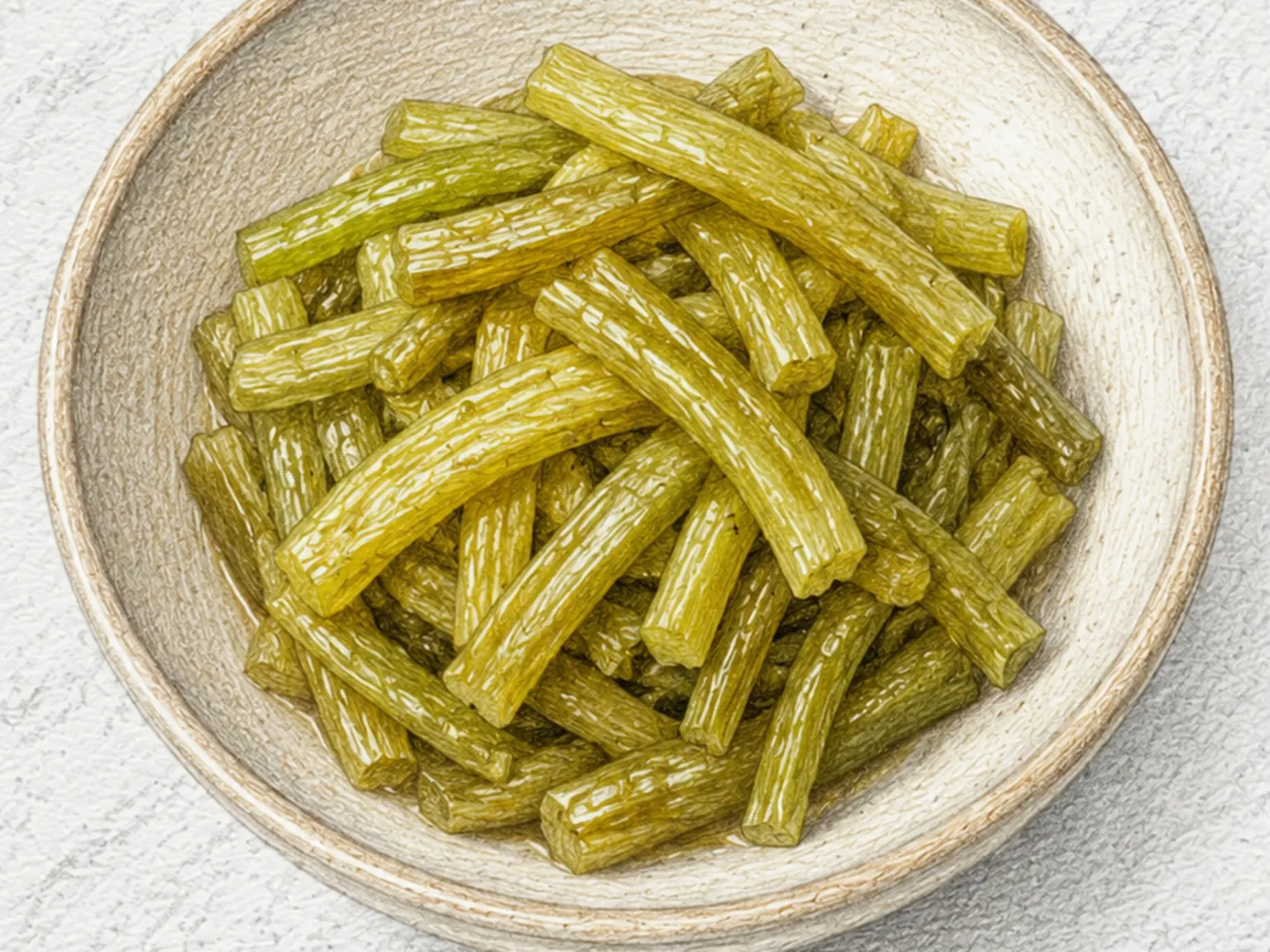
Korean Pickled Celtuce Stems
Rehydration yield varies by product, so weigh out 300 g of celtuce stems after soaking and draining, not dry. Heat 1 cup soy sauce, 1 cup water, 3/4 cup vinegar, and 1/2 cup sugar over medium heat until no sugar grains remain, turn off the heat as soon as the brine reaches a steady boil, and steep 5 whole garlic cloves and 2 dried red chilies in it for 1 minute. Cover the stems completely with the hot brine, refrigerate promptly, and start checking the flavor after a day.
Quick answer
- Total time
- At least 1 day 1 min
- Level
- Medium
- Servings
- 4 servings
- Ingredients
- 7
About this dish
Dried celtuce stems, soaked until they bend but keep a firm bite, give this soy pickle its springy chew.
Read more
The 300 g in the ingredient list is the soaked and drained weight. Soaking that much dry gungchae would swell far beyond what the brine can cover. Plain dried stems are the right buy, because fresh wosun stalks and pre-seasoned jars behave differently. Garlic and dried chilies steep in the hot soy, vinegar, and sugar brine, adding a mild warmth behind the sweet-salty taste. Rather than waiting for the hot jar to cool on the counter, split it into shallow containers and chill it right away, and the flavor starts to come through after a day.
Ingredients
Instructions
- 1
Rinse and soak plain dried gungchae in cold water according to the package instructions, until the stems bend easily but retain a firm bite. Do not weigh out 300 g dry stems at this stage.
- 2
Rinse the rehydrated stems, trim tough ends, and cut into 5 cm pieces.
Drain thoroughly in a colander, then weigh 300 g. If the package requires blanching, complete that preparation, cool, and drain before weighing.
- 3
Add 1 cup soy sauce, 1 cup water, 3/4 cup vinegar, and 1/2 cup sugar to a saucepan.
Heat over medium heat while stirring until no sugar grains remain on the bottom.
- 4
When bubbles rise from the edges and the whole brine reaches a steady boil, turn off the heat right away.
Add 5 whole garlic cloves and 2 dried red chilies, then steep for 1 minute.
- 5
Place the 300 g drained stems in a clean heatproof container.
Add enough hot brine to cover them completely; the container may not need all the brine.
- 6
Divide the hot pickles and brine into shallow heatproof containers and refrigerate promptly.
Do not wait for them to cool completely at room temperature or leave them out for extended aging. Start checking the flavor after a day and keep refrigerated.
References checked
These references were consulted when this page was prepared or corrected. A source check does not mean the recipe was independently kitchen-tested.
- 궁채 손질: 마른 중량과 불린 중량 구분
김진옥요리가좋다 · Checked: 2026-09-12
- Cooling cooked food promptly
USDA FSIS · Checked: 2026-09-12
Use-up ingredient planner
Turn these ingredients into two more meals
The overlap excludes basic seasonings. Open the next recipe and your selected dishes will stay with you.
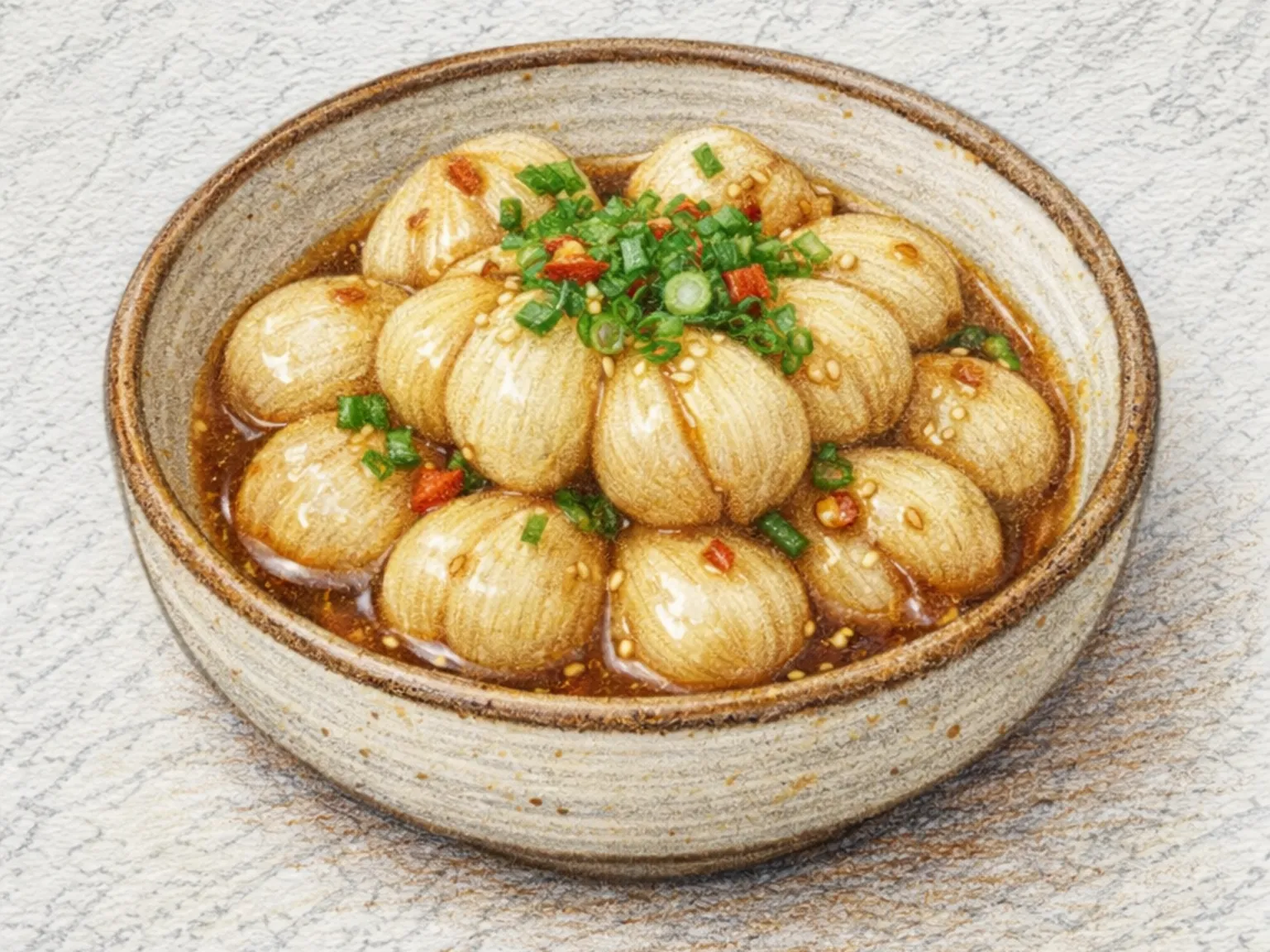
Korean Steamed Whole Garlic
whole garlic cloves
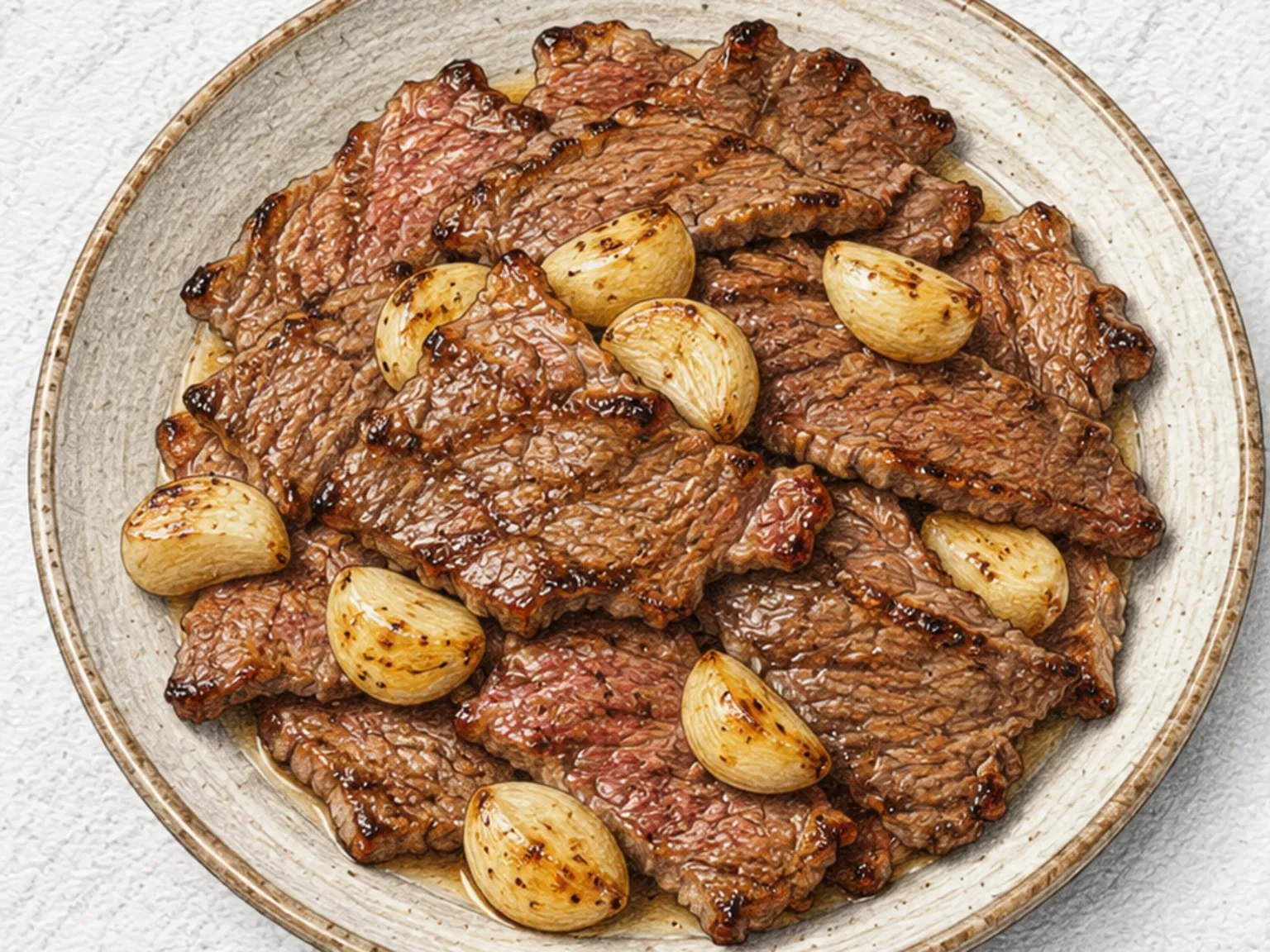
Korean Garlic-Grilled Skirt Steak
whole garlic cloves
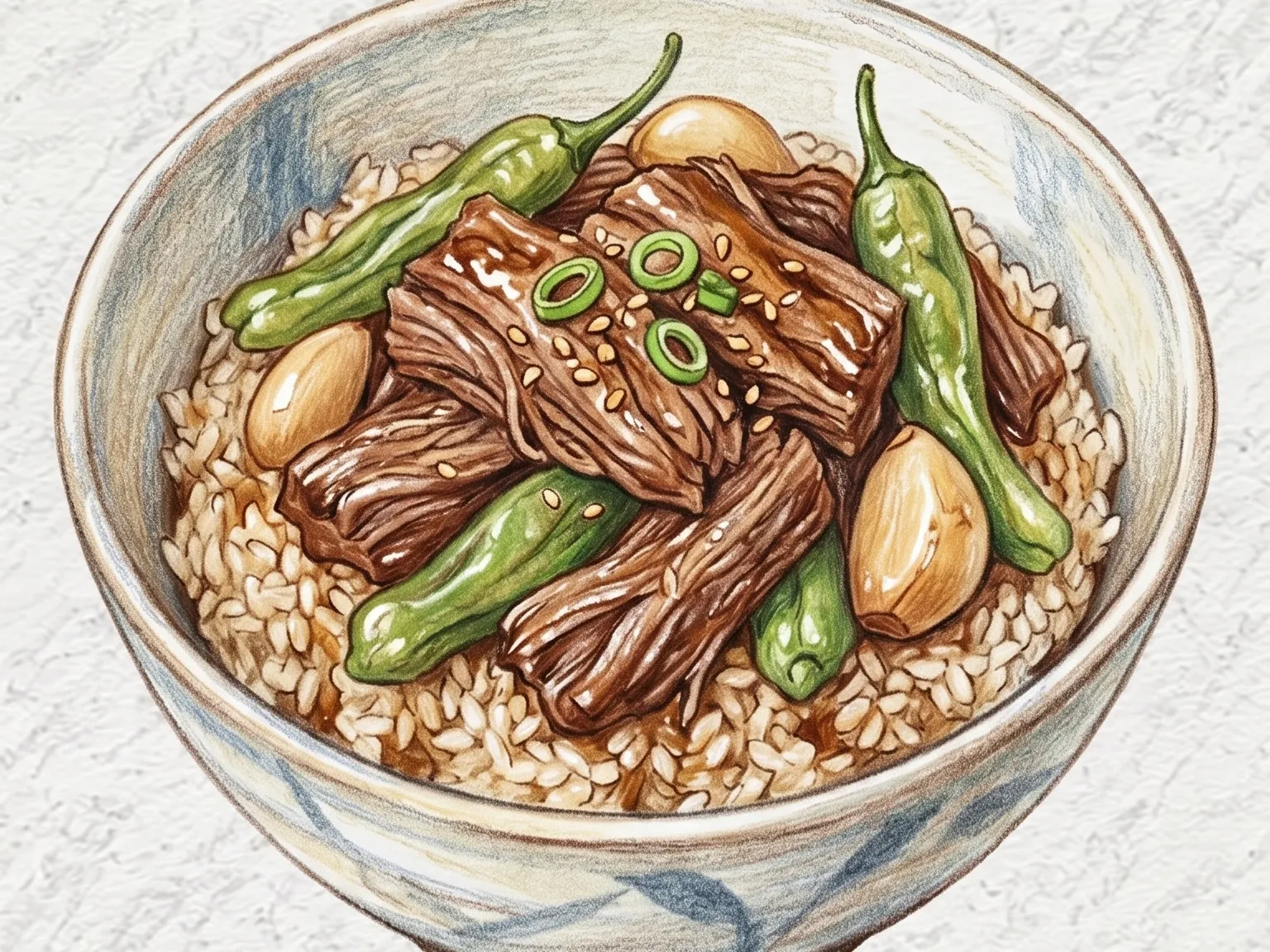
Korean Braised Beef and Shishito Rice
whole garlic cloves