Korean Royal Soy Sauce Tteokbokki
Quick answer
Gungjung-tteokbokki traces its roots to the royal court cuisine of the Joseon dynasty, where the condiment gochujang had no place at the table.
What makes this special
- Joseon court origins explain why this royal tteokbokki uses soy sauce instead of gochujang.
- Royal court origin; soy sauce only, no gochujang, keeps it mild
- Sesame oil as the sole cooking fat gives a noticeably more refined aroma
Key ingredients
Core cooking flow
- 1 If the 300 g rice cakes feel firm, soak them in lukewarm water for about 10 minutes.
- 2 Mix the 120 g thin-sliced beef with 1 tablespoon soy sauce, 1/2 tablespoon s...
- 3 Heat a pan over high heat, then add half of the sesame oil.
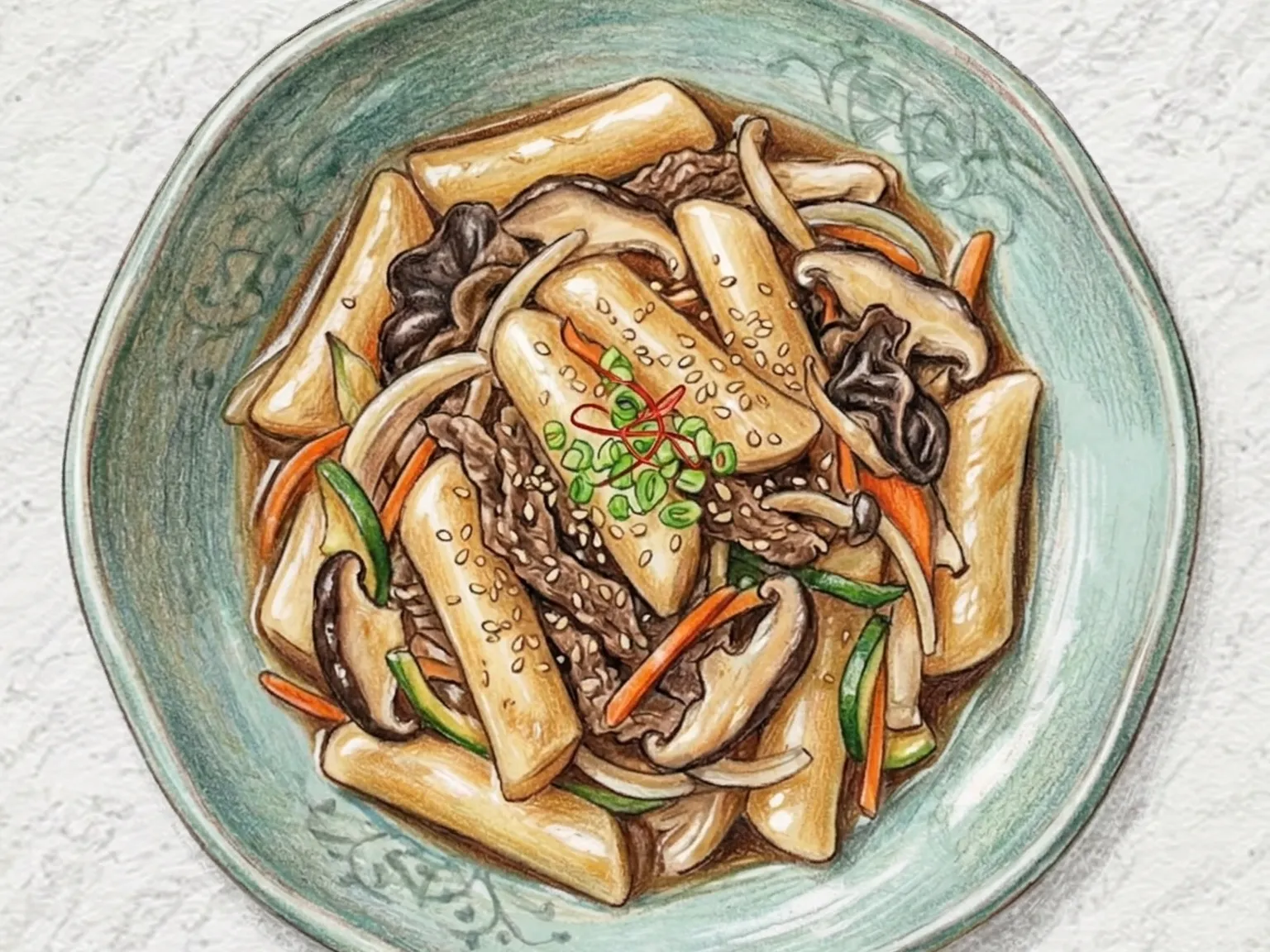
Gungjung-tteokbokki traces its roots to the royal court cuisine of the Joseon dynasty, where the condiment gochujang had no place at the table. Soy sauce and sesame oil provide the seasoning instead, producing a mild, sweet-savory glaze rather than heat. Sliced garae-tteok rice cakes are stir-fried together with marinated beef, shiitake mushrooms, carrot, and onion until the soy seasoning coats everything evenly and the rice cakes develop a subtle gloss. The beef is marinated separately in soy sauce, sugar, and sesame oil before going into the pan, which lets the meat develop its own depth as it sears. Shiitake mushrooms reinforce the savoriness and add fragrance without overwhelming the other components. The rice cakes need enough time in the pan to absorb the seasoning and become slightly caramelized on the surface, but if cooked too long they turn hard and lose their chew. Using sesame oil rather than cooking oil throughout adds a nutty warmth that elevates the dish. Without any chili heat, this is one of the few tteokbokki variations that suits every age group and is a common presence on festive or holiday tables.
Instructions
Read the steps as a cooking flow: prep, heat, seasoning, doneness control, and finish.
- 1Season
If the 300 g rice cakes feel firm, soak them in lukewarm water for about 10 minutes.
Drain well when they bend slightly, so extra water does not thin the soy sauce glaze later.
- 2Season
Mix the 120 g thin-sliced beef with 1 tablespoon soy sauce, 1/2 tablespoon sugar, and 1/2 teaspoon minced garlic.
Let it stand for 10 minutes, just long enough for the seasoning to soak into the meat.
- 3Control
Heat a pan over high heat, then add half of the sesame oil.
Spread the beef in a thin layer and stir-fry for about 1 minute, only until the outside browns, then remove it before it toughens.
- 4Control
Add the 100 g onion, 60 g carrot, and 70 g shiitake mushrooms to the same pan.
Stir-fry over medium-high heat for 2-3 minutes, until the onion softens slightly and the mushrooms smell savory.
- 5Control
Add the rice cakes, the remaining soy sauce, sugar, minced garlic, and 120 ml water.
Cook over medium heat for 4-5 minutes, stirring often, until the liquid thickens and the rice cakes look glossy.
- 6Season
Return the beef and toss for only 1-2 minutes to coat it with the sauce.
When the rice cakes are tender and the glaze is lightly thickened, turn off the heat and mix in the remaining sesame oil.
After the steps
Pick a recipe that fits this dish.
Continue with shared ingredients, meal pairings, or a similar method.
Recipes That Go Well With This
More Stir-fry →Based on shared ingredients and meal pairing
Korean Gangwon-Style Soy Bulgogi
Gangwon-style soy bulgogi represents a regional variation of the traditional Korean grilled beef dish specifically associated with the Gangwon Province. Unlike the bulgogi styles commonly found in the Seoul metropolitan area, which often lean heavily into sweet and fruit-driven marinades, this version prioritizes the clean and savory profile of soy sauce. The preparation begins by marinating thinly sliced beef in a mixture composed of soy sauce, sugar, minced garlic, and toasted sesame oil, along with the addition of fresh pear juice. The inclusion of pear juice serves a dual purpose in the recipe. The natural enzymes within the juice work to tenderize the muscle fibers of the beef, while its sugars provide a subtle and restrained sweetness that complements the salty foundation of the soy sauce without becoming the dominant flavor. When the meat is ready, it is cooked in a preheated pan over high heat. Sliced shiitake mushrooms and onions are added to the pan during this stage, allowing them to absorb the liquid marinade as they soften. This process integrates the flavors of the vegetables with the primary taste of the beef. Maintaining a high temperature is a critical step in the cooking process to ensure that moisture evaporates rapidly. This prevents the dish from taking on the texture of a braised stew and instead produces a slight char and a smoky quality on the edges of the meat. Just before the heat is turned off, diagonally sliced green onions are tossed into the pan. They are cooked only until they begin to wilt, preserving a bright and sharp contrast that balances the finished dish. The result is a soy-focused flavor profile that is clear and direct. Because it avoids being overly aggressive or excessively sweet, this bulgogi serves as a consistent accompaniment for steamed rice that remains palatable through frequent consumption.
Korean Spicy Beef Stir-Fry
Sogogi gochujang-bokkeum marinates thin-sliced beef in a paste of gochujang, soy sauce, sugar, and minced garlic, then stir-fries it over high heat. The chili paste's spiciness and the sugar caramelize together on the meat's surface, building a dark, sticky glaze with layered heat. Onion cooked alongside the beef releases moisture that helps the seasoning distribute evenly across every slice. A finish of sesame oil adds a roasted nuttiness on top of the bold, spicy-sweet profile -- intensely flavored enough that a small portion carries a full bowl of rice.
Manduguk (Korean Dumpling Clear Broth Soup)
Manduguk is a Korean dumpling soup in which hand-folded dumplings stuffed with ground pork, tofu, scallion, and garlic are dropped into a clear, simmering broth, typically anchovy-kelp stock or beef broth, and cooked until they float. As the dumplings cook, their thin wheat-flour wrappers release a subtle starch that gives the broth a barely perceptible body, while the filling leaks savory juices that enrich the liquid gradually. A thin drizzle of beaten egg stirred in near the finish creates silken wisps on the surface of the broth and gives the bowl a more finished appearance. Shredded egg strips and crumbled dried seaweed scattered on top add a pleasant contrast in color and a faint oceanic note to the flavor. Many Korean households serve manduguk on Lunar New Year as an alternative to tteokguk, and some combine the two by adding sliced rice cakes alongside the dumplings. Dumplings can be made in large batches and frozen raw, which means this soup can be pulled together quickly on weeknights without sacrificing any of the flavor that comes from homemade filling. A small dish of soy-vinegar dipping sauce served alongside lets each person adjust the seasoning at the table, and the light acidity of the sauce cuts through the mild broth in a way that makes the contrast between the two worth trying.
Korean Spicy Tteok and Sundae Stir-Fry
Tteokbokki-sundae-bokkeum combines chewy rice cakes and Korean blood sausage in a spicy-sweet gochujang, soy sauce, and sugar sauce. The rice cakes are soaked first and then simmered in the sauce so the seasoning penetrates their dense, glutinous interior. Sundae is added near the end and stirred briefly to prevent the casing from bursting. Each bite alternates between the elastic pull of the rice cakes coated in red sauce and the heavier, starchy chew of the sundae filling - a recreation of the classic Korean street food pairing of tteokbokki and sundae in a single pan.
Serve with this
Korean Spam Mayo Rice Bowl
Thick-cut spam is pan-seared until the edges turn golden and crisp while the center stays moist. Soft-scrambled eggs are folded loosely so they remain creamy, then layered over steaming rice alongside the spam. A generous drizzle of mayonnaise sauce melts gently against the warm rice, binding the salty meat and silky egg together. A dash of soy sauce or sriracha adds a sharp accent that cuts through the richness and keeps each bite interesting. Controlling resting time and grain texture helps the ingredients cook evenly while keeping the final seasoning balanced.
Korean Mushroom Dumpling Hot Pot
Mandu jeongol is a generous hot pot of twelve large dumplings simmered with napa cabbage, shiitake mushrooms, oyster mushrooms, and bok choy in anchovy-kelp stock. The two varieties of mushroom add layers of umami to the clear broth, while the cabbage and bok choy soften and release their natural sweetness as they cook. The dumplings cook directly in the simmering stock, their wrappers gradually turning chewy as the filling flavors seep into the surrounding liquid. Soup soy sauce and garlic provide a clean, understated seasoning that keeps the broth from overshadowing any single ingredient. The right moment to eat is when the vegetables have wilted and the dumplings float to the surface, signaling they are cooked through. The absence of any spice or strong seasoning makes this one of the more universally approachable hot pots, suited for all ages. Leftover broth absorbs cooked rice or soaked glass noodles easily, turning what remains into a satisfying finish to the meal.
Korean Pickled Celtuce Stems
Gungchae is the dried stem of celtuce (Lactuca sativa var. asparagina), known in Chinese as wosun, and in Korea it carries the name meaning palace vegetable, reflecting its historical association with royal court cuisine. When rehydrated from its dried state, the stems regain a firm, almost cartilaginous crunch that is the defining quality of the ingredient and the entire reason to use it. Packed into sterilized glass jars, the stems are covered with a boiling brine of soy sauce, vinegar, sugar, and water poured in while still hot, which drives the seasoning into the outer layers while preserving the interior snap. The pickle is edible after a single day, but three days is when the balance of tangy, salty, and sweet flavors reaches its peak. Served alongside grilled meats or rich main dishes, the crisp texture and bright acidity cut through heaviness and refresh the palate between bites, making it a natural companion to oily or heavily seasoned Korean mains.
Similar recipes
Korean Kimchi Bulgogi (Kimchi Stir-Fried Marinated Beef)
Kimchi bulgogi combines soy-marinated sliced beef with aged napa kimchi, cooked together over high heat in a single pan. The beef is marinated with soy sauce, pear juice, and sugar before it ever touches the pan. Pear juice breaks down the muscle fibers to tenderize the meat while adding a subtle fruity sweetness, which the kimchi's sharp acidity and concentrated salt counter-balance to produce a layered, complex seasoning. As the two cook together at high heat, kimchi liquid seeps into the beef and builds a deeper, more rounded umami than standard bulgogi achieves on its own. The tangy lactic sourness from the fermented cabbage layers into the meaty savoriness and gives the dish a character that no amount of seasoning adjustments can replicate in an unfermented substitute. Heating the pan fully before adding the ingredients is important, because a properly hot surface sears rather than steams, preserving the wok-adjacent char that makes this dish more than a simple stir-fry. A final drizzle of sesame oil rounds out the dish with a warm, nutty note. Served over steamed white rice, the pan juices soak into each grain and the combination disappears from the bowl quickly. Well-aged kimchi, ideally stored for several weeks to months, produces the most pronounced result, though ripe freshly made kimchi works as a substitute when no aged version is available.
Korean Spicy Rice Cakes (Gochujang Braised Chewy Tteok with Fish Cake)
Simmering cylindrical rice cakes and thin fish cake sheets in a spicy base of gochujang, red chili flakes, sugar, and soy sauce creates a sticky, glossy coating. The starch released from the rice cakes as the liquid reduces acts as a natural thickener, ensuring the sauce clings tightly to each ingredient. While the fish cakes soak up the heat from the surrounding liquid, they release a subtle seafood essence into the pan, and the addition of green onions at the final stage provides a crisp contrast to the underlying sweetness. Preparing a stock from dried anchovies and kelp rather than using plain water establishes a solid savory foundation for the entire dish. It helps to start with only half the seasoning paste, adding the remainder gradually to manage the final intensity and texture as the volume decreases. If the liquid evaporates too quickly, adding small amounts of water prevents the sugars in the sauce from scorching before the rice cakes reach the desired softness. For rice cakes that have been chilled or feel exceptionally firm, a short soak in cool water or a quick blanch in boiling water helps them cook through evenly. Serving the finished dish with boiled eggs, blood sausage, or assorted fried items replicates the setup found at traditional street stalls. This recipe scales easily into different versions by incorporating heavy cream or tomato-based sauces, resulting in the rose and cream variations often found in modern snack shops.
Korean Oil Tteokbokki (Dry-Stir-Fried Rice Cakes in Chili Soy Glaze)
Gireum-tteokbokki is a dry-style tteokbokki where rice cakes are stir-fried in oil and coated with a concentrated paste of gochugaru, soy sauce, sugar, and garlic - no broth involved. Blooming the chili flakes briefly in oil draws out their nutty, toasted aroma rather than raw heat, and the soy sauce and sugar build layered sweetness and umami on top of that base. Without liquid, the seasoning clings tightly to each rice cake's surface. The key technique is restraint with stirring: letting each rice cake sit undisturbed long enough to develop a lightly crisped exterior while the inside stays chewy creates a dual texture that broth-based versions cannot replicate. Green onion and sesame seeds added at the end provide fresh fragrance and textural contrast against the rich coating. The seasoning should be applied generously so the flavors penetrate past the surface rather than sitting only on the outside. Believed to have originated in school-front snack shops in 1970s and 1980s Seoul, gireum-tteokbokki is milder than gochujang versions and accessible to those who find the spicier style too intense.