Guo Bao Rou (Sweet and Sour Crispy Pork)
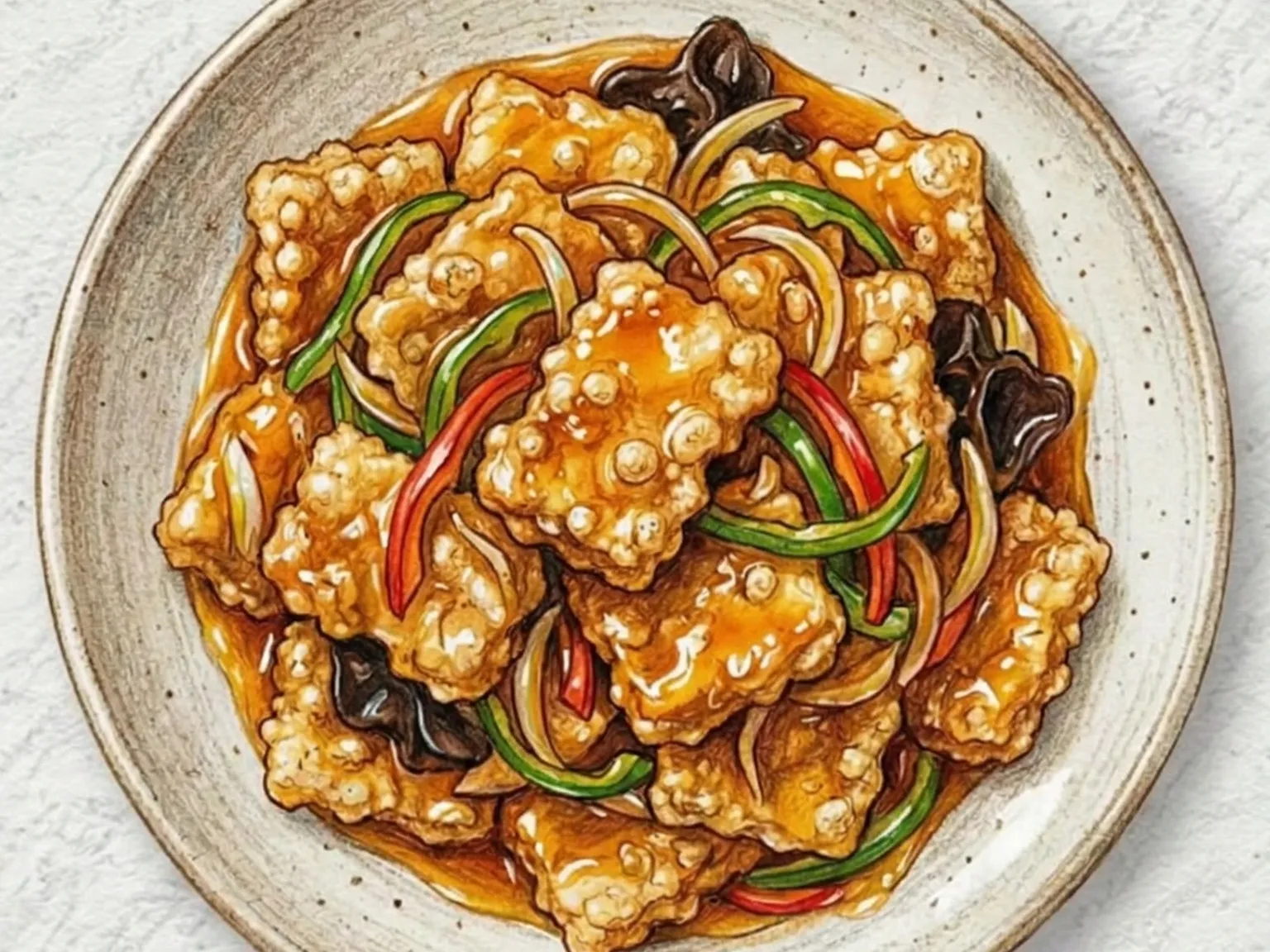
Guo bao rou - literally 'pot-wrapped meat' - is the signature dish of Northeastern Chinese cuisine, created in late Qing Dynasty Harbin to entertain Russian diplomats who found traditional Chinese flavors too unfamiliar. Pork tenderloin or loin is sliced thin and coated heavily in potato starch, fried once to set the crust, then fried a second time at higher temperature to puff the starch into a shatteringly crisp shell - this double-frying technique is non-negotiable. A sauce of vinegar, sugar, and soy sauce is reduced rapidly in a hot wok until it caramelizes, then the crispy pork is tossed through in a motion that must take no more than thirty seconds - any longer and the starch absorbs the liquid, destroying the crunch. The original Harbin version leans heavily on vinegar's sharp tang with a pale color, while versions that migrated south or into Korean-Chinese kitchens often substitute ketchup for a sweeter, redder result. Each piece delivers a triple texture: a glassy sauce coating on the outside, a shattering starch layer beneath, and soft, yielding pork at the center.
Adjust Servings
Instructions
- 1
Slice pork thinly and prepare a thick starch batter.
- 2
Coat pork in batter and fry at 170°C for the first fry.
- 3
Rest briefly, then refry at 185°C for extra crispness.
- 4
Simmer vinegar, sugar, and soy sauce in a pan.
- 5
Add carrot, green onion, and fried pork, tossing quickly to coat.
As an Amazon Associate, we may earn from qualifying purchases.
Tips
Nutrition (per serving)
More Recipes

Sweet and Sour Pork
Sweet and sour pork, known in Korea as tangsuyuk, is a Chinese-Korean dish of double-fried pork pieces served under a glossy, tangy sauce. Bite-sized cuts of pork loin are coated in egg and cornstarch, then fried twice at 175 degrees Celsius-the first pass cooks the inside, and the second crisps the crust to a shattering crunch. The sauce is built from ketchup, sugar, vinegar, and soy sauce, brought to a quick boil and tossed with stir-fried bell pepper and onion, which contribute color and a fresh vegetal crunch. Timing is everything: the sauce is poured over the pork at the very last moment so the coating stays audibly crisp when bitten into. The interplay between the crunchy exterior, the soft pork within, and the bright, fruity sauce makes this one of the most popular dishes at Chinese restaurants across Korea.

Hui Guo Rou (Twice-Cooked Pork)
Hui guo rou, literally 'twice-cooked pork,' is a cornerstone of Sichuan cuisine where pork belly is first simmered whole until cooked through, then cooled and sliced thin before returning to the wok. The initial boiling renders some fat and firms the meat so it can be cut into uniform slices. In the wok, these slices fry until their edges curl and crisp slightly while the fat layers turn chewy rather than flabby. Doubanjiang, the fermented chili bean paste central to Sichuan cooking, goes in next along with fermented black beans, and together they create the dish's signature salty-spicy backbone. Soy sauce and a pinch of sugar round out the seasoning. Diagonally sliced leek and green bell pepper are added only in the final one to two minutes over high heat, keeping their crunch and fresh color against the deeply flavored pork.

Bao Zai Fan (Cantonese Claypot Rice with Chinese Sausage)
Bao zai fan - claypot rice - is a Cantonese winter dish that has been served in Hong Kong's dai pai dong stalls and Guangzhou's old-quarter restaurants for over a century. Raw rice cooks directly in a heated clay vessel with Chinese sausage, cured meats, or marinated chicken layered on top, so their rendered fats drip down and season the grains as they absorb the liquid. The clay holds heat long after leaving the flame, continuing to toast the bottom layer of rice into a golden, crackling crust called fan jiu - the most coveted part of the dish. A sauce of dark soy, light soy, sugar, and sesame oil is poured over at the table and stirred through, staining the white rice amber and releasing a rush of caramelized soy fragrance. The textural range within a single pot - sticky-soft grains on top, chewy middle layer, and shattering crust at the bottom - is what keeps this dish central to Cantonese comfort food despite the time it demands.

Spicy Fried Chicken Stir-fry
Rajogi is a Korean-Chinese dish of chicken thigh pieces coated in potato starch and deep-fried at 170 degrees Celsius until golden, then tossed in a sauce built from gochujang, ketchup, and vinegar. Onion and bell pepper are stir-fried separately to form the sauce base before the crispy chicken is folded in. The coating absorbs just enough glaze to deliver sweetness, tanginess, and chili heat simultaneously while retaining crunch underneath. Timing is critical -- the chicken must be tossed in sauce moments before serving to preserve its texture.

Lion's Head Meatballs (Chinese Braised Large Pork Meatballs with Cabbage)
Lion's head meatballs are a hallmark of Huaiyang cuisine from eastern China. Each meatball is shaped to the size of a fist from a loose mixture of ground pork, minced water chestnuts, and aromatics - the water chestnuts keeping the interior moist and giving it a subtle crunch even after long braising. The meatballs nestle into napa cabbage leaves in a clay pot, then simmer gently in a light soy and ginger broth until the cabbage wilts into silky ribbons and the pork turns spoon-tender. The name comes from how the cabbage wraps around each ball like a lion's mane. Served with steamed rice, the mild broth doubles as a soup course.

Chinese Red-braised Pork Belly
Hongshao rou is a traditional Chinese red-braised pork belly dish where thick-cut pork is slowly simmered in soy sauce, sugar, cooking wine, ginger, and scallion. The meat is first seared to render excess fat, then braised on low heat until the seasoning penetrates deeply. As it cooks, the pork becomes fork-tender and the sauce reduces into a thick, glossy glaze with a deep reddish hue. It is one of the most beloved home-cooked dishes across China, served simply over steamed rice.