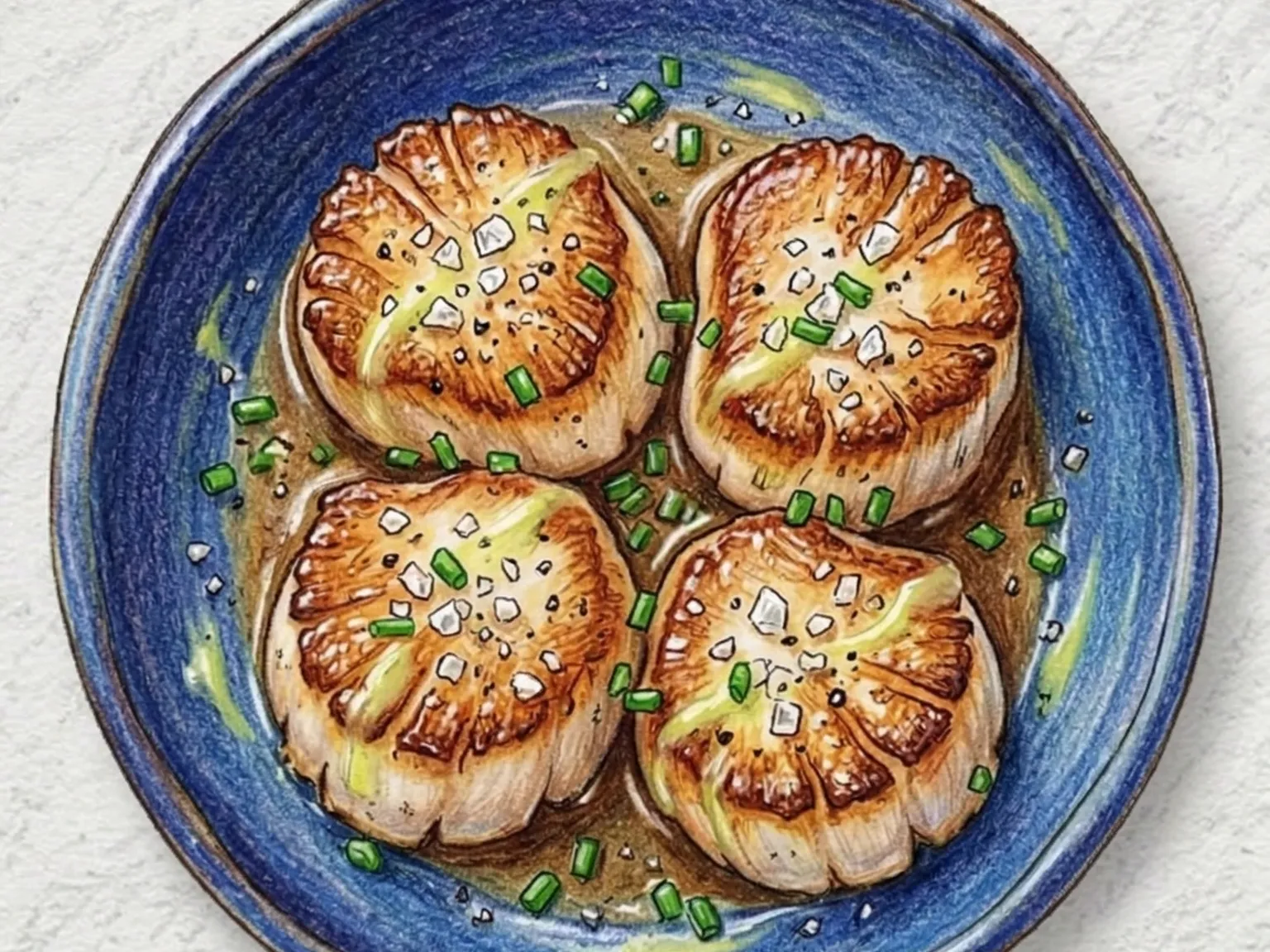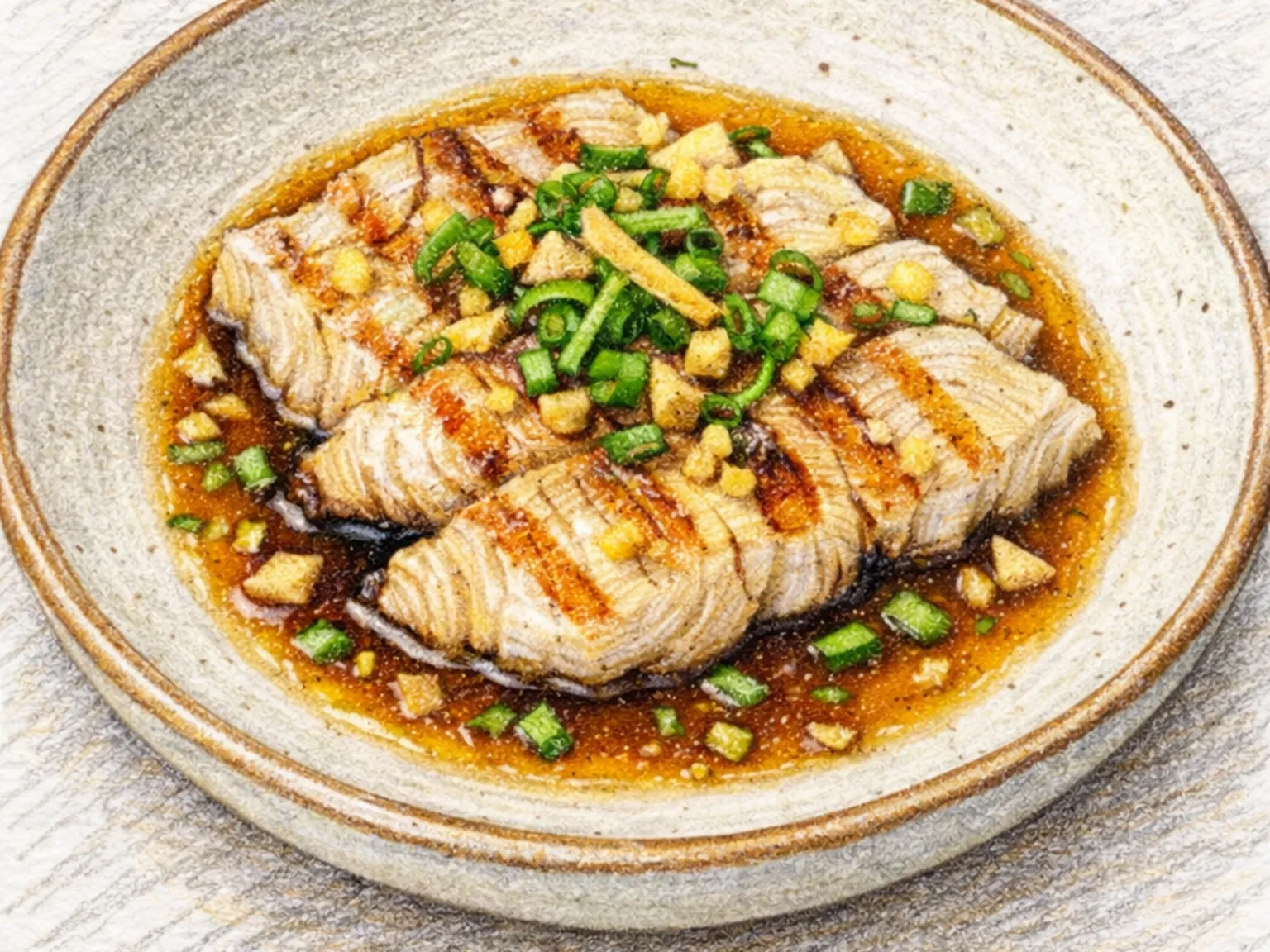
Korean Gwangeo Yuja Ganjang Gui (Yuja Soy Grilled Flounder)
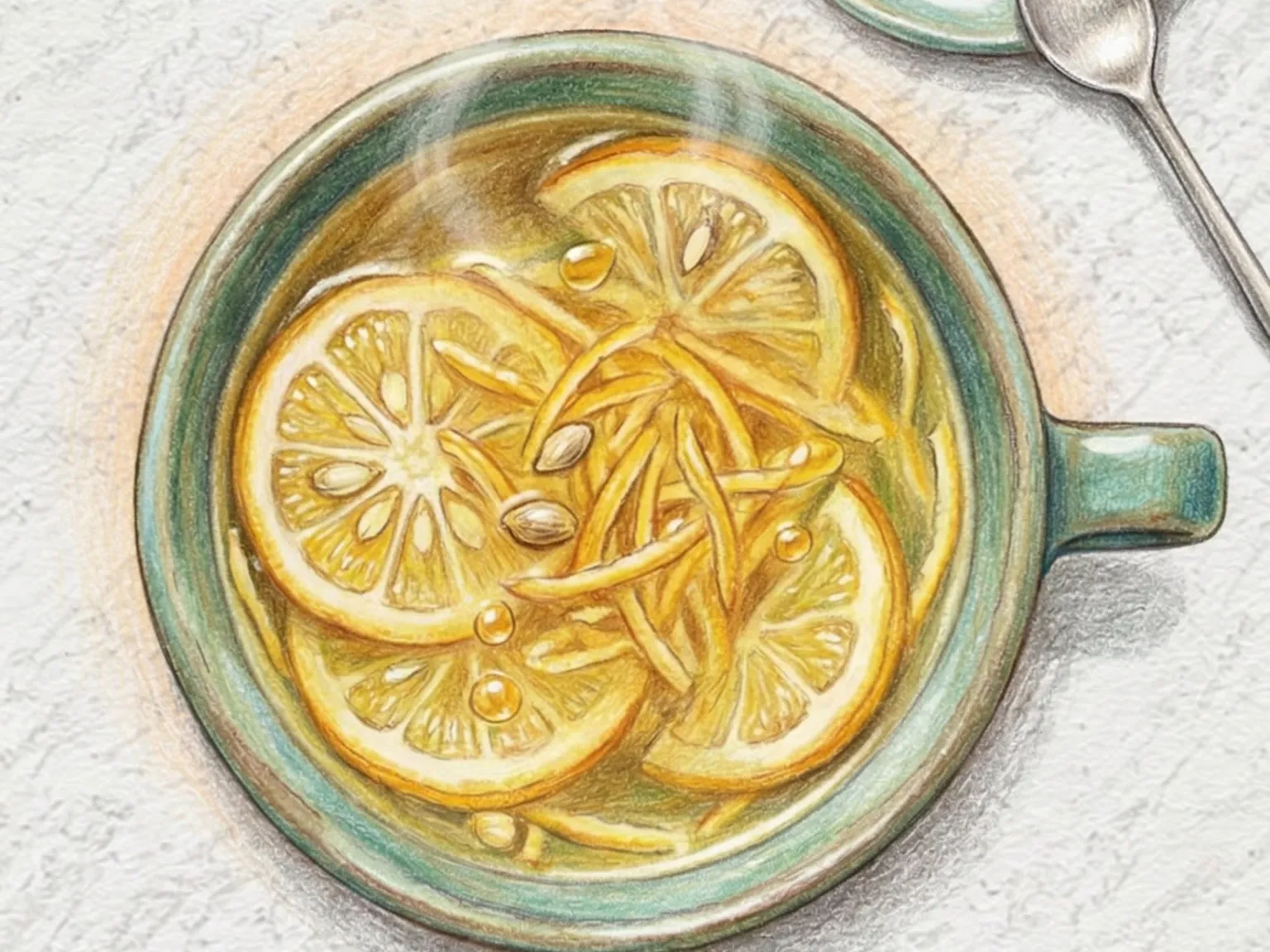
Gwangeo yuja-ganjang-gui is a Korean yuzu-soy grilled flounder where fillets are brushed with a glaze of soy sauce, yuzu marmalade, minced garlic, and ginger juice, marinated for ten minutes, then cooked in olive oil for three minutes per side. The yuzu marmalade lifts the dish with bright citrus acidity that sits on top of the soy sauce's deep umami, building a complex flavor profile over the flounder's mild, clean flesh. Brushing on the remaining glaze during a final two to three minutes on low heat creates a glossy, aromatic sheen, and lemon zest with chopped chives add a finishing burst of fragrance. Flounder fillets are thin and fragile, so flipping once with a wide spatula in a single confident motion is essential to keep the fish intact.
Adjust Servings
Instructions
- 1
Pat flounder dry and season evenly with black pepper.
- 2
Mix soy sauce, yuja marmalade, garlic, and ginger juice into a glaze.
- 3
Brush half the glaze on the fish and marinate for 10 minutes.
- 4
Heat olive oil over medium heat and grill fish 3 minutes per side.
- 5
Brush remaining glaze and cook on low for 2-3 more minutes until glossy.
- 6
Finish with lemon zest and chopped chives for aroma.
As an Amazon Associate, we may earn from qualifying purchases.
Tips
Nutrition (per serving)
More Recipes

Korean Bollak Ganjang Gui (Soy-Glazed Rockfish Grill)
Bolak-ganjang-gui is a Korean soy-glazed rockfish dish where fillets are brushed with a sauce of soy sauce, cooking wine, minced garlic, ginger juice, and honey, then grilled over medium-high heat. Half the glaze is applied first and left for just ten minutes-long enough for the salt and sweetness to penetrate the surface without overwhelming the fish's own mild flavor. Starting skin-side down for four minutes builds a crisp base, and brushing on the remaining glaze during the final minutes of cooking lets the honey caramelize into a glossy, dark-brown coating. A finish of sesame oil and sliced green onion adds a nutty, aromatic layer on top of the savory-sweet glaze.

Korean Horse Mackerel with Yuzu Soy Glaze
Horse mackerel is marinated in a blend of yuzu marmalade, soy sauce, cooking wine, and garlic, then grilled on a grill pan. The citrus notes from the yuzu naturally suppress fishiness while harmonizing with the soy sauce saltiness. Brushing the remaining glaze in the final minute gives the skin a lacquered sheen. Sesame oil and sliced scallion complete the dish with a toasted, aromatic finish.

Korean Gochujang-Grilled Butterfish
Byeongeo gochujang-gui is a Korean spicy grilled butterfish where fillets are brushed with a paste of gochujang, soy sauce, plum syrup, minced garlic, and red pepper flakes, then pan-fried over medium heat. Butterfish has an exceptionally fine, soft flesh that absorbs the glaze readily, and the plum syrup's fruity acidity tempers the fermented heat of gochujang so the finish stays clean rather than heavy. The glaze must be applied in thin, repeated layers during cooking-a single thick coat causes the sugars to burn before the fish cooks through. A light squeeze of lemon at the end adds a bright citrus note that lifts the dish and prevents any lingering oiliness.

Korean Daegu Doenjang Gui (Doenjang-Grilled Cod)
Daegu-doenjang-gui is a Korean grilled cod dish where fillets are coated with a mixture of doenjang, minced garlic, and sesame oil, then cooked until the paste forms a thin, savory crust over the fish. Cod's mild, white flesh is an ideal canvas for doenjang's deep, fermented soybean flavor-the seasoning does not compete with the fish but rather defines it. As the paste dries slightly on the surface under heat, it creates a concentrated savory shell while the flesh underneath stays moist and flaky. Adjusting the amount of doenjang is key since it can easily oversalt the delicate fish, and serving with sliced green onion or perilla leaves provides an herbal counterpoint to the earthy paste.

Korean Steamed Flounder (Whole Flatfish with Soy Garlic Sauce)
Gajami-jjim is a Korean steamed flounder dish prepared with a light soy sauce seasoning, onion, and green onion. Rice wine is added during cooking to neutralize any fishiness while keeping the flesh moist. The seasoning is restrained-soy sauce and garlic provide just enough flavor without masking the flounder's naturally mild, clean taste. With its soft texture and few bones, this dish works well as an everyday banchan alongside rice and soup.

Yuja Shrimp Basil Linguine
Yuja shrimp basil linguine keeps total shrimp cook time under three minutes to preserve a springy bite, deveining and patting them dry before searing. Garlic and red pepper flakes are gently sauteed in olive oil over low heat to build an aromatic base, and a splash of white wine cooks off quickly to add clean depth. Yuja marmalade brings citrus sweetness that is dialed in gradually since brands vary in sugar content, and three tablespoons of starchy pasta water bind the sauce into a light glaze that clings to the linguine. Basil leaves are folded in off the heat to keep their volatile oils intact, layering fresh herbal fragrance over the yuja's citrus notes.