Charim

2686 Korean & World Recipes

2686+ Korean recipes, clean and organized. Ingredients to instructions, all at a glance.

Korean Rolled Omelette (Layered Vegetable Egg Roll)

Korean Rolled Omelette (Layered Vegetable Egg Roll)

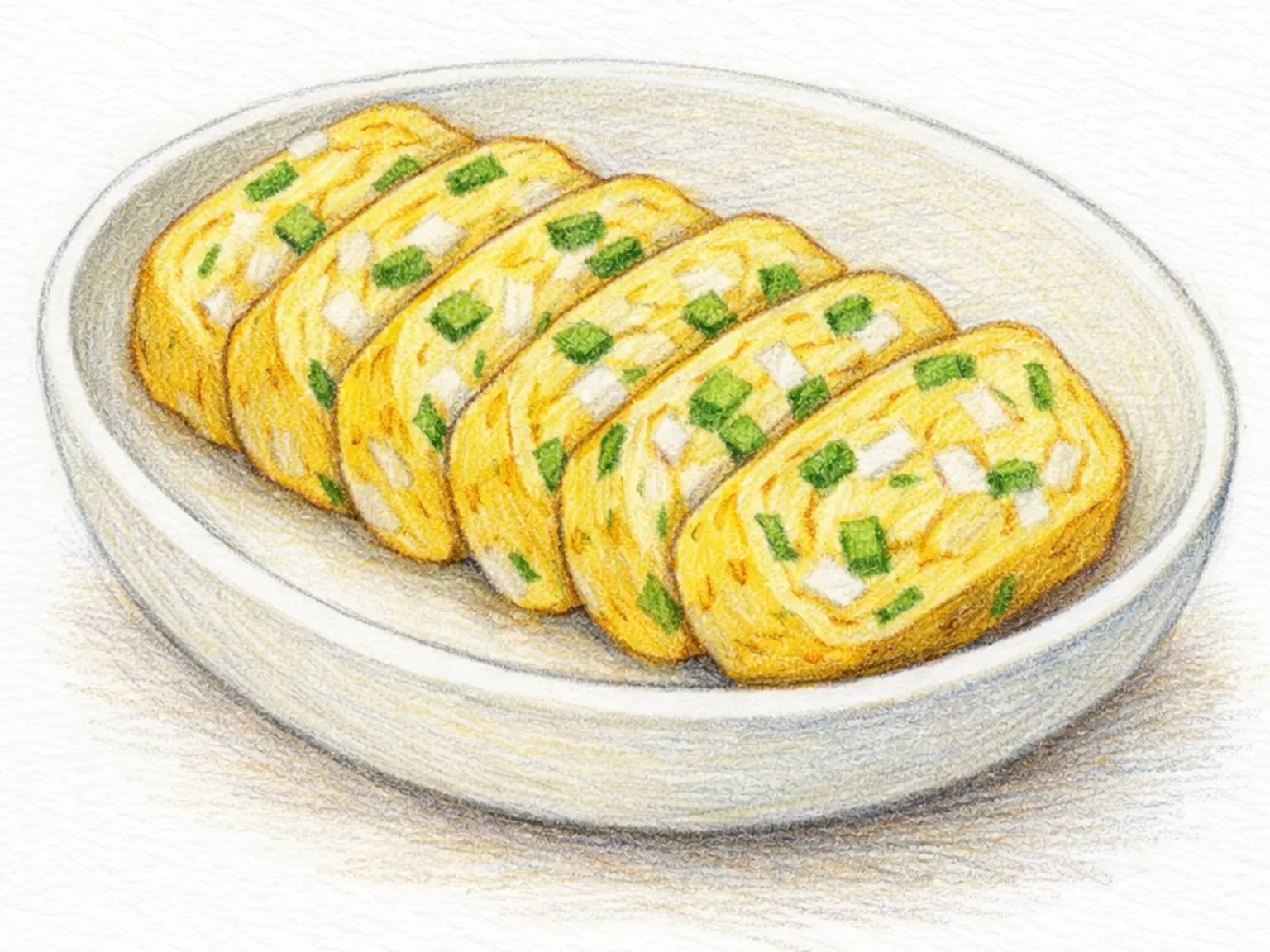
Gyeran-mari - Korean rolled omelette - is a staple of Korean lunchboxes and dinner tables, a dish every Korean home cook masters early. Finely diced carrot, onion, and scallion are mixed into beaten eggs and poured in a thin stream across a lightly oiled rectangular pan. When the egg layer is half-set, it is rolled from one side to the other, then more egg mixture is poured beside the roll and the process repeats three to four times, building concentric yellow layers visible when sliced. Air trapped between the thin sheets gives the omelette its characteristic pillowy softness. Temperature control is critical - too hot and the egg browns; too cool and the layers will not bond. After cooking, wrapping the roll in a bamboo mat or kitchen towel for two minutes sets its shape into a clean cylinder. Found in school cafeterias, picnic bento boxes, and family dinners across Korea.

Prep 10min Cook 8min 2 servings

Adjust Servings

2servings
servings

Instructions

  1. 1

    Finely mince carrot, onion, and green onion, then gently blot moisture with paper towel.

  2. 2

    Beat eggs in a bowl and mix in salt, pepper, and milk evenly.

  3. 3

    Add minced vegetables to the egg mixture and stir lightly once more.

  4. 4

    On low heat, lightly oil the pan and pour in one-third of the mixture to cook a thin layer.

  5. 5

    Roll from the end slowly, then repeat twice with remaining egg mixture.

  6. 6

    Cool for 1 minute, then slice into 2 cm pieces and serve.

🛒Shop Ingredients on Amazon

As an Amazon Associate, we may earn from qualifying purchases.

Tips

Keep the heat low to prevent browning and get a smooth texture.
Adding milk keeps the omelette moist even after cooling.

Nutrition (per serving)

Calories
176
kcal
Protein
11
g
Carbs
3
g
Fat
13
g

More Recipes

Korean Pollock Roe Rolled Omelet
Side dishesMedium

Korean Pollock Roe Rolled Omelet

Myeongran gyeran-mari elevates the classic Korean rolled omelet by incorporating myeongranjeot - salted pollock roe - whose briny pop against the egg's gentle sweetness creates a two-layered flavor experience in every bite. The roe sac is split lengthwise with a knife and scraped clean with a spoon to separate the individual eggs from the membrane. Two techniques exist: mixing the roe directly into the beaten egg for even distribution, or laying a line of roe across each layer as the omelet is rolled, which produces a vivid orange stripe visible in the cross-section. Low to medium heat is mandatory during cooking - too hot and the egg browns, burying the roe's delicate salinity beneath a scorched note. When sliced, the contrast between the pale yellow egg and the pink-orange roe granules is visually striking, and biting into a piece delivers a soft egg cushion punctuated by tiny pops of salty roe. This banchan is popular in Korean lunchboxes and reflects the influence of Japanese tamagoyaki technique on modern Korean home cooking.

🏠 Everyday🍱 Lunchbox
Prep 10minCook 10min2 servings
Korean Soy-Braised Fish Cake
Side dishesEasy

Korean Soy-Braised Fish Cake

Eomuk-jorim - soy-braised fish cake - is among the most reliable banchan in the Korean refrigerator, keeping for up to a week while improving in flavor each day as the soy glaze penetrates deeper. Korean eomuk is a pressed fish paste distinct from Japanese kamaboko, with a chewier, denser bite. The fish cake is cut into triangles or rectangles and simmered in a mixture of soy sauce, rice syrup, garlic, and water. As the liquid reduces by half over ten minutes, the remaining sauce thickens into a sticky, sweet-salty glaze clinging to each piece. Adding a sliced cheongyang chili near the end introduces a subtle heat that lifts the otherwise one-dimensional sweetness. This banchan has been a fixture of Korean school cafeterias, packed lunches, and corner-store side dishes for decades - a workhorse side dish that costs almost nothing to prepare.

🏠 Everyday🍱 Lunchbox
Prep 8minCook 12min4 servings
Korean Seasoned Carrot Namul
Side dishesEasy

Korean Seasoned Carrot Namul

Carrot namul is one of the five-color banchan Koreans prepare for ancestral rites, where orange represents fire. Julienned thin, the carrots are salted briefly to shed water, then stir-fried with garlic for two to three minutes - just enough to soften the raw edge while keeping an audible crunch. No soy sauce or chili enters the pan; seasoning stays minimal to preserve natural sweetness. A final toss with sesame oil and seeds rounds out this clean, single-ingredient side.

🏠 Everyday🍱 Lunchbox
Prep 8minCook 6min2 servings
Korean Steamed Eggplant Namul
Side dishesEasy

Korean Steamed Eggplant Namul

Gaji namul strips eggplant down to its quietest expression - steamed until completely soft, then dressed with just soy sauce, garlic, and sesame oil. No chili, no vinegar, no fermented paste. The eggplant is halved and steamed for seven minutes until the flesh is uniformly tender, then torn into long shreds by hand along its natural fibers. This tearing technique creates rough surfaces that grip the minimal seasoning better than knife-cut pieces would. The dressed namul has a glossy, dark sheen from the sesame oil and soy sauce soaking into the porous flesh. Among Korean namul dishes, gaji namul stands out for its exceptionally soft, almost melting texture - it practically dissolves when mixed into warm rice. A traditional banchan in Korean Buddhist temple cuisine, where simplicity is a principle rather than a limitation.

🏠 Everyday🍱 Lunchbox
Prep 10minCook 8min4 servings
Korean Soy Braised Quail Eggs
Stir-fryEasy

Korean Soy Braised Quail Eggs

Al-jorim - soy-braised quail eggs - is one of Korea's most universal banchan, found in school cafeterias, office lunch boxes, and home refrigerators alike. The dish has roots in the broader Korean jorim tradition of slow-simmering proteins in sweetened soy sauce until the glaze penetrates to the core. Peeled quail eggs simmer in a mixture of soy sauce, water, sugar, cooking wine, and garlic for ten minutes, rolling occasionally to ensure even color. The soy sauce stains each egg a glossy chestnut brown on the outside while the yolk inside stays bright yellow. A sliced cheongyang chili dropped in near the end adds a subtle heat that keeps the sweet-salty profile from becoming one-note. This banchan improves after a night in the refrigerator as the seasoning continues to penetrate, and keeps well for nearly a week.

🏠 Everyday🍱 Lunchbox
Prep 10minCook 15min2 servings
Korean Stir-fried Sausage
Stir-fryEasy

Korean Stir-fried Sausage

Sosegi-bokkeum is a Korean sausage stir-fry where scored Vienna sausages are dry-fried until golden, then tossed with onion in a sauce of ketchup, gochujang, oligosaccharide syrup, and soy sauce. Scoring the sausages lets the sweet-spicy glaze seep into every cut, so the flavor is consistent from edge to center. The sauce caramelizes quickly -- just two minutes of tossing coats the sausages in a glossy, clingy layer. Finished with sesame seeds and sliced green onion, it is a staple banchan that packs well in lunchboxes.

🏠 Everyday🧒 Kid-Friendly
Prep 5minCook 10min2 servings
More Side dishes →