Korean Egg Drop Soup for Anju
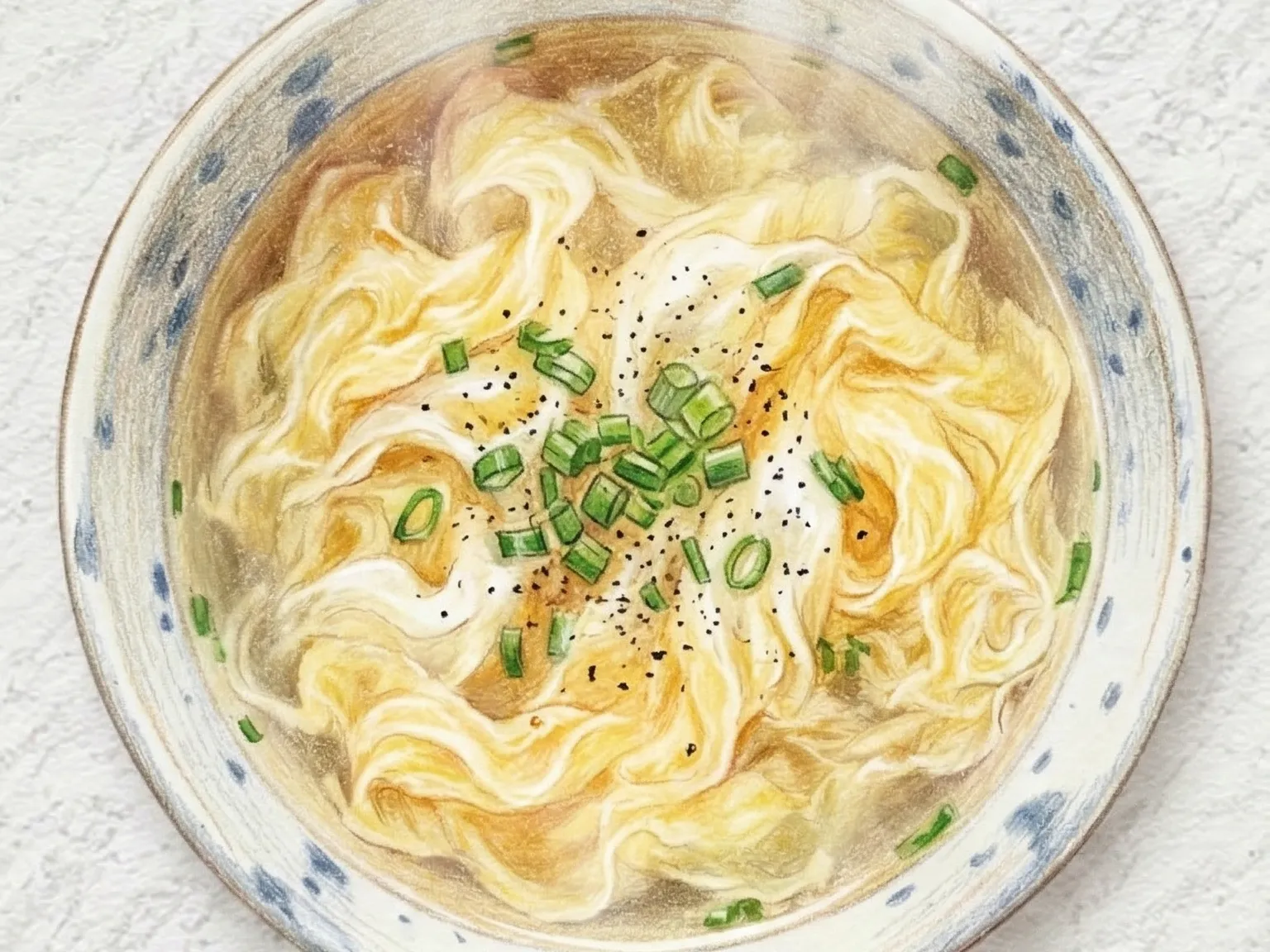
Gyeran-tang is a light Korean egg drop soup built on a clear broth seasoned simply with soup soy sauce and minced garlic. Beaten eggs are drizzled into the boiling liquid along chopsticks, forming delicate ribbons that cook almost instantly into soft, silky strands. A pinch of black pepper adds a mild, peppery warmth that cuts through the mildness of the egg. Thinly sliced green onion is scattered on top just before serving, releasing a fresh, sharp fragrance that rises with the steam from the hot bowl.
Adjust Servings
Instructions
- 1
Beat eggs and strain once for a smoother texture.
- 2
Boil water and season with soup soy sauce and garlic.
- 3
Lower heat, create a gentle swirl, and slowly pour in eggs.
- 4
Let it set for 30 seconds without stirring.
- 5
Add green onion and pepper, simmer 1 more minute, and serve.
As an Amazon Associate, we may earn from qualifying purchases.
Tips
Nutrition (per serving)
More Recipes

Korean Grilled Dried Pollack
Hwangtae-po-gui is a grilled dried pollack snack prepared by brushing seasoning paste onto semi-dried hwangtae fillets and cooking them over medium-low heat. Hwangtae is pollack that has been freeze-dried repeatedly through winter cycles, a process that puffs up the flesh and gives it a softer grain and chewier texture than ordinary dried fish. A paste of gochujang, soy sauce, and oligosaccharide syrup is spread on both sides and grilled slowly so the sugars caramelize into a glossy, sticky coating. Minced garlic, sesame oil, and sesame seeds add roasted richness, and each torn piece delivers alternating salty and sweet notes.

Korean Poached Squid Slices
Ojingeo-sukhoe is a Korean poached squid dish where cleaned whole squid is blanched for just two to three minutes in boiling water seasoned with salt, cooking wine, and green onion, then sliced and served with vinegared gochujang. Removing the innards thoroughly and rinsing well is the key step for a clean taste, and the cooking wine in the poaching liquid neutralizes any remaining fishiness. Pulling the squid out promptly and letting it cool briefly prevents carryover cooking from toughening the flesh, preserving smooth, clean-cut slices. The tangy, spicy dipping sauce provides a sharp contrast against the mild squid, turning a minimalist preparation into a dish with genuine depth of flavor.

Korean Fish Cake Soup (Clear Anchovy Radish Broth)
Eomuk-tang is a Korean fish cake soup in which skewered fish cakes and thick radish slices simmer in a clear broth built from dried anchovies and kelp. The kelp is removed as soon as the water begins to boil to prevent the broth from becoming slimy, and the radish is cut thick so it releases natural sweetness over extended simmering. Rinsing the fish cakes in hot water before adding them removes surface oil and keeps the broth clean. Soup soy sauce adjusts the seasoning, and scallion and black pepper finish the bowl with a mild, savory depth.

Korean Tofu with Stir-fried Kimchi
Dubu-kimchi pairs thick slices of blanched tofu with aged kimchi stir-fried alongside pork shoulder and onion. The deep fermentation sourness of the aged kimchi concentrates as it cooks in oil with gochugaru, and a small amount of sugar bridges the gap between the sour and spicy notes. The tofu is blanched just briefly in salted water so it stays firm without crumbling, and placing it under the hot kimchi stir-fry lets the surface absorb the seasoning. A finish of sesame oil adds a nutty aroma, and sliced green onion on top provides a fresh contrast.

Gyeran-guk (Egg Drop Anchovy Broth Soup)
Korea's quickest comfort soup - ready in under 10 minutes with just eggs, soy sauce, and garlic. A beaten egg is drizzled into rolling broth and immediately sets into delicate, flower-like ribbons that float through the clear liquid. A finish of sliced green onion and a drop of sesame oil adds fragrance without weight. The result is gentle and soothing, mild enough for anyone feeling under the weather yet satisfying enough to anchor a full meal of rice and banchan. Gyeran-guk appears on Korean dinner tables more often than almost any other soup, and its economy of ingredients makes it a reliable standby for busy weeknight dinners.

Korean Rolled Omelette (Layered Vegetable Egg Roll)
Gyeran-mari - Korean rolled omelette - is a staple of Korean lunchboxes and dinner tables, a dish every Korean home cook masters early. Finely diced carrot, onion, and scallion are mixed into beaten eggs and poured in a thin stream across a lightly oiled rectangular pan. When the egg layer is half-set, it is rolled from one side to the other, then more egg mixture is poured beside the roll and the process repeats three to four times, building concentric yellow layers visible when sliced. Air trapped between the thin sheets gives the omelette its characteristic pillowy softness. Temperature control is critical - too hot and the egg browns; too cool and the layers will not bond. After cooking, wrapping the roll in a bamboo mat or kitchen towel for two minutes sets its shape into a clean cylinder. Found in school cafeterias, picnic bento boxes, and family dinners across Korea.