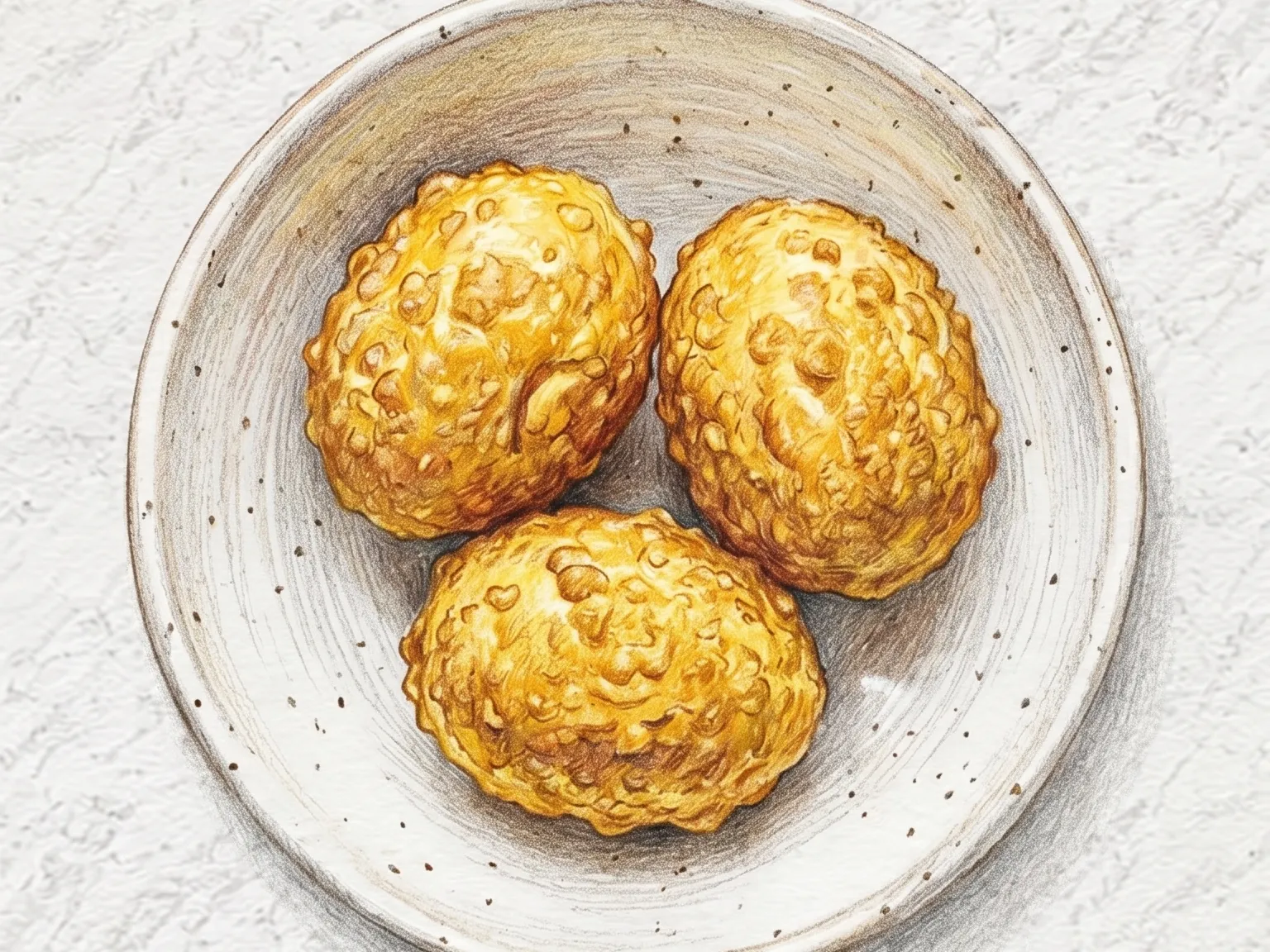
Korean Deep-Fried Egg (Battered Boiled Egg with Crispy Golden Shell)
Gyeran-twigim is Korean deep-fried egg - a peeled boiled egg coated in cold-water tempura batter and fried at 170 degrees Celsius until golden. Soft-boiling keeps the yolk semi-liquid inside the crisp shell, creating a dramatic contrast when bitten into, while hard-boiling gives a crumbly yolk texture instead. A thinner batter lets the egg's own flavor come forward, and plain salt is the only accompaniment needed. Dipping the fried egg into tteokbokki sauce is a popular way to eat it, as the crunchy batter soaks up the spicy-sweet broth.
Adjust Servings
Instructions
- 1
Boil eggs and peel.
- 2
Mix frying powder and cold water to make batter.
- 3
Coat boiled eggs in batter.
- 4
Deep-fry at 170C until golden.
- 5
Serve with salt.
As an Amazon Associate, we may earn from qualifying purchases.
Tips
Nutrition (per serving)
More Recipes

Korean Potato Fritters
Gamja twigim coats sliced or shredded potatoes in a batter of frying mix and cold water, then deep-fries them until golden and crisp. Soaking the cut potatoes in cold water to wash off surface starch results in a crunchier finish after frying, and keeping the batter coat thin lets the potato's own starchy sweetness come through. Thick-cut slices yield a fluffy interior beneath the crust, while shredded potatoes tangle together into a chip-like, airy cluster. A simple dusting of salt is enough to bring out the potato flavor, and Korean fritter shops typically serve these alongside chili pepper and perilla leaf tempura as part of a mixed platter.

Korean Deep-Fried Seaweed Rice Roll
Gimmari is a Korean street snack of glass noodles seasoned with soy sauce and sesame oil, rolled inside seaweed sheets with julienned carrot and onion, then coated in batter and deep-fried. At 160 degrees Celsius, the seaweed barely absorbs oil, crisping into a thin shell while the noodles inside stay chewy. The first bite delivers the crunch of the fried coating and the savory depth of the seaweed, followed by the springy pull of the glass noodles and a hint of soy-sesame seasoning. Dipping gimmari into tteokbokki sauce is one of the most iconic Korean snack pairings.

Korean Gochujang Honey Dakgangjeong
Gochujang honey dakgangjeong starts with bite-sized boneless chicken thigh pieces coated in potato starch and double-fried - first at 170 degrees, then at 180 degrees - before being tossed in a glaze of gochujang, honey, soy sauce, and garlic. The two-stage frying builds a rigid starch shell that stays crunchy even after saucing, while the thigh meat's natural fat keeps the interior moist. The glaze balances gochujang's fermented heat against honey's dense sweetness, with soy sauce anchoring the saltiness and sesame seeds adding a finishing nuttiness. The sauce must be reduced quickly - under one minute on high heat - to achieve a glossy coat without burning.

Korean Stir-Fried Fish Cake Strips
Flat fish cake is sliced into strips and quickly stir-fried with red pepper flakes, soy sauce, sugar, and minced garlic in a hot pan. Blanching the fish cake beforehand removes surface oil so the seasoning adheres more cleanly, and a final toss with sesame oil and sesame seeds brings a nutty fragrance. Despite the short ingredient list and fast cook time, the balance between sweet and spicy is well defined.

Korean Tomato Egg Fried Rice
Eggs are scrambled first and set aside, then tomatoes are stir-fried in the same pan until their juices burst and coat the wok. Day-old or freshly cooked rice goes in next, tossed at high heat so the grains absorb the tomato's sweet-tart moisture while staying individually distinct. The scrambled egg is folded back in at the end, distributing soft, fluffy curds throughout the fried rice. Rooted in the Chinese classic of tomato and egg, this version turns those familiar flavors into a satisfying one-bowl fried rice.

Korean Egg Fried Rice (Quick Wok-Tossed Grain Bowl)
Two beaten eggs and one bowl of rice are all it takes to make this ten-minute fried rice. The eggs are poured into a smoking-hot oiled pan, and rice is added the moment the eggs are half-set, then tossed rapidly so every grain gets an individual egg coating - producing a texture that is fluffy and slightly glossy rather than clumpy. Cold leftover rice works best because its lower moisture content lets the grains separate cleanly during stir-frying. A finishing drizzle of sesame oil and a scattering of chopped green onion add a toasty fragrance that rounds out this minimal but satisfying solo meal.