Charim

2686 Korean & World Recipes

2686+ Korean recipes, clean and organized. Ingredients to instructions, all at a glance.

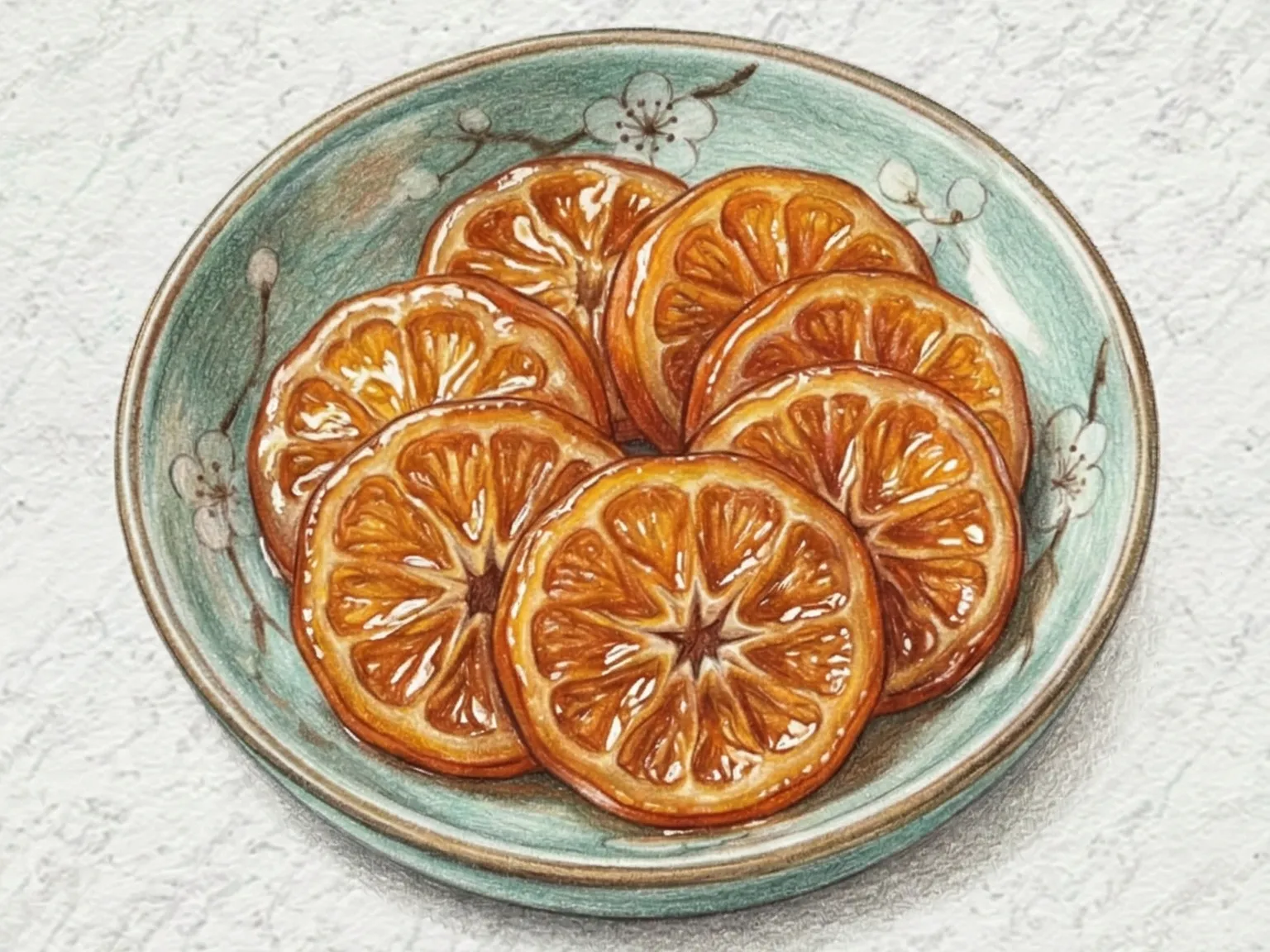
Candied Tangerine Peel (Korean Citrus Honey Confection)
Desserts Medium

Candied Tangerine Peel (Korean Citrus Honey Confection)

Gyul jeonggwa is a traditional Korean candied confection made by slicing tangerine peels into 0.8 cm strips, blanching them twice in salted water to draw out bitterness, then simmering in a syrup of sugar, honey, and cinnamon for thirty-five to forty minutes on low heat. Leaving a moderate amount of white pith intact preserves the essential citrus oils that give the finished candy its bright, aromatic character. As the peels cook, they turn translucent and absorb the syrup, developing a dense, chewy texture similar to a fruit jelly. A splash of lemon juice at the end prevents the syrup from crystallizing and rounds out the sweetness with a clean acidic note, and drying the pieces on a rack for an hour after cooking yields a non-sticky surface.

Prep 25min Cook 70min 4 servings

Adjust Servings

2servings
servings

Instructions

  1. 1

    Trim excessive white pith from peels and slice into 0.8 cm strips.

  2. 2

    Blanch peels in salted water for 5 minutes, discard water, and repeat once to reduce bitterness.

  3. 3

    Make syrup with 400 ml water, sugar, honey, and cinnamon over low heat.

  4. 4

    Add blanched peels and simmer gently for 35-40 minutes until translucent.

  5. 5

    Finish with lemon juice and simmer 2 more minutes.

  6. 6

    Lift out and spread on a rack to dry for 1 hour before serving.

🛒Shop Ingredients on Amazon

As an Amazon Associate, we may earn from qualifying purchases.

Tips

Leave some white pith; removing too much weakens flavor.
Cool fully for a less sticky, pleasantly chewy finish.

Nutrition (per serving)

Calories
156
kcal
Protein
1
g
Carbs
39
g
Fat
0
g

More Recipes

Saenggang Jeonggwa (Candied Ginger)
DessertsMedium

Saenggang Jeonggwa (Candied Ginger)

Saenggang jeonggwa is a traditional Korean candied ginger made by slicing fresh ginger thinly, blanching it twice to tame the raw heat, then simmering the slices in a sugar and grain syrup glaze. A 10-minute cold-water soak removes the sharpest bite first, and two rounds of boiling soften the pungency further while preserving the clean aromatic core. The slices are simmered on low heat until the syrup reduces to a glossy coat, at which point lemon juice is stirred in to balance the sweetness with a light acidity, and the finished pieces are dried on a rack before being rolled in granulated sugar. The sugar crust crackles on first bite, giving way to the chewy, syrup-concentrated ginger underneath with its slow-building warmth.

🎉 Special Occasion🧒 Kid-Friendly
Prep 15minCook 45min4 servings
Black Sesame Tea Cookies (No-Bake Korean Pressed Cookies)
DessertsEasy

Black Sesame Tea Cookies (No-Bake Korean Pressed Cookies)

Heukimja dasik is a traditional Korean pressed tea cookie made by binding roasted black sesame powder and almond flour with honey and rice syrup, then pressing the mixture into a decorative wooden mold. It requires no heat at all: the rich, toasty flavor of the sesame and the fatty depth of the almond combine within the sticky honey base to create a crumbly, melt-in-the-mouth texture. A small amount of sesame oil improves the binding, and dusting the mold with pine nut powder before pressing yields a sharply defined surface pattern. After shaping, the cookies are rested in an airtight container for thirty minutes to firm up, resulting in bite-sized confections traditionally served alongside tea.

🧒 Kid-Friendly Quick
Prep 20min4 servings
Jeungpyeon (Fermented Makgeolli Rice Cake)
DessertsMedium

Jeungpyeon (Fermented Makgeolli Rice Cake)

Jeungpyeon is a traditional Korean fermented rice cake made by mixing rice flour with makgeolli, fermenting the batter in a warm spot for one hour until bubbly, then steaming for eighteen to twenty minutes. The yeast and lactic acid bacteria in the makgeolli break down the rice starch while generating small air pockets, and a supplementary addition of baking powder ensures the cake rises into a soft, sponge-like crumb. Raisins and pumpkin seeds placed on top just before steaming soften slightly in the heat, contributing fruit sweetness and seed richness to the surface. Wrapping the steamer lid with cloth prevents condensation from dripping onto the cakes, which keeps the top smooth, and the lingering makgeolli fermentation aroma sets jeungpyeon apart from other steamed rice cakes.

🧒 Kid-Friendly
Prep 20minCook 25min4 servings
Green Tea Dasik Cookies (No-Bake Korean Matcha Pressed Cookies)
DessertsEasy

Green Tea Dasik Cookies (No-Bake Korean Matcha Pressed Cookies)

Nokcha dasik are Korean pressed tea cookies formed by binding roasted soybean powder and matcha with honey, rice syrup, and a touch of sesame oil, then stamping the mixture in a traditional wooden mold. No oven or heat is needed; the key is achieving a moisture ratio that lets the dough hold together under pressure without cracking. On the tongue, the cookie dissolves gently, releasing the toasty depth of roasted soybean first, followed by the grassy bitterness of green tea that cleans the palate. The embossed pattern from the mold gives each piece a refined, ornamental appearance, and a brief air-dry at room temperature firms the surface enough for neat storage.

🧒 Kid-Friendly
Prep 25min4 servings
Dasik (Korean Honey-Pressed Roasted Grain Confection)
BakingEasy

Dasik (Korean Honey-Pressed Roasted Grain Confection)

Dasik is a traditional Korean pressed confection made by kneading roasted grain or nut powders with honey and pressing the mixture into carved wooden molds. Unlike baked goods, dasik holds its shape through the binding power of honey alone, which gives it a distinctive texture - slightly sticky on the teeth at first, then dissolving softly at body temperature. Roasted soybean powder produces a nutty version, black sesame yields a deeply aromatic one, and additions of pine nut powder or cinnamon deepen the flavor further. The wooden molds imprint decorative patterns onto the surface, making each piece as visually refined as it is flavorful. Dasik has been a staple of Korean tea ceremonies for centuries.

🧒 Kid-Friendly Quick
Prep 20min4 servings
Korean Tangerine Peel Ginger Tea
DrinksEasy

Korean Tangerine Peel Ginger Tea

Gyulpi-saenggang-cha combines dried tangerine peel and sliced fresh ginger simmered together for about eighteen minutes, creating a tea where citrus bitterness and ginger heat meet in each sip. Properly dried tangerine peel has concentrated oils and reduced bitterness compared to fresh peel, and the simmering draws out its fragrant essential oils. Jujubes smooth the sharp edges of the brew with their gentle sweetness, while honey and rice syrup each contribute a different texture of sweetness - one bright, the other thick and malty. A tiny pinch of salt at the end sharpens the overall flavor and leaves the finish clean.

🍺 Bar Snacks
Prep 10minCook 18min2 servings
More Desserts →