Korean Tangerine Peel Ginger Tea
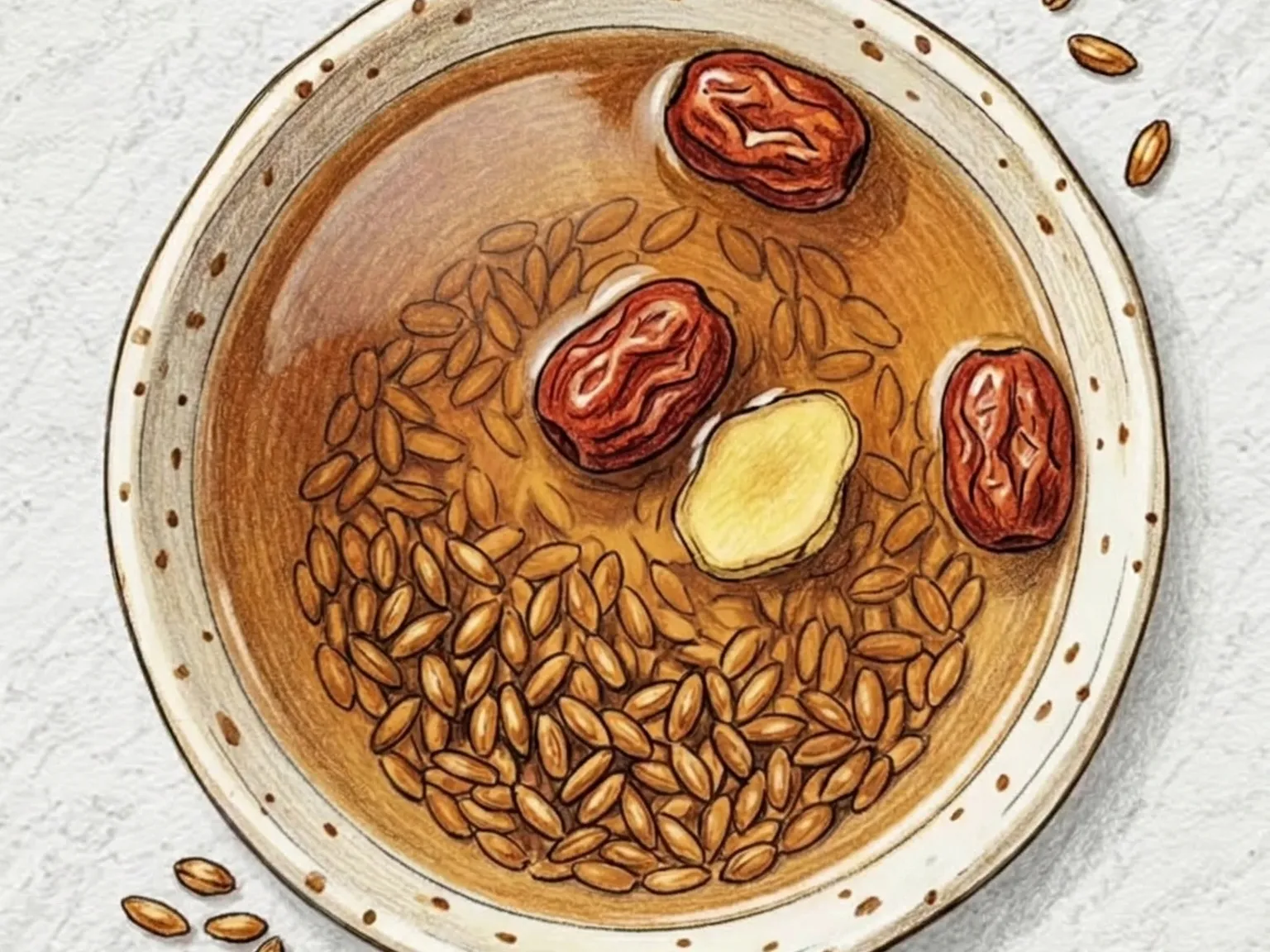
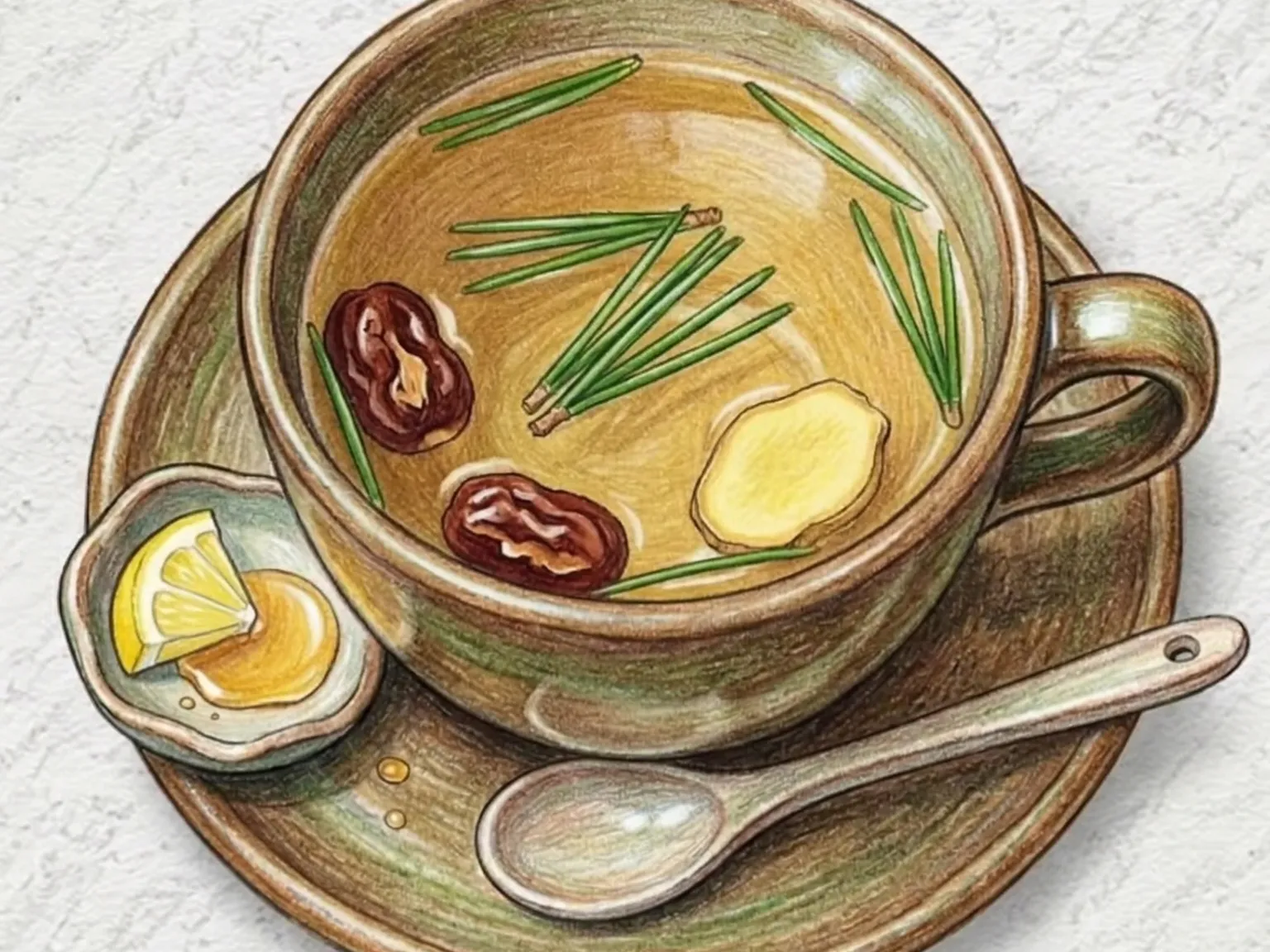
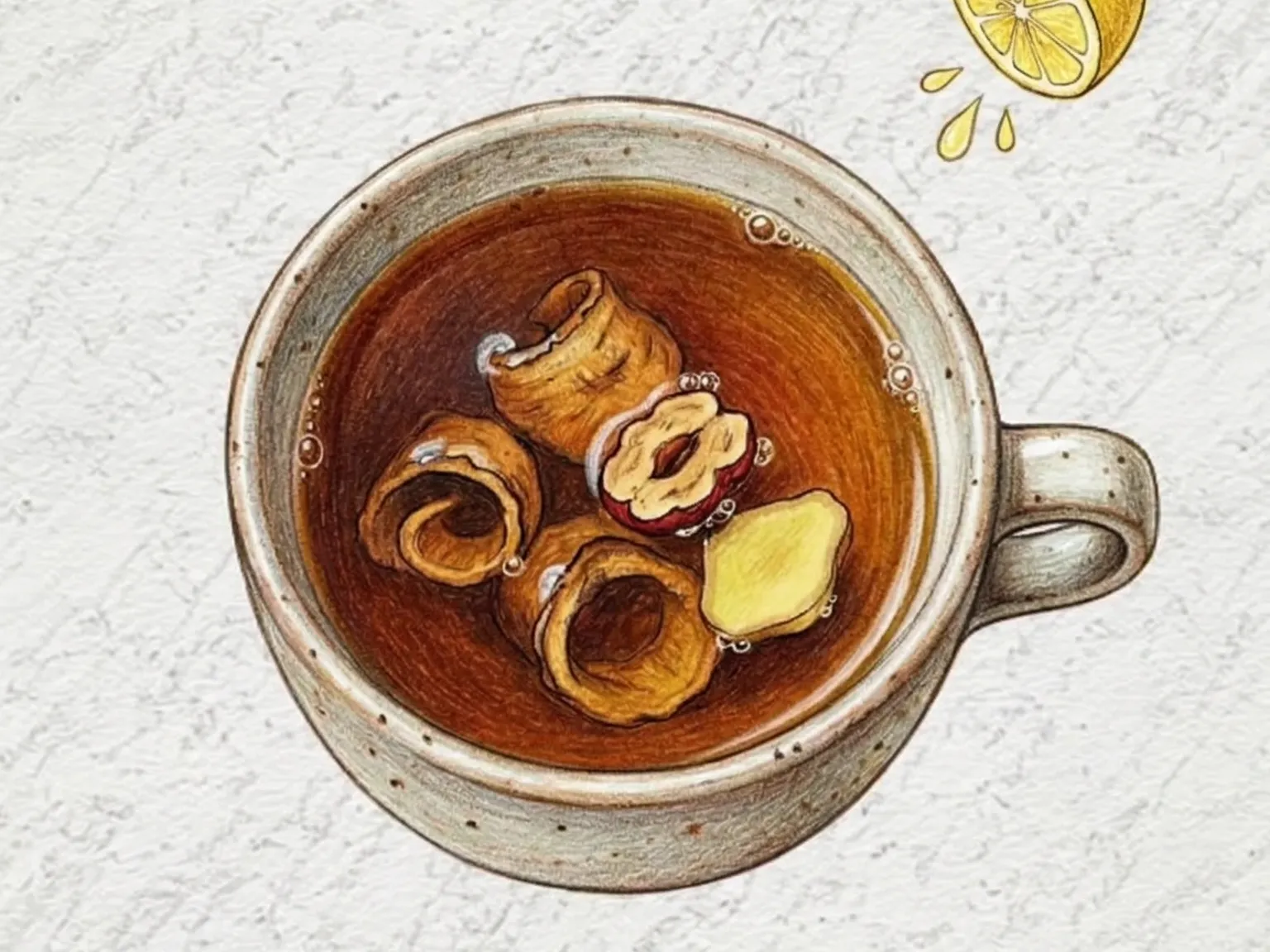
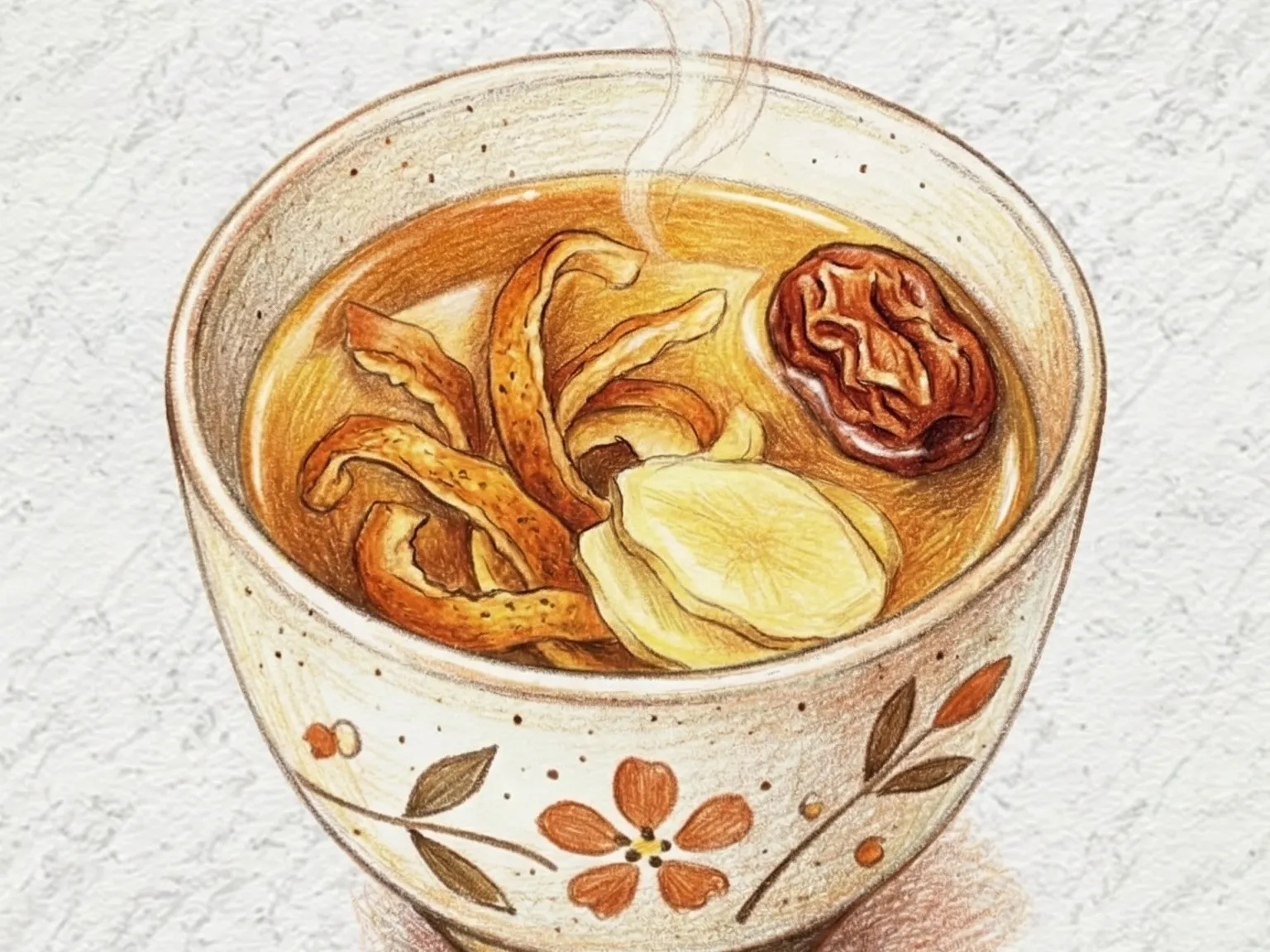
Gyulpi-saenggang-cha combines dried tangerine peel and sliced fresh ginger simmered together for about eighteen minutes, creating a tea where citrus bitterness and ginger heat meet in each sip. Properly dried tangerine peel has concentrated oils and reduced bitterness compared to fresh peel, and the simmering draws out its fragrant essential oils. Jujubes smooth the sharp edges of the brew with their gentle sweetness, while honey and rice syrup each contribute a different texture of sweetness - one bright, the other thick and malty. A tiny pinch of salt at the end sharpens the overall flavor and leaves the finish clean.
Adjust Servings
Instructions
- 1
Rinse dried tangerine peel and soak for 2 minutes to remove bitterness.
- 2
Thinly slice ginger and halve jujubes to remove pits.
- 3
Add water, tangerine peel, ginger, and jujube to a pot and bring to a boil.
- 4
Lower heat and simmer gently for 12 minutes.
- 5
Strain out solids, then mix in honey, rice syrup, and a pinch of salt.
- 6
Serve hot, or chill in the fridge and serve over ice.
As an Amazon Associate, we may earn from qualifying purchases.
Tips
Nutrition (per serving)
More Recipes

Korean Ginger Tea (Spiced Jujube Honey Ginger Brew)
Saenggangcha is a Korean ginger tea made by simmering thinly sliced fresh ginger and halved, pitted jujubes in water for 15 minutes on medium heat followed by 5 minutes on low to extract both the sharp warmth of ginger and the quiet fruitiness of the jujubes. Slicing the ginger thin maximizes the surface area exposed to water, accelerating the release of gingerol, the compound responsible for the tea's characteristic peppery bite. Honey is dissolved only after the pot is removed from the heat, preserving its floral aroma intact on top of the ginger's lingering warmth. A small measure of ground cinnamon deepens the spice profile, and lemon slices floated on the surface add a citrus brightness that offsets the body of the tea.

Korean Balloon Flower Ginger Tea
Doraji-saenggang-cha is a Korean herbal tea that layers the gentle bitterness of balloon flower root, the sharp warmth of ginger, and the natural sweetness of pear and jujube into a single infusion. Rubbing the balloon flower root in salted water before cooking is essential to draw out its harsh bitterness; skipping this step leaves the entire tea heavy and medicinal. Ginger and jujube simmer for twenty minutes first to build the broth's backbone, then pear goes in for five more minutes so its juice dissolves into the liquid as a natural sweetener. Honey is stirred in only after the heat is off, preserving its fragrance in the finished cup.

Korean Kudzu Root Tea (Earthy Herbal Root Brew)
Chik-cha is a traditional Korean tea made by slowly simmering dried kudzu root with sliced ginger, scored jujubes, and a cinnamon stick for at least twenty-five minutes on low heat. The kudzu root releases an earthy, starchy depth that forms the tea's backbone, while ginger adds warm pungency and cinnamon contributes a sweet, woody spice layer. Honey is stirred in only after the heat is turned off to preserve its floral aroma, and the jujubes provide a subtle fruity sweetness that ties the flavors together.

Korean Lotus Root Tea (Warm Herbal Root Brew)
Yeongeun-cha is a Korean lotus root tea made by simmering peeled, sliced lotus root with jujube, ginger, and a cinnamon stick on low heat for 25 minutes. The root's natural starch dissolves into the water, giving the tea a clear yet slightly viscous body, while cinnamon and ginger leave a warm undertone in the finish. Jujubes supply the primary sweetness, supplemented by honey and a tiny pinch of salt to deepen the flavor. A brief soak of the lotus root slices in vinegar water before cooking prevents browning and keeps the tea's color pale and clean. It tastes equally smooth served hot or chilled.

Candied Tangerine Peel (Korean Citrus Honey Confection)
Gyul jeonggwa is a traditional Korean candied confection made by slicing tangerine peels into 0.8 cm strips, blanching them twice in salted water to draw out bitterness, then simmering in a syrup of sugar, honey, and cinnamon for thirty-five to forty minutes on low heat. Leaving a moderate amount of white pith intact preserves the essential citrus oils that give the finished candy its bright, aromatic character. As the peels cook, they turn translucent and absorb the syrup, developing a dense, chewy texture similar to a fruit jelly. A splash of lemon juice at the end prevents the syrup from crystallizing and rounds out the sweetness with a clean acidic note, and drying the pieces on a rack for an hour after cooking yields a non-sticky surface.

Baesuk (Korean Poached Pear Punch)
Baesuk is a traditional Korean punch made by slowly simmering whole or large-cut Korean pear with ginger, whole black peppercorns, and dried jujubes. As the pear cooks over low heat, its juice gradually dissolves into the liquid, building a natural sweetness that forms the drink's backbone. Ginger contributes a warm, peppery sharpness that interlocks with the pear's sweetness, producing a flavor that is comforting yet clean. Whole peppercorns are used sparingly; they provide a subtle spice aroma in the background rather than actual heat. Jujubes add a faint reddish tint and a mild fruity undertone to the liquid. Honey is stirred in after the heat is turned off and the temperature has dropped slightly, preserving its fragrance; because the pear already contributes significant sweetness, the honey amount should start small and be adjusted by taste. Overnight refrigeration allows the ginger and pear flavors to meld more fully, rounding out the drink. Pine nuts floated on the surface before serving add a subtle oily richness to the finish of each sip.