Korean Mixed Seaweed Salad
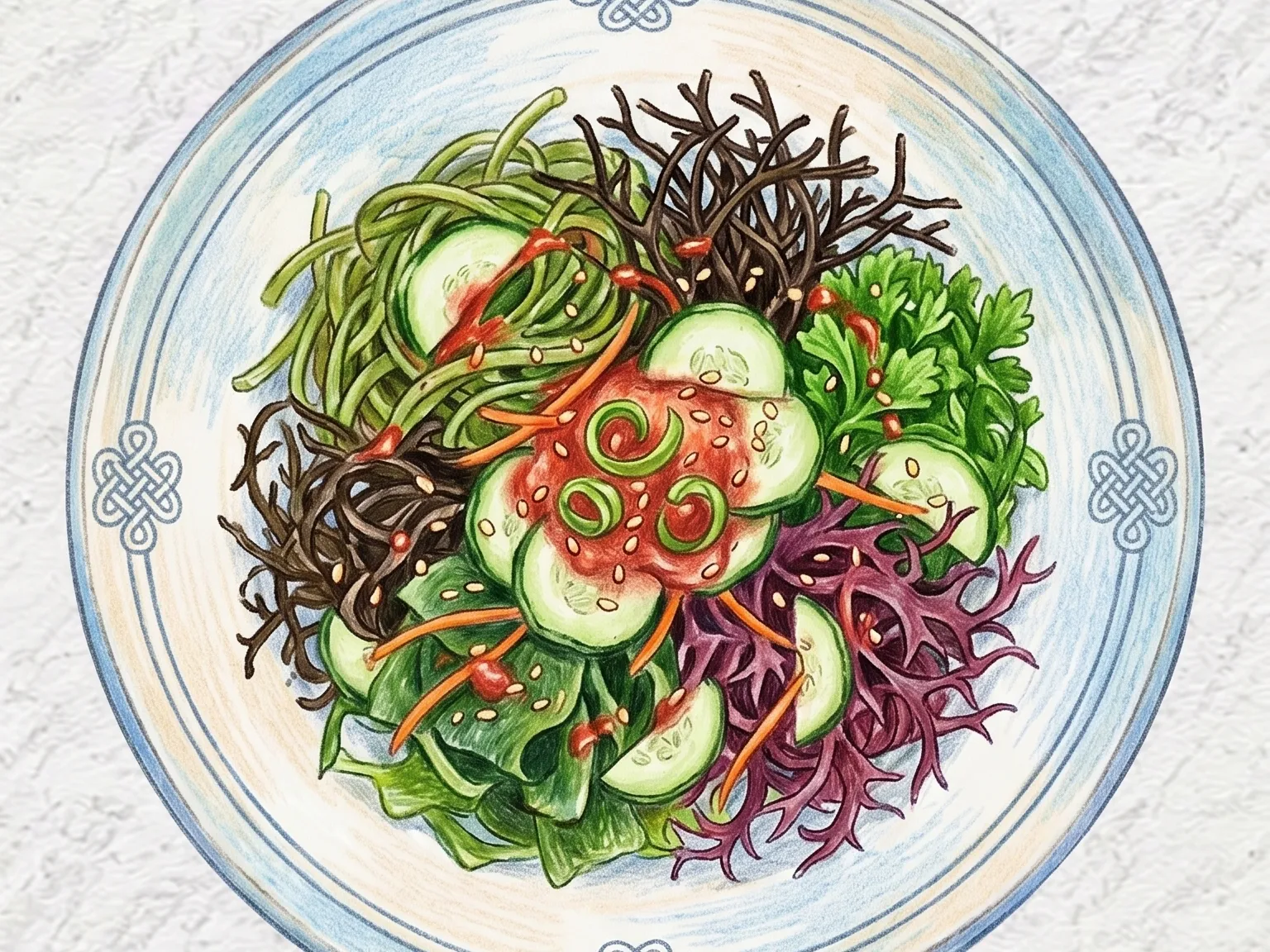
Haecho-muchim gathers several types of ocean seaweed - often including miyeok julgi (seaweed stems), tot (sea mustard), parae (green laver), and kkosiraegi - into one bowl and dresses them in cho-gochujang, a tangy-sweet sauce made by blending gochujang with vinegar and sugar. Each strand and leaf brings a different texture: some chewy, some slippery, some with a gentle pop. The seaweed is blanched for no longer than twenty seconds to preserve that textural variety - longer cooking turns everything uniformly soft. Squeezing out all residual water before dressing is critical, otherwise the sauce dilutes into a watery puddle. Julienned cucumber threaded through the seaweed adds a crisp, garden-fresh counterpoint to the briny marine flavors. Served chilled, this low-calorie banchan is especially welcome in hot weather.
Adjust Servings
Instructions
- 1
Rinse seaweed and blanch for 20 seconds.
- 2
Rinse in cold water and squeeze dry.
- 3
Julienne the cucumber.
- 4
Mix gochujang, vinegar, sugar, garlic, and sesame oil.
- 5
Toss seaweed and cucumber with dressing and garnish with sesame seeds.
As an Amazon Associate, we may earn from qualifying purchases.
Tips
Nutrition (per serving)
More Recipes

Korean Seasoned Green Seaweed
Cheonggak is a branching green seaweed from Korea's southern coast, prized for its oceanic perfume and cartilage-like crunch. A 10-second blanch brightens the color without destroying its snap. Squeezed and cut to finger lengths, it is dressed in a vinegar-forward sauce with soy, gochugaru, garlic, and sugar that cuts through the brininess. The seaweed must be served immediately - its texture collapses within hours. A specialty of Jeollanam-do coastal markets in winter and early spring.

Korean Seasoned Hijiki Seaweed
Fresh hijiki seaweed is blanched and dressed in a chogochujang sauce, a blend of gochujang, vinegar, and sugar, that highlights the sea vegetable's briny character. Hijiki's slender, dark strands take on a deeper black after blanching, and their texture firms into a distinctive pop that crunches lightly between the teeth. The dressing's tangy heat meets the seaweed's subtle ocean salinity, producing a refreshing umami interplay that makes this banchan especially appealing in warmer months. Sugar tempers the vinegar's sharpness, rounding the overall flavor into something balanced rather than aggressive. Thinly sliced raw onion mixed in adds a crisp contrast to the seaweed's softer chew, and minced garlic contributes a pungent depth beneath the sauce's bright surface. Rinsing the hijiki in cold water immediately after blanching and draining it thoroughly prevents the strands from turning tough. The finished dish is rich in iron and calcium, making it as nutritionally substantial as it is flavorful.

Korean Seasoned Sea Mustard Sporophyll
Miyeokgwi-muchim is seasoned sea mustard sporophyll - the ruffled, root-adjacent part of the miyeok plant - blanched and tossed in a sweet-sour-spicy dressing. Though it comes from the same seaweed as regular miyeok-muchim, the sporophyll is a distinctly different eating experience. Its thicker, corrugated surface gives a chewy, almost bouncy texture compared to the silky softness of seaweed leaves. This particular part of the plant contains higher concentrations of alginic acid and fucoidan than the leaf portions, which has drawn attention in Korean health-food circles. After rinsing in cold water, blanching for exactly thirty seconds is ideal - going longer turns the texture rubbery. The gochugaru-soy-vinegar-sugar dressing tames the marine saltiness and builds a bright sweet-sour-spicy flavor profile that stimulates appetite alongside rice. Chilling for ten minutes before serving lets the dressing adhere to the bumpy surfaces and leaves a cool finish. At around fifty-two kilocalories per serving, it is a go-to diet banchan. Pre-trimmed miyeokgwi is widely available at Korean markets and online.

Korean Broccoli Doenjang Salad
Blanched broccoli in doenjang dressing - a modern Korean banchan bridging Western ingredients with traditional seasoning logic. Florets and thinly sliced stems blanch ninety seconds, then are shocked in cold water for vivid green and a firm bite. The dressing combines doenjang with vinegar and oligosaccharide syrup - fermented salt, acidity, and gentle sweetness that lifts mild bitterness. Ready in under ten minutes and keeps refrigerated for days.

Korean Steamed Mixed Mushrooms
Three types of mushrooms - oyster, shiitake, and enoki - are steamed in a soy sauce and garlic seasoning. Each mushroom variety keeps its distinct texture: the meaty chew of oyster, the thick bite of shiitake, and the delicate snap of enoki. Sesame oil adds a finishing nuttiness to the minimal soy-garlic base. With just a handful of ingredients, this steamed side dish lets the natural flavors and aromas of the mushrooms come through clearly.

Abalone Seaweed Salad
Abalone has been gathered along Korea's Jeju coastline for centuries by haenyeo - female free-divers who harvest shellfish without oxygen tanks. This salad pairs thinly sliced abalone, blanched just 40 seconds to preserve its springy bite, with rehydrated sea mustard and crisp vegetables. A dressing of lemon juice, plum syrup, and soup soy sauce pulls the oceanic brininess into focus without overwhelming it. The combination of chewy abalone, slippery seaweed, and crunchy cucumber creates three distinct textures in every bite. It works well as a light appetizer before heavier grilled dishes or as a standalone side during hot summer months.